For anyone not so familiar with cat behavior, this cat is out of its mind excited to do this. It’s much more rare for cars to wag their tails but it means the same as it does when a dog does it. This cat is curious and proud and playing. It keeps looking at its owner too, like “LOOK AT ME, DAD” and it’s so rare to get videos of cats this happy. This is fucking rad
Nope.. wagging tails means anger or irritation in cat body language.
hey y’all, hope you don’t mind me stepping in!
you’re both right 🙂 a wagging tail means the cat is highly stimulated (think coiled spring, ready to go off). depending on the situation, this can be interpreted differently – just like people can smile nervously at job interviews vs. happily grin at friends.
in most cases, it’s safe to interpret overstimulation as ‘you’re doing something to amp up the cat & it wants you to stop’ (ex. unwanted petting). it should be seen as a warning; all that pent-up energy COULD be released as a swat or bite.
BUT in this case, that tail-wagging ‘frustration’ is the stimulation that comes from problem-solving (where can I jump? is it safe to go here?) and the excitement of play. it’s good to be wary of ‘cute’ animals vids, but this seems like an unproblematic video!
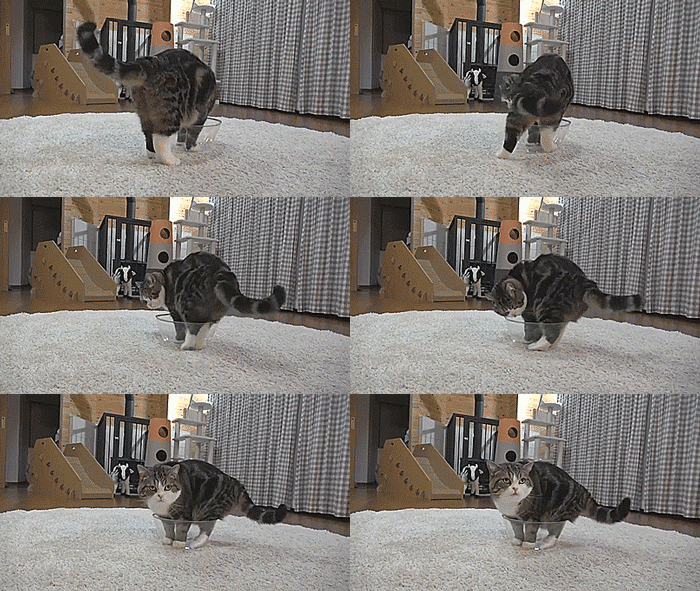
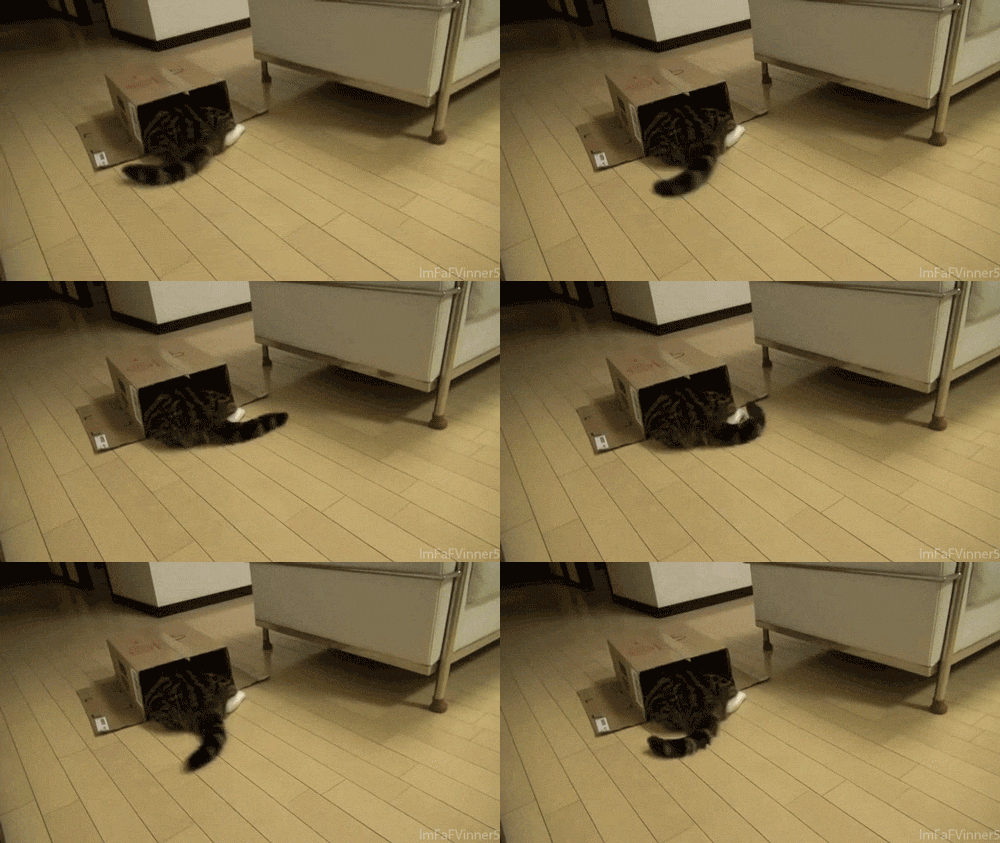
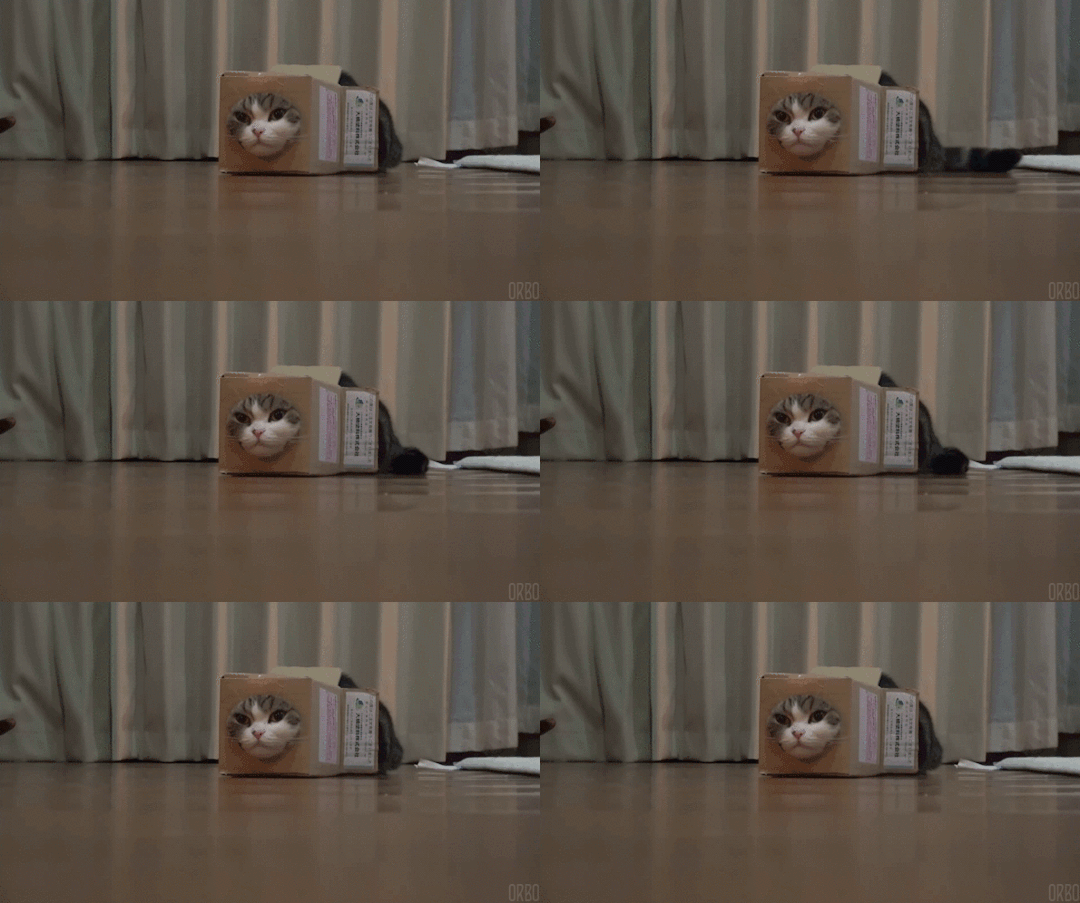
I’d like to add to this–just look at world-famous box-loving cat, Maru, who wags his tail every time he stuffs his body into a box or other small object. He’s clearly not about to attack the person behind the camera! It’s definitely based on stimulation, but more to the point of “ahhh FINALLY I’ve gotten into the small space, now how do I get the rest of me inside”:
@pangur-and-grim is spot on with their commentary here! A wagging tail (on a dog or a cat) is a sign of stimulation, also referred to professionally as arousal. That can be either positive or negative in experience. It’s like an accelerometer on a car – tail movement tells you the car is revving, but not how fast it is going or where.
Sometimes you can tell from tail movement and tension if the internal state of the animal is tense or excited. Low-stress engagement (calm interest, excitement, getting happy pets) tends to get a tail that wags more slowly, in softer arcs, whereas high-stress engagement (over-stimulation, prey drive) will get a stiffer tail wagging in more tight movements. These look like lower-stress tail movements to me and likely correlate with interest and engagement rather than anything unpleasant.

 Steel Phoenix Studios