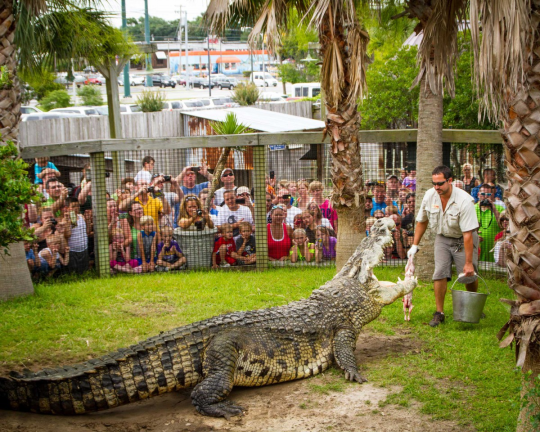
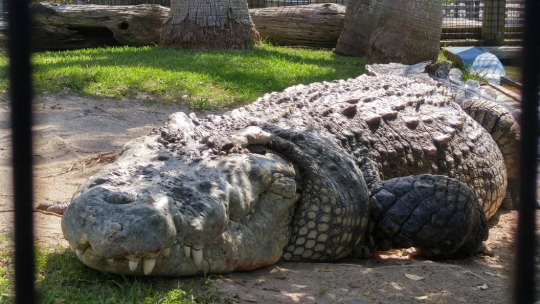
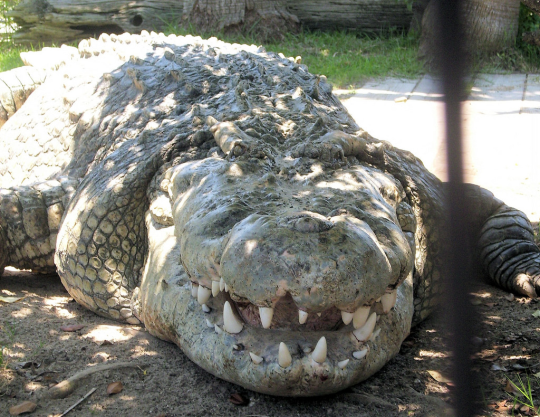
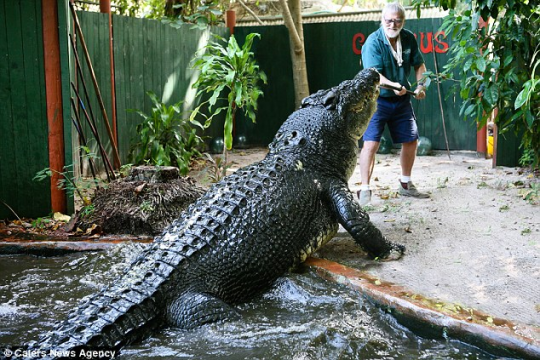
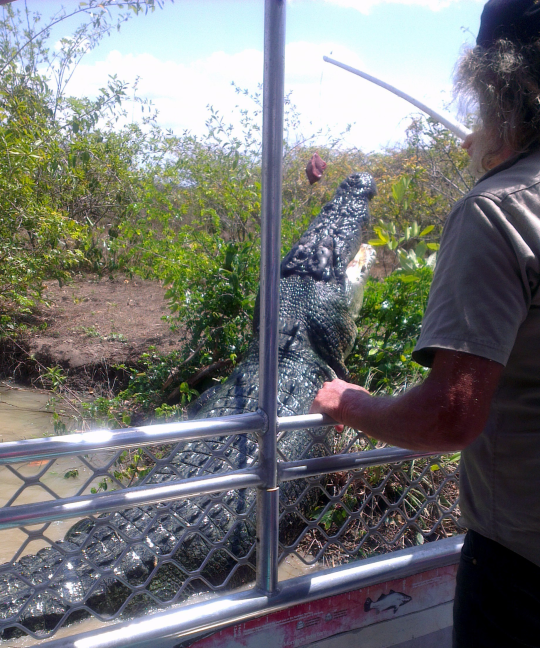
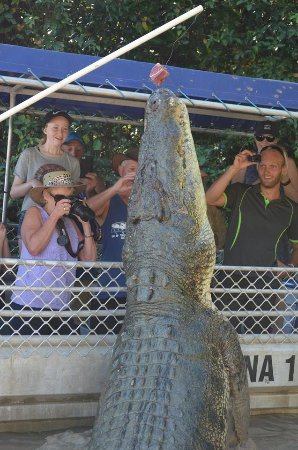
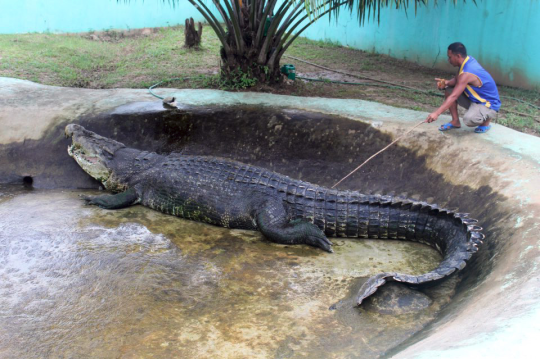
I can’t stop thinking about crocodiles for some reason so here’s some cool pictures I found of probably the second largest one in captivity, his name is Utan:
isn’t he beautiful
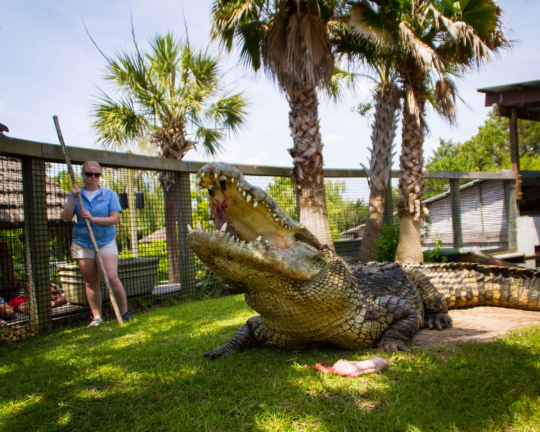
listen to the SOUND when he bites
and that’s not even a real power bite, that’s mostly just heavy bone falling on heavy bone from his jaws and the air rushing out from between them
2000 pounds of Good Boy
you get me
I honestly expected like 5 notes, what HAPPENED here
More tags on this ridiculous post:
Wait, thats the 2nd biggest crocodile? Then what does the biggest one look like?
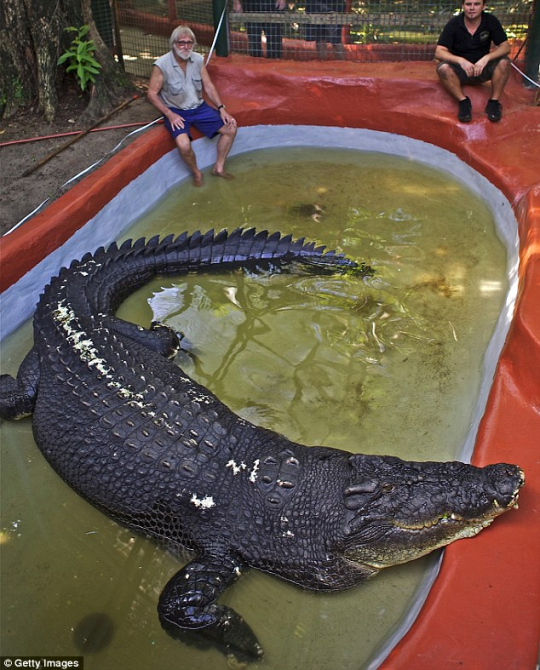
That would be Cassius, a very old Saltwater crocodile who is estimated to be around 114 years old and lives at Marineland Melanesia in Green Island, Australia. His official measurement is 5.48 meters, which makes him the largest in captivity currently. Because Utan is only slightly smaller and much younger, (only in his 50s), he will likely break Cassius’ record eventually. But for now, Cassius holds the title:
He is NOT, however, either the largest crocodile ever captured in Australia OR the largest ever in captivity.
A slightly larger crocodile has been reported (though not yet comfirmed) to have been captured at 5.58 meters.
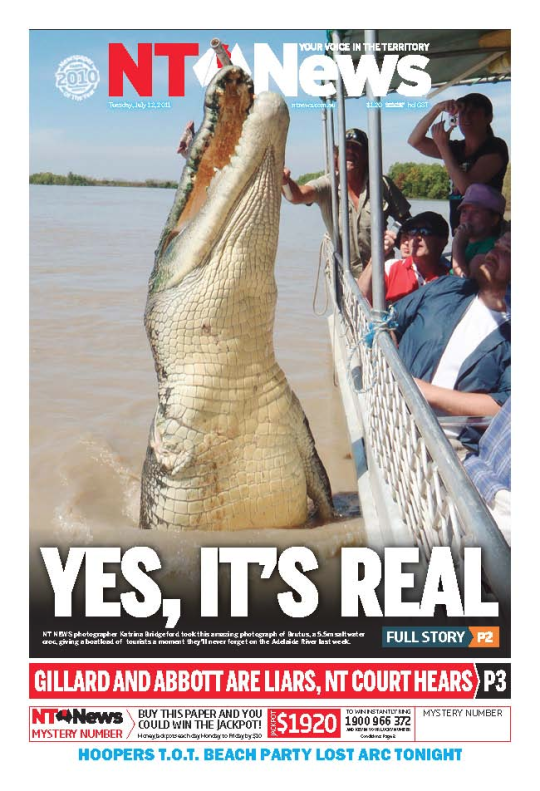
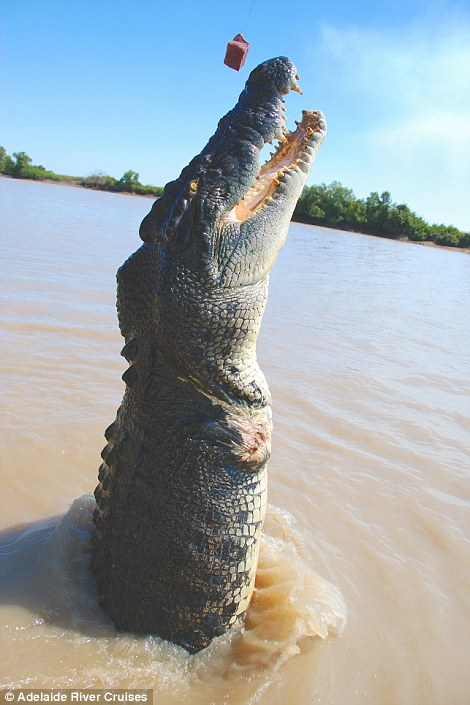
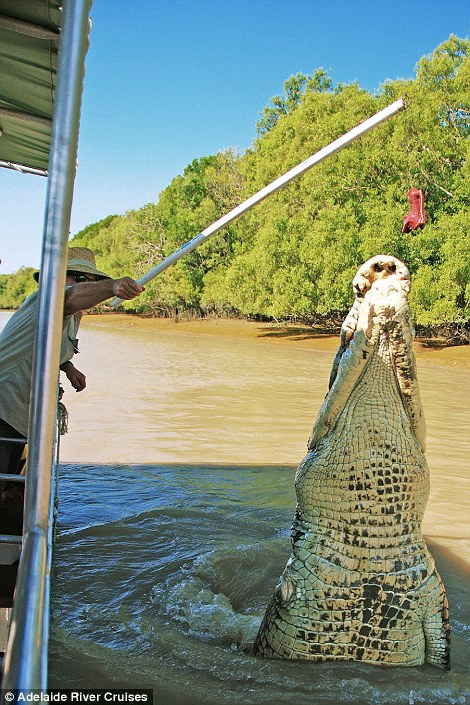
And while the famous Brutus of the Adelaide River was estimated to be just slightly larger than Cassius at 5.5m, he was driven out of his territory by a younger and even larger crocodile, who as a result has been given the name, The Dominator. He is estimated to be just over 6m.
This is Brutus, with an appropriate caption:
It is believed that he lost that arm in a fight with a Bull Shark.
The Bull Shark lost.
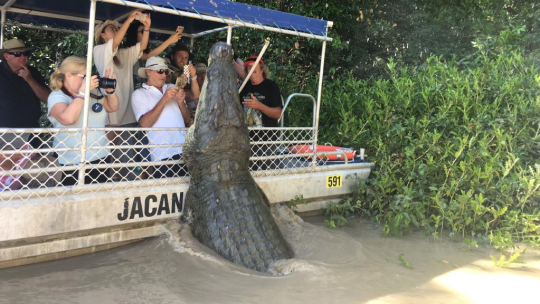
THIS is the crocodile who kicked him out. The Dominator:
And that’s STILL not the biggest.
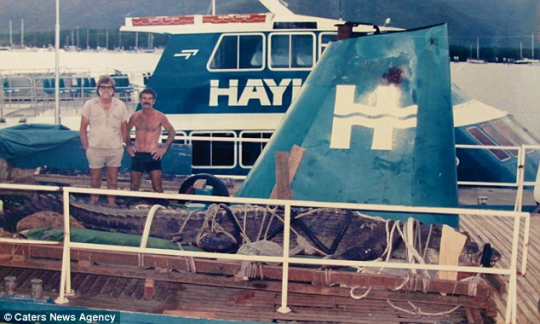
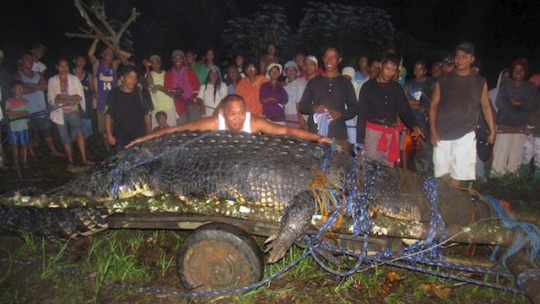
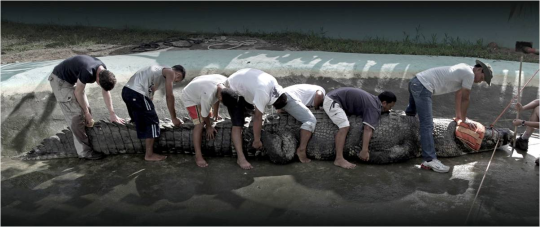
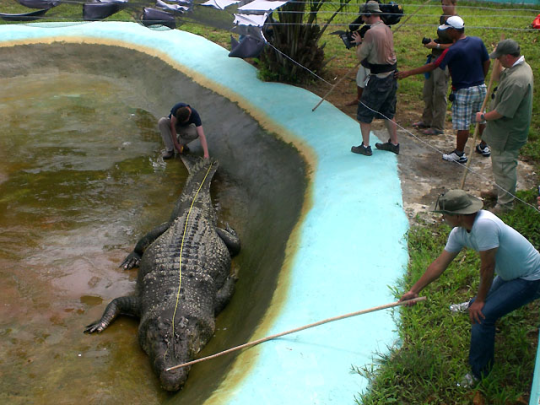
The largest living crocodile ever reliably measured was Lolong, who for the 1.5 years between his capture and his death was the largest crocodile ever held in captivity, at a whopping 6.17 meters (20 feet 3 inches) and 1075 kg (2,370 lbs). He had been feeding on both humans and very large livestock in the Bunawan creek in Agusan del Sur in the Philippines. It took 100 people all night to drag him to shore during his capture.
And here’s why:
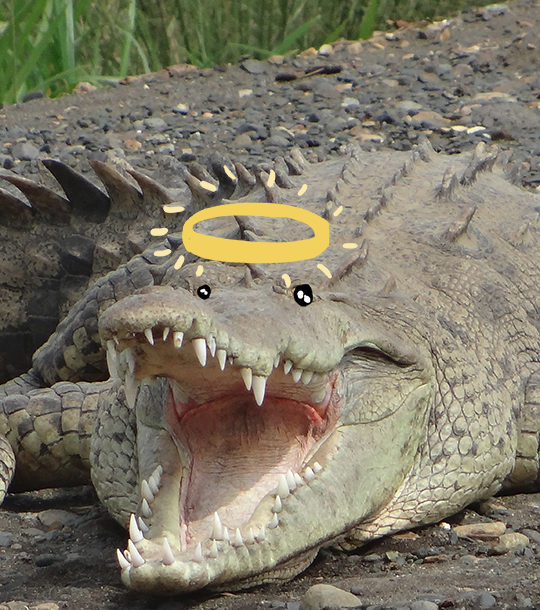
Also, to prevent credit from getting buried on a separate reblog, I have been informed that the above image of the crocodile with the cartoon eyes and halo was made by @rashkah! (And it is wonderful and I would like to thank him for its existence, because it perfectly captures my feelings about terrifying giant primordial reptiles.)
The answer is it depends. Crocodilians are very hardy animals. Their stomach acid is the strongest of any animal. Their immune systems are INSANE. Literally if you drop crocodile blood onto a petri dish full of MRSA – one of the most aggressive and antibiotic-resistant forms of Staph bacteria – by the time you check on it the next day the crocodile blood will have eaten a hole through the MRSA colony. I’d post a link but I’ve watched … a lot of crocodile documentaries and I don’t know which one it was from off the top of my head and would take a while to find out.
That’s the reason Brutus survived his encounter with a Bull shark, by the way. Crocodiles lose limbs in fights all the time and honestly, they’re fine. It probably hurts, but in the long run it’s not a life threatening problem for them. They have an amazing circulatory system that adapts to trauma and reroutes blood away from an open wound like that until it has time to close, so they can suffer SEVERE injuries that would be life-ruining for most apex predators and live to kill for decades afterward. And their blood is so potently antibiotic that they don’t have to worry about infection.
They also, due to their exothermic nature, are extremely efficient with their energy needs. They can go a YEAR without food if they have one meal that’s big enough, which is a perfect adaptation for an opportunistic ambush predator.
Plus their thick skin is covered in osteoderms (literally bony skin) and hard scutes that act as a natural armor – a couple reblogs have mentioned an internationally famous Nile crocodile named Gustave, who I will NOT spend a lot of time on because I do not need to get started down that rabbit hole again, I’ve posted about him enough before. But long story short Gustave, being a MASSIVE crocodile, was a long standing problem along the Rusizi River in Burundi with a history of killing dozens of humans and plenty of livestock, and over the years there had been many unsuccessful attempts to kill him. His body was marked with many scars, including multiple bullet wounds from some kind of automatic weapon. Which, obviously, did not kill him. Crocodiles are TOUGH.
All of this adds up to an animal with very few weaknesses. Honestly there are only three major things that present any real threat to a large crocodile:
A larger crocodile
Humans, prior to conservation laws that criminalized poaching
STRESS
Stress is the biggest danger for a crocodile. They are very sensitive to environmental stress, which is part of why Steve Irwin, and the golden age of Animal Planet that he brought with him, was so focused on conservation. Stress in the environment can come from things like shifting ecosystems, rising temperatures (which affects the sex of crocodile eggs), and especially ACCESS TO FOOD.
A crocodile does not need to eat often, but they do need food to be AVAILABLE when they need to eat. If their ecosystem is not providing a stable SUPPLY of food, even if the crocodile isn’t necessarily in immediate need of it, they can end up feeling environmental stress, and this alone can be enough to kill them, if it’s severe enough and they don’t know how to get to another food source. This is one danger of practices like the Adelaide River tours – not only do crocodiles associate humans with a food source (not the biggest concern in the Northern Territory where that’s kind of the default with Saltwater Crocodiles anyway), but it could potentially cause them to RELY on humans for food, in which case, if the practice was ever shut down, the change in their environment (no more unlimited free food 9 months of the year) might stress them out and cause them to either find another source of food elsewhere (increasing conflicts and competition with crocodiles in nearby territory), or die.
This is why zoos – good ones – are actually not a terrible thing for large crocodiles. There have been many concerns in the tags about Utan’s enclosure, but most of it is not visible from this post, which mostly shows off the area where they do his feeding shows. He has water to swim in comfortably, and honestly, his enclosure is like twice the size of my house. Utan is living better than me. The fact that they feed him very regularly, as many skinned rabbits as he feels like eating every couple of days is EXTREMELY positive for his overall health, because CROCODILES DO VERY WELL IN PREDICTABLE ENVIRONMENTS. Routine is good for them. That doesn’t mean they don’t like a bit of excitement from time to time, but that excitement should come in the form of stimulating their brains rather than upsetting their environment. Good zoo programs call this “enrichment” (like giving lions and tigers pumpkins full of raw meat to play with on Halloween) and it helps keep the animals happy, which further helps to keep them healthy.
Which is why a crocodile like Cassius can celebrate his 114th birthday.
Crocodiles in the wild can, under the right circumstances, live 60-80 years or so, more if their environment is very favorable, no larger crocodiles challenge their dominance, and no humans can bother them (except as a food source, which includes literally preying on humans, which happens especially with Nile and Saltwater crocodiles). Cassius has been in captivity for decades, getting regular access to food with very little stress. Under such circumstances, honestly who knows how long he might live. Reptiles are crazy. Tortoises can live to 200. Without the risk of starvation, competition, or poaching, crocodiles might well far outlive our expectations. I wouldn’t be surprised if Cassius broke 120. Utan, who has all that AND a better enclosure, maybe longer. I’d be more surprised if Utan didn’t at least get past 80 or 90.
Lolong died quickly in captivity because his time in captivity was stressful. He was the largest captive crocodile in the world – BY TWO FEET – so they liked to drain his pool to show him off for tourists. This was an unpredictable source of environmental stress for him, plus, given how massive he was, it put a lot of strain on his organs, which benefit greatly from the buoyancy of being in the water or on soft ground rather than the hard concrete of his shallow pool. He may also have suffered from pneumonia. There was a point during his capture where they had to float him to the other side of the river because they dragged him to the wrong side of the shore and couldn’t carry his weight over a crude wooden bride. To do this they basically tied him to some things that floated and threw him back in the water face first. Since he was restrained and blindfolded at the time, it’s possible that this caught him by surprise and forced some water into his lungs before he could close his nostrils. He survived about a year and a half after this, but crocodile metabolisms are so slow in general that it may have just taken that long for the pneumonia to kill him, or he could have acquired it from any one of the times they drained and refilled his pool.
TL;DR crocodiles can live a LONG time under the right circumstances. Stress in their environment is extremely harmful to their well-being, but in a healthy environment with steady access to food and lack of competition from larger males and no threat of poachers – all of which a good enclosure in captivity provides – a crocodile has a lifespan potential on par with humans.
I have more crocodile posts on my blog somewhere, including ones particularly on the differences between alligators (and caimans) and crocodiles, which might help some of the people in the notes who keep falsely claiming or suspecting that Utan is an alligator. One of those posts was actually the reason I had crocodiles on my mind when I first made this post.
I assure you, despite the unusually heavy and bony skull he has, Utan is 100% crocodile. No alligator comes close to him in size or shape. I won’t explain it again in detail here, but there’s specific things that people mean when they say alligators have wider, rounder faces than crocodiles. Utan is not an alligator.



 Steel Phoenix Studios