Every time a post on queerplatonic relationships makes its way around tumblr, the comments are inevitably filled with a flood of “IT’S CALLED FRIENDSHIP” or “WHY DO YOU NEED A WORD FOR THIS.”
Do you honestly think society regards friendship as an acceptable substitute for romance and marriage? The thing is, most aros would LOVE if it could just be called friendship.
Because that would mean a world where:
Friendships are considered equal to or sometimes *SHOCK HORROR* more important than romantic relationships. This is not an exceptional occurrence.
Romantic partners know that they might not be their datemate’s Most Important Person and are not bothered by this.
People commonly plan major life events around their friends up to and including housing, finances, employment, ect.
It is common for people to be in their 30s, 40s, 50s, hell even old age having lived with friends that entire time and no one has ever asked them why they’re not married.
It is common for people to have a committed lifelong partnership with their friend and no one bats an eye.
Having a life friend is considered something that can be regarded as equally close to marriage. It is also taken just as seriously.
Until the day that those are true, friendship is unfortunately not an accurate word to convey the types of relationships we’re talking about.
The level of vitriol and condescension in some of the notes to this post are really striking. Direct quotes:
“So…all of this is common?? Unless you are very young or are living under a rock?”
“PLEASE go outside and quit posting this fucking nonsense”
“lmaoo how is the solution to this making up a ridiculous word to describe committed friendships”
“FOR FUCKS SAKE. PLEASE LEAVE YOUR FUCKING HOUSE ONCE IN A WHILE AND TALK TO SOMEONE, LITERALLY ANYONE. MAKE. SOME. FRIENDS.”
“i’m 100% convinced that none of u on this site have ever left the house or had a friend”
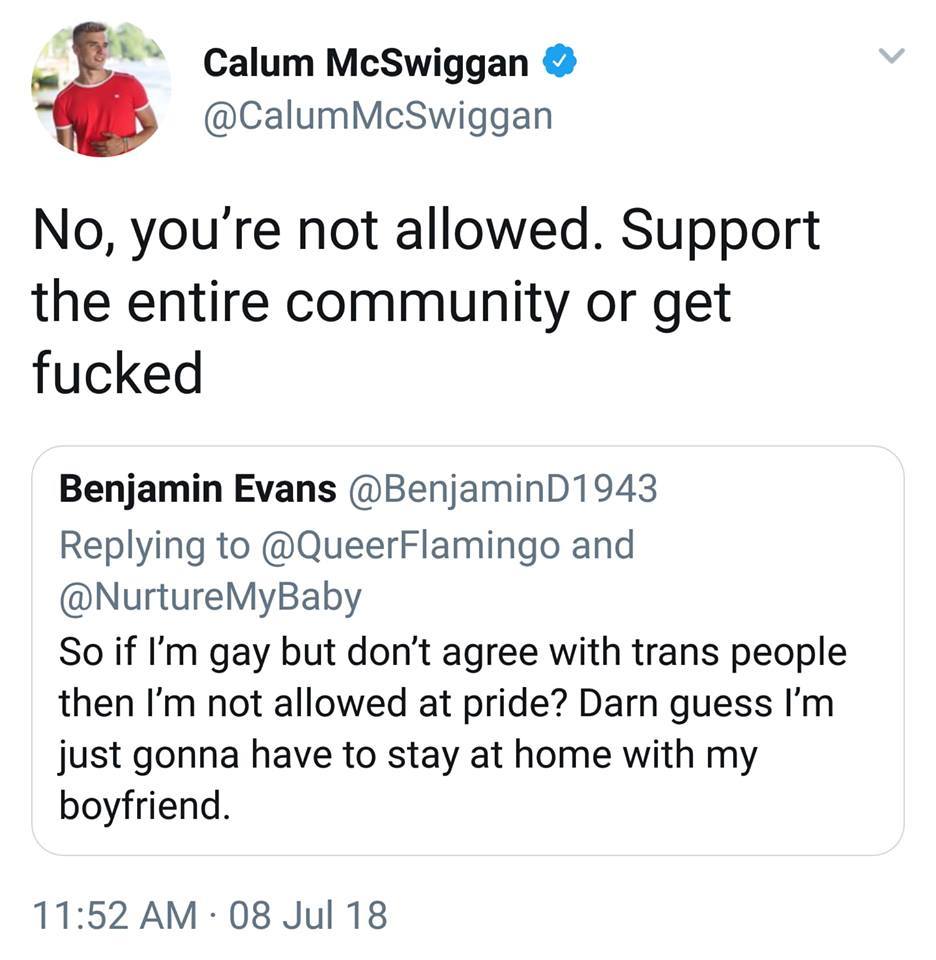
And so on. There are also plenty of folks positioning the OP and others who relate to this kind of language and/or this kind of relationship as in opposition to the “real” LGBT+ community, presumably due to an assumption that only asexual or aromantic people find themselves in relationships like this, or would want a word to describe them (and the accompanying assumption that aromantic and asexual people aren’t “really” queer). There seems to be a feeling that, by creating this word or attempting to articulate a particular subset of the larger category “friendship,” OP and folks like them are taking something away from some other group of people—whether that’s because they’re usurping the language of queerness undeservedly, or just making an annoying bid for attention, or because they’re somehow impoverishing the social perception of friendships that don’t fall into this category.
As a data point: I’m neither very young nor living under a rock. I’m 37; hold down a human-interaction-heavy, management-level job at a nonprofit; have a regular Ashtanga yoga practice and am training for a 10K run; formerly owned a clothing design business; have lived in three major, extremely left-leaning, west-coast cities over the past four years and still maintain friendships with a wide diversity of people in all of those places as well as in many other places across the world; just visited one of my best friends since kindergarten, who now lives in Manhattan: also a major, left-leaning metropolis. It happens that I am neither asexual nor aromantic, and generally have active lovers/friends-with-benefits relationships going with between one and three women at any given time. I also live with my best friend/writing partner/committed life collaborator/Best Person (@greywash/Gins)—I have done for four years now, across three different apartments in two different cities, and I have concrete plans to continue doing so in the future. We eat together; write together; do projects together; go on vacation together; take each other to doctor appointments; we’ve gone on trips with both sets of our parents; the two of us just visited my hometown for a major family event, where I reconnected with a wide network of family & friends, and introduced her to all of them, etc.
As such, I’ve spent a lot of time talking with a lot of different people—real, meatspace humans, in face-to-face conversations—about my domestic situation. And I’m here to tell you: arrangements like this are not, in my experience, “really common,” even in the big liberal city. And for many people, they’re not intuitive to grasp. People are extremely uncomfortable with relationships that tick some of their Relationship Escalator buttons but not others, and they work very hard to find a way to make the thing they’re observing fit their preexisting relationship models. I’ve frequently encountered:
People telling me we shouldn’t get too “serious,” because what will happen when one of us falls in love with one of our sexual partners? (Assumptions: having sex is the universal falling-in-love trigger; being in love is necessarily accompanied by having sex and doesn’t happen in its absence; sexual/romantic relationships are intrinsically more stable/serious than relationships that are only one or neither of these things; seriousness is synonymous with long-term stability; long-term stability is the universal goal.)
Sexual partners being extremely over-invested in knowing whether Gins and I have sex, even though they know I am otherwise non-monogamous, and only feeling secure if the answer to this question is no. (Assumptions: a relationship, however close or committed, doesn’t become a “real threat” unless sex is in the picture; also that there is an easy yes/no answer to the question “Are you sexually involved?”)
People positing a dichotomous understanding where either (a) she and I are roommates, implying a relationship of convenience that carries little to no commitment (“What will you do when Gins moves to the Bay?”), or (b) we’re romantic/sexual partners, which carries an assumption of jealous monogamy (“Is Gins okay with you going out to the lesbian bar with your BFF?”). (Assumptions: relationships come in pre-packaged units, with levels of commitment, exclusivity, and sexual and romantic expression pre-set.)
People making all kinds of hurtful and often stereotypical assumptions about our interpersonal dynamics in order to explain why our relationship doesn’t look more “normal.”
On the “bid for attention” front: because we don’t want to have this kind of involved conversation with every person with whom we casually interact, Gins and I often use other shorthands to refer to one another. I don’t go around introducing her as my “queerplatonic life partner” or even my “hard-to-define life partner” unless I have a pretty good idea that the person I’m talking to will understand what I mean by that, or they have a genuine need to know. (Though, on the flip side: if they do understand what I mean by that, it’s usually a good sign we’ll get along.) Depending on the context, we tend to either use the word “roommate,” which feels painful to me because it downplays our importance to one another, or the catch-all word “partner,” which at least to me feels a lot truer and more validating, but can come with some inconvenient assumptions about our sexual/romantic involvement since many people process “partner” as essentially meaning “wife/girlfriend,” and “wife/girlfriend” as essentially meaning “monogamously sexual/romantic.” In any case, it’s not my goal to get on a relationship terminology soapbox with everyone I meet; quite the contrary. But that doesn’t mean that there isn’t value in being able to articulate to myself and my close circle how the relationship actually works.
I do understand the instinctive reaction against a perceived insistence on granular labels. I sometimes feel this way when I feel pressured to label my own sexuality. The term I’m most comfortable with is simply “queer,” because while I am now and always have been near-exclusively sexually and romantically interested in women, I also spent 12 years of my life in a relationship with my male band-mate and art-making partner, a connection which continues to be very important to me. “Lesbian” feels erasing of that important relationship, whereas “bisexual” radically overstates my interest in men. I exist in a place where neither label is all that usefully descriptive of my lived experience—which incidentally makes the frequent intra-queer bickering which assumes a clear experiential line between bi women and lesbians, pretty confusing for me. So I get how labels can feel constricting when they’re not useful to you personally. But I also understand that many people find granular sexuality labels to be extremely meaningful! Nobody should be pressuring me to adopt them, but on the other hand, it’s no skin off my nose that other people find power and useful descriptive force in claiming their bisexual or lesbian or gay or whatever identities. Calling myself queer doesn’t invalidate folks who call themselves lesbians, and them calling themselves lesbians doesn’t devalue my use of queer.
Similarly, articulating a term for a specific type of friendship doesn’t devalue the blanket “friendship” category. And I’d like to point out that there are already granular terms for many different kinds of friendship currently in use, and historically there have been many more—including terms that, like “queerplatonic,” explicitly seek to straddle or complicate the division between friendship and another category. I quite like the idea of repurposing the 19th-century term “Boston marriage” to describe my own arrangements, and the 18th-century concept of a “romantic friendship” or “passionate friendship” resonates with many other sapphic women I know. None of these terms are simple synonyms for modern-day terms like “lesbian lovers” or “best friends”—although there was undoubtedly overlap among those concepts—but unique historical formulations of their own. At some point, someone had to come up with these terms to describe what they were living through and observing around them, and that process applies just as much to the present day as it did in 1890 or 1780. Right now, scrolling through my contacts list in my phone, I see people that I would categorize as: acquaintances, college friends, friends with benefits, former friends with benefits, art friends, yoga friends, fandom friends, knitting friends, activism friends, childhood friends, best friends, family friends, work friends, potential friends, ex-friends, Portland friends, LA friends, close friends, and casual friends. And my queerplatonic life partner, who feels different to me than these other categories, just as they are all different from one another.
Thanks for this. I find it extremely helpful in articulating some experiences that I’ve had in the past couple of years—experiences that don’t have easy, pre-existing language around them, and are thus apparently unintelligible to a lot people. Namely: the experience of falling in non-romantic love with female friends. How do you even talk about that? Queerplatonic is … yeah. That works for me, but the problem is that no one really knows what it means. I’ve tried to explain this experience to a very close friend (of the BFF variety), and she sort of fixated on the idea that I was cheating on my husband, or that I was having an “emotional affair,” or was about to cheat, and like… Number one, that implies an enforced emotional hierarchy of intimacy that I do not find natural, and number two, as hbbo states above, it privileges sexual contact over anything else, and number three… Okay, I don’t even know. I think a lot of it has to do with rendering women’s emotional relationships into parcels that are comprehensible and therefore controllable by patriarchal systems, right? I have committed, long-term, emotional, loving, variably sensual, okay queerplatonic relationships with women that are more vital and more intimate to me (to ME, and not visible elsewhere) than my official marriage. And honestly, I think this would be the case regardless of the health of that marriage, although it might not feel quite as desperately necessary? I don’t know.
The bullet points in the original post up there? Those are attitudes that feel natural to me, and I have and do live my life by several of them.
I have been frustrated by an inability to explain or talk about this.
Not coincidentally, this is what my long-promised next novel is about. I should, like, write that. Or something.
A nice anon asked me the other day about my writing software, and I gave out the name “manuskript” and like, realised that i really wanted to share more about it with you guys ! (I gain no money for that, i just really like that app ?)
SO, Manuskript.
First it’s free. So, yeah, nice ! Then :
Parts to put your general infos and summary, with option to put different sized summary. NICE. Then I guess you’d like to keep tracks of your character ? Well good cause here :
Sorted into main/secondary/minor for your convenience. You can chose colors for them which will be useful later… Mine is pretty empty cause I got all in my brain and forget to put it down here but see that last tab ? Perfect for a character sheet ! Then you’ve got plots, sub-plots, sub-subplots ? Here you go :
I did some censorship there, because I wouldn’t want to spoil you but see ? Organised in importance, general infos, characters part of the plot/subplot, then resolution steps. Also there’s a button on the right side so if you wanna have the book summary on screen you can. SO NICE.
Also I guess you may have some worldbuilding to do ? GOOD cause there’s a part for this too !
Here you can put all your worldbuilding stuff, under categories of your choice !
Now you want to do some plans for your writing ? put down chapters, parts ? guess what’s in the “outline” tab 😉
On your left, you plots and subplots. In the middle, your outline. You can also put a summary, one line or longer, set the POV, and the wordcount goal down there. HOW COOL.
What about ACTUALLY WRITING NOW ?
Here is the Editor with all parts open : outline on the left, data, cheat and search tab on the right, and that thing that let’s you keep track of things you put in References (in the data tab) through chapters, with POVS, down.
Note : You can chose also what appears in the outline bar : here i set it so that i have : – progression percentage after categories, wordcount after chapters – color of chapter icon indicates POV – color of categories and chapters name indicate progression (red = not started or less than half [or two thirds ?] of goal, blue = half of goal or more, green = goal or more, orange = more than a third of goal above it)
Of course you can chose which tabs are open. For example this is my usual set. Outline, data, nothing more
I don’t use much of the “Debug” part, but it’s a great way to keep track of things, and I guess you can do much with it that I don’t know about.
>Good guy director gets fired after far-right pundit digs up past he repeatedly apologized for
>Tumblr thinks this is okay
New rule, starting now. Anyone making a snarky comment about this gets unfollowed because that’s gross
>28 year old my little pony fan thinks I value their opinion on someone getting fired for making rape jokes
hahahahaha here I was, legit hoping this discourse wouldn’t show up on my blog but, there it is. wow.
#1) The person who dragged up the pedophilia jokes about James Gunn is none other than far-right blogger Mike Cernowich. You know, the guy behind fucking #PIZZAGATE.
#2) James Gunn already apologized for previous behavior. Like, several years ago. In 2012. Before #MeToo. Before ANY of this. And his behavior since then proves a marked change.
#3) In fact, James Gunn’s behavior changed so radically that he became the target of Mike Cernovich. Because Gunn’s been pretty outspoken about our current president. Which didn’t sit well with President Pizzagate, not one bit.
#4) So Mike Cernovich finding and released all the old tweets during SDCC was NOT a coincidence. This was targeted to Disney, to see if Mike can wank himself over forcing the biggest major conglomerate to make a marketing decision in order to get ONE GUY rightfully furious about Trump out of the business.
#5) Look, I think James Gunn’s tweets are pretty damn horrible. But to put it on the same level as someone like Harvey Weinstein is disingenuous.
#6) We’re not winning any wars with the mentality of “problematic people are forever doomed for having once done problematic things, even if they’ve changed.” And like stated above, James Gunn is NOT another Weinstein. I’ve said homophobic things in the past, and I’m A LESBIAN for fuck’s sake!!
#7) Dave Bautista isn’t the only one who’s on James Gunn’s side in this. The entire GOTG cast is on his side.
#8) In the end this isn’t just about GOTG. This isn’t about Disney. This isn’t about James Gunn’s career (he’ll bounce back). This is about Right-winger trolls weaponizing accountability. And it’s fucking gross.
This isn’t about Disney. This isn’t about James Gunn’s career (he’ll bounce back). This is about Right-winger trolls weaponizing accountability. And it’s fucking gross.




 Steel Phoenix Studios