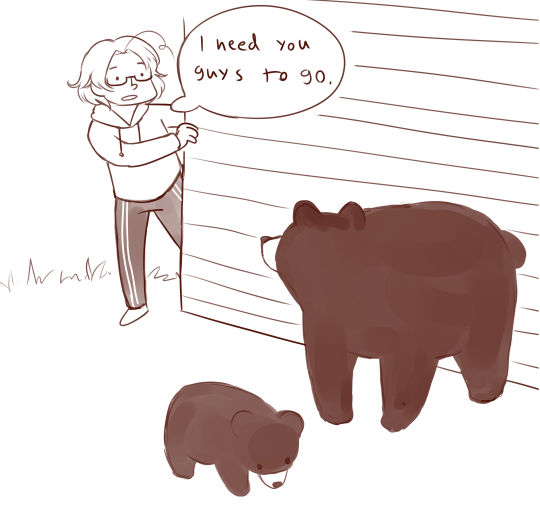
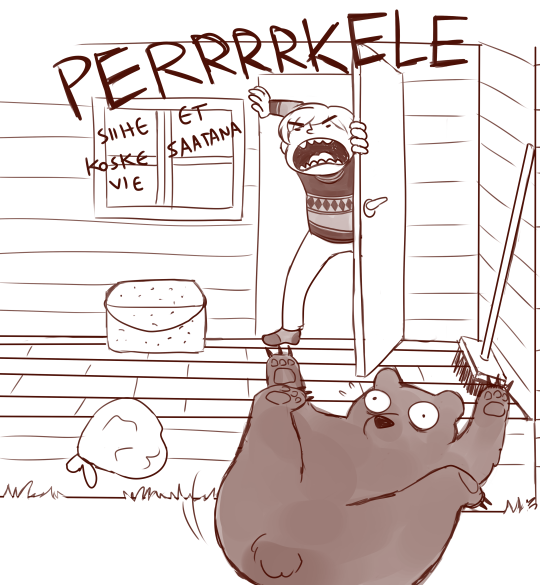
I asked my boyfriend in Canada once, how he deals with polar bears because I was curious about what to do and he was like, just be calm, let them know you’re there, and give them space and they’ll usually just go away.
When you look around the world and throughout human history, the Western style of parenting is WEIRD. We are outliers. In
many instances, what we think is “necessary” or “critical” for
childhood is actually not present in any other cultures around the world
or throughout time.
Perhaps
most striking is how Western society segregates children from adults.
We have created two worlds: the kid world and the adult world. And we go
through great pains to keep them apart. […] But in many indigenous cultures,
children are immersed in the adult world early on, and they acquire
great skills from the experience. They learn to socialize, to do
household chores, cook food and master a family’s business, Lancy
writes.
Of course, just because a practice is ancient, “natural” or universal
doesn’t mean it’s necessarily better, especially given that Western kids
eventually have to live — and hopefully succeed — in a WEIRD society.
But widening the parenting lens, even just a smidgen, has a practical
purpose: It gives parents options.
One of the things I notice about having spent so much time out of the country is that a lot of the parenting discourse here just… makes no sense to me. Of course you should breastfeed whenever and wherever you damn well please? Of course whatever adult is around should take care of the kid who scraped her knee? Of course you shouldn’t expect mothers to stay home and take care of babies by themselves? Of course you should expect kids to run around in packs and play in the dirt more-or-less unsupervised? And yes, it’s more complicated in the US where you don’t usually have networks of friends and family living in close proximity, but maybe we should think about how we could make that happen more often? Or get to know some neighbors? And actually it is safer for kids here than it used to be, and safer than in a whole lot of other places, and while no, we shouldn’t be reckless or fatalistic about it, sometimes shit happens. There’s no way to 100% protect a kid from the whole world, and that shouldn’t even be the goal.
Anyway, one reason i don’t want kids is that I’ve internalized too many “poor country” parenting philosophies so while I wouldn’t let my 2-year-old play with machetes, I would totally get sent to jail for letting a 6-year-old walk to the store by herself because why on earth would that be a problem?
Japan’s complete lack of understanding of declining birth rates in relation to its work culture reminds me a lot of how America has an assumption that millennials are killing industries when the truth is they are more frugal because of a lack of funds.
Both come from a conservative mindset that neglects the impact that a toxic work culture can have on society.
A 80+ hour work week in order to maintain financial stability isn’t exactly a solid ground to date people and eventually build a family from a healthy relationship.
A workforce comprised of 20 somethings that make between 20-40k a year in entry positions isn’t a good ground to build a reliable consumer base when a huge chunk of that is going to rent, utilities, car payments, and student loans.
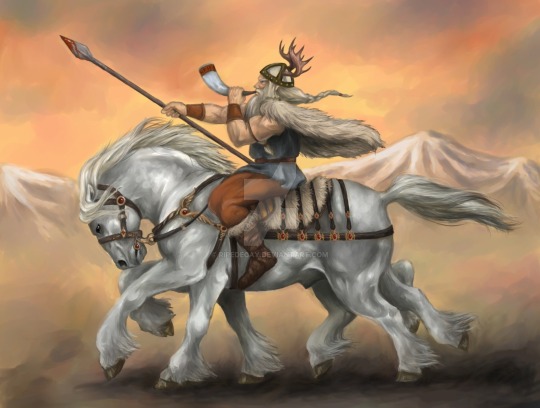
One thing I never really understood was Sleipnir (meaning “slippery one” fyi) in depictions of Norse mythology. Sleipnir is an eight-legged horse, the steed of Odin and the son of Loki, and he is commonly depicted like this:
(image not mine)
But why would you depict an eight-legged horse like this? Horses gallop the same way most other mammals run, with all feet leaving the ground at one point, so having extra feet here doesn’t seem like it could make the horse any faster. I’m also not sure it would give it any more stable footing, since it doesn’t have a wider base.
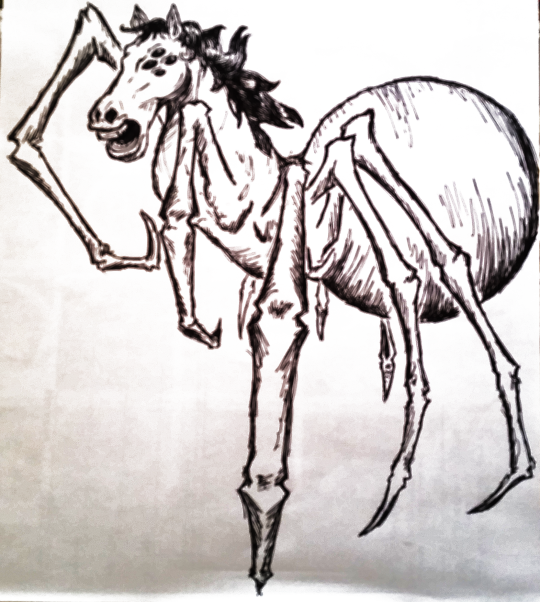
If you want a stable eight-legged form that can reach great speeds for its size, wouldn’t you want to start with what nature has already provided? Wouldn’t you want something more like… this?
(my drawing)
“But wait!” you might say, “Sleipnir was conceived when Loki, in horse-form, seduced another horse! That’s why it looks all horsey, just with extra bits!”
Well, that’s a good point, but consider that Loki as a deity was originally based off the spider, and his name even derives from the old Swedish word for spider (source). Therefore, it’s not too hard to believe Sleipnir inherited his horse half from his mother and the more spidery half from his father. In conclusion:
Spider-Horse, Spider-Horse, He does spider-things of course! Weaves a web, Makes you gawk, Riding round ‘til Ragnarok! Look out! Here comes the Spider-Horse.
I am all for creative interpretations of Sleipnir. And spiders, obviously. This is epic.
But just so you know, that journal is from the 60′s, and the current scholarly consensus no longer considers the spider etymology to be likely. We still aren’t sure where the name comes from, and probably won’t ever be, but I’ve seen quite a few more recent academics lean toward Old Norse luka, meaning “close”, “shut”, or “end.” (See Simek’s Dictionary of Northern Mythology.)
^^^^ my research found much the same. (which is sad, i like spiders)
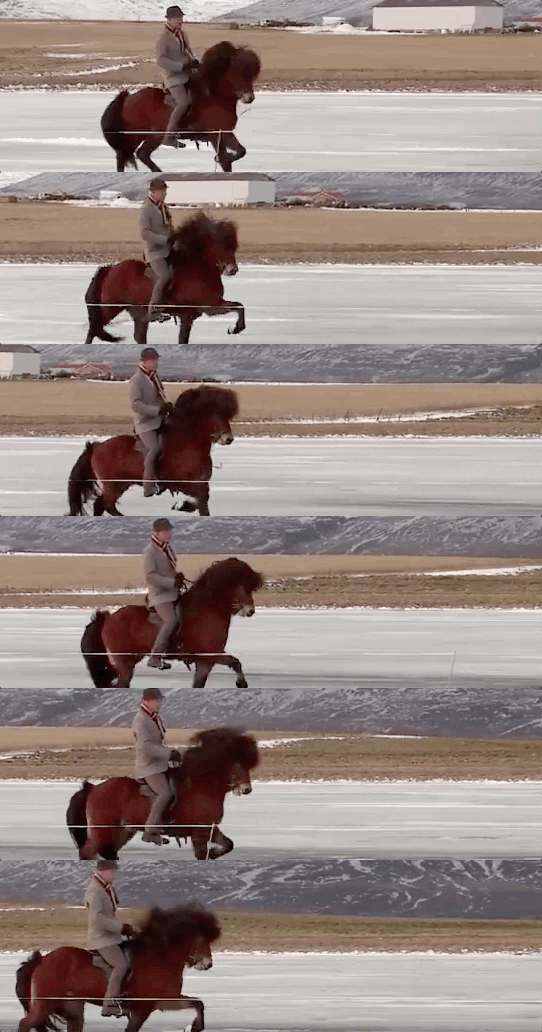
As far as Sleipnir having eight legs, it’s probably a reference to Icelandic horses. Icelandic horses are one of the few horse breeds with five gaits. They can do a walk, trot and canter/gallop, like most horses. But they have also evolved to have a tolt,
[ gif of a man riding a brown Icelandic horse doing a tolt. The back legs of the horse move rather stiffly back and forth, while the front legs are lifted up almost to the horse’s chest. While the horse bounces slightly, the man riding the horse could probably hold a glass of water without spilling. ]
which is fast, smooth and noted for its explosive speed and ability to cover long distances.
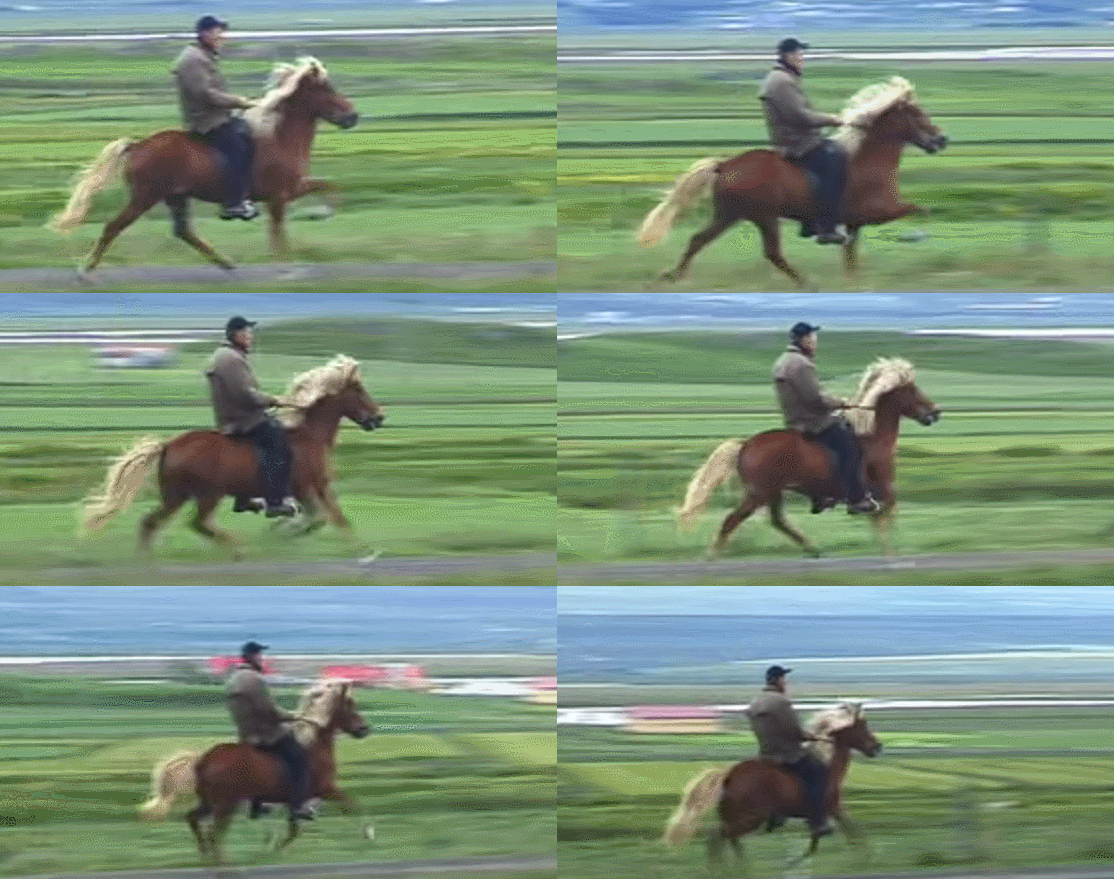
The second unique gait is called flugskeið, or flying pace.
[ a light brown Icelandic horse demonstrating the flugskeið. With the exception of the wind in the horses’ mane, the upper part of the horse and the rider seem to almost be still, with the background simply zipping by them. The horse’s legs, however, move fast enough to blur. Unlike with a full gallop, the horse does not fully extend its legs away from its body. This is particularly obvious in the front legs of the horse, which lift up to the chest of the horse and land under its chin the same way as in the tolt]
It is both smooth and fast, some horses being able to reach speeds of 30 mph. Not all Icelandic horses can do a flugskeið, but you’ll notice that when done properly the legs move in unison and so fast they can blur, giving the illusion of the horse having eight legs.
Anyways, here is a video to further emphasize how cool the flugskeið is;
I’d never heard this theory! That’s so neat.
The one I’ve read attributed the eight legs thing to a metaphor of a coffin + 4 pallbearers.
This is FASCINATING, and I adore Sleipnir! 😍 @tinaferraldo
You’ve brought my horse geek out now. You have been warned!
The thing is, until the late 1800s we didn’t know how horses moved.
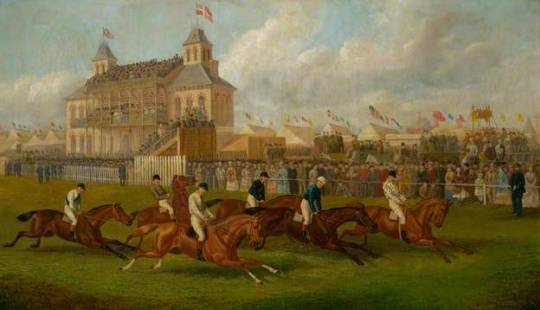
In old paintings you typically see horses with their legs stretched wide as they thought that gave the appearance of great speed.
But it really just looks like Timmy’s big brother was being an evil bastard and bent the legs of his tin horses out .
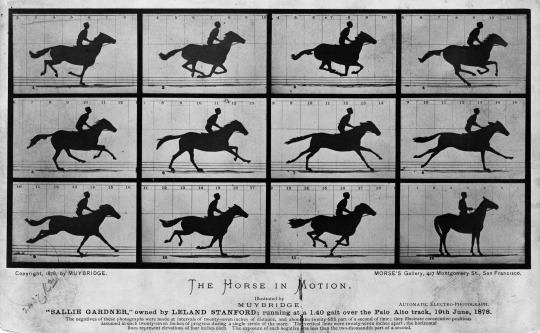
It’s completely unnatural looking, but horses moved too fast for us to be able to see how they moved, until Edward MAuybridge captured their motion in a series of consecutive photographs in 1878.
And for the first time we could see that all four legs did leave the ground. (and are never stretched uncomfortably wide!).
He also created the first motion picture as the individual photographs could be put together as a series of film frames (below).
So, all this is to say that back when Sleipnir was being dreamed up, they didn’t understand how animals moved and probably thought more legs = faster, and to a degree they were right, things on four legs run faster than bipeds so they continued that principle to its logical, if incorrect, conclusion.
THIS IS THE BEST HORSE MOVEMENT DISCOURSE EVER
or we can consider that norse epics were, above all else, poetry, and consider that the image of an eight-legged horse brings to mind a horse that moves like a spider – with that fast darting scuttle that so many people find terrifying. an alien horse. a divine horse. a monster.
(personally i find the spider run adorable, like when a cat gets startled and does the skitter. but i recognize this is an unusual reaction.)
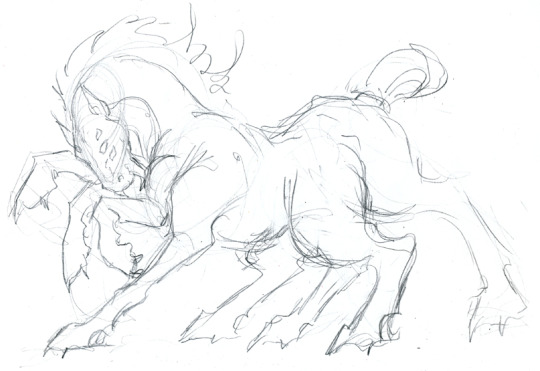
So, inspired by the whole concept of a spider-horse I very loosely sketched this:
…To which my brother @foxofwar simply pointed out, that being a spider-horse, it’s a sporse.
Slightly off topic, but it isn’t unique to Norse mythology to give a magical horse unusual number of legs tho. In Hungarian folklore special horses (usually fond of eating cinders, capable of flying or running faster than the win or even faster than thoughts, usually liked to sass the hero of the tale) had 5, 6 or 7 legs.
Obviously those numbers were chosen because they held cultural significance (our dragons/giants had odd number of heads too), but it probably sounded like common sense that more legs=faster horse.
I have nothing to add but damn is this thread epic.
There’s a Peruvian horse breed called the Paso that has a fifth gait as well – kind of a smooth, toe-skimming shuffle between the trot and the canter. It’s smooth as butter.
I just want to throw in there that Muybridge didn’t shoot a horse on film galloping for science. No. He did it to settle a bar bet about whether horses ever had all four hooves off the ground.
he won.
Never underestimate the power of the bar bet to change the world.
someone pls talk to me about the inheritance of gaits because this is fascinating.



 Steel Phoenix Studios