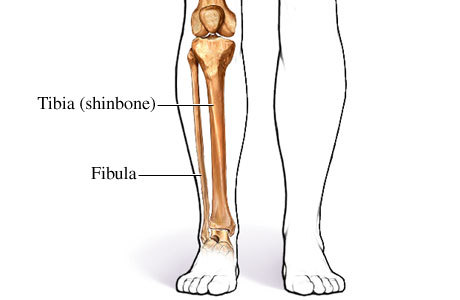
There are two bones in your lower leg. One’s big and buff and one’s pretty wimpy. When you walk, that big tibia takes ~80% of your weight of impact, and the fibula only has to take the remaining 20%.
But skaters place their weight differently over their feet. In principle a hockey player has 100% of their weight shifted forward onto their tibia.
You can actually see the implications of this in practice. If you break your fibula, 20% of the weight-bearing is gone, and you won’t really be able to walk. But a hockey player who cracks their fibula can and will keep skating almost without noticing something’s wrong. This happens pretty damn often when they block shots. You’ll see them skate easily over to get checked out, step up onto the hallway floor, and then suddenly slump over, with medical staff helping them limp off down the hallway.
I hear people saying, “oh, guess he’s fine!” when hockey players get up and appear to be skating okay: nah. And when a player wants to return to the ice: they may genuinely feel better skating but be too injured to walk.
And over time, if you’re in the weight-bearing position for skating more often than walking, and are skating from a young age, yes, that affects the shape of your weight-bearing bones and external appearance of your legs and feet. I don’t have a survey on hockey players’ shapely ankles compared to the normal population in front of me at the moment, but every single skater I see could be identified by their ankles
I thought this was going to be someone condescendingly explaining hockey to me but this is so informative and well written and I trust you with all my bones now.
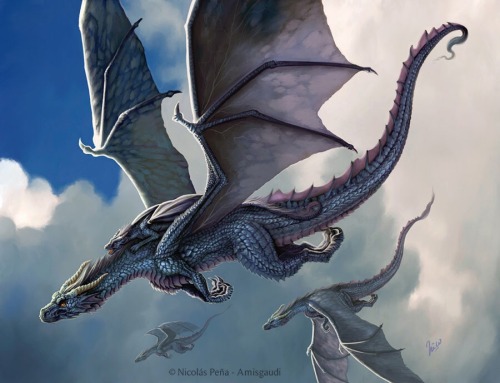
The eyes-in-the-front thing (usually) only applies to mammals. Crocodiles, arguably the inspiration for dragons, have eyes that look to the sides despite being a predator.
hey what up I’m about to be That Asshole
This isn’t a mammalian thing. When people talk about ‘eyes on the front’ or ‘eyes on the side,’ they’re really talking about binocular vision vs monocular vision. Binocular vision is more advantageous for predators because it’s what gives you depth perception; i.e, the distance you need to leap, lunge, or swipe to take out the fast-moving thing in front of you. Any animal that can position its eyes in a way that it has overlapping fields of vision has binocular vision. That includes a lot of predatory reptiles, including komodo dragons, monitor lizards, and chameleons.
(The eyes-in-front = predator / eyes-on-sides = prey thing holds true far more regularly for birds than it does for mammals. Consider owls, hawks, and falcons vs parrots, sparrows, and doves.)
But it’s not like binocular vision is inherently “better” than monocular vision. It’s a trade-off: you get better at leap-strike-kill, but your field of vision is commensurately restricted, meaning you see less stuff. Sometimes, the evolutionary benefit of binocular vision just doesn’t outweigh the benefit of seeing the other guy coming. Very few forms of aquatic life have binocular vision unless they have eye stalks, predator or not, because if you live underwater, the threat could be coming from literally any direction, so you want as wide a field of view as you can get. If you see a predator working monocular vision, it’s a pretty safe assumption that there is something else out there dangerous enough that their survival is aided more by knowing where it is than reliably getting food inside their mouths.
For example, if you are a crocodile, there is a decent chance that a hippo will cruise up your shit and bite you in half. I’d say that makes monocular vision worthwhile.
Which brings us back to OP’s point. Why would dragon evolution favor field of view over depth perception?
A lot of the stories I’ve read painted the biggest threats to dragons (until knights with little shiny sticks came along) as other dragons. Dragons fight each other, dragons have wars. And like fish, a dragon would need to worry about another dragon coming in from any angle. That’s a major point in favor of monocular vision. Moreover, you don’t need depth perception in order to hunt if you can breathe fucking fire. A flamethrower is not a precision weapon. If you can torch everything in front of you, who cares if your prey is 5 feet away or 20? Burn it all and sift among the rubble for meat once everything stops moving.
Really, why would dragons have eyes on the front of their heads? Seems like they’ve got the right idea to me.
this is some good dragon discourse right here, 10/10, and i dont mean to derail the whole thing away from the eyes, but i feel obligated to mention that in many stories and accurate to some reptiles, dragons have an extremely acute sense of smell/taste which would definitely help narrow down the depth perception issue. things smell stronger the closer they are. and i feel like i read somewhere that a blind snake can flick the air with its tongue and track its target mouse with no trouble at all. gotta imagine the “great serpents of the sky” had some pretty advanced biology. enough to make field of view win out against depth perception.
anywho. cool stuff. fear the dragons even if they are the prey cause they still beat us on the food chain.
I love animals that are, like, the opposite of cryptids: we know for a fact they exist and have a clear idea of what they look like because we have photographs and individual specimens, but we haven’t the faintest idea where they’re coming from – they just keep showing up out of nowhere, and the locations of their actual population centres are a complete mystery.
I so want examples. anyone who knows of any should post them in notes
You know, like giant squid and such. We know the bastards exist, we have credible first-hand accounts stretching back thousands of years and dead specimens washed up on shore and such, but in centuries of searching we’ve managed exactly one well-documented encounter with a giant squid in its natural habitat. We have no idea what their native range is or what their life-cycle looks like, let alone how many of them are out there.
Are there any reverse-cryptids that /aren’t/ at the bottom of the ocean?
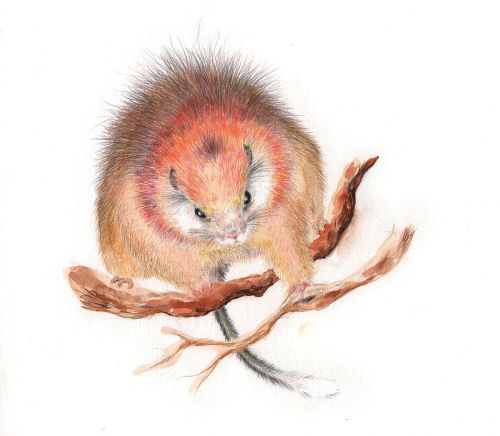
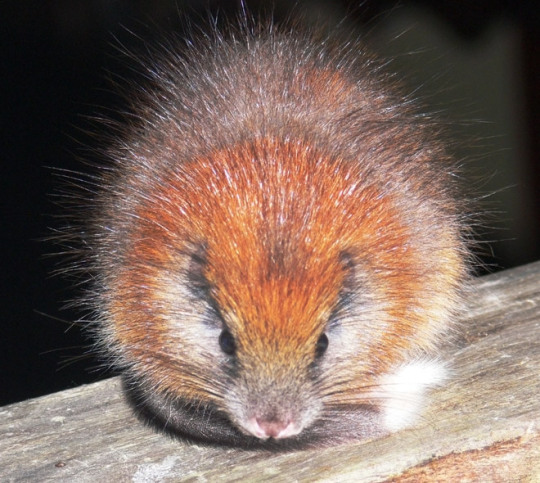
The red-crested tree rat, for one. There have been only three well-documented encounters since 1898, and they just plain disappeared from the zoological record for over a century. The only reason we know they’re not extinct is that one walked right up to a couple of wildlife research interns at a Columbian nature reserve back in 2011, apparently out of pure curiosity, and allowed itself to be photographed and observed for several minutes before disappearing again.
That’s genuinely pretty cool and all, but I absolutely need to talk about how the picture in that Wikipedia article looks like a tiny eldritch horror disguising itself as a peach.
To be fair, based on the actual photos from the 2011 encounter, they really do look like that:
He’d want a bouquet of these, you just *know* it. (I bet he’d also have raised a giant one in the greenhouse he has in the Jedi Temple grounds. It’s one of his proudest achievements).
These are the ones who smell like rotting dead meat, I think xd
2.fun fact this bat isnt being eaten; like, its roosting there for the night. this is Nepenthes hemsleyana, a pitcher plant species in a mutualistic relationship with the local tiny bat friends Kerivoula hardwickii (Hardwicke’s woolly bat)!! it works like this:
– the pitchers are shaped to make a special distinctive reflection of the bat’s echolocation. so like, the bats can hear where the pitchers are and go to them for roosting.
-the bats enter the pitchers and sit on this special rim inside that holds them above the water line so they dont get eaten on accident.
-up to two teeny bat friends can fit in an average pitcher at a time lmao
-the bat friends poop when they sleep and the plant eats the poop when it falls into the digestive fluid
The context behind this image is even fucking funnier imo. Dolphins will bonk this kind of puffer fish because when it puffs up it also release a toxin that’s normally deadly to other fish but just gives dolphins a mild high
So I’m on the TV Tropes page for “Small Taxonomy Pools” and it reads like it was written by the saltiest troop of biologists ever. It’s a fucking gold mine of taxonomical nerd rage. Observe:
(not quite one time I accidentally saw a truly godawful Weather Channel disaster movie thing that used the name of an archaeal taxon but literally everything they said about it was wrong and also they didn’t mention the word archaea so still technically correct)
DID I WRITE THIS ENTIRE TVTROPES PAGE WHILE SLEEPWALKING?!?!?!
I just don’t understand how this happened. But here’s a picture of a lemon from my backyard
WHAT THE EVERLOVING FUCK
when life gives yoǘ̻̬͓͎̣̟̩̦͢ ͪ̂̀̆҉̳̘̝̺̀l͇̬̹̞̻̥͕̥̗̒̎ͩ̋ͥ͆e͙̭̭̠̣̠̊́ͩ̂̓̀ṃ̛̍̂͛̈̏o̠̪̪ͤ͗͘n̵͉̣ͭͧ̿ͧ͛̀s̷̠͑ͬͫͦ̅͡ ̸͐ͤ͘҉̦̺M̰̹͙͇ͮ̉ͫͅȦ̻̔̅̇̑ͭ͛͋͘K̠̻̫̤̇̀ͥE͂ͪ͏̱̤͚͕ ̞͔̜̬̑ͯ͑͢ͅŞ͔̦̩̳̣̖ͮ͊ͨA͈̓͂̈́̀̀̚͘C̡̠̟͉ͪ͆̔ͤ͂ͪR̬͙͕ͪ̀͠Ĩ̵̖͚̑̊̓́F͎͕̄Iͬͧ̀̂̑ͪ͟͏̴̪̤ͅC̢̰̝͓̗͛ͬ̔̍̓́́̚̚Ḙ̶̠̰̳̩̳̊ͭͮ̇̇̚̕S̻͖̣̰̒̈͟
it’s back
Satan lemon
every villain is lemons
And finally, dear listeners, a reminder; several concerned citizens have brought to the city’s attention an irregularity surrounding this summer’s citrus harvest. City council would like to remind all enterprising fruit pickers to exercise reasonable caution when acquiring these fruits. Grasp the fruit firmly around its circumference, pull slowly but steadily to avoid damaging the tree, and under no circumstances heed its demands of you. Do not acknowledge or obey the depraved whisperings of the demon fruit.
And now: The Weather.
This kind of looks like a Buddha’s hand to me
they’re a type of Citron, a citrus closely related to lemons. I wonder if whatever causes that twistedness in Buddha’s hands is present but dormant/recessive in other citruses?
a lot of people having been messaging me about this, and honestly i had no idea that Buddha’s hands existed and it totally seems likely to me??? like honestly that seems like a really plausible explanation, especially because when we look at the demon fruit, the twisty ‘arms’ are going off in all different directions when the only place i can see a twisty arm happening on a lemon is on the top. like if the fruit is developing from the original growth point into a body then why are the offshoots developing the opposite way, from a body into a twisty thing? when in a Buddha’s hand, it totally makes sense because the twisty things are growing outward anyway.
im no pomologist but the similarities in the growth patterns really do reflect in The Demon Fruit.


























 Steel Phoenix Studios