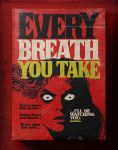
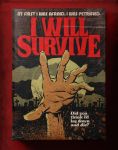
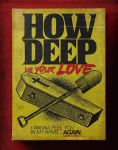
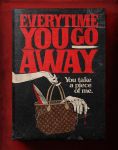
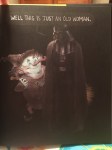
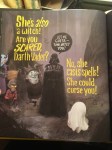
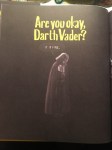
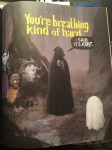
Brazilian graphic designer and illustrator Butcher Billy got the idea of turning famous love hits into book covers of horror master Stephen King.
Joy Division’s “Love Will Tear Us Apart,” The Smiths, “Head Over Heels” by Tears For Fears and many others were portrayed in a very unusual way.
“This series imagines an alternate universe where some of the most desperate and tragic romantic songs in the ‘70s and’ 80s are actually books written by Stephen King. The concept is to look at the dark side of love by the vision of pop culture, bringing aspects of its classic stories to play the true meaning of the songs – this can be completely subverted or stressed strangeness, while paying tribute to the vintage design of the original covers,” Butcher writes on his Behance.
He was white, middle-aged, nothing terribly exciting. But he was very friendly and we talked the entire time about what he does (works for a company that manufactures cable) and what he was doing down here (a conference) and that segued into where we’d visited and where we’d LIKE to visit and I mentioned I wanted to move to Canada, so we talked about that—it was a good 20 minute drive.
And then we got downtown and he was like “damn, where’s this traffic coming from” and I told him it was the football season opener but not to ask me anything else because all I could tell him was football had a pointy ball.
Me: “Ask me about HOCKEY and I can tell you some stuff.”
Him: “I USED TO PLAY HOCKEY!”
So then he said he wasn’t exactly agile enough to do it anymore and I said yeah, that’s why I write about it instead and I’d just written a hockey romance.
Him: “Wait, what, you’re published? Where can I find your books??”
Me: “Well, that depends, are you okay reading gay romance?”
Him: “You mean male/male?”
Me: “Yes.”
Him: “Well… I’m married.”
Me: *braced for him to have some kind of bullshit excuse about it makes him less of a man or his wife doesn’t like it*
Him: “And my husband’s name is David.”
No lie, we looked at each other like:
So then I gave him my card and he promised to look me up on FB after he’d read my stuff and told me I was “the actual best” and he was giving his husband my books and tipped me 50% the end
This whole thing started out with ‘white middle-aged male’, and ngl, I braced myself for the bad, but instead this adorable thing happened, and thank you OP. Good way to start a Monday.
It’s INSANE to me how controversial romance novels are. Romance novels. Like, being openly a fan of them immediately opens you up to people constantly coming at you like “but don’t you think it’s ~limiting- and ~juvenile~ to have a genre of books with happy endings for women?”
Like.
No?
Why is it such a big deal to want to read stories where women have sex and then don’t die at the end? Jesus Christ.
Why is the concept of female characters being happy seen as less creative than female characters suffering? (Trust me, creating a world where women win in the end takes a lot more creativity and artistic vision lmfao)
Anyway, literary bros will pry my romance novels with their happy endings from my cold dead fingers.
Or die in the very beginning of the book. But no one calls out James Patterson for writing another formulaic thriller in which a woman is horrifically killed after getting laid and then some man solves her murder. Every. Damn. Time.
But hey, those romance novels where women get happy endings are so limiting, eh?
Real talk: realizing how common it is for female characters to be punished for on-the-page sex with death was a big part of my embracing the romance genre. Once I noticed it I couldn’t unnotice it. It’s everywhere. A woman having sex in literature or non-romance genre fiction is the literary equivalent of a red shirt on Star Trek.
It’s not just the sex thing, though that’s a key element. It’s that, in romance novels, the heroine gets to be cared for the way she normally would care for everyone else. It’s wish fulfillment in that her romantic partner will do emotional labor, spend a great deal of time thinking about her, or sacrifice his desires or fortune or reputation to be with her, or spend days nursing her back to health, or risking his life to save hers. In romance novels, you’ll find men taking care of children, talking about their feelings, putting effort into their appearance—even if they are adorably bad at it. Watch how many romance novel protagonists fall in love with a man who happens to be rich or handsome, but she didn’t give in until his behavior changed and he starts mentoring her, or providing for her, or being gentle toward her, nourishing her, listening to her, appreciating her… I suspect romance novels are looked down upon not for being juvenile formulaic “beach reads” but because they paint a fantasy world that leaves men feeling uncomfortable or even emasculated. But whether you’re a Midwest housewife or a big city CEO, women who read romance novels just want to read about men loving women the way women are expected love everyone else—with a nurturing and protective form of unswerving loyalty. Great sex they don’t have to die for is also a huge bonus, but the *romance* part of the novel is genuinely more about the woman being appreciated (for her beauty or spunk or intelligence at first, and then for all of her by the end).
I just had to explain what I was cackling at to my roommate. It automatically passes the Laugh Rule.
She found her reluctant fiance, Erstad, brooding out on the rainy moors.
“Is that a baby rabbit?” she asked, observing his huddled form.
“IT’S SIX BABY RABBITS AND YOU CAN’T TOUCH THEM,” replied Ernstad, contriving to look twice his usual size and at least three times his usual fierceness.
“Whoah okay damn,” she said, and backed away.
i’d read the gothic romance novel of ernstad and his baby rabbits like right now
I finished reading Joanna Russ’s How to Suppress Women’s Writing recently, in which she quotes from Ellen Moers’ Literary Women, and it feels delightful to discover so many connections between women writers – Emily Dickinson knew Elizabeth Barrett Browning’s Aurora Leigh by heart and named her as a mentor, Helen Hunt Jackson encouraged Dickinson to publish her poetry, Amy Lowell and Adrienne Rich later referred to Dickinson as their foremother, Elizabeth Barrett Browning was friends with Mary Russell Mitford and both admired and visited George Sand, Willa Cather called Sand’s novels masterly, Elizabeth Barrett Browning and George Eliot were pen pals with Harriet Beecher Stowe, George Eliot wrote to Elizabeth Gaskell to say that ‘Cranford’ was an inspiration to her and she re-read Jane Austen’s novels while writing her own, Austen loved Maria Edgeworth’s novels, Nathalie Sarraute admired Ivy Compton-Burnett as one of England’s greatest novelists, etc. etc.
As Russ points out, when reading literary anthologies put together by men and citing maybe half a dozen lone female writers sprinkled over several centuries amidst a sea of male names, you get the impression that women writers were very isolated figures in their time, that their literary ambition and talent was an anomaly completely unrelated to any appreciation of other women writers and wish to emulate them, and it’s so nice to get a reminder that they actually had female mentors and fangirls and friendships with other women writers and they read and studied and admired one another.
Holy shit. Holy fuck. I got my little sister the book “sex is a funny word” because she’s at that age where she’s reading a lot of puberty books and I’d heard that this one was lgbtq+ friendly, but I was checking it over for accuracy and I gotta say, even with the totally gender neutral language they were using to talk about body parts and the really respectful way they talk about gender and their portrayals of same sex couples I was so fucking sure that I would have to mention that not everyone gets crushes or feels attraction separately. Because these books never talk about that. But here it is. The one thing I was so absolutely sure wouldn’t be included.
I honest to god dropped the book when I saw this I was so shocked. And I’m so fucking happy right now. I can’t exspress how much I wish this was mentioned in the books I read when I was a kid. It would have saved me so much confusion, and I’m so happy that kids today are gonna read this and know that it’s okay and normal to not get curses. I’m so so fucking happy you have no idea.
jane austen was so lit because she wrote about men the way men typically write about women i.e. her stories just centered around women and men were only there for the sake of women, and her books could have been all bitter and sad about the state of women in that century, but instead they’re sweet honest observational stories of friendship, family and love *sighs* what a lady i am sorry i ever doubted you cos I was bored in high school
no seriously her books do not pass the REVERSE bechdel test and it’s perfect
Jane Austen never wrote a single scene without a woman present.







 Steel Phoenix Studios