Well then, let me show you, because that’s what I do for a living.
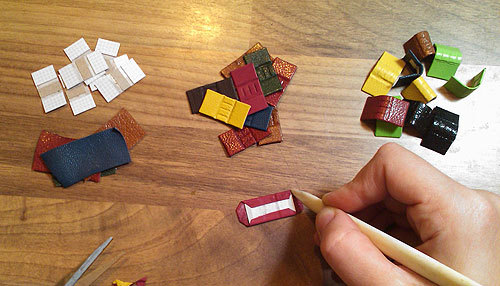
Right now, it’s this time of the year, and the little ones have just freshly hatched:
You’ll notice they’re still blind and naked when they hatch. So I make them little coats to keep them warm during their first winter:
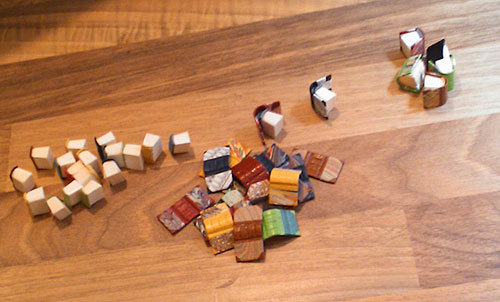
See how they happily line up to put them on:
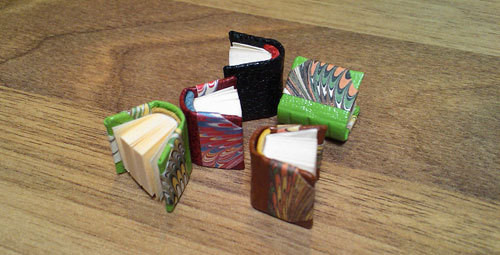
See? Better. Now they’re ready to go and explore the world.
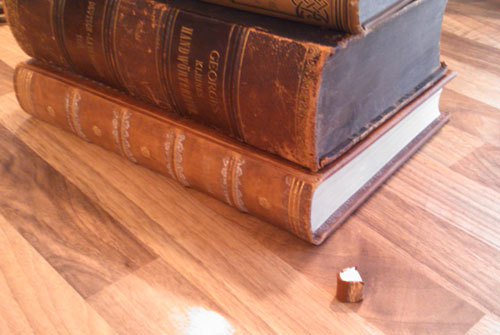
And if they make it through the winter and we take good care of them, they will grow up to be strong and wise like their older fellows:
So, in case you were ever wondering, now you know.
As a Publishing Professional I can say that this is 10000% accurate, and I am a little concerned you’re just giving away all of our industry secrets on Tumblr.
I am a famousy awards-winning author of BOOKS and I endorse this post.
“We regularly ask teenage girls to read books in which characters degrade women, expecting them to understand that the book’s other merits outweigh its misogyny. To set such an expectation and not consider its effect on young women is foolish and hypocritical; we rarely expect young men to do the same, and hardy ever expect young white men to read extensively in traditions where their identities aren’t represented or are degraded. We need to reflect on the way the literature we celebrate supports the idea that women who are sexually frustrated create problems for themselves, while men in the same situation create problems for the world. Though the links are subtle, our celebration of a canon of sad white boy literature affects the way we think, and how much tolerance we offer to men like [Alek] Minassian and [Elliot] Rodger.”
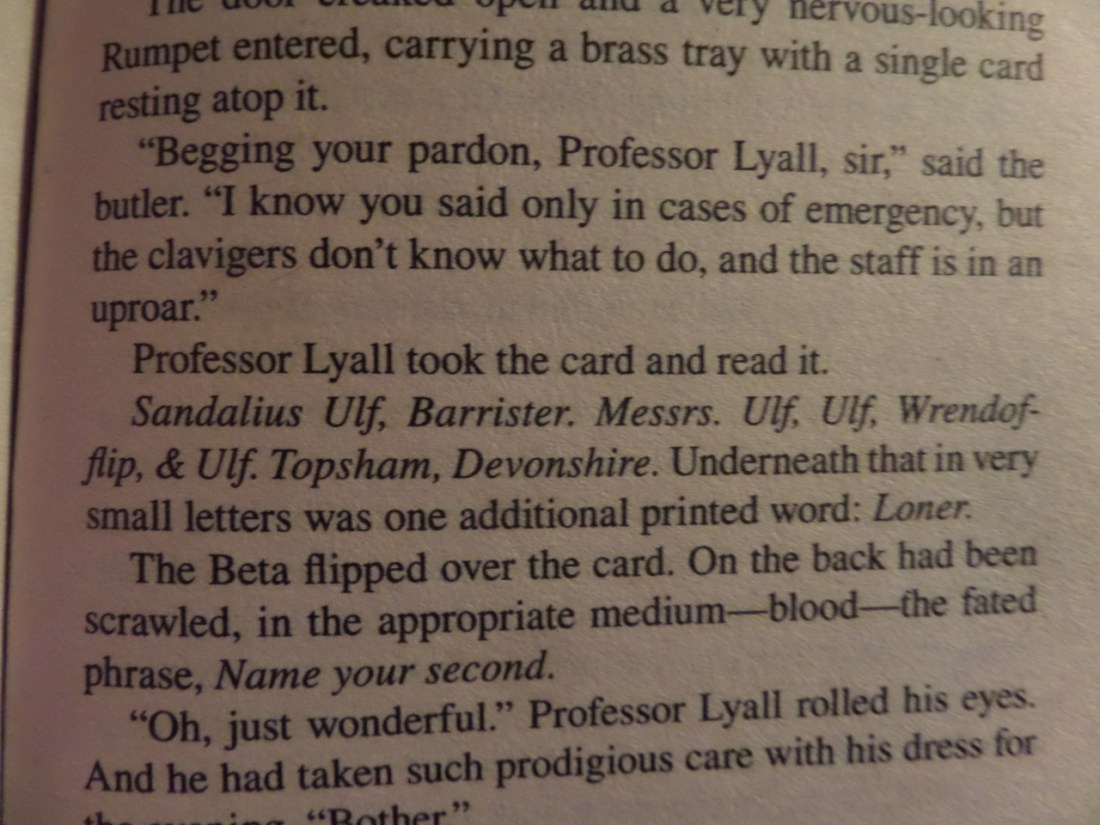
‘Ulf’ derives from the Old Norse word for “wolf” (úlfr). Saldalius is Latin for “true wolf”.
So we’ve literally got Mr. Wolf Wolf from Messrs. Wolf, Wolf, Wrendofflip, and Wolf fighting Randolph Lyall, whose first name derives from the Old Norse “
Rannúlfr” which literally breaks down to shield + wolf, and his last name “Lyall” also means wolf.
So basically the fight in Blameless was Professor Wolf Wolf vs. Mr. Wolf Wolf and Professor Wolf Wolf only won because his Alpha, Lord Wolf Wolf of Woolsey (Conall meaning strong wolf and Maccon meaning son of a wolf), came to fuck Mr. Wolf Wolf’s shit up in a drunken backyard brawl.
Gail Carriger, everybody.
This is just a blatant attempt to outdo JK Rowling
It gets better. Pretty much all the other werewolf characters in that series have Wolf Wolf names, too.
Major Wolf Wolf of the Chesterfield Wolves (Channing means Wolf)
Noble Wolf Bluebutton (Adelphus is a variant Old German ‘Adalwolf’)
Hemming: derived from hamr “shape”, and possibly originally a nickname for a person believed to be a shape changer.
Hopefully I snared you with that tantalizing header. Because hip-hip- HOO– I FINISHED MY FIRST FULL BOOK MANUSCRIPT! – RAY!!!
At 75,000 ish goddamn fucking words, “A Boy Named Joy” is a fantasy fiction story set in the modern day about a young black boy named Dontae that dies under mysterious circumstances, though he doesn’t stay dead for long. He does what no living being has ever done before: He convinces Death Themself to try their boney hand at being alive. What follows is what usually happens when a deity becomes mortal: they absolutely fuck it up. (Not to mention they’re now seemingly permantly attached to the hip of this poor back-from-the-dead kid like a particularly lethal puppy, and that brings trouble for them both – of the supernatural and the all-to-natural kind). What will happen! Will Death get a life? Will Dontae discover who killed him and stop them before they can kill again? Will he ever get to go home? (Is Death *flirting* with him? You may look like a 16 year old, but you’re an ageless force of nature you don’t flirt with people. You *happen* to people!)
*jazz hands* And that’s my pitch. Er, sorta. Maybe minus some of the cussing, but anyway. *claps* Would you like to help me get it noticed? Here’s how:
Tomorrow (July 18th) I’m participating in something called PIT2PUB. This is a Twitter hashtag party that happens yearly, where pathetic authorly hopefuls such as myself makes a pitch of their completed manuscript into a tweet, posts it with the tag #Pit2Pub and then any agents/publishers that take an interest will favorite it, which is code for “we wanna see more of this epic badassery”.
But I have a problem. Well, lots really, but this problem specifically has to do with the fact that I am one dang teensy small-fry over on Twitter. With only 18 followers to my pseudonym, I’ll be luck to have anyone see my fantabulous pitches.
That’s where you come in. Tomorrow, from 8am to 8pm, retweet my pitch (it’ll be easily discernable, and remember: don’t favorite it unless you’re a big time agent that wants to help MONEY), get more eyes to see it. I’d say get it trending, but I’m not nearly popular enough for that sort of power play. But a single retweet could be the difference between nothing and getting offers of representation that could lead to a book. A real life, published book! My dream! It would be an insult to everyone with a dream if I got this close and gave up.
So, help a nonbinary gal pal out? I’m even gonna include my official authorly Twitter on this post, which is something I’ve been totally terrified of doing. But that just shows how serious about this I am, dudes! I’m proud of this book. I’m proud that I got this far, and I want to keep going. But I need your help, and luck. Lots and lots and lots and lots of fucking luck.
Please, please, please, I cannot tell you guys how good a writer Pops is enough times, not even remotely closely, but she is and you should check out her stuff and you should help her get her book from off the ground, so please, if you see this, go and help her out by re-tweeting her book proposal!
As a library worker, there’s something I want to say to you.
You do not have to apologize for the books you choose to read.
At all. To anyone. You owe nobody any explanations; you need no excuse or “good reason” to be reading the book.
You do not have to be ashamed for wanting to read “bad” books. You wanna read Twilight? We got Twilight. Need a banal, cookie-cutter-plot mystery or thriller?Those are always fun. Our regulars check them out by the towering stack. Ask Betty for recommendations; she’s read them all. 50 Shades of Oh Fucking No? We’ve got it, we even got it in large print. Have fun. Check out the rest of our porn too. Oh, and the sex manuals are a MUST if you want to “experiment” yourself. Don’t be afraid to ask; they’re here for a reason.
Want to read a book written by a huge asshole everyone hates and agree was a monster? Yeah, we have those. No, we don’t think you’re an asshole for wanting to know what was actually written in there, or judging things for yourself.
You are not too old for Diary of a Wimpy Kid, The Babysitter’s Club, or Captain Underpants. You are not too young for Sherlock Holmes. There’s nothing wrong with a boy reading The Princess Academy or Sweet Valley High. There’s nothing wrong with a girl being into The Hardy Boys or Artemis Fowl instead.
You do not have to pull the shame face and offer me an excuse when you check out your books. I don’t care if I got so angry at that book I threw it against a wall when I read it: you have the right to read it, and enjoy it if it’s enjoyable for you. THAT’S WHY THE LIBRARY HAS IT IN THE FIRST PLACE. If we only stocked pure, unproblematic literature everyone approved of, by authors of unquestionable virtue, we wouldn’t have any books at all. Or music. Or movies. It would be utterly fucking boring. And it certainly wouldn’t be a library.
so I work at a library now and during training we were shown each section and how they’re organized bluh bluh normal stuff, until we got to the 680s and my boss sighed at this shelf nearly busting from the weight of a shit ton of yarn books. now you may be wondering “how much is a shit ton of yarn books exactly max???” well let’s just say it’s about 2 shelves worth crammed onto one.
so when we got to this area my supervisor looked at us new pages and said in the most serious voice, “if anyone EVER gives you book donations never EVER accept donations of yarn books. EVER.” and we all laughed but deep down in the pit of my stomach I knew that was not a joke.
fast forward to a month later (today) and my shift starts pretty normally, I’m casually chatting with my co worker about video games and sorting books in the workroom when this couple walk into our workroom with big boxes saying they wanted to donate some books. so my coworker nods and says something about just leaving them there and he’ll grab our manager. so they put down these boxes and leave. so my manager comes along exclaiming how nice it is to get such a big donation and so she walks to the boxes, opens them, and starts shouting “JAMES GET IN HERE RIGHT NOW JAMES IT HAPPENED AGAIN” and so now I’m interested and I walk over and it just looks like boxes filled to the brim with books until I see the books all had library stickers on them and all have the numbers 680. so james comes running over and sees them and drops to his knees and starts shaking his head.
so then we got the details. apparently all libraries in my city all have too many yarn books and since you can technically check out a book and return it to any library and they’ll just shelve it there, all libraries just try and get rid of the books by tricking other libraries into taking them in. ways of this happening is staff from one library checking out the maximum amount they can of yarn books and dropping books around another library, or just viciously shoving these books through our returns, and now this, and apparently it’s a full out war with war maps and planning sheets written inside these yarn books. so please for the love of god never donate yarn books to your local library
Ahhhhh I also work at a library and this applies to all craft books. The 700-760 section is ridiculous. Plus they tend to be weird shapes/sizes which makes the mess worse
did you guys know that the robot genre of science fiction sprung up as a critique of the way in which industrialization reduced workers to taking up monotonous, unskilled factory jobs in order to earn profit, jobs which in turn alienated them from their own humanity? did you know that the theory of the alienation of the self under capitalistic mode of production is a core principle of marxism? did you know that robot itself comes from a czech playwright who, for a science fiction play, coined the word as a derivative of the czech term robota, meaning forced labor? did you know that the robot genre is rooted in anti-capitalist sentiment?
The earliest known book-length biography of an African woman, a 17th-century text detailing the life of the Ethiopian saint Walatta Petros, has been translated into English for the first time.
Walatta Petros was an Ethiopian religious leader who lived from 1592 to 1642. A noblewoman, she left her husband to lead the struggle against the Jesuits’ mission to convert Ethiopian Christians to Roman Catholicism. It was for this that the Ethiopian Orthodox Täwaḥədo Church elevated her to sainthood.
Walatta Petros’s story was written by her disciples in the Gəˁəz language in 1672, after her death. Translator and editor Wendy Laura Belcher, an associate professor at Princeton University, came across the biography while she was studying Samuel Johnson’s translation, A Voyage to Abyssinia. “I saw that Johnson was fascinated by the powerful noble Ethiopian women in the text,” said Belcher. “I was speaking with an Ethiopian priest about this admiration and he told me that the women were admired in Ethiopia as well, where some of them had become saints in the Ethiopian church and had had hagiographies written about them.”
Ten years later, Belcher still remembers how “thrilling” this revelation was. “What? Biographies of powerful African women written by Africans in an African language? And to be able to pair European and African texts about the same encounter? I knew then I wouldn’t rest until I had translated this priceless work into English.”
Belcher learned Gəˁəz in order to translate Walatta Petros’s biography, working first with the Ethiopian priest, and then with the translator Michael Kleiner. “As a biography, it is full of human interest, being an extraordinary account of early modern African women’s lives — full of vivid dialogue, heartbreak, and triumph. For many, it will be the first time they can learn about a pre-colonial African woman on her own terms,” she said.
The biography has now been published in English by Princeton University Press as The Life and Struggles of Our Mother Walatta Petros. It has only been translated into two other languages before: Amharic and Italian, the latter in the 1970s.
While researching the text, Belcher discovered that the biography contained the earliest known depiction of same-sex desire among women in sub-Saharan Africa, an element she said was “censored” from the manuscript that the 1970s Italian edition was based on.
Belcher writes in the book’s preface that while she and Kleiner were translating the story from the Italian edition, they came across a “perplexing anecdote about a number of community members dying because some nuns had pushed each other around”. Kleiner suspected the manuscript had “been miscopied, perhaps deliberately, in order to censor the original, or merely by accident”, and speculated that “the nuns were not fighting but flirting with each other”.
After consulting with several Ethiopian scholars and looking at digitised copies of the original manuscripts, Kleiner and Belcher found the uncensored manuscript concurred. They translated the line as Petros seeing “some young nuns pressing against each other and being lustful with each other, each with a female companion.”
“This is the earliest anecdote we know of in which African women express desire for other women,” writes Belcher.
The academic also pointed to Walatta Petros’s relationship with her fellow nun Eheta Kristos, describing their first encounter with each other as “rapturous”. The text says that “love was infused into both their hearts, love for one another, and… they were like people who had known each other” their whole lives. Walatta Petros and Kristos “lived together in mutual love, like soul and body. From that day onward the two did not separate, neither in times of tribulation and persecution, nor in those of tranquillity, but only in death”.
“There is no doubt that the two women were involved in a lifelong partnership of deep, romantic friendship,” Belcher writes.
Identifying them as lesbians would be “anachronistic” partly because Walatta Petros was “deeply committed to celibacy”, she told the Guardian.
“Many Ethiopians are quite upset about my comments about the saint, my interpretations of her relationship with Eheta Kristos,” she said. “Part of this upset is due to not understanding my point. I think she was a sincere, celibate nun, but that she also felt desire for other women and that she was in a life-long celibate partnership with Eheta Kristos.”
I just kept smiling wider and wider the more I read.





 Steel Phoenix Studios