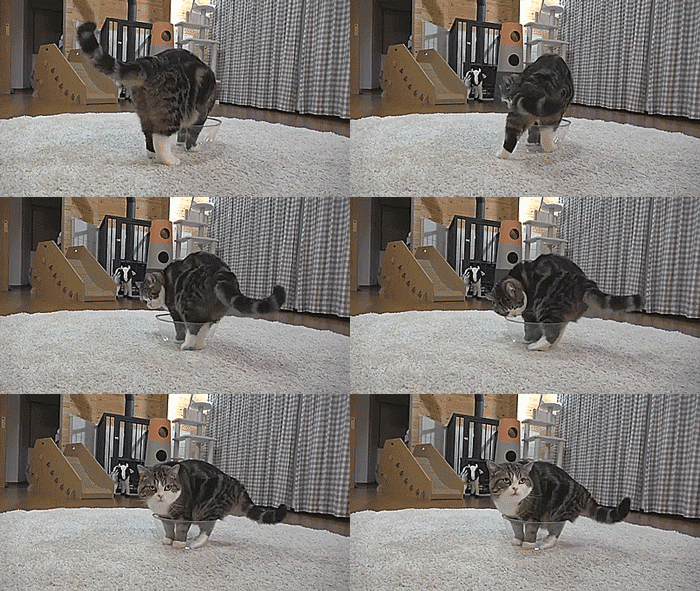
For anyone not so familiar with cat behavior, this cat is out of its mind excited to do this. It’s much more rare for cars to wag their tails but it means the same as it does when a dog does it. This cat is curious and proud and playing. It keeps looking at its owner too, like “LOOK AT ME, DAD” and it’s so rare to get videos of cats this happy. This is fucking rad
Nope.. wagging tails means anger or irritation in cat body language.
hey y’all, hope you don’t mind me stepping in!
you’re both right 🙂 a wagging tail means the cat is highly stimulated (think coiled spring, ready to go off). depending on the situation, this can be interpreted differently – just like people can smile nervously at job interviews vs. happily grin at friends.
in most cases, it’s safe to interpret overstimulation as ‘you’re doing something to amp up the cat & it wants you to stop’ (ex. unwanted petting). it should be seen as a warning; all that pent-up energy COULD be released as a swat or bite.
BUT in this case, that tail-wagging ‘frustration’ is the stimulation that comes from problem-solving (where can I jump? is it safe to go here?) and the excitement of play. it’s good to be wary of ‘cute’ animals vids, but this seems like an unproblematic video!
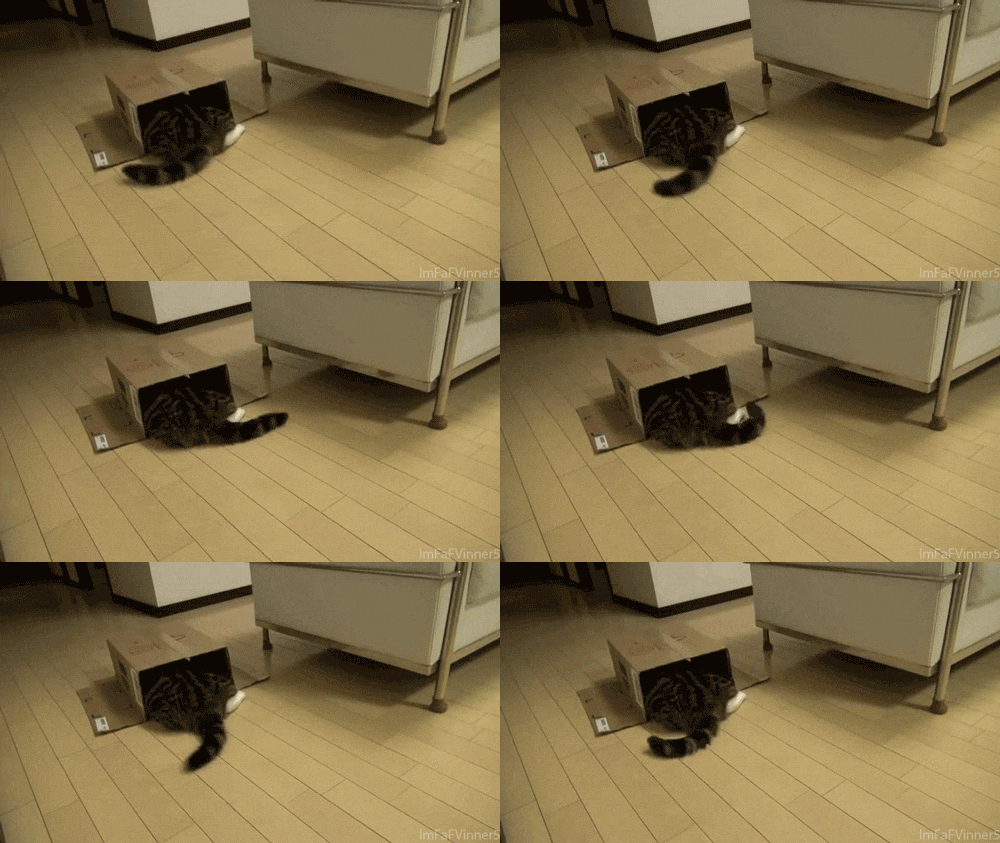
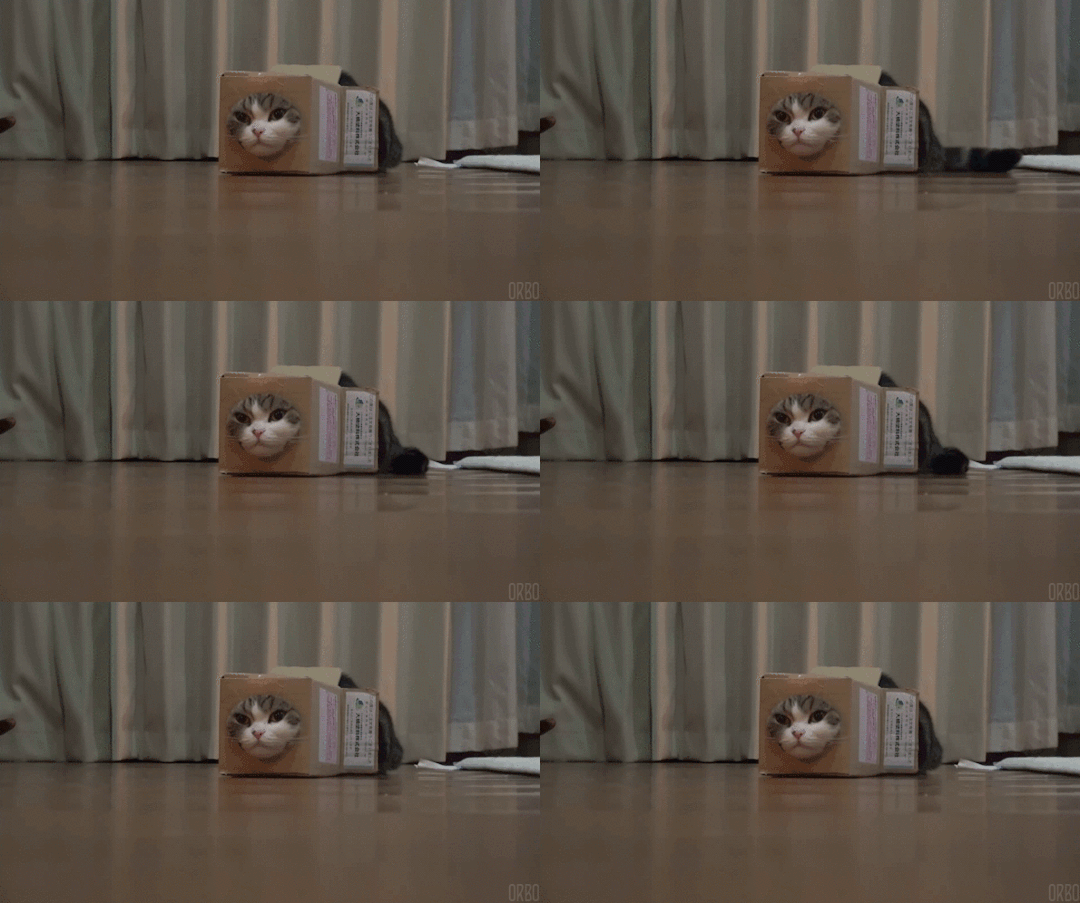
I’d like to add to this–just look at world-famous box-loving cat, Maru, who wags his tail every time he stuffs his body into a box or other small object. He’s clearly not about to attack the person behind the camera! It’s definitely based on stimulation, but more to the point of “ahhh FINALLY I’ve gotten into the small space, now how do I get the rest of me inside”:
@pangur-and-grim is spot on with their commentary here! A wagging tail (on a dog or a cat) is a sign of stimulation, also referred to professionally as arousal. That can be either positive or negative in experience. It’s like an accelerometer on a car – tail movement tells you the car is revving, but not how fast it is going or where.
Sometimes you can tell from tail movement and tension if the internal state of the animal is tense or excited. Low-stress engagement (calm interest, excitement, getting happy pets) tends to get a tail that wags more slowly, in softer arcs, whereas high-stress engagement (over-stimulation, prey drive) will get a stiffer tail wagging in more tight movements. These look like lower-stress tail movements to me and likely correlate with interest and engagement rather than anything unpleasant.
Do you ever wonder if the reason that different cultures have such wildly different onomatopoeias for the noise a cat makes is that cats have regional accents?
Actually, they do.
There’s a lot of evidence that animals have regional accents. Both birds and sperm whales in fact to vocalise differently depending on where they grew up.
As for felines themselves, there’s an ongoing study underway on at Lund University precisely about this.
As a phonologist who has watched entirely too many cat videos on the internet, I can confirm that cats of differing countries do have differentiated accents in their cries. Felines in England tend to have shorter, lower “mow” whereas Japanese cats do tend to make glides into high vowels, and are sustained longer, such as the ubiqutous use of “nyaaaan” in Japanese onomatopoeia.
As a linguist, I can affirm that the sounds produced for communication are determined every bit as much by anatomical features as they are by communicative experience.
Has anyone ever taken a look at cats’ body sizes and shapes, especially in the face and throat? Especially the width of the throat, the length of the nose, depth of the chest, and size of the jaws and mouth.
Look at all these face, chest, and throat shapes. That alone would indicate differences in their sounds.
What I really want to see is comparing maine coons bred in different countries and raised by litters from different regions being compared, or cats with the same size/shape (to cover anatomical inconsistencies) being compared, even across a continent.
But the tricky thing is, even cats from the same place have different voices and preferred “syllables” they’ll sustain, or how rapidly they call, or for how long.
Does anyone know who that study (re: cat accents) is being conducted by? I can’t find any mentions of that one, specifically… (All the Google results I’m getting are about what certain cat noises mean, or the big debate on ‘do cats have a special language for humans/dogs/other cats’, ‘what noises do cats make we can’t hear’, etc… I can’t find a study or article on the accent thing.)
The demise of Vine is drawing closer. I couldn’t stand the thought of all those cat videos out there being lost to the abyss, so I gathered a few (i.e. nearly 50) of my favourites.
I hope you enjoy this compilation of cats and kittens being funny, silly, or just plain adorable.
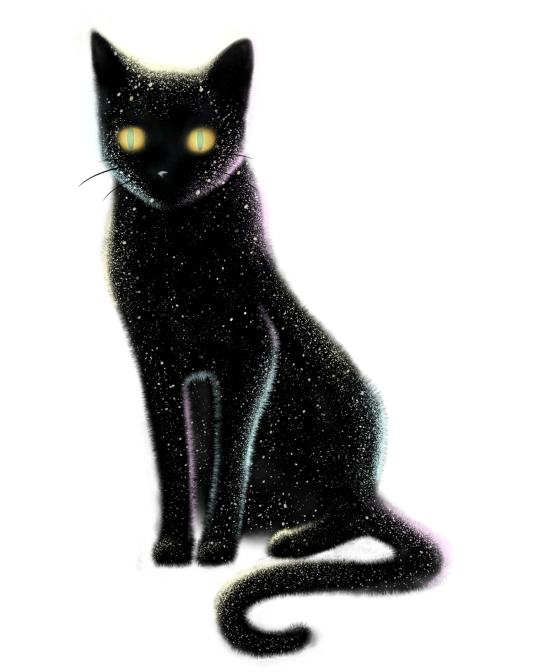
THIS IS WHAT FUCKING HAPPENS WHEN YOU FORGET TO RINSE THE TUB OUT AFTER USING A LUSH INTERGALATIC BATHBOMB!
He’s fine. He got a bath.
Lush glitter is made of seaweed.
I hope you don’t mind but I drew your cat
Best cat drawing ever!!
You both have gifted the world with a thing of beauty. Drawings even better knowing it’s a real thing that happened and it was inspired by online connections. ❤ All of this.



 Steel Phoenix Studios