“A long-term study of children
raised by lesbians found that these children were less likely
to suffer from physical and sexual abuse than were their peers
who were raised by heterosexuals. This is thought to be due to
the absence of adult heterosexual men in the households (Gartrell,
Bos, & Goldberg, 2010). Girls raised by
lesbians tend to have higher self-esteem, show more maturity
and tolerance than their peers, and are older when they have
their first heterosexual contact (Gartrell et al., 2005, 2010). Children
raised by same-sex parents seem to be less constrained by
traditional gender roles; boys are less aggressive, and girls are
more inclined to consider nontraditional careers, such as doctor,
lawyer, or engineer (Gartrell et al., 2005; Stacey & Biblarz,
2001). Over the course of more than 20 years, scientists studied
the psychological adjustment of 78 teenagers who were raised by lesbian mothers. Compared to age-matched counterparts raised
by heterosexual parents, these adolescents were rated higher
in social, academic, and total competence, and lower in social
problems, rule-breaking, aggression, and externalizing problem
behavior (Gartrell & Bos, 2010).
There are fewer studies of children raised by two men, but gay
fathers are more likely than straight fathers to put their children
before their career, to make big changes in their lives to accommodate
a child, and to strengthen bonds with their extended families
after becoming fathers (Bergman, Rubio, Green, & Padrone,
2010).” ~ Martha Rosenthal, Human Sexuality: From Cells to Society, p.247.
“having gay parents will harm children”
I love that this is cited and sourced ahhhh. Actual researched support! So good.
Mr. Rogers had an intentional manner of speaking to children, which his writers called “Freddish”. There were nine steps for translating into Freddish:
“State the idea you wish to express as clearly as possible, and in terms preschoolers can understand.” Example: It is dangerous to play in the street.
“Rephrase in a positive manner,” as in It is good to play where it is safe.
“Rephrase the idea, bearing in mind that preschoolers cannot yet make subtle distinctions and need to be redirected to authorities they trust.” As in, “Ask your parents where it is safe to play.”
“Rephrase your idea to eliminate all elements that could be considered prescriptive, directive, or instructive.” In the example, that’d mean getting rid of “ask”: Your parents will tell you where it is safe to play.
“Rephrase any element that suggests certainty.” That’d be “will”: Your parents can tell you where it is safe to play.
“Rephrase your idea to eliminate any element that may not apply to all children.” Not all children know their parents, so: Your favorite grown-ups can tell you where it is safe to play.
“Add a simple motivational idea that gives preschoolers a reason to follow your advice.” Perhaps: Your favorite grown-ups can tell you where it is safe to play. It is good to listen to them.
“Rephrase your new statement, repeating the first step.” “Good” represents a value judgment, so: Your favorite grown-ups can tell you where it is safe to play. It is important to try to listen to them.
“Rephrase your idea a final time, relating it to some phase of development a preschooler can understand.” Maybe: Your favorite grown-ups can tell you where it is safe to play. It is important to try to listen to them, and listening is an important part of growing.
Rogers brought this level of care and attention not just to granular
details and phrasings, but the bigger messages his show would send.
Hedda Sharapan, one of the staff members at Fred Rogers’s production
company, Family Communications, Inc., recalls Rogers once halted taping
of a show when a cast member told the puppet Henrietta Pussycat not to
cry; he interrupted shooting to make it clear that his show would never
suggest to children that they not cry.
In working on the show,
Rogers interacted extensively with academic researchers. Daniel R.
Anderson, a psychologist formerly at the University of Massachusetts who
worked as an advisor for the show, remembered a speaking trip to
Germany at which some members of an academic audience raised questions
about Rogers’s direct approach on television. They were concerned that
it could lead to false expectations from children of personal support
from a televised figure. Anderson was impressed with the depth of
Rogers’s reaction, and with the fact that he went back to production
carefully screening scripts for any hint of language that could confuse
children in that way.
In fact, Freddish and Rogers’s philosophy of
child development is actually derived from some of the leading
20th-century scholars of the subject. In the 1950s, Rogers, already well
known for a previous children’s TV program, was pursuing a graduate
degree at The Pittsburgh Theological Seminary when a teacher there
recommended he also study under the child-development expert Margaret
McFarland at the University of Pittsburgh. There he was exposed to the
theories of legendary faculty, including McFarland, Benjamin Spock, Erik
Erikson, and T. Berry Brazelton. Rogers learned the highest standards
in this emerging academic field, and he applied them to his program for
almost half a century.
This is one of the reasons Rogers was so
particular about the writing on his show. “I spent hours talking with
Fred and taking notes,” says Greenwald, “then hours talking with
Margaret McFarland before I went off and wrote the scripts. Then Fred
made them better.” As simple as Mister Rogers’ Neighborhood looked and sounded, every detail in it was the product of a tremendously careful, academically-informed process.
When you look around the world and throughout human history, the Western style of parenting is WEIRD. We are outliers. In
many instances, what we think is “necessary” or “critical” for
childhood is actually not present in any other cultures around the world
or throughout time.
Perhaps
most striking is how Western society segregates children from adults.
We have created two worlds: the kid world and the adult world. And we go
through great pains to keep them apart. […] But in many indigenous cultures,
children are immersed in the adult world early on, and they acquire
great skills from the experience. They learn to socialize, to do
household chores, cook food and master a family’s business, Lancy
writes.
Of course, just because a practice is ancient, “natural” or universal
doesn’t mean it’s necessarily better, especially given that Western kids
eventually have to live — and hopefully succeed — in a WEIRD society.
But widening the parenting lens, even just a smidgen, has a practical
purpose: It gives parents options.
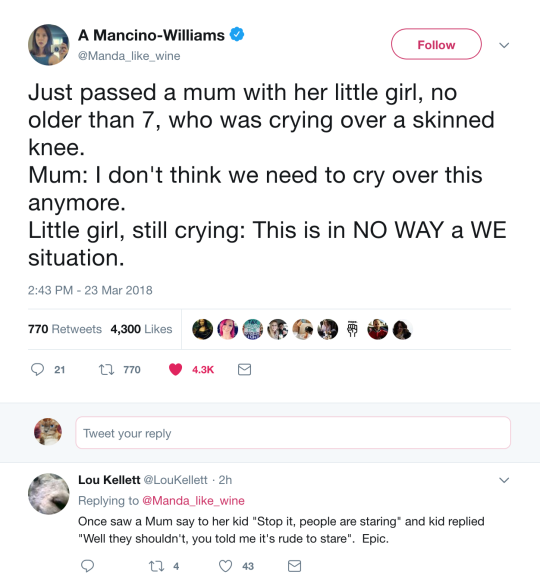
One of the things I notice about having spent so much time out of the country is that a lot of the parenting discourse here just… makes no sense to me. Of course you should breastfeed whenever and wherever you damn well please? Of course whatever adult is around should take care of the kid who scraped her knee? Of course you shouldn’t expect mothers to stay home and take care of babies by themselves? Of course you should expect kids to run around in packs and play in the dirt more-or-less unsupervised? And yes, it’s more complicated in the US where you don’t usually have networks of friends and family living in close proximity, but maybe we should think about how we could make that happen more often? Or get to know some neighbors? And actually it is safer for kids here than it used to be, and safer than in a whole lot of other places, and while no, we shouldn’t be reckless or fatalistic about it, sometimes shit happens. There’s no way to 100% protect a kid from the whole world, and that shouldn’t even be the goal.
Anyway, one reason i don’t want kids is that I’ve internalized too many “poor country” parenting philosophies so while I wouldn’t let my 2-year-old play with machetes, I would totally get sent to jail for letting a 6-year-old walk to the store by herself because why on earth would that be a problem?
so im at work and bagging for this lady and her little kid and the kids askin me about what its like being a big kid and all that so he goes “do you have a girlfriend? is she pretty?” and i live in a pretty liberal area and it was pretty quiet in the store so i just calmly responded “actually i have a boyfriend, but he’s fairly pretty” and the mom just kinda pauses on her phone and looks down at her son like please dont say anything bad please dont embarrass me but he just gets so fuckin excited and is like “you can do that ???? i didnt know boys were allowed to have boyfriends!!” and hes turns to his mom and is pulling at her phone trying to get her attention and is just really excited like “mom did you know that ? can i have a boyfriend instead of a girlfriend ??” and she just started laughing and was like “if you want sure” and they took their groceries and left and im just standing there like
DID THAT JUST HAPPEN
THAT WAS SO CUTE
The purest post.
OMG
That is so cute and that mother!!!!! Good job mom.
my favorite student is this little excitable turkish kid who waves me over at lunch every day to holler a joke at me & then urges me to get the other teachers to come listen to his jokes. my favorite so far is Q: what do you call somebody who doesnt want you to go to the bathroom? A: a teacher (the other teachers did not find it as hilarious as i did)
this child, hollering at me in the middle of class: YOU NEED PUN.
me: yeah i do whats ur pun
this child: what was the real name of the titanic? …the fathership. ……….because fathers are Big.
me, at recess: hey u got any jokes today
this child, stumbling off a log & dramatically yeeting his paper hat full force for no apparent reason: i have,,,,, ONE. [dramatic pause] i really have to KETCHUP on fortnite
todays the last day i have this kids class & he was like “u need a GOOD final joke” & i want yall to know his final joke to me was: why are frogs so happy? because they eat what bugs them. he then proceeded to hug me for a solid minute while a bunch of other kids came & took turns hugging me,
i hate the trope of kids giving their favorite stuffed animal to a younger child as a sign of compassion and coming of age, as if this is something that should be expected of kids as they grow up
im 22 and i dont care who you are you’ll have to pry my ikea shark out of my cold dead hands
I can’t remember the name of the study, but there was a theory, supported by pretty good evidence, that if you have your comforter, be it blanket, plush, pacifier, whatever, taken away when you’re not ready to give it up, even if you’re a dinky little kid, it can have really long lasting effects. People who kept their comforters into adulthood were less likely to smoke, drink or do drugs, tended to have better family relations and home lives etc, while those that saw their comforter removed or destroyed were more likely to be drawn to more serious “comforts” elsewhere. The more extreme the removal, the more extreme the result. Typically.
We learn at our own pace to make and break connections and emotional ties, and the situation is forced upon us, we seek comfort. But whoa wait, you can’t possibly have comfort anymore, you’re five. You’re a big kid now.
So when parents are forcing you to “grow up” by tearing the only comfort in the world from you, they could actually be messing you up big time.
In psychology they’re called “transitional objects” and they help the neurobiological process of helping children learn to internalize the experience of being loved and cared for, which is an essential part of learning to regulate your emotions. They are REALLY important.
I wonder what it means psychologically that I’ve started getting a few more for myself?
Well, there’s a process we call “re-parenting yourself” where you give yourself the love you missed out on in childhood, and thereby start to heal the pain you’ve carried since then. And using childhood comfort objects can be part of that.
Oh..
Oh my god…
In the year of the lord 2018 our grown asses start healing.
This makes me feel less bad for being an adult that still sleeps with a teddy bear. My parents tease me about it but they never took any comfort items away from me.
Ok I saw a rb of this with some context and I only remember like half of it so I’m also using Google I may get some of this wrong
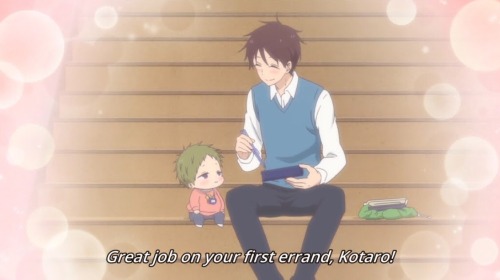
But apparently the “first errand” thing isn’t just a cute little fact about the little kid, it’s a totally real thing done in Japan to teach kids that they can like rely on the community to offer assistance if they need it. They send their kids (like 2-3 years old) out alone to perform a relatively simple errand like going to a convenience store and buying a carton of milk. (There’s even a tv show where a camera crew follows children as they accomplish this first errand.) It’s not uncommon to see kids as young as 6-7 riding the subway alone because they’ve gained this sense of independence that comes from knowing that there will be people to help out if they need it.



 Steel Phoenix Studios