Your players are faced with an ancient Sumerian curse! However, since the early ancient Sumerian language was only used for recording tax debts, it turns out to actually be an ancient Sumerian bill.
and therefore they need to get hold of some ancient Sumerian coinage and bring it to the ruins of the ancient Sumerian tax office, because the Sumerians had a pleasingly direct way of preventing tax evasion, namely horrifying curses.
well I don’t have any coin but I have these copper ingots, lovely copper ingots, from a very reputable merchant, never heard a word said against him, very thorough with his paperwork, anyway they’re guaranteed pure copper and proper weight, so can I pay my tax with those?
I just want everyone to take a step back for a second and really think about how we’re using the most powerful knowledge tool in history to make jokes about a specific dude who lived almost 4000 years ago.
Imagine how pissed you have to be to engrave a rock
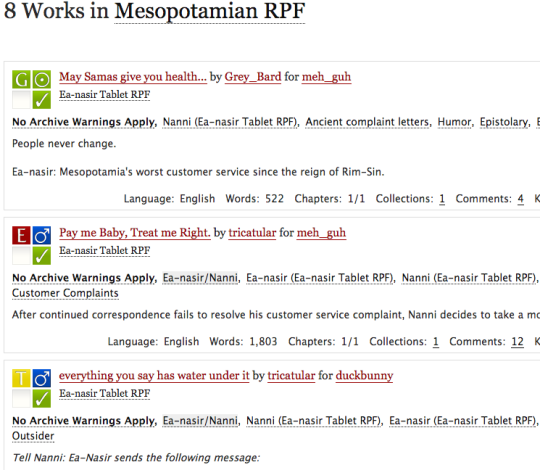
Ok but there was this guy called Ea-nasir who was a total crook and would actually cheat people ought of good copper and sell them shit instead. The amount of correspondences complaining to and about this guy are HILARIOUS.
Are you telling me we know about a specific guy who lived 5000 years ago, by name, because he was a huge asshole
More like 4000 years ago but yes. Ea-nasir and his dodgy business deals.
And we haven’t even touched on the true hilarity of the situation yet. Consider two additional facts:
He wasn’t just into copper trading. There are letters complaining about Ea-nasir’s business practices with respect to everything from kitchenwares to real estate speculation to second-hand clothing. The guy was everywhere.
The majority of the surviving correspondences regarding Ea-nasir were recovered from one particular room in a building that is believed to have been Ea-nasir’s own house.
Like, these are clay tablets. They’re bulky, fragile, and difficult to store. They typically weren’t kept long-term unless they contained financial records or other vital information (which is why we have huge reams of financial data about ancient Babylon in spite of how little we know about the actual culture: most of the surviving tablets are commercial inventories, bills of sale, etc.).
But this guy, this Ea-nasir, he kept all of his angry letters – hundreds of them – and meticulously filed and preserved them in a dedicated room in his house. What kind of guy does that?
Okay, but imagine from the other guy’s point of view. You send angry letters about how Ea-nasir shipped you half a ton of subpar copper, and then 3800 years later—

 Steel Phoenix Studios