A message to teachers who refuse to pronounce the names of their students of color correctly.
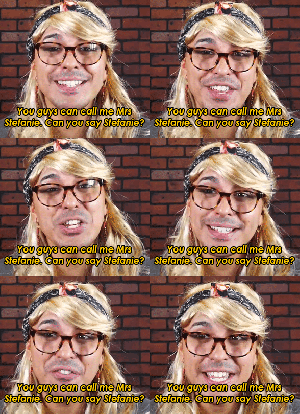
In a new video, Adam Levine-Peres, an educator in the Bronx, talks about the importance of teachers, especially white teachers, learning how to pronounce the names of Black and Brown students properly. He says pronouncing the students’ names correctly “will go along way in the classroom”, otherwise there might be lack of trust, students might end up giving up on things like their teacher gave up on saying their name the right way.
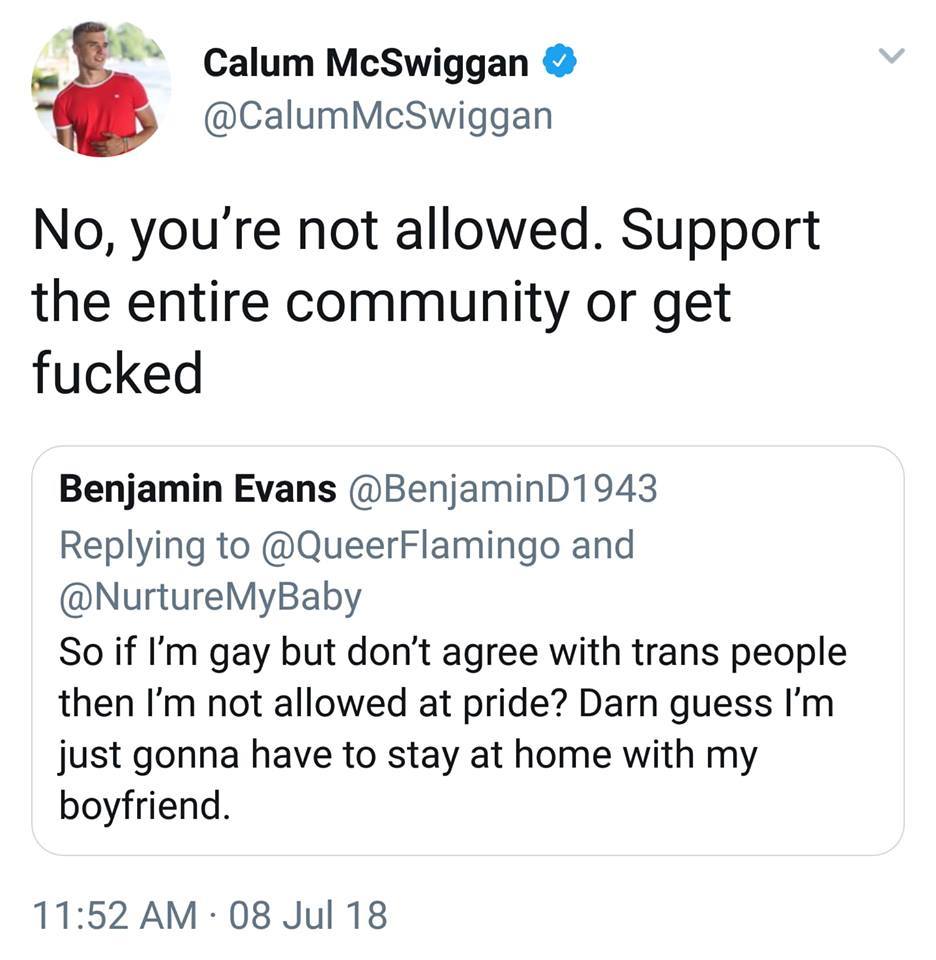
You are not the Queer Pope. You don’t get to decide who is and isn’t queer.
Also, get off my blog.
Not only is anon not Queer Pope, they’re also factually incorrect. For others champing at the bit to be the next grayface too chickenshit to be wrong with their URL attached:
Google “the spinster movement”. 1920′s and 1930′s. Ace women considered “queer” by straight society for not complying with the demands of compulsory heterosexuality (i.e. marry, let your husband fuck you whenever he wants, produce hordes of children, probably die of tuberculosis (well, that last bit’s not compulsory heterosexuality, but I digress)).
Better yet, look up stuff from the research of Alfred Kinsey and/or Magnus Hirschfield (of the
Institut für Sexualwissenschaft- the Nazis burned it for advancing knowledge and acceptance of ace, trans, and gays & lesbians- all enemies of the State because their existence undercut the Aryan call for men FATHER MANY ARYAN BABIES and to FIGHT FOR THE FATHERLAAAAAND and for the women to manage Kinder, Küche, and Kirche (children, kitchen, church).
Here’s a nice excerpt from a 1935 newspaper on how asexual women should be barred from teaching (one of the very few jobs a woman could hold in those days) based on their sexuality: “The women who have the responsibility of teaching these girls are many of them themselves embittered, sexless or homosexual hoydens who try to mould the girls into their own patten.”
In the Victorian era, there was a movement for decades in favor of evicting spinsters (read: asexual and lesbian women) over 30 from Britain, and send them to Canada, Australia, or the United States instead.
They were at best, “surplus females”, and at worst? Here’s another quote! This one is from Eliza Linton, a Victorian writer quoted in a more modern work analyzing Victorian families, describing spinsters in contrast with “naturally” celibate women, that is, widows: “Unnatural and alien: Painted and wrinkled, padded and bedizened, with her coarse thoughts, bold words, and leering eyes, [the wrong kind of spinster] has in herself all the disgust which lies around a Bacchante and a Hecate in one…. Such an old maid as this stands as a warning to men and women alike of what and whom to avoid.”
TL;DR YOU EXCLUSIONIST SHITHEADS KNOW NOTHING ABOUT THE HISTORY OF YOUR OWN COMMUNITIES, LET ALONE BROADER QUEER HISTORY. SHUT YOUR MOUTHS, OPEN A FEW WEBPAGES, AND READ.
I, an old cis hetero woman, I’m pretty uncomfortable with your exclusionist shit, anon. It’s absolutely disgusting that as soon as a minority group gains some traction and acceptance, some members will go “lemme see who can I exclude next to make myself feel better and more special”. I’ve seen enough shit posted about ace and bi people to seriously question the attitude “I’m gay, and my gayness gives me a status close to sanctity and infallibility and I can spew hateful nonsense now and be offended by everyone who’s not me or like me”. Anyone agreeing with the anon here can unfollow me right now, thank you, bye.
But like why is there still this concept that males don’t like cute mushy romantic shit and being emotionally taken care of? Just the other day I was cuddling with my boyfriend and after admiring him for awhile I told him, “Your eyes are so beautiful, they look like mini oceans” and I swear to god I heard him squeak in embarrassment and saw his cheeks actually begin to blush. Sometimes he likes being the little spoon and although I’m half his size I’m always happy to play jet pack. If he’s having a bad day he knows he can lay his head on my shoulder and just bawl his eyes out and I won’t think any less of him. Guys have emotional needs and want to feel loved and taken care of too yanno.
Boys deserve emotional reassurance just like anybody. They deserve compliments and cuteness, too.
If I can, I always opt to ditch my name tag in a dementia care environment. I let my friends with dementia decide what my name is: I’ve been Susan, Gwendolyn, and various peoples’ kids. I’ve been so many identities to my residents, too: a coworker, a boss, a student, a sibling, a friend from home, and more.
Don’t ask your friend with dementia if they “remember your name” — especially if that person is your parent, spouse, or other family member. It’s quite likely to embarrass them if they can’t place you, and, frankly, it doesn’t really matter what your name is. What matters is how they feel about you.
Here’s my absolute favorite story about what I call, “Timeline Confusion”:
Alicia danced down the hallway, both hands steadily on her walker. She moved her hips from side to side, singing a little song, and smiled at everyone she passed. Her son, Nick, was walking next to her.
Nick was probably one of the best caregivers I’d ever met. It wasn’t just that he visited his mother often, it was how he visited her. He was patient and kind—really, he just understood dementia care. He got it.
Alicia was what I like to call, “pleasantly confused.” She thought it was a different year than it was, liked to sing and dance, and generally enjoyed her life.
One day, I approached the pair as they walked quietly down the hall. Alicia smiled and nodded at everyone she passed, sometimes whispering a, “How do you do!”
“Hey, Alicia,” I said. “We’re having a piano player come in to sing and play music for us. Would you like to come listen?”
“Ah, yes!” she smiled back. “My husband is a great singer,” she said, motioning to her son.
Nick smiled and did not correct her. He put his hand gently on her shoulder and said to me, “We’ll be over there soon.”
I saw Nick again a few minutes later while his mom was occupied with some other residents. “Nick,” I said. “Does your mom usually think that you’re her husband?”
Nick said something that I’ll never forget.
“Sometimes I’m me, sometimes I’m my brother, sometimes I’m my dad, and sometimes I’m just a friend. But she always knows that she loves me,” he smiled.
Nick had nailed it. He understood that, because his mom thought it was 1960, she would have trouble placing him on a timeline.
He knew that his mom recognized him and he knew that she loved him. However, because of her dementia, she thought it was a different year. And, in that year, he would’ve been a teenager.
Using context clues (however mixed up the clues were) Alicia had determined that Nick was her husband: he was the right age, he sure sounded and looked like her husband, and she believed that her son was a young man.
This is the concept that I like to call timeline confusion. It’s not that your loved one doesn’t recognize you, it’s that they can’t place you on a timeline.
What matters is how they feel about you. Not your name or your exact identity.
[image: analog clock set to 7:59]
This is super informative!!
I also want to chime in with my own experience caring for people with dementia
With those who have timeline confusion they may talk about people from that time who have long passed; such as a parent or a spouse and sometimes they’ll ask/state if the person is coming- or if they can go see them.
Do not tell them that their loved one has passed because this will upset the person greatly; instead tell them that they’ll be coming later or that they’ll see them soon. Act is if the person is still alive for them, ask the person about the loved one who’s passed to give them a sense of ease and comfort and some time to gush about the person they love.
In a nutshell just go along with what they’re saying unless it’s detrimental to them, they’re happier that way.





















 Steel Phoenix Studios