adults, while forcing all children above the age of 5 to sit still, be silent, and obey orders for 7-8 hours a day with minimal breaks, reducing their exposure to fresh air and sunlight to almost nothing, forcing them to alter their natural sleeping patterns to increase productivity, and repeatedly telling them their self worth depends on their being able to follow these instructions perfectly for 13 or more years: kids these days are so lazy! they never go outside! they never want to do anything! clearly it’s not because of us!
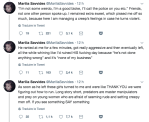
The way we treat children is extremely inhumane, but so many adults want to dismiss it because it’s so normalized
You… You do realize that’s what it’s like to be a working adult…? And our days are even longer.
thats because an 8 hour work day is extortion and should be illegal. next question.
Either you’ve never had a job or you’re just lazy af. There’s nothing wrong with 9 to 5 jobs. Nobody is forcing people to work them and people need the hours to make more money. People get breaks too.
Please take a biology class & get some help. People shouldnt have to do work 80% of the day to survive.
2. capitalism is forcing people to work. i could just quit my job and hang out at home – but then i would lose my house and most likely starve to death, because of the way our economy works.
3. breaks for most establishments are a mere 30 minutes for an 8-hour shift; at my first job, for a 6-hour shift, your break would only be 15 minutes and any longer shift would only get 30. studies say people are more productive if for every hour you work, you get a 15-minute break – meaning, for an 8-hour shift, you’d need an hour-long break, and so on and so forth.
the way modern society views work is unhealthy for loads of reasons, not just what i mentioned here. the fact that we’re preparing children for such a torturous lifestyle is horrific.
not to mention in florida its not legally required for them to give breaks at all !! ive been forced to work for 13 hours with no breaks to eat even because of that shit
Not entirely willingly, mind. I was young, religious, and I made
the naïve mistake in thinking that all Christians were like the ones I had
encountered at my home church: warm, tolerant, kind. I fell in love, and we did
what young, hormonal Christian teenagers did: rushed into a marriage.
I realized my mistake almost immediately, but it took far
too long to get out.
Personally, I endured abuse at the hands of my new husband—mental,
physical, sexual, economic, emotional. You name it, he did it. Brutal is an
understatement. He systematically broke me down until I was a shell of a human
being. I’m still dealing with the emotional fallout and physical side effects,
and I probably will be for another decade at least.
That’s personally, but let’s talk his family. Because he was
an extreme case, yes, but he was raised with the idea that women existed to
keep their mouths shut and their legs open. I spit out two children faster than
I could whip my head, because birth control wasn’t part of god’s grand plan for
my life. I was fulfilling my purpose as a mother, and wasn’t that great? My
husband didn’t want the first baby. He wanted me for himself, see? Abortion was
unthinkable, but he fully expected to carry a baby—my baby—to term, then give
it away.
Keeping him was my first rebellion. Keeping the next one was
my second.
In the time I belonged to that family, I watched my
mother-in-law endure the same, though less extreme mistreatment. I watched every
young female family member be groped by the family patriarch. “That’s just how
it is.” I was shamed for making a fuss about it. I watched an older cousin try to sexually assault my teenage
sister-in-law and she was the one who
felt ashamed. We women made family dinners while the men sat on their asses. My
husband and I lived with his parents for a short time. She and I would go to
work each morning—an hour each way—with our husbands sitting in their robes in
the living room, playing video games. When we returned hours later, weary,
exhausted, they hadn’t moved. The standard greeting? “What’s for dinner.”
That’s his family, and yes, some families are sexist, but let’s
talk about church. That’s where all of this is validated, encouraged, taught. Imagine
my shock, when I went to my new husbands’ family church and encountered muted
xenophobia and racism, a heavy dose of homophobia, and some damned overt sexism
(see above.)
Equal roles, but different. Sound familiar? This is still
being taught to little girls today.
In church, I listened with quiet disgust as pastors preached
about how awful my sister—one of the gays—was. I piped up and asked how that
sexual sin was any different than the two young church kids who’d just been
caught “in a bad way”, soon to expect their first baby. Sexual sin is sexual
sin, isn’t it? I sure did get an earful for that one. We did church boycotts:
Disney, Target. Every Sunday School class: Job, cookies, and lets pray God
saves the moos-lims before they all come over and blow us up. We revered
people with white savior complexes who went to be jesus’s hands and feet and
save the poor, helpless Africans.
Hate and ignorance, wrapped up in the holy Scripture.
Hallelujah.
Meanwhile, I endured this abuse. This abuse, and every door
slammed in my face as my husband hit me, tortured me. “Stay true to your vows,”
the pastor would say. “You have communication issues,” our sister-in-law
would tell us. My mother-in-law: “Linds, you just have to accept it. Love is a
choice.”
“But what about the part where it says that husbands are to
love their wives like Christ loves the church?” I asked.
My brother in law, joking: “This is why women aren’t
supposed to speak in church.”
This America is alive and kicking, kids. It’s never gone away; it’s just been lurking,
behind closed doors. “Pass the casual racism and meat loaf, would you? And get
me a glass of water while you’re up. Ketchup, too.” What I’m scared about,
truly, is that I know this. And these ideas are now validated. Now mainstream. Almost
50% of our population believes this is
a good idea.
“It’s our time to take America back.”
What in the hell, if they’ve been saying these things behind
closed doors, and if they believe them In The Name Of God—what in the hell are
they going to say in the open, now? What in the hell are they going to do?
The 50s are revered as the aspirational yester-year, days
gone by. Progress, as we call it, is godlessness to them. We, the godless libs,
took Jesus out of schools. We’ve gone wrong ever since.
This is the America people want back, and that’s my first
fear.
The second is this:
I got out. And I’m terrified that this, my success story,
won’t happen anymore.
I’m the rare statistic. I un-brainwashed and educated myself.
I got counseling (against every Christian advice) to treat severe post-partum
depression. In the process of becoming a healthier person, I realized
what a goddamn mess I was.
It took three tries and a pastor-pseudo-therapist legitimately
telling me, “You know if he hits you again, Linds, I’m going to have to tell
you to leave.”
All regretful, like it was bad news.
“Why should I stick around and wait for it to happen again?”
I asked.
He didn’t have an answer. I left the next week.
It took a few boldfaced lies (it’s temporary, it’s just a separation), and a few miracles, and a
large support system of family and friends who all but plucked me out of that
hell.
For leaving? My price was excommunication. From his family,
our friends, our church. I am the heathen who Divorced my Husband and broke our
home. In that entire city, only three people talk to me now.
(No loss, but it took a long time to recognize that.)
I never, ever would have made it on my own. I had two small children,
a new job that barely paid a living wage, and I was, as I’ve said, a shell of a
human being. I left him and went straight to the human services office. Without
subsidized childcare, healthcare, and food supplements, we would have starved
or been homeless. It never would have been possible.
These are the services that will probably be cut first.
How will anyone in my situation ever be able to leave? They
won’t. Not to mention federal funding for shelters, crisis counseling for
families, healthcare for abused women, and legal services for domestic violence
victims. Throw in a court system that doesn’t value women, and a cultural mentality
that believes what happens behind closed doors should stay behind closed doors… What hope do abused, trapped women have? None in hell.
If this is what makes America great again, I want out. I’ve
been there, done that, and I’m never, ever doing it again.
You’ll take it back over my cold, lifeless body.
This is the dark, dirty secret of Amerika: Women are not free.
“Keeping the internet open is critical for us. It powers social movements, and provides a global platform for people of color, LGBTQ folks and the most marginalized communities to tell their own stories, run their own businesses and route around powerful gatekeepers.”—Candace Clement, Free Press Action Fund Campaign Director via @fight4future
Starting today, June 11, U.S. internet providers will be legally allowed to censor and block websites and apps, and force you to pay extra fees to to access your favorite places online. Your internet sanctuaries, the communities you are part of, the ones you have help build up, could be decimated.
Will it happen today? No. Next week? Probably not. The changes will not be swift. They will come piece by piece. A slow, tempered death to the free and open internet we love.
It doesn’t have to be this way. You can still make a difference, Tumblr. We need the House of Representatives to sign a discharge petition in support of the Congressional Review Act that would force a vote on the floor.
It’s so easy. Just go to BattleForTheNet.com, fill out the form, and follow their directions from there.
They have an updated widget for you to throw on your websites to urge others to make a difference. You can put it on your Tumblr. Let your followers know what you stand for, encourage them to do the same. It’s so easy to do. Just copy and paste their small line of code right into the customize theme page on the web.
Go, go, go, go. We know you have that passion in you. We’re fighting right alongside you.
Mr. Rogers had an intentional manner of speaking to children, which his writers called “Freddish”. There were nine steps for translating into Freddish:
“State the idea you wish to express as clearly as possible, and in terms preschoolers can understand.” Example: It is dangerous to play in the street.
“Rephrase in a positive manner,” as in It is good to play where it is safe.
“Rephrase the idea, bearing in mind that preschoolers cannot yet make subtle distinctions and need to be redirected to authorities they trust.” As in, “Ask your parents where it is safe to play.”
“Rephrase your idea to eliminate all elements that could be considered prescriptive, directive, or instructive.” In the example, that’d mean getting rid of “ask”: Your parents will tell you where it is safe to play.
“Rephrase any element that suggests certainty.” That’d be “will”: Your parents can tell you where it is safe to play.
“Rephrase your idea to eliminate any element that may not apply to all children.” Not all children know their parents, so: Your favorite grown-ups can tell you where it is safe to play.
“Add a simple motivational idea that gives preschoolers a reason to follow your advice.” Perhaps: Your favorite grown-ups can tell you where it is safe to play. It is good to listen to them.
“Rephrase your new statement, repeating the first step.” “Good” represents a value judgment, so: Your favorite grown-ups can tell you where it is safe to play. It is important to try to listen to them.
“Rephrase your idea a final time, relating it to some phase of development a preschooler can understand.” Maybe: Your favorite grown-ups can tell you where it is safe to play. It is important to try to listen to them, and listening is an important part of growing.
Rogers brought this level of care and attention not just to granular
details and phrasings, but the bigger messages his show would send.
Hedda Sharapan, one of the staff members at Fred Rogers’s production
company, Family Communications, Inc., recalls Rogers once halted taping
of a show when a cast member told the puppet Henrietta Pussycat not to
cry; he interrupted shooting to make it clear that his show would never
suggest to children that they not cry.
In working on the show,
Rogers interacted extensively with academic researchers. Daniel R.
Anderson, a psychologist formerly at the University of Massachusetts who
worked as an advisor for the show, remembered a speaking trip to
Germany at which some members of an academic audience raised questions
about Rogers’s direct approach on television. They were concerned that
it could lead to false expectations from children of personal support
from a televised figure. Anderson was impressed with the depth of
Rogers’s reaction, and with the fact that he went back to production
carefully screening scripts for any hint of language that could confuse
children in that way.
In fact, Freddish and Rogers’s philosophy of
child development is actually derived from some of the leading
20th-century scholars of the subject. In the 1950s, Rogers, already well
known for a previous children’s TV program, was pursuing a graduate
degree at The Pittsburgh Theological Seminary when a teacher there
recommended he also study under the child-development expert Margaret
McFarland at the University of Pittsburgh. There he was exposed to the
theories of legendary faculty, including McFarland, Benjamin Spock, Erik
Erikson, and T. Berry Brazelton. Rogers learned the highest standards
in this emerging academic field, and he applied them to his program for
almost half a century.
This is one of the reasons Rogers was so
particular about the writing on his show. “I spent hours talking with
Fred and taking notes,” says Greenwald, “then hours talking with
Margaret McFarland before I went off and wrote the scripts. Then Fred
made them better.” As simple as Mister Rogers’ Neighborhood looked and sounded, every detail in it was the product of a tremendously careful, academically-informed process.
I wish i could find this one article written in I believe the 90’s that went under the radar on abortion. The author said that the “life” arguments are basically useless on either side and what actually matters is that humans shouldn’t have a right to use other human bodies as a resource without consent no matter how alive or sentient they are, even if they’re on the brink of death you have the right to deny them access to you. It probably was too radical for pro-choice activists back in those days but like…that’s the most robust arguement lol so we need 2 being that back and dead the pontifications and splitting hairs about “life” in my honest onion
I found it. Actually, it was written in the 70’s. She was way ahead of the curve.
The article is ‘A Defense of Abortion’ by Judith Jarvis Thomson. Essential reading!
If you cannot demand that a person donate their organs to keep you alive, you have no right to legislate that an embryo gets to use a woman’s body to keep itself alive without the woman’s consent.
First Home in the U.S. specifically for sex-trafficked boys is set to open in late 2016. Of course neighbors pulled a stink and tried to get the house shut down before it even opened.
The founders are still trying to take donations to help cover maintenance costs. You can find more information about this ministry and donate here.
OOOOH THIS IS VERY IMPORTANT FOR MANY REASONS
Excellent
I CANNOT believe how much resistance they’re facing.
People are worried about their property values when these young boys have literally been sold as sex slaves and raped and abused in who knows how many other ways. They just need a safe place to heal and protection while they testify against their abusers so we can put the actual criminals in prison.
And people are worried about them “taking their medicine” like we’re trying to cure them of something. These are trafficking victims. But apparently people are more worried about these boys than they are about making sure the people who abused them go to prison.
Oh man, as soon as I get a little extra money I’ll be donating to this fine cause because this is just fucking great. I hate all the shit they’re getting for it, but shit or no shit I want to support these people.
This is very important
I love that every few months this post gets another surge of notes, and now is good a time as any to give an update.
In late Fall last year, the area of North Carolina where this house is set to be opened experienced a lot of very bad flooding. This has set them back. They wanted to be open by now, but they have finished restoring the house and are now working on furnishing it so they can open soon.
The link above is broken, so here is an updated one. You can see they now have a registry for Target and Walmart open. If you want to donate by buying items they need to furnish it, you can do so this way.
The thing about how women in comics used to be drawn and sometimes are still drawn, you can only really understand the difference between an action girl being forced into unrealistic sexual, sensual positions, and an actual strong and well posed, empowering but still sexy female character, when you see what it looks like to have male characters depicted in overtly sensual poses
And I’m not talking about the Hawkeye Initiative or any given parody
I actually want to draw a comparison using art by Kevin Wada
Kevin Wada is a proud part of the LGBTQ+ community and he has this unique ability to sexualize mainstream male heroes without it looking like a parody. He draws covers for multiple big comic companies and his style reminiscent of old fashion magazines, drawn largely in traditional watercolor, has made him a stalwart of the industry.
He also draws a lot of naked Bucky Barnes.
Anyway, I want to talk about how interesting his art is, the difference between his power poses and his sexy poses for male and female characters.
A typical power pose for a male comics character would look like this
Whereas every so often with female heroes you get something like this
Not all the time, of course, but it happens and it happens in the wrong places. You wouldn’t be posing like a cover model in the middle of a battle, you really wouldn’t.
But when it comes to Wada and male and female characters, the difference is pretty clear.
When he draws male characters, they more often look like this
Sensual, in a pose you wouldn’t usually see a big, muscular hero doing. If not that, then playful, sexy, for looking at, but nothing about their anatomy overly exaggerated
How he draws women is also very clearly different from many other artists, from sexy pose to power pose.
Still posing for the camera, still to be looked at, but very, very different from how we’ve seen female characters portrayed in mainstream comics in the past.
And I guess it’s really just a matter of variety? Objectification in art is a long time debate and appears everywhere always, but for all that we can argue about its impact on popular media, there are a few things I know for sure:
1) having a female character pose like a playboy cover girl in the middle of a battle scene is just Bad Art and y’all need to find better references
2) female power poses will never look quite as right as when they’re drawn by people who know the value of expressing personality through pose (it’s basic animation principles and some artists still need to learn it) and who actually know what a female character’s personality beyond “sexy”
3) Iron Man or Batman posing like they’re about to beat somebody up is 100% not the same as a fashion drawing by Kevin Wada where a Typical Beefy Action Guy gets to pose like a flirty pretty boy
4) the MCU films have figured out the value of pandering to female audiences by sexually objectifying all their male action heroes while simultaneously appealing to the male demographic’s action movie power fantasy. Quoting Chris Hemsworth and Taika Waititi: “I’m not a piece of meat” “Uh, yes you are.”
They definitely struck some kind of balance there.
Also, more important than this entire post: y’all should follow @kevinwada on Tumblr and give him love because his art is divine and his talent beyond words
We featured @kevinwada‘s Naked Snake last year and mentioned (as a couple times before) that if you really want to see the principles male gaze applied unironically to masculine characters, you gotta find pinup done by a male artist who’s into men. And Wada’s artwork is a great proof of that, without resorting to pandering exaggerations (which belong more to parody art).







 Steel Phoenix Studios