It’s directed beautifully, they subtly show feminism without exclusively bad mouthing men, and without hesitating they show the issue of how girls are viewed in India. I can safely say that the level of misogyny is in a lot of Asian countries, households and community, it really hits close to home.
They even mentioned the reality of underage marriage and why it’s a problem.
Believe me, it’s an empowering movie and whoever stands with women’s rights will understand what I mean.
since the movie wasn’t mentioned i took the liberty of looking for it! It looks amazing and is the second highest-grossing film at the worldwide box office (x)
It’s called Dangal and you can watch the trailer here
I have watched it and another tidbit is that it is actually based on a true story! Geeta and Babita Phogat won medals for their country in the Commonwealth Games and they come from a state in India (Haryana) that is generally known to be not that progressive.
This is Geeta:
This is Babita
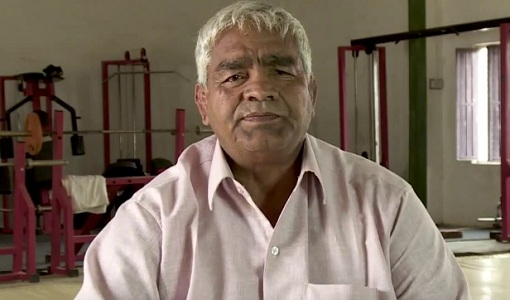
and this is their father, Mahavir Singh Phogat,
The story is inspiring, amazing and every single one of you should watch it by hook or by crook.
Amir Khan (the actor playing the father) has a history of staring and directing films that are very socially aware and most films he takes part in are beautiful in their message.
Highly recommend this movie!!
Listen, I live in India and I witness firsthand the amount of sexism there is here every day. THIS MOVIE IS AMAZING. watch it, please.
Speaking as the the child of Indian immigrants, this is a 10/10 story and film. And I say this as someone who really dislikes Bollywood cinema
Three churches, a school, and dozens of homes were demolished
^^^^Prominent abolitionist Albro Lyons and Mary Joseph Lyons were residents of Seneca Village.
The community, called Seneca Village, began in 1825 and eventually spanned from 82nd Street to 89th Street along what is now the western edge of Central Park. By the time it was finally razed in 1857, it had become a refuge for African Americans. Though most were nominally free (the last slave wasn’t emancipated until 1827) life was far from pleasant. The population of African Americans living in New York City tripled between abolition and complete emancipation and the migrants were derided in the press. Mordecai Noah, founder of The New York Enquirer, was especially well-known for his attacks on African Americans, fuming at one point that “the free negroes of this city are a nuisance incomparably greater than a million slaves.”
More than three-fourths of the children who lived in Seneca Village attended Colored School №3 in the church basement. Half of the African Americans who lived there owned their own property, a rate five times higher than the city average. And while the village remained mostly black, immigrant whites had started to live in the area as well. They shared resources ranging from a church (All Angels Episcopal), to a midwife (an Irish immigrant who served the entire town).
But in 1857, it was all torn down.
Even as the church was being built on 86th street, then painstakingly painted white, the original settlers fought for their lands in court. Andrew Williams was paid nearly what his land was worth, after filing an affidavit with the state Supreme Court. Epiphany Davis was not as fortunate, losing hundred of dollars.
By 1871, Seneca Village had largely been forgotten. That year, The New York Herald reported that laborers creating a new entrance to the park at 85th Street and 8th Avenue had discovered a coffin, “enclosing the body of a Negro, decomposed beyond recognition.” The discovery was a mystery, the paper reported, because “these lands were dug up five years ago, when the trees were planted there, and no such coffins were there at the time.” That’s unlikely, as the site was the graveyard of the AME Zion church.
Researchers from Columbia, CUNY, and the New York Historical Society have been working on excavating the site of Seneca Village since the early 2000s. The work has been slow, with excavation starting in 2011.
The only official artifact that remains intact on the site is a commemorative plaque, dedicated in 2001 to the lost village.
People didn’t know about this? We learned about this in school bc the village welcomed and sheltered Irish immigrants during the Famine.
The authorities hated the place because the residents were highly politically active and had ties to the Underground Railroad.
A lot of people assume, because Manhattan was in The North[tm], that it must have been an abolitionist-friendly place (and that its residents then would have had as favorable view of Lincoln as residents today have of Obama).
But the truth is: much of the money flowing through Wall Street was profits from the cotton, sugar, rum and slave trade. The Power Brokers of NYC were solidly on the side of the slaveholders in the South.
Terry Pratchett started his career as a crypto-monarchist and ended up the most consistently humane writer of his generation. He never entirely lost his affection for benevolent dictatorship, and made a few classic colonial missteps along the way, but in the end you’d be hard pressed to find a more staunchly feminist, anti-racist, anti-classist, unsentimental and clear-sighted writer of Old White British Fantasy.
The thing I love about Terry’s writing is that he loved – loved – civil society. He loved the correct functioning of the social contract. He loved technology, loved innovation, but also loved nature and the ways of living that work with and through it. He loved Britain, but hated empire (see “Jingo”) – he was a ruralist who hated provincialism, a capitalist who hated wealth, an urbanist who reveled in stories of pollution, crime and decay. He was above all a man who loved systems, of nature, of thought, of tradition and of culture. He believed in the best of humanity and knew that we could be even better if we just thought a little more.
As a writer: how skillful, how prolific, how consistent. The yearly event of a new Discworld book has been a part of my life for more than two decades, and in that barrage of material there have been so few disappointments, so many surprises… to come out with a book as fresh and inspired as “Monstrous Regiment” as the 31st novel in your big fantasy series? Ludicrous. He was just full of treasure. What a thing to have had, what a thing to have lost.
In the end, he set a higher standard, as a writer and as a person. He got better as he learned, and he kept learning, and there was no “too late” or “too hard” or “I can’t be bothered to do the research.” He just did the work. I think in his memory the best thing we can do is to roll up our sleeves and do the same.
This post seems to be making the rounds again so here it is on the word blog






 Steel Phoenix Studios