Frozen Inuit princesses redesigns. ❤ I think it would have been really awesome if they did something like this instead. Either way, it was really fun to gather reference and draw some snowy cuties.
You do realise that Frozen is based on a fairytale by Hans Christian Andersen – a Dane. And let me inform you that the ethnic demografic of Denmark was almost exclusively caucasian until after WWII – so I think it is really unfair to criticise Disney of whitewashing when it was written and takes place in a country where literally everyone was white!
it’s got a fucking talking snowman and a breed of mono-antlered reindeer with split hooves that’s being impossibly ridden like it’s a fucking caribou and you wanna go out of your way to paragraph at someone about “criticism” when it’s just a picture with the caption “would have been cool if it were like this but i had fun drawing”
you literally want to flop in “historical accuracy” when it’s set in a fictional kingdom, with an amalgamation of clothing styles that are either butchered attempts or native to no one, freaking snow magic, and—allow me to repeat— talking snowmen and improper riding of reindeer that aren’t built to be ridden in the first place. but suddenly Inuit redesigns aren’t historically accurate enough? Because the author of a fictional story was a white Dane?? Might you be interested in learning that the earliest known version of Cinderella was about a Greek slave girl and an Egyptian pharaoh? Historical accuracy doesn’t mean squat to Disney and everyone knows it, it’s an extremely tripe card to pull.
do you literally think that every single person in Denmark/Scandanavia was some kind of 100% whiteAryan wet dream until magically after world war 2 some brown people finally wandered by??? even though they had an entire country full of indigenous peoples under their thumb AND a monopoly on trade with the place until like 1953 like is that really something that is going through your head at this very moment because i am truly aghast.
It’s fanart, a redesign, based on what would have been neat. and there’s literally zero reason to tear it apart just because you’re uncomfortable about the fact that they’re not white.
I’ve been trying to think of a good term for the “weepy movies about tragic queer people aimed at straight audiences” subgenre, and I think I’ve got it:
dead gays for the straight gaze
eh? eh??
queers die for the straight eye
SO YOOOO who wants to learn why this is a thing because the history is actually really fascinating and ties into some of my favorite shit ever?
Okay, so like, back in the mid-twentieth century, when being queer was still totally a crime everywhere in the United States, queer writers started working in pulp fiction–starting with Vin Packer (she is awesome)–and writing pulps to tell our stories.
So one day over lunch, her editor asks her, “Hey, Vin, what’s the story you most want to write?”
And she goes, “Well, I’d like to write a love story about lesbians because I’m, you know, gay.”
He says, “Hey, that’s awesome, I will publish it. One thing, though, the homosexuality has to end badly and the main character has to realize she was never gay in the first place. We can’t seem to support homosexuality. I don’t actually think that’s cool, but the government will literally seize our book shipments and destroy them on the basis of the books being ‘obscene’ if you don’t, so if we want this story actually out there, and not burning in a bonfire somewhere, it’s what you gotta do.”
So Vin goes home and writes Spring Fire, the book that launched the entire lesbian pulp genre. And while one character ends up in an insane asylum and the other ends up realizing she never loved her at all, it’s massively successful, and queer women everywhere snap it up and celebrate quietly in their closets across the nation because HOLY SHIT THERE’S A BOOK ABOUT ME? I’M NOT ALONE and it starts a huge new genre.
But: every publisher is subject to those same government censorship rules, so every story has to end unhappily for the queer characters, or else the book will never see the light of day. So, even though lesbian pulp helps solidify the queer civil rights movement, it’s having to do so subversively or else it’ll end up on the chopping block.
So blah blah blah, this goes on for about twentyyears, until finally in the seventies the censorship laws get relaxed, and people can actually start queer publishing houses! Yay! But the lesbian pulps, in the form they’d been known previously, basically start dying out.
MEANWHILE, OVER IN JAPAN! Yuri, or the “girls love” genre in manga, starts to emerge in the 1970s, and even starts dealing with trans characters in the stories. But, because of the same social mores that helped limit American lesbian pulp, the stories in Japan similarly must end in tragedy or else bad shit will go down for the authors and their books. Once more: tragic ends are the only way to see these stories published rather than destroyed.
The very first really successful yuri story has a younger, naive girl falling into a relationship with an older, more sophisticated girl, but the older girl ends up dying in the end, and subsequent artists/writers repeated the formula until it started getting subverted in the 1990s–again, twenty years later.
And to begin with cinema followed basically the same path as both lesbian pulps and yuri: when homosexuality is completely unacceptable in society, characters die or their stories otherwise end in tragedy, just to get the movies made, and a few come along to subvert that as things evolve.
But unlike the books and manga before them, even though queer people have become sightly more openly accepted, movies are stuck in a loop. See, pulps and yuri are considered pretty disposable, so they were allowed to evolve basically unfettered by concerns of being artistic or important enough to justify their existence, but film is considered art, and especially in snooty film critic circles, tragedy=art.
Since we, in the Western world, put films given Oscar nods on a pedestal, and Oscar nods go to critical darlings rather than boisterous blockbusters (the film equivalent of pulps, basically), and critics loooove their tragedy porn, filmmakers create queer stories that are tragic and ~beautiful~ that win awards that then inspire more queer stories that are tragic and ~beautiful~ until the market is oversaturated with this bullshit.
The Crying Game? Critical darling, tragic trans character.
Brokeback Mountain? Critical darling, tragic queer (? not totally sure if they’d consider themselves gay or bi, tbh?) characters.
And so on and so on VOILA, we now have a whole genre of tragedy porn for straight people, that started out as validation for us and sometimes even manages to slip some more through the cracks occasionally, but got co-opted by pretentious ~literary~ types. While tragic ends made these stories more acceptable to begin with, and in the mid-to-late nineties that started getting subverted a little bit (Chasing Amy, But I’m a Cheerleader), eventually that became the point, as more straight audiences started consuming these narratives and got all attached to the feels they got from the ~beauty of our pain~.
Queer history is crucial
I actually have a copy of Spring Fire. I read a lot of lesbian pulp when I was a teenager, and I loved the drama of it but hated the tragedy. Then I found neo-pulp, modern stories in the pulp style where queers got happy endings! Check out Monica Nolan and Mabel Maney. They were hugely influential on me and were very inspirational when I was working on I Was Kidnapped by Lesbian Pirates from Outer Space in particular.
My favorite thing is that Europe is spooky because it’s old and America is spooky because it’s big
“The difference between America and England is that Americans think 100 years is a long time, while the English think 100 miles is a long way.” –Earle Hitchner
A fave of mine was always the american tales where people freaked out because ‘someone died in this house’ and all the europeans would go ‘…Yes? That would be pretty much every house over 40 years old.’
‘…My school is older than your entire town.’
‘Sorry, you think *how far* is okay to travel for a shopping trip?’
*American looks up at the beams in a country pub* ‘Uh, this place has woodworm, isn’t that a bit unsafe?’ ‘Eh, the woodworm’s 400 years old, it’s holding those beams together.’
A few years ago when I was in college I did a summer program at Cambridge aimed specifically at Americans and Canadians, and my year it was all Americans and one Australian. We ended the program with a week in Wessex, and on the last day as we all piled onto the bus in Salisbury (or Bath? I can’t remember), the professors went to the front to warn us that we wouldn’t be making any stops unless absolutely necessary. We’re headed to Heathrow to drop off anyone flying off the same day, then back to Cambridge.
“All right, it’s going to be a long bus ride, so make sure you’re prepared for that.”
We all brace ourselves. A long bus ride? How long? We’re Americans; a long bus ride for us is a minimum of six hours with the double digits perfectly plausible. We can handle a twelve hour bus ride as long as we get a bathroom break.
The answer. “Two hours.”
Oh.
English people trying to travel around Australia and wildly underestimating distance are my favourite thing
a tour guide in France told my school group that a particular cathedral wouldn’t interest us much because “it’s not very old; only from the early 1600s”
to which we had to respond that it was still older than the oldest surviving European-style buildings in our country
China is both old and big. I had some Chinese colleagues over; we were discussing whether they wanted to see the Vasa ship (hugely expensive war ship which sank on it’s maiden voyage after 12 min). They asked if it was old, I said “not THAT old” (bearing in mind they were Chinese) “it’s from the 1500s.” To my surprise they still looked impressed, nodding enthusiatically. Then I realised I’d forgotten something: “…I mean it’s from the 1500s AFTER the birth of Christ” and they went “oh, AFTER…”.
My dad’s favorite quote from various tours in Italy was “Pay no attention to the tower – it was a [scornful tone] tenth century addition.”
Sooooooo as asked @misseccentric here is a post about undergarments (I think I’ll make another one for men’s undergarments later!). Basically are 5 garments (pug not included) that we consider “undergarments” and after a woman was dressed with them she was… well, ready to get dressed (I know, WTF).
1. Shift
Also known as chemise, the shift was the very first layer of clothing for a woman of any class, worn with nothing underneath (no underpants darlings!) it was usually made of white linen (the whiter the finer and more expensive) and it could have simple and discreet lace or very small riffles on the neckline and cuffs. The main function of the shift was to protect the clothing from the body, since daily bathing was not customary (eeewww), that’s why there are not many surviving garments (double eeeeww).
2. Stays
Stays are what people usually call “corset”, but back in the 17th century they were called “body” or “boned body and in the 18th century “stays” or “pair of stays”. Their main purpose was to shape the upper body in a conical form and to support the bosom, so it is not a constrictive garment more than one of support. Most women wore stays of different boning and materials depending on their social and economical situation, but in vague shape and style the stays of a woman from the upper class and the ones from the house maid were not that different from each other. Made of linen, wool or silk they were reinforced with whalebone or cane.
3. Pockets
A pocket (or a pair of them) was tied around the waist since actual pockets stitched to the garments didn’t happen until the 19th century. They could be of plain linen or be beautifully embroidered (even though no one would see them) and have a rather big size since they should hold all the necessities of a woman (think about all a girl would carry in her purse nowadays).
4. Paniers and Bums
The hoops or paniers were also made of linen and reinforced with whalebone or cane. The biggest expression of this garment happened at the court, where even if in the fashionable dress big panniers were no longer in fashion, they kept appearing through the whole century. The hoops are a key for the century silhouette in combo with the stays: the curve-less upper body was the perfect contrast with the big bottom that had volume only on the sides of the dress. That is until the bustle became fashionable.
The bustle (bums, rumps or culs),came as a substitute to the huge panniers and they were only small hoops or pads of different sized and shapes that added volume to the hips, both on sides and back (VERY Georgiana Cavendish).
5. Stockings and Garters
Stockings then and now are pretty much the same in shape but not in materials since they could be made of woven as well as knitted silk or wool. My favourite part of 18th century stockings is the over-the-top decoration and the bright colours these people wore (and here I am with a closet full of black and grey clothes!). Since (obviously) there was no spandex back in the day, you had to use garters (ribbon or tape) to keep the stockings in place, and of course those must have a little colourful party too with embroideries, gilded threads, knitted materials, satin colours and phrases and monograms.
A reblog because undergarments info is always welcome 🙂
So the other night during D&D, I had the sudden thoughts that:
1) Binary files are 1s and 0s
2) Knitting has knit stitches and purl stitches
You could represent binary data in knitting, as a pattern of knits and purls…
You can knit Doom.
However, after crunching some more numbers:
The compressed Doom installer binary is 2.93 MB. Assuming you are using sock weight yarn, with 7 stitches per inch, results in knitted doom being…
3322 square feet
Factoring it out…302 people, each knitting a relatively reasonable 11 square feet, could knit Doom.
Hi fun fact!!
The idea of a “binary code” was originally developed in the textile industry in pretty much this exact form. Remember punch cards? Probably not! They were a precursor to the floppy disc, and were used to store information in the same sort of binary code that we still use:
Here’s Mary Jackson (c.late 1950s) at a computer. If you look closely in the yellow box, you’ll see a stack of blank punch cards that she will use to store her calculations.
This is what a card might look like once punched. Note that the written numbers on the card are for human reference, and not understood by the computer.
But what does it have to do with textiles? Almost exactly what OP suggested. Now even though machine knitting is old as balls, I feel that there are few people outside of the industry or craft communities who have ever seen a knitting machine.
Here’s a flatbed knitting machine (as opposed to a round or tube machine), which honestly looks pretty damn similar to the ones that were first invented in the sixteenth century, and here’s a nice little diagram explaining how it works:
But what if you don’t just want a plain stocking stitch sweater? What if you want a multi-color design, or lace, or the like? You can quite easily add in another color and integrate it into your design, but for, say, a consistent intarsia (two-color repeating pattern), human error is too likely. Plus, it takes too long for a knitter in an industrial setting. This is where the binary comes in!
Here’s an intarsia swatch I made in my knitwear class last year. As you can see, the front of the swatch is the inverse of the back. When knitting this, I put a punch card in the reader,
and as you can see, the holes (or 0′s) told the machine not to knit the ground color (1′s) and the machine was set up in such a way that the second color would come through when the first color was told not to knit.
tl;dr the textiles industry is more important than people give it credit for, and I would suggest using a machine if you were going to try to knit almost 3 megabytes of information.
It goes beyond this. Every computer out there has memory. The kind of memory you might call RAM. The earliest kind of memory was magnetic core memory. It looked like this:
Wires going through magnets. This is how all of the important early digital computers stored information temporarily. Each magnetic core could store a single bit – a 0 or a 1. Here’s a picture of a variation of this, called rope core memory, from one NASA’s Apollo guidance computers:
You may think this looks incredibly handmade, and that’s because it is. But these are also extreme close-ups. Here’s the scale of the individual cores:
The only people who had the skills necessary to thread all of these cores precisely enough were textile and garment workers. Little old ladies would literally thread the wires by hand.
And thanks to them, we were able to land on the moon. This is also why memory in early computers was so expensive. It had to be hand-crafted, and took a lot of time.
Don’t underestimate the impact craft has had on our culture
I love how humans have literally not changed throughout history like the graffiti from Pompeii has people from hundreds of years ago writing stuff like “Marcus is gay” “I fucked a girl here” “Julius your mum wishes she was with me” and leonardo da vinci’s assistants drew dicks in their notebooks just for the banter and mozart created a piece called “kiss my ass” so when people wish for ‘today’s generation’ to be like ‘how people used to’ then we’re already there buddy we’ve always been
The Hagia Sophia has inscriptions that were considered sacred for centuries until they were deciphered in the 70s to be Nordic runes saying “Halfdan wrote this”
my old english prof told us that theres a cave in Scandinavia where a viking gratified some runes like 14 feet up on the wall and when they finally reached it all it translated into was “this is very high”
Ancient Shitposting
Now on the History Channel
‘People have literally just always been people’ is genuinely my favorite fact about the world
“Times are bad. Children no longer obey their parents, and everyone is writing a book.” – Marcus Tullius Cicero, 106 BC – 43 BC
VIKING LORE HELD THAT BOTH WEAVING AND SORCERY WERE WOMEN’S WORK, DITTO THE ORDERING OF THE HOUSE ACCOUNTS. MANY CULTURES HAVE HISTORICALLY LEFT ACCOUNTANCY TO WOMEN! MANY SOCIETIES HAVE ALSO LEFT FIBERCRAFT TO WOMEN BECAUSE IT IS TEDIOUS AND REPETITIVE BUT ALSO VERY NECESSARY. SEE ALSO: COOKING, CLEANING, BUDGETING, EMOTIONAL LABOR.
ANYWAY FIBERCRAFT, AS I HAVE DISCOVERED VIA LEARNING TO DO A WHOLE LOT OF IT, IS ALMOST ENTIRELY APPLIED MATHEMATICS EXCEPT FOR THE PART THAT’S ENGINEERING (WHICH IS ALSO MATHEMATICS). ONCE YOU LEARN EVEN THE BASICS OF KNITTING, SEWING, AND WEAVING, IT BECOMES ABSOLUTELY INCREDIBLE TO REALIZE MEN THINK WOMEN ARE BY VIRTUE OF THEIR SEX (these are of course sexist gender-essentialist men who are not cool with trans people) ILL-EQUIPPED TO DO MATH SOMEHOW. HOLY SHIT, HAVE YOU SEEN HEIRLOOM KNITTING PATTERNS? HAVE YOU SEEN THE FORETHOUGHT THAT GOES INTO WORKING A HARNESS LOOM? OH MY GOD.
THIS IS, THEN, WHERE PROGRAMMING (AND SORCERY) COMES IN. A PROGRAM IS “CODED INSTRUCTIONS FOR THE AUTOMATIC PERFORMANCE OF A PARTICULAR TASK”. WEAVING IS OFTEN A BINARY PATTERN: OVER/UNDER. PUNCH CARDS ON ADVANCED LOOMS CAN SET WHETHER THREADS GO OVER OR UNDER, AND SWITCHING THE CARDS AROUND YIELDS DIFFERENT PATTERNS OF CLOTH. A DUDE NAMED JAQUARD DEVELOPED EXTREMELY COMPLEX PUNCH CARDS THAT STARTED TO ENCODE HIGH VOLUMES OF INFORMATION FOR INCREASINGLY AUTOMATED LOOMS. A HUNDRED YEARS LATER WOMEN ARE USED AGAIN FOR THE ‘TEDIOUS BUT NECESSARY’ BUSINESS OF USING BINARY ON/OFF CARDS TO WRITE PROGRAMS FOR EARLY COMPUTERS.
WHERE SORCERY FITS INTO ALL THIS IS HAVE YOU EVER SEEN A WOMAN USE A CARD LOOM REALLY FAST? IT’S THE MOST INTIMIDATING SKILLSET OUTSIDE OF A RODEO. SHE 100% LOOKS LIKE SHE COULD MAKE YOUR BUTT FALL OFF IF YOU CROSSED HER. APPLIED MATHEMATICS / ENGINEERING IS BAFFLING TO WATCH FROM THE OUTSIDE, ESPECIALLY WHEN IT COMES TO FIBERCRAFT. YOU CAN MANIFEST WITH YOUR MIND AND HANDS THIS HIGHER AND TRUER ARCANE PLANE OF EXISTENCE INTO A NICE SCARF AND KEEP YOUR HUSBAND ALIVE FOR THE WINTER. MAYBE IF HE CROSSES YOU YOU CAN ALSO MAKE HIS BUTT FALL OFF.
I TOTALLY ACKNOWLEDGE THAT MEN DO FIBERCRAFT TOO BUT THIS WAS SPECIFICALLY ABOUT THE INTERSECTIONS BETWEEN WOMEN, MATH, FIBERCRAFT, AND MAGIC, SO THERE YOU GO.
You may have known this already, but the Apollo guidance computer’s core memory was literally woven strands of copper, and it was all done by hand, by a bunch of women. Because who else knows how to weave things?
*SLAMS HANDS ON TABLE* WOMEN’S WORK SENT MEN TO THE FUCKING MOON HOW IS THAT NOT MAGIC AS HELL
Oh oh oh oh this is my subject on Viking reenactment gigs, I’m the group’s Vala and I also fill in for the weavers and spinners because IT’S THE SAME SHIT let me tell you about it 😀 😀 😀
SPINNING with a drop spindle, none of your fancy high-tech spinning wheels here my friend, SPINNING OMG is literally taking undifferentiated fluff and turning it into the most useful and life-essential item in your whole civilisation with little more than a click of your fingers–without thread you have no sails, no clothes, no blankets, it’s literally power of life-or-death shit here, it is magic AS FUCK. That’s without doubt why the Norns were spinners and weavers.
There was laws about not saying people’s names or talking about people when you’re spinning, because you’re basically bringing something into being out of nothing, and with that kind of power you could just as easily bring events into being. So folks probably look the other way when you’re spinning thread for your son’s shirt and you want him to be victorious and honourable, but if you’re spinning away and bitching out about that ho Ingvar (see below) and how she stole your man and deserves the same to happen to her, that’s a crime. You’d be in better legal standing if you just punched her, because enchantment against a person was seen as sneaky and underhanded, with all connotations of forethought and antisocial intention, while punching someone could be an understandable lapse of self-control.
It was also forbidden to spin “against the sun” (ie: counterclockwise) because ok we also know there’s a mechanical aspect to that as well, it’s very useful to have the twist going in the same direction at all times so it doesn’t cancel itself out, but it was believed that an item made from backwards-spun thread could literally kill a person, there’s an account of a Vala spinning a shirt to murder a priest and it’s inferred that it was spun backwards. Because like, the sun is the source of all life, and to go against the sun goes against life, and much as the anti-twist cancels out the twist, it cancels out life. Brutal.
And you couldn’t talk about people when weaving, either, because weaving is an extension of the whole something-from-nothing power, but presumably people did anyway because there’s an actual find of a weaving tablet with a curse carved on it “Sigvor’s Ingvar shall have
my misfortune” so basically every time the card was turned, it would strengthen the curse, and literally spin and weave it into being. HOW FUCKING AWESOME IS THAT. There’s also a find of a weaving sword with a “love poem” carved on it, note the quotemarks because this “poem” goes “Think of me, I think of you; Love me, I love you” THAT AIN’T NO POEM FAM THAT A SPELL. She probably making him (or her) a shirt.
And that’s three times I’ve mentioned shirts, so I should tell you that making a shirt for someone was a Big Deal, in a way it was sort of the period equivalent of the boyfriend sweater, with the sheer amount of labour that goes into making a shirt you have to really give a whole lot of shits about that person. There’s an account of a woman making a shirt for her brother-in-law while her husband was away, and it’s OMG DRAMA BOMB. The Vala I mentioned above really gave a lot of shits about murdering that priest. Hence, the most-likely-a-woman who owned the inscribed weaving sword could very well have been making a shirt for her crush, who may OR MAY NOT have been her husband. You know, she could’ve been like “hope my nice hubby thinks about me while he’s away” or she could’ve been like “damn, brother-in-law too hot” or she could’ve been like “damn, Ingvar too hot” (wlw aren’t attested at all but you gotta assume it happened because humans) but in any event she knew what was up. And making a shirt for someone wasn’t thought of as *overtly* magical, mostly, but there’s kind of a subtext to it that presupposes any shirt could be enchanted and probably was to some extent.
And this is just scratching the surface of the academically well established stuff, with none of my own hypotheses and observations. I can go on for hours.
I have talked about knitting and fiber arts with many different women of all sorts of religion and non religion, and the vast majority of them say that when they make special items, they put some kind of intentions into the garment.
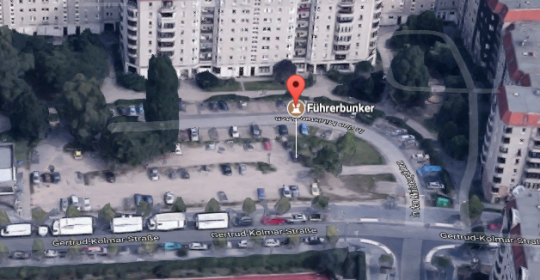
exactly. there’s nothing there. not a statue. not a plaque. nothing.
[drives over hitler’s death site]
Bloody amazing.
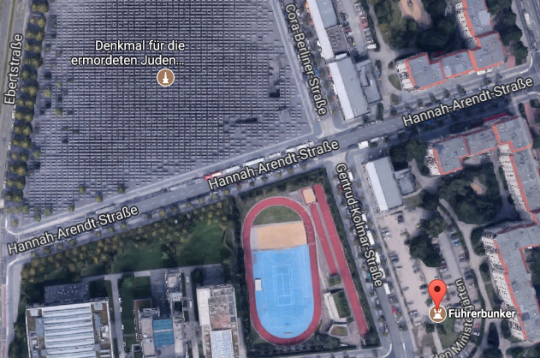
And you know what’s right next to it?
That’s right, the Denkmal für die ermordeten Juden, which translates to the Memorial for the murdered jews.
So if you wanna go have a look at the monument commemorating the victims of Hitler’s regime, you can park your car right on the spot he died and walk there.
I literally can’t get myself to sit through movies that don’t have women. I’m like where the fuck are the women? Why are there so many men? This is boring as fuck goodbye
Even if it’s historically accurate?
as everyone knows, women were invented in 1990
All the notes of “women weren’t on old time battlefields” are wrong. There were more prostitutes and merchant women than there were soldiers in most every encampment. They followed the armies, marching alongside them, and notably ran the camps.
Many more women dressed as men to fight.
Long before female nurses were officially considered to be a part of the military, they were already on the battlefield. They merely didn’t get written into official reports because they were “invisible women”, “not supposed to be there”. Usually they would be local women running a makeshift care center out of their homes.
Movies involving ancient societies? Guess how many had female fighters?
Spies? Mostly female. Yeah, only the men were caught, usually (because nobody suspected the servant woman), but historians believe most cases had more women spies than men. Most cases meaning across time and continents.
Giving me a movie on samurai? Women were trained as well to avoid being captured and raped, and often fought just as hard as men. One woman notably survived multiple battles, and became a hero alongside her sisters after taking out 7 men before dying in her last fight (usually in sword fighting you’d be lucky to take out 2 enemy soldiers. 7 is fucking insane, but because she was a woman it was shoved under the records how the lord managed to survive).
Women have ALWAYS been on battlefields. Women have an intense history in driving victories and losses alike. They were supply runners, fighters, spies, assassins, prostitutes (look up how prostitutes essentially ran the western world, or even the social status of harem members. They literally fucking ruled), even underground activists.
The only time there weren’t many women were with cowboys. Actual western cowboys tended to be both POC and gay. In fact, any time women didn’t have a near equal or greater presence, there was a LOT of gay men.
History: either 80% female or 100% gay. And it’s 95% POC.






 Steel Phoenix Studios