This epic suit of armour took me 3 months of work. Every single piece of this armour was made with artistry and neatness to satisfy my customer. I used the best materials I could get to make it safe,durable and special. Hundreds of work hours, liters of sweat… but it’s totally worth of any sacrifice. Many thanks to my friends, who inspired me, who helped me, your support is invaluable. Photos made by my friend: www.lenartfotografia.pl Model: Karolina Sęk
‘’
to all the people that complain about black people in historical european settings: don’t you ever get tired of being racist?
“but it’s not historically accurate”, i see you cry out. you know what else isn’t historically accurate? all the perfect teeth. all the hairless women. the costumes, often. the accents. the fact that i’m supposed to believe that everyone spoke english all the time regardless of where they were and which company was present. but sure, black people in medieval europe, that’s the big historical innacuracy. because you’re racist.
GUYS. THERE WAS DRIVE-THROUGH IN ANCIENT ROME. FINDING OUT THIS ALONE IS WORTH THE COST OF MY MASTERS IN HISTORY.
[From Daily Life of the Ancient Romans by David Matz]
*rolls up to the window* yeah gimme a number V combo
“I’ll have two number IXs, a number IX large, a number VI with extra ambrosia, a number VIII, two number XLVs, one with cheese, and a large goblet of wine.”
hail, I am Gaius Furius, welcome to Diners, Drive-ins, and Dives
I JUST HAD TO CLOSE MY EYES FOR A SECOND AND LIKE……..DIGEST THIS WHA T THE HELL
You know why
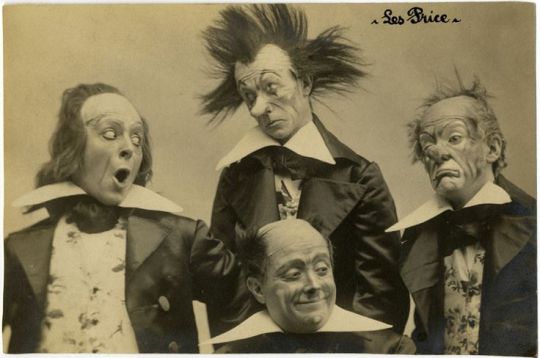
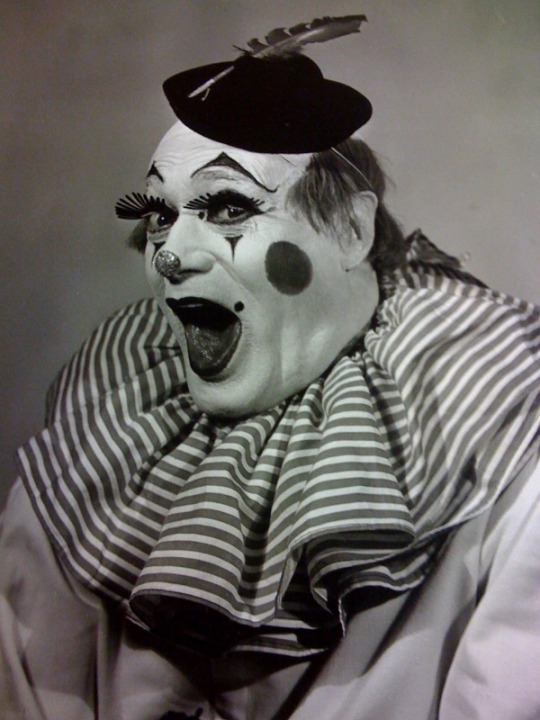
clowns actually originated in egypt to entertain royalty- they wore weird masks and imitated gods. there were also clowns in ancient china, greece, and italy. it wasn’t “black face and then switched to white face” like i saw in the notes– the clown white paint was invented in 1801.
the big, red nose is associated with alcoholism/being drunk (heavy alcohol usage can lead to severe rosacea and swelling of the nose), because drunkards in ye olde times were seen as fun for the whole family. the overlined lips create an exaggerated smile). curly or big hair was seen as whimsical and fun, as was a lack of hair (if you look up ‘vintage clowns’, you’ll see their hair is puffed out to the sides or upwards. nowadays, people probably wear afros because they’re cheap, and don’t involve lots of styling.
i am passionate about clowns
They are a terrifying breed of monster, and must be eradicated from the face of the earth, but it’s relieving to know they weren’t born from a place of racial prejudice.
Steve Rogers never got the serum. He doesn’t have superhuman abilities. What he has is a paintbrush, some stage props, a stomach full of spite, and a Bucky Barnes.
It’s enough.
Fic and Artwork Rating: PG
Warnings: –
Relationships: James “Bucky” Barnes/Steve Rogers, side Peggy Carter/Steve Rogers
Characters: Steve Rogers, James “Bucky” Barnes, Peggy Carter, Howard Stark, Tony Stark, Chester Phillips, Howling Commandos, Original Characters, random hydra assholes
Wartime drama based on historical fact: Steve helps create the myth of the supersoldier through the top secret workings of the Ghost Army!
New works are being posted to the CapRBB AO3 Collectionevery day until July 4th. Remember to check them out!
GUYZ, this fic!!!! The basic premise is that Steve joins the Ghost Army and fabricates Captain America. No one is serumed. The Howlies include Peggy (for the punching) and Howard Stark (for making tank noises).
What I love about it is that it normalizes Steve and Bucky’s wartime experiences. There’s no over-the-top world-saving, no special serum that makes their experience unique. Steve’s still a tiny spitfire, and Bucky’s still coping with wartime trauma, and basically just being two people who care a lot about each other and being thrown into war. Reading it made me think about all the people who fought in wars, then came home and went back to their lives and jobs – no ice, no HYDRA, just living.
I also love how Bucky and Steve fight with each other – their relationship is built from being stuck with each other and knowing each others’ stubbornness. It’s much easier to write selfless!Bucky and noble!Steve, so I have extra appreciation for the nuance here.
I want you all to know that an Arab Muslim from Tunis proposed the Theory of Evolution near 600 years before Charles Darwin even took his first breath. Don’t let them erase you.
Also, it was not the apple falling from a tree that made Issac Newton “discover” gravity. He was reading the books of Ibn Al Haytham, an Arab Muslim from Iraq, who pioneered the scientific method, discovered gravity and wrote about the laws governing the movement of bodies (now known as Newtons three laws of motion) some 600 years before Newton existed. Without him, modern science as we know it wouldn’t exist. Read on him. His achievements are far greater than what I’ve just mentioned here.
Also – Arab scholars are the major reason that the great classics of the Greek and Roman world still exist – they were preserved by Arab scholars, where they were largely destroyed in Europe by the crazy that was the Dark Ages.
Remember that before the Holocaust, there were 18 million Jews in the world. They killed a third of us.
Remember that pre-war Eastern Europe was the center of world Jewry, and it had a thriving Jewish society with Yiddish theater, poetry, literature, art, and political activism. An entire society was destroyed.
Remember that before the war, a third of Warsaw’s population was Jewish. The vast majority of those Jewish residents were murdered.
Remember that Salonika (Thessaloniki) was a city in Greece that had a Jewish majority for hundreds of years. It used to be known as Sabatopolis – the Shabbat city – because before electric light, ships going by on Friday night would see a dark shoreline because the residents could not light lights. In the 16th century, it was known as the “mother of Israel” and was a center of Jewish life where Eastern European Jews would come to visit and study. Fewer than 1800 Jews from Salonika survived the Holocaust.
Remember that in Krakow, what used to be the Jewish quarter is now a tourist trap for the groups who come to look at what once was. The Jewish community owns several beautiful synagogues but only regularly uses one because there are so few Jews left. Without the tour groups who regularly pray with them, they would have trouble getting a quorum of ten men by the beginning of the Shabbat service. The other synagogues are museums now.
Medieval castle stairs were often built to ascend in narrow, clockwise spirals so right-handed castle defenders could use their swords more easily. This design put those on the way up at a disadvantage (unless they were left-handed). The steps were also uneven to give defenders the advantage of anticipating each step’s size while attackers tripped over them. SourceSource 2Source 3
Not really the best illustration since it totally negates the effect by having a wide open space for those ascending. Castle tower staircases tended to look like this:
Extremely tight quarters, with a central supporting pillar that is very, very thoroughly in the way of your right arm.
Wider, less steep designs tend to come later once castles moved away from being fortresses to simply noble family homes with the advent of gunpowder.
Oh! Pre-gunpowder military tactics are my jam! I don’t know why, but this is one of my favorite little details about defensive fortifications, because the majority handedness of attackers isn’t usually something you think about when studying historical wars. But strategically-placed walls were used basically worldwide as a strategy to secure gates and passages against advancing attackers, because most of the world’s population is right-handed (and has been since the Stone Age).
Pre-Columbian towns near the Mississippi and on the East coast did this too. They usually surrounded their towns with palisades, and they would build the entrance to the palisade wall in a zigzag – always with the wall to the right as you entered, to hinder attackers and give an advantage to the defender. Here’s some gates with some examples of what I’m talking about:
Notice that, with the exception of the last four (which are instead designed to congregate the attackers in a space so they can be picked off by archers, either in bastions or on the walls themselves) and the screened gate (which, in addition to being baffled, also forces the attackers to defend their flank) all of these gates are designed with central architectural idea that it’s really hard to kill someone with a wall in your way.
In every culture in the world, someone thought to themselves, “Hey it’s hard to swing a weapon with a wall on your right-hand side,” and then specifically built fortifications so that the attackers would always have the wall on their right. And I think that’s really neat.
Ooh, ooh, also: Bodiam Castle in Sussex used to have a right-angled bridge so any attacking forces would be exposed to archery fire from the north-west tower on their right side (ie: sword in the right hand, shield on the useless left side):
These tactics worked so well for so long because until quite recently lefties got short shrift and had it trained (if they were lucky) or beaten out of them.
Use of sword and shield is a classic demonstration of how right-handedness predominated. There’s historical mention of left-handed swordsmen (gladiators and Vikings), and what a problem they were for their opponents, but that only applies to single combat.
A left-handed hoplite or housecarl simply couldn’t fight as part of a phalanx or shield wall, since the shields were a mutual defence (the right side of the shield covered its owner’s left side, its left side covered the right side of his neighbour to the left, and so on down the line) and wearing one on the wrong arm threw the whole tactic out of whack.
Jousting, whether with or without an Italian-style tilt barrier, was run shield-side to shield-side with the lance at a slant (except for the Scharfrennen, a highly specialised style that’s AFAIK unique.) Consequently left-handed knights were physically unable to joust.
The construction of plate armour, whether specialised tournament kit or less elaborate battle gear, is noticeably “right-handed“ – so even if a wealthy knight had his built “left-handed” it would be a waste of time and money; he would still be a square peg in a world of round holes and none of the other kids would play with him.
Even after shields and full armour were no longer an essential part of military equipment, right-hand use was still enforced until quite recently, and to important people as well as ordinary ones – it happened to George VI, father of the present Queen of England. Most swords with complex hilts, such as swept-hilt rapiers and some styles of basket-hilt broadsword, are assymetrical and constructed for right handers. Here’s my schiavona…
It can be held left-handed, but using it with the proper thumb-ring grip, and getting maximum protection from the basket, is right-handed only. (More here.) Some historical examples of left-hand hilts do exist, but they’re rare, and fencing masters had the same “learn to use your right hand” bias as tourney organisers, teachers and almost everyone else. Right-handers were dextrous, but left-handers were sinister, etc., etc.
However, several
predominantly left-handed
families did turn their handedness into advantage, among them the Kerrs / Carrs, a notorious Reiver family along the England-Scotland Borders, by building their fortress
staircases with a spiral the other way to the OP image.
This would seem to be a bad idea, since the attackers (coming upstairs) no longer have their right arms cramped against the centre pillar – however it worked in the Kerrs’ favour because they were used to this mirror-image of reality while nobody else was, and the defender retreating up the spiral had that pillar guarding his right side, while the attacker had to reach out around it…
For the most part Reiver swords weren’t elaborate swept-hilt rapiers but workmanlike basket-hilts. Some from Continental Europe have the handedness of my schiavona with thumb-rings and assymmetrical baskets, but the native “British Baskethilt” is a variant of the Highland claymore* and like it seems completely symmetrical, without even a thumb-ring, which gives equal protection to whichever hand is using it.
*I’m aware there are those who insist “claymore” refers only to two-handers, however the Gaelic term claidheamh-mòr
– “big sword” –
just refers to size, not to a specific type of sword in the way “schiavona” or “karabela” or even “katana” does.
While the two-hander was the biggest sword in common use it was the claidheamh-mòr; after it dropped out of fashion and the basket-hilt became the biggest sword in common use, that became the claidheamh-mòr.
When Highlanders in the 1745 Rebellion referred to their basket-hilts as claymores, they obviously gave no thought to the confusion they would create for later compilers of catalogues…




 Steel Phoenix Studios