I can’t stand people who say stuff along the lines of “lol history professors have the most boring job in the world”
like. buddy. have you ever met a history professor??? i’ve witnessed roughly five (5) separate debates that ended in full-on, hoarse-voiced shouting matches and at least one (1) fistfight
All historians are just angry, salty, bitter people who hate people long dead and fight about headcanons.
Historians are condemned to a life of horrors because they look at what people do and are like ‘oh god oh my goood gOd wHY sToP the last time someone did that it ended in 275 years of war and two million and a half dead people and also Poland stopped existing for a while jesus fucking christ dooon’t do thaaat’
Basically being a historian means wanting to bang your head against the nearest wall and yelling at the news on tv 70% of the time and staring into an imaginary camera like you’re in The Office for the other 30% because the thing went exactly like you had foreseen because it had already happened in 1756 but no one listened to you
This is literally what this last election was. We were all screaming at people and trying to get them to listen, but nope, facism can’t happen here! This is ‘merica! Guys, buddies, pals, friends, that’s what the Germans thought too!
One of the most unique and fascinating collections of historical dog collars that are known in the world today, with collected pieces that have stemmed the ages.
This fantastic collection of hand-made dog collars that span over five centuries, is on display in a creative presentation. People young and old enjoy the great craftsmanship of centuries-old.
With over 130 rare and valuable dog collars, from leather to hand worked brass, were discovered in storage and have never been displayed until now.
One of the earliest pieces in the collection dates back to the latter half of the 15th century. It is a Spanish iron herding mastiff’s collar, used for protection back when wolves and bears were plentiful and roamed throughout Europe.
In some other collar collections of 16th-centuryury German iron collars with long spikes along with ornate gilt collars worn in the Baroque period, right to 19th-century silver dog collars that were engraved using a chasing method. 20th-century collections display collars from tyres, beads and plastic.
Mrs. Gertrude Hunt presented the dog collar collection back in 1977 to the Leeds Castle Foundation dedicated in memory to her husband, John Hunt, historian. The Hunts were avid collectors of priceless art and antiques, the dog collars, though, were Mr. Hunt’s true passion.
Mrs. Hunt donated more than 60 dog collars from all of Europe, from the 16th century to the 19th. Since the initial gift from the Hunts, many more donations have come in from various members of the public, Leeds castle has also acquired some collars through purchase.
These were all worn by dogs that are long-dead and were loved. That’s so cool
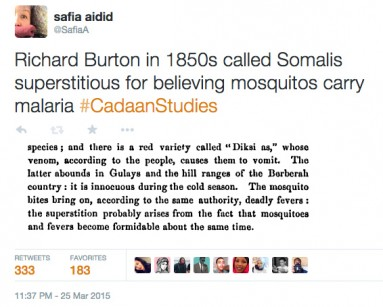
What’s really wild is that the native people literally told the Europeans “they walked” when asked how the statues were moved. The Europeans were like “lol these backwards heathens and their fairy tales guess it’s gonna always be a mystery!”
Maori told Europeans that kiore were native rats and no one believed them until DNA tests proved it
Roopkund Lake AKA “Skeleton Lake” in the Himalayas in India is eerie because it was discovered with hundreds of skeletal remains and for the life of them researchers couldn’t figure out what it was that killed them. For decades the “mystery” went unsolved.
Until they finally payed closer attention to local songs and legend that all essentially said “Yah the Goddess Nanda Devi got mad and sent huge heave stones down to kill them”. That was consistent with huge contusions found all on their neck and shoulders and the weather patterns of the area, which are prone to huge & inevitably deadly goddamn hailstones. https://www.facebook.com/atlasobscura/videos/10154065247212728/
Literally these legends were past down for over a thousand years and it still took researched 50 to “figure out” the “mystery”. 🙄
Adding to this, the Inuit communities in Nunavut KNEW where both the wrecks of the HMS Erebus and HMS Terror were literally the entire time but Europeans/white people didn’t even bother consulting them about either ship until like…last year.
“Inuit traditional knowledge was critical to the discovery of both ships, she pointed out, offering the Canadian government a powerful demonstration of what can be achieved when Inuit voices are included in the process.
In contrast, the tragic fate of the 129 men on the Franklin expedition hints at the high cost of marginalising those who best know the area and its history.
“If Inuit had been consulted 200 years ago and asked for their traditional knowledge – this is our backyard – those two wrecks would have been found, lives would have been saved. I’m confident of that,” she said. “But they believed their civilization was superior and that was their undoing.”
“Oh yeah, I heard a lot of stories about Terror, the ships, but I guess Parks Canada don’t listen to people,” Kogvik said. “They just ignore Inuit stories about the Terror ship.”
Schimnowski said the crew had also heard stories about people on the land seeing the silhouette of a masted ship at sunset.
“The community knew about this for many, many years. It’s hard for people to stop and actually listen … especially people from the South.”
Indigenous Australians have had stories about giant kangaroos and wombats for thousands of years, and European settlers just kinda assumed they were myths. Cut to more recently when evidence of megafauna was discovered, giant versions of Australian animals that died out 41 000 years ago.
Similarly, scientists have been stumped about how native Palm trees got to a valley in the middle of Australia, and it wasn’t until a few years ago that someone did DNA testing and concluded that seeds had been carried there from the north around 30 000 years ago… aaand someone pointed out that Indigenous people have had stories about gods from the north carrying the seeds to a valley in the central desert.
it’s literally the oldest accurate oral history of the world.
Now consider this: most people consider the start of recorded history to be with the Sumerians and the Early Dynastic period of the Egyptians. So around 3500 BCE, or five and a half thousand years ago
These highly accurate Aboriginal oral histories originate from twenty thousand years ago at least
The aboriginal people of Australia have a history in the country that starts at least 30,000 years ago. Possibly as long as 60,000 years ago. They are believed to have been among the very the first diasporas out of Africa.
Just think about that. We’d been confined to a single continent for all of human history. And this group invented migration and sea-crossing and got to Australia. They probably went via Asia, but on the other hand there’s no genetic evidence for them spending any time in that continent.
It hardly seems plausible they just sailed from the Somali coat heading east across the vast India Ocean with their fingers crossed they’d hit land, hundreds of thousands of years before sea-going was even A Thing. But then the idea of this band going the long way round – across desert, mountain, sea and jungle; through Western Asia, then the entire India sub-continent and then hopping from island to island – hardly seems possible either.
Nevertheless, they made the journey.
No one survives that, and then goes on to thrive in Australia (which is well documented as being a hostile landscape even today) by luck. These were sophisticated people.
Aboriginal people know what they’re about. They saw the world before most people knew there was a word to see. If they say there were giant kangaroos, there were giant kangaroos.
all gaul is divided into three parts, of which the belgians inhabit the first, the aquitani inhabit the second, and those who are called celts in their own language and gauls in ours inhabit the third
umm OP neglects to mention that one small village of indomitable gauls still holds out against the invaders and life is not easy for the roman legionaries who garrison the fortified camps of totorum, aquarium, laudanum and compendium
Raymonde de Laroche (1882-1919) was a French pilot who, in 1910,
became the first woman in the world to obtain a commercial pilot’s license. She
also served as a military driver during the First World War, as flying was
considered too dangerous for women.
In 1919 she broke two
flight world records, one for altitude and one for distance. Sadly, she was
killed in an aviation accident during a time when she was preparing to become
the first female professional test pilot.
Ahh see the thing is you’re imagining that bodies in Ancient Egypt were left to decompose without care. There’s really no such thing. There’s also no concept of the ‘soul’ in Ancient Egypt either.
Let’s start at the beginning.
Most people believe that every Egyptian was mummified after death. This is simply not true. 99% of all Egyptians were never mummified, either because the practice was not yet invented (seriously, it took them a while to get it right), or because they simply could not afford it. It’s the age old adage of the 1% getting all the bells and whistles and the 99% getting nothing. Most of our surviving record is the burials of the elite, with little known about the regular citizens. It’s a bummer for Egyptologists.
What did happen was that when someone died they were placed in a dug out hole, given grave goods, and then re-covered. However, the body would not decompose but instead dry out, thus forming a natural mummy, leaving most organs intact. This was an acceptable form of burial for the Egyptians and they would still get into the afterlife even though they’ve been left to ‘decompose’.
Both manually mummified and naturally mummified individuals would be able to enter into the afterlife as they still had the one organ that mattered in all of this: the heart.
You’ve probably heard of the ‘weighing of the heart’ whereby the heart was believed to be the seat of emotion and intelligence (as they hadn’t figured out what the brain did yet), and it was weighed against Ma’at (the feather of truth). Before this point the deceased had to go before 42 ‘judge’ gods and speak Negative Confessions to state they have not broken the laws of Ma’at. The heart is then weighed to make sure they’re telling the truth. Read more about the Judgement process here.
(Weighing of the Heart scene from Ani’s Book of the Dead – Source: British Museum)
If you balanced with Ma’at you could progress into the Field of Reeds; the Egyptian afterlife that is essentially just Egypt all over again, but this time with no manual labour. If you failed, and your heart was heavy with lies, then your heart was eaten by Ammit. Here she is looking as beautiful and as terrifying as all women wish to be when they enter a room. Get it girl:
(Thoth and Ammit from Ani’s Book of the Dead – Source: British Museum)
I’m gonna go on a slight detour before I explain Second Death, so I can address the concept of the ‘soul’ in Ancient Egypt.
There isn’t such a thing as a ‘soul’ in Ancient Egypt. Modern influence on the Ancient record has led us to impose the concept on the Egyptians as a way of explaining the religious implications of the Egyptian concept of self to the general public. Basically there are 5 parts to the Egyptian concept of self:
ib – (eeb) the heart – seat of knowledge and emotions
rn – (ren) the name – important for being remembered and accepted into the afterlife. No name, you don’t exist. This is why they scrubbed names off monuments of people like Akhenaten. Read more about Damnatio Memoriae. Oddly for the Egyptians, being on display in a museum wouldn’t be the worst thing as their name would continually be being said by visitors, thus causing them to live on forever. They even had inscriptions on their tomb walls asking visitors or passers by to say their name and say an offering of bread and beer to help them continue existing. Odd how that works out. Read more about the Egyptians and their interactions with the dead.
Swt – (sheut) the shadow – since it was always present the Egyptians believed is was an intrinsic part of the self.
bA – (bah) the personality –
comes into existence after death and is corporeal, eats, drinks and copulates. It can fly between the living world and the afterlife communicating with the gods and the living. It is thought that the Ba is not a part of the person but the person in their entirety, so very much unlike the Abrahamic religions concept of a soul.
kA – (kah) the vital spark – this is what distinguishes between a living and dead person. When a person died the Ka left the body and remained in the afterlife. It needed to be sustained by offerings of food and drink from the living otherwise it would die and go into ‘Second Death’. This could be worked around by having carvings or paintings of tables piled high with food on your tomb walls (because images were magic and came to life in perpetuity), or burying yourself with food.
So basically what you refer to in your ask is the Ka of the deceased dying if the body is left to decompose. As I’ve already stated, decomposition isn’t really a thing in Egypt if the body was buried, so the Ka of the deceased would live on as long as it was tended to. I’ll get on to what happens when it isn’t in just a bit.
The only way you could get a ‘decomposed’ body is through something catastrophic happening meaning that your family would be unable to retrieve it for burial. No body. No burial. No Afterlife. This is relatively rare, but would usually occur through things like drowning in the Nile and being swept away, being eaten by an animal (usually a Crocodile), or dying outside of Egypt. There’s a reason a lot of the curses you find in Ancient Egypt have to do with drowning or being eaten by Crocodiles, mainly because it was an excellent way of wiping the existence of a person from the face of the Earth. Read more about curses in this PhD thesis.
And finally back to Second Death…
So now we know that to achieve Second Death in Ancient Egypt was to either have no body or an abandoned Ka. What exactly was ‘Second Death’? It’s a bit of a tricky concept to get across, but essentially with second death the person dies again and falls into Nun. Nun (noon) is the deification of the primordial waters of chaos that the Egyptian’s believe the world originated from. So essentially, if a person is unfortunate enough to be subjected to ‘second death’ then their Ka falls into the waters of Nun and ceases to exist entirely. There is no comeback from this. When a person falls into Nun due to second death they can never comeback to the Afterlife and they are forgotten. That’s it. Gone. Kaput. It’s not Hell or Purgatory (there’s no such thing in Ancient Egypt), it’s just complete non existence. You either achieve the afterlife, and have used all within your power to maintain your Ka (family provides offerings/tomb wall carvings/heart scarab), or you get Second Death and cease to exist.
That, my friend, is what happens to an Egyptian when their body is lost and their Ka is not sustained.




 Steel Phoenix Studios