deadcatwithaflamethrower:

demad69:

beautifulmedievalmanuscripts:

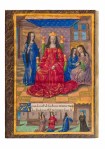
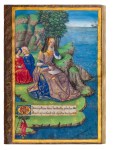
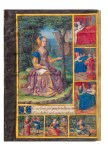
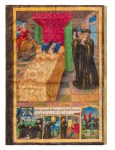
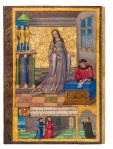
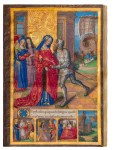
Epistres d’Ovide and three French poems

MASTER OF THE CHRONIQUE SCANDALEUSE, FRANCE, PARIS, C. 1493

This stunningly beautiful manuscript was made for Anne of Brittany, Queen of France. The compilation includes French translations of Ovid’s epistolary poems and three French poems that were written for a highly exclusive audience.

Source

@deadcatwithaflamethrower

*drooling*

mediaeval-muse:

cedrwydden:

unstilness:

cedrwydden:

unstilness:

cedrwydden:

What annoys the FUCK out of me about the ‘all historians are out there to erase queerness from history’ thing on Tumblr is that it’s just one of those many attitudes that flagrantly mischaracterises an entire academic field and has a complete amateur thinking they know more than people who’ve spent fucking years studying said field.

Like someone will offer a very obvious example of – say – two men writing each other passionate love letters, and then quip about how Historians will just try to say that affection was just different ‘back then’. Um…no. If one man writes to another about how he wants to give him 10 000 kisses and suck his cock, most historians – surprise surprise! – say it’s definitely romantic, sexual love. We aren’t Victorians anymore.

It also completely dismisses the fact of how many cases of possible queerness are much more ambiguous that two men writing to each other about banging merrily in a field. The boundaries of platonic affection are hugely variable depending on the time and place you’re looking at. What people mock us for saying is true. Nuance fucking exists in the world, unlike on this hellscape of a site.

It is a great discredit to the difficult work that historians do in interpreting the past to just assume we’re out there trying to straightwash the past. Queer historians exist. Open-minded allies exist.

I’m off to down a bottle of whisky and set something on fire.

It’s also vaguely problematic to ascribe our modern language
and ideas of sexuality to people living hundreds or even thousands of years
ago. Of course queer people existed then—don’t be fucking daft, literally any
researcher/historian/whatever worth their salt with acknowledge this. But as
noted above, there’s a lot of ambiguity as well—ESPECIALLY when dealing with a
translation of a translation of a copy of a damaged copy in some language that
isn’t spoken anymore. That being said, yes, queer erasure happens, and it
fucking sucks and hurts. I say that as a queer woman and a baby!researcher. But
this us (savvy internet historian) vs. them (dusty old actual historian)
mentality has got to stop.

You’re absolutely right.

I see the effect of applying modern labels to time periods when they didn’t have them come out in a bad way when people argue about whether some historical figure was transmasculine or a butch lesbian. There were some, of course, who were very obviously men and insisted on being treated as such, but with a lot of people…we just don’t know and we never will. The divide wasn’t so strong back in the late 19th century, for example. Heck, the word ‘transmasculine’ didn’t exist yet. There was a big ambiguous grey area about what AFAB people being masculine meant, identity-wise.

Some people today still have a foot in each camp. Identity is complicated, and that’s probably been the case since humans began to conceptualise sexuality and gender.

That’s why the word ‘queer’ is such a usefully broad and inclusive umbrella term for historians.

Also, one more thing and I will stop (sorry it’s just been so long since I’ve gotten to rant). Towards the beginning of last semester, I was translating “Wulf and Eadwacer” from Old English. This is a notoriously ambiguous poem, a p p a r e n t l y, and most of the other students and I were having a lot of trouble translating it because the nouns and their genders were all over the place (though this could be because my memory is slipping here) which made it hella difficult to figure out word order and syntax and (key) the fucking gender of everything. In class, though, my professor told us that the gender and identity of the speaker were actually the object of some debate in the Anglo-Saxonist community. For the most part, it was assumed that the principal speaker of the poem is a woman (there is one very clear female translation amongst all that ambiguity) mourning the exile of her lover/something along those lines. But there’s also some who say that she’s speaking of her child. And some people think the speaker of the poem is male and talking abut his lover. And finally, there’s some people who think that the speaker of the poem is a fucking BADGER, which is fucking wild and possibly my favorite interpretation in the history of interpretations.

TL;DR—If we can’t figure out beyond the shadow of a doubt whether the speaker is a human or a fucking badger, then we certainly can’t solidly say whether a speaker is queer or not. This isn’t narrowmindedness, this is fucking what-the-hell-is-this-language-and-culture (and also maybe most of the manuscripts are pretty fucked which further lessens knowledge and ergo certainty).

Also, if there’s nothing to debate, what’s even the fun in being an historian?

All of this.

I had a student once try to tell me that I was erasing queer history by claiming that a poem was ambiguous. I was trying to make the point that a poem was ambiguous and that for the time period we were working with, the identities of “queer” and “straight” weren’t so distinctive. Thus, it was possible that the poem was either about lovers or about friends because the language itself was in that grey area where the sentiment could be romantic or just an expression of affection that is different from how we display affection towards friends today.

And hoo boy. The student didn’t want to hear that.

It’s ok to admit ambiguity and nuance. Past sexualities aren’t the same as our modern ones, and our understanding of culture today can’t be transferred onto past cultures. It just doesn’t work. The past is essentially a foreign culture that doesn’t match up perfectly with current ones – even if we’re looking at familiar ones, like ancient or medieval Europe. That means our understanding of queerness also has to account for the passage of time. I think we need to ask “What did queerness look like in the past?” as opposed to “How did queerness as we understand it today exist in the past?” As long as we examine the past with an understanding that not all cultures thought same-sex romance/affection/sexual practice was sinful, we’re not being homophobic by admitting there can be nuance in a particular historical product.

I know a lot of very smart people who are working on queerness in medieval literature and history. And yes, there are traditions of scholars erasing queer history because they themselves are guided by their own ideologies. We all are. It’s impossible to be 100% objective about history and its interpretation. But that doesn’t mean there isn’t good work being done by current scholars, including work that corrects the bad methodologies of the past.

deadcatwithaflamethrower:

misty-anne:

orbisonblue:

kozacy:

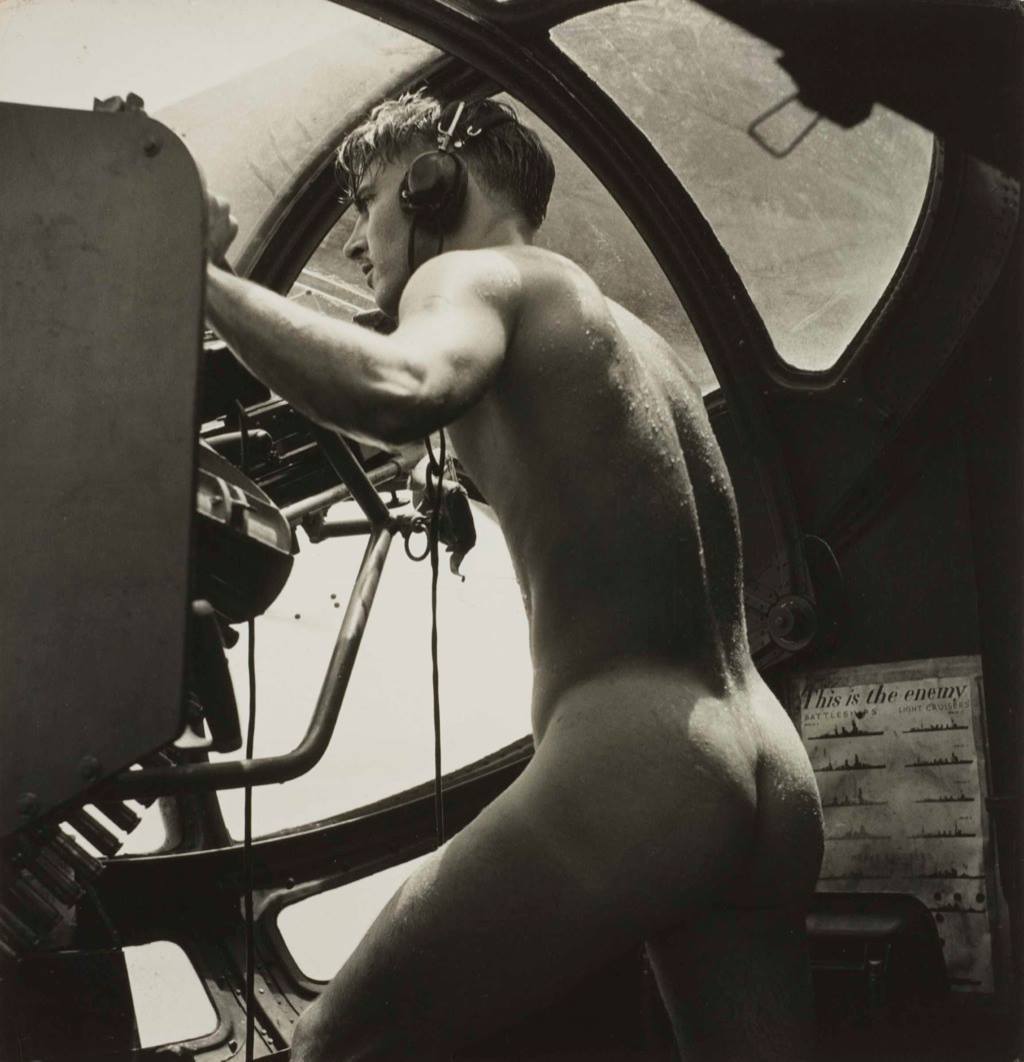
In the heat of battle, photographer Horace Bristol captured one of the most unique and erotic photos of WWII.

Bristol photographed a young crewman of a US Navy “Dumbo” PBY rescue mission, manning his gun after having stripped naked and jumped into the water of Rabaul Harbor to rescue a badly burned Marine pilot. The Marine was shot down while bombing the Japanese-held fortress of Rabaul.

“…we got a call to pick up an airman who was down in the Bay. The Japanese were shooting at him from the island, and when they saw us they started shooting at us. The man who was shot down was temporarily blinded, so one of our crew stripped off his clothes and jumped in to bring him aboard. He couldn’t have swum very well wearing his boots and clothes. As soon as we could, we took off. We weren’t waiting around for anybody to put on formal clothes. We were being shot at and wanted to get the hell out of there. The naked man got back into his position at his gun in the blister of the plane.”

“And well, there was his butt, and I had a camera. I mean I AM a historian.”

That is the BEST EVER quote about the nature of historians I’ve ever seen

@deadcatwithaflamethrower ? For cheering ups?

Because it was there. *firm nod*

sisterofiris:

One of the most powerful moments I experienced as an ancient history student was when I was teaching cuneiform to visitors at a fair. A father and his two little children came up to the table where I was working. I recognised them from an interfaith ceremony I’d attended several months before: the father had said a prayer for his homeland, Syria, and for his hometown, Aleppo.

All three of them were soft-spoken, kind and curious. I taught the little girl how to press wedges into the clay, and I taught the little boy that his name meant “sun” and that there was an ancient Mesopotamian God with the same name. I told them they were about the same age as scribes were when they started their training. As they worked, their father said to them gently: “See, this is how your ancestors used to write.”

And I thought of how the Ancient City of Aleppo is almost entirely destroyed now, and how the Citadel was shelled and used as a military base, and how Palmyran temples were blown up and such a wealth of culture and history has been lost forever. And there I was with these children, two small pieces of the future of a broken country, and I was teaching them cuneiform. They were smiling and chatting to each other about Mesopotamia and “can you imagine, our great-great-great-grandparents used to write like this four thousand years ago!” For them and their father, it was more than a fun weekend activity. It was a way of connecting, despite everything and thousands of kilometres away from home, with their own history.

This moment showed me, in a concrete way, why ancient studies matter. They may not seem important now, not to many people at least. But history represents so much of our cultural identity: it teaches us where we come from, explains who we are, and guides us as we go forward. Lose it, and we lose a part of ourselves. As historians, our role is to preserve this knowledge as best we can and pass it on to future generations who will need it. I helped pass it on to two little Syrian children that day. They learnt that their country isn’t just blood and bombs, it’s also scribes and powerful kings and Sun-Gods and stories about immortality and tablets that make your hands sticky. And that matters.

deadcatwithaflamethrower:

loafed-beans:

ethereal-insight:

fedkaczynski:

allamericankindofguy-actual:

fedkaczynski:

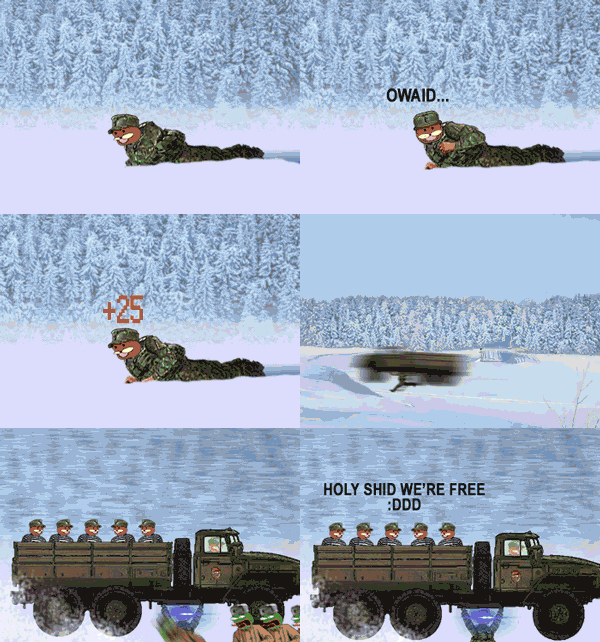
What’s funny is that this actually happened. 

I’m unfamiliar with this story please elaborate

Finnish soldier gets separated from the rest of his unit but he’s the only one carrying the emergency amphetamines for the unit, takes too many and goes on a one man rampage for like 2 weeks straight giving the opposing Soviet soldiers nightmares for decades. Oh and he did it all on skis. 

Did he survive?

Yes, during his methed up 2-3 week rampage he got injured by a land mine, travelled 400km on skis, and only ate pine buds and a Siberian Jay that he caught which he ate raw. When he made it back to Finnish lines he was taken to a hospital where it was found his heart rate was nearly 200 beats per minute and his weight had dropped to 43kg (94.7lbs).

Don’t fuck with the Finns.