Here’s a cool trick to see if a man actually respects you: try disagreeing with him
A friend of mine did something with online dating where, before meeting a person, she’d say no to something minor without a reason for the no. For example: “No, I don’t want to meet at a coffee shop, how about X?”, or “No, not Wednesday”, or “No, I don’t want to recognize each other by both wearing green shirts”. She said how the potential dates reacted was a huge indicator of whether she actually wanted to meet them, something I readily believe.
I’ve mentioned this to a few people and sometimes I get very annoyed and incredulous responses from guys about how are they supposed to know that it’s a test if the girl is being unreasonable? How are they supposed to know that and let her have her way? I find it difficult to explain that if you find it unreasonable for someone to have a preference of no consequence which they don’t feel the need to explain, then you are the one being unreasonable. You can decide for yourself that it sounds flaky and you don’t want to date her, but you don’t have a right to know and approve all of her reasons for things in order to deign to respect that she said no about it. Especially in the case of someone you haven’t even fucking met yet.
The point isn’t to know it’s a test, the point is that if you would only say “yes” if you knew it was a test, then what if it’s not a test, but because she hates coffee shops, or because she’s attending a funeral Wednesday and doesn’t know you well enough to want to share that, or whatever else? Because if you’re making rules for when other people can have preferences and not explain why… yeah, that is a thing they can reasonably want to avoid.
Sometimes people like to write things about florist’s shops. Here are two things you need to know, the most egregiously wrong things.
1. It makes no fucking sense to sketch out a bouquet before you make it. Every individual flower is different in a way that cannot really be adjusted the way other building materials can be adjusted, and each individual bouquet is unique. Just put the fucking flowers together.
2. No one — in months and months of working at the flower shop — has ever cared what the flower/color of the flower means. No one’s ever asked. It’s just not something people tend to care about outside of fiction and it’s certainly not something most florists know. You know what florists know? What looks good and is thematically appropriate.
Here’s an actual list of the symbology of flowers, as professionals use it:
Yellow – for friends, hospitals Pink – girls, girlfriends, babies, bridesmaids Red – love Purple – queens White – marriage and death (DO NOT SEND TO HOSPITALS) Pink and purple – ur mum Red, orange, and yellow – ur mum if she’s stylish Red, yellow, blue – dudes and small children Blue and white – rare, probably a wedding Red and white – love for fancy bitches
Here are what the flowers actually mean to a florist:
The Fill It Out flowers:
Carnations – fuck u these are meaningless filler-flowers, not even your administrative assistant likes them, show some creativity Alstroemeria – by and large very similar to carnations but I like them better Tea roses – cute and lil and come several to a stalk, a classy filler flower Moluccella laevis – filler flower but CHOICE Delphinium – not as interesting as moluccella but purple so okay I guess Blue thistle – FUCK YEAH, some fucking textural variety at last! you’re getting this for a dude, aren’t you? Chrysanthemums – barely better than carnations but better is still better Gladiolus – ooh, risky business, someone understands the use of the Y-axis, very good
Focal points:
Long-stem roses – yeah whatever Lilies – LBD, looks good with everything, get used as often as possible Hydrangeas – thirsty fuckers, divas of the flower world and rightly so, treat them right and they make you look good Gerbera daisies – the rose’s hippie cousin, hotter but no one admits it Peonies – CHA-CHING, everybody’s absolute favorite but you need guap Orchids – if this isn’t for a wedding you’re probably trying too hard but they’re expensive so keep ordering them
You know what matters? THE CUSTOMER’S BUDGET. THAT’S TELLING.
-$20 – if you’re not under 12, fuck off, get your sugar something else $30 – good for bouquets but an arrangement will be lame $40 – getting there, there’s something that can be done with that. you can get some gerbs or roses with that and not have them look stupidly solo. $50 to $70 – tolerable $80 – FINALLY. It sounds elitist but this really is the basic amount of money you should expect to spend on an arrangement that matters. That’s your Mother’s Day arrangement. You’re probably not going to spend $80 on a bouquet. $90 to $130 – THE GOOD SHIT, you’re likely to get some orchids $130+ – Weddings and death. This amount of money gets you a memorial arrangement or a handmade bridal bouquet. Don’t spend this on a Mother’s Day or a Babe I Love You arrangement, buy whosits a massage or something.
Miscellaneous:
Everything needs greening and if you don’t think that you’re an idiot.
As a new employee, when you start making arrangements, you can’t see the mistakes you’re making because you’re brand new and you’re learning an art form from the ground up.
With a few exceptions customers don’t have a clear plan in mind. They want you to develop the bouquet for them. They want something that will delight their little sweetbread but you’re lucky if they know that person’s favorite color, let alone flower.
Flower shops don’t typically have every kind of flower in every kind of color. Customers generally aren’t assed about that. Most people don’t care about the precise shade of the rose or having daffodils in July, because they’re not boning up on flower language before they buy. That would imply that they’ve got a clear bouquet in mind and, again, they don’t.
Being a florist is essentially a lot like what I imagine being a mortician is about. You’re basically keeping dead things looking good for as long as possible. You keep the product in the fridge so it doesn’t rot and look horrible by the time the family gets a whack at it, and in the meanwhile you put it in a nice container.
Anyway that’s flowers.
this is magnificent and I love hearing about ppl job feilds
“Miss Sherlock,” 8-part Japanese-language drama series, made as a joint venture with Hulu Japan.
“Miss Sherlock,” now in post-production, stars Yuko Takeguchi in the title role and is a modern interpretation of the classic Sherlock Holmes tales, solving bizarre and extraordinary cases. Shihori Kanjiya plays Dr Wato Tachibana, a reinterpretation of Holmes’ sidekick, Doctor Watson.
The series will air from April 2018, simultaneously on Hulu in Japan, and HBO’s streaming platform, HBO GO, and HBO on Demand. (X) (X)
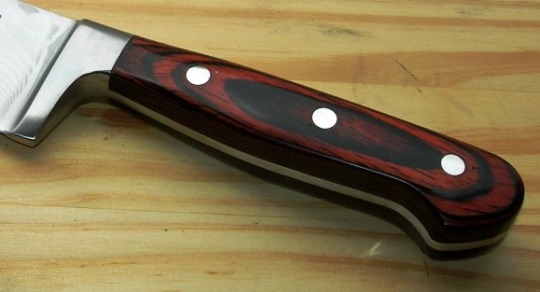
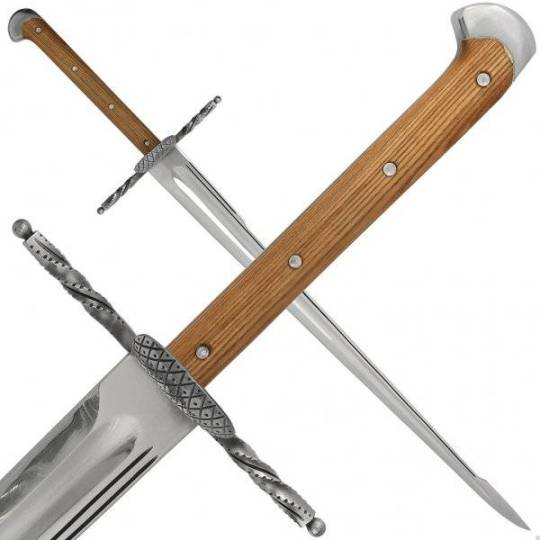
I don’t wanna like Kill The Joke but this brings up a really cool fact about swords in ~14th-16th century Germany! The only people who were allowed to own Real Swords were the royalty and nobility BUT! Everyone else was allowed to own knives. The definition of a knife, however, was based on not length but handle construction, and to some extent how it was sharpened. The handle had to be constructed Like So with 2 pieces of wood sandwiching the metal tang.
Only one edge was allowed to be sharpened, but oftentimes a small part (a couple inches) of the short edge (e.g. the edge that wasn’t sharp) would be sharpened, and weapon design often allowed for this
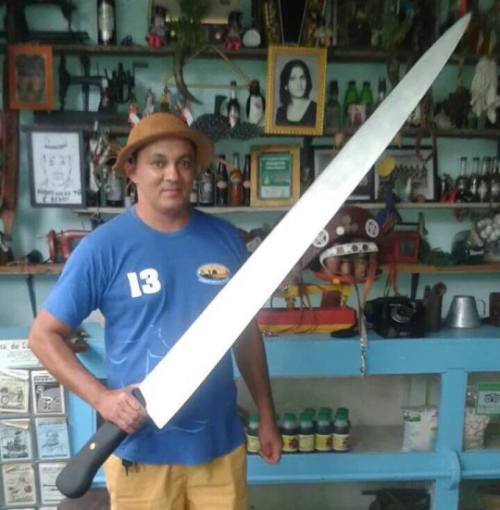
In this way, something that looked like This, a messer of just over a meter in length…
…would be legally considered a knife, and therefore allowable for non-nobility to possess. (you can also see the bit on the back of the tip that would be sharpened)
So @swordmutual, there’s a not definitive but certainly interesting historical perspective on your question
Thank you for finally answering my years old question, “why the hell are all these old german swords just called ‘knife’”
one of my favorite things is how badgers and coyotes will hunt cooperatively. as in not just like happening to go after the same thing at the same time but actually combining efforts to bring down prey; coyotes are faster and can chase down prey species, while badgers are adept at digging them out of their burrows
Thanks sooo much for coming along on this ride! I’m so happy to say that Silenced Magic is live on Amazon today. It’s free with Kindle Unlimited, and ’d be honored if you’d check it out and maybe even leave me a review.
Here’s what you’re getting into:
Sean Ollivier doesn’t find out that David Takeda is just your run-of-the-mill comp-sci junior at Deercreek University until Sean accidentally-on-purpose outs himself as a witch. He’s surprised when David’s surprised, so Sean has to ask—isn’t David an elf? Come on, he’s attractive, he’s socially awkward, it all adds up. David insists that, no, for real, he’s not an elf. And what does Sean mean, magic?
David finds out that Sean means magic is a Thing That Exists when he takes David to his usual paranormal hangout to double-check about this alleged not-an-elf business. David has to come to terms quickly with the fact that all the regulars at Sean’s fave coffee shop, Mistletoe, are just a little bit on the abnormal side. Paranormal, actually.
Turns out Deercreek is full of witches, psychics, elves, pixies, giants, werewolves, faeries, and a thriving paranormal underground that swirls around Mistletoe. David and Sean get tangled in all of it as they hack magical databases, expose a new magic, and figure out if a witch and a human have any chance at falling in love.
And because I’m so excited to finally, finally share this with you, there’s an excerpt under the cut (different from the excerpt you can read on Amazon!):
1. Linguistic Intelligence: the capacity to use language to express what’s on your mind and to understand other people. Any kind of writer, orator, speaker, lawyer, or other person for whom language is an important stock in trade has great linguistic intelligence.
2. Logical/Mathematical Intelligence: the capacity to understand the underlying principles of some kind of causal system, the way a scientist or a logician does; or to manipulate numbers, quantities, and operations, the way a mathematician does.
3. Musical Rhythmic Intelligence: the capacity to think in music; to be able to hear patterns, recognize them, and perhaps manipulate them. People who have strong musical intelligence don’t just remember music easily, they can’t get it out of their minds, it’s so omnipresent.
4. Bodily/Kinesthetic Intelligence: the capacity to use your whole body or parts of your body (your hands, your fingers, your arms) to solve a problem, make something, or put on some kind of production. The most evident examples are people in athletics or the performing arts, particularly dancing or acting.
5. Spatial Intelligence: the ability to represent the spatial world internally in your mind — the way a sailor or airplane pilot navigates the large spatial world, or the way a chess player or sculptor represents a more circumscribed spatial world. Spatial intelligence can be used in the arts or in the sciences.
6. Naturalist Intelligence: the ability to discriminate among living things (plants, animals) and sensitivity to other features of the natural world (clouds, rock configurations). This ability was clearly of value in our evolutionary past as hunters, gatherers, and farmers; it continues to be central in such roles as botanist or chef.
7. Intrapersonal Intelligence: having an understanding of yourself; knowing who you are, what you can do, what you want to do, how you react to things, which things to avoid, and which things to gravitate toward. We are drawn to people who have a good understanding of themselves. They tend to know what they can and can’t do, and to know where to go if they need help.
8. Interpersonal Intelligence: the ability to understand other people. It’s an ability we all need, but is especially important for teachers, clinicians, salespersons, or politicians — anybody who deals with other people.
9. Existential Intelligence: the ability and proclivity to pose (and ponder) questions about life, death, and ultimate realities.
Howard Gardner’s seminal Theory of Multiple Intelligences, originally published in 1983, which revolutionized psychology and education by offering a more dimensional conception of intelligence than the narrow measures traditional standardized tests had long applied. (via divinespirit)
Being intelligent is not just about being ‘smart’ and good at academic subjects.
Honestly I am still a lil ??? at the viscerally negative reaction to Vashti because like, there is nothing, in the Megillah, at all,
Vashti is…. the white dudes in the background that everyone ships with each other even though they were only briefly on screen in one scene and never showed up again
Except she’s a woman so people either hate her or have to be all ~PROGRESSIVE!~ about their headcanon and it’s like whoa there what is happening here. She ain’t that deep
That’s my Vashti opinion
ok logically i can kinda see this opinion
but then emotionally/ideologically i feel like we can/should analyse everything, that the texts are like this for a reason
but then on the THIRD hand, i do really hate how it’s either “I’m a feminist and Vashti is the best!!!” or “I’m Orthodox and Vashti was awful” and there’s never an in between or any other option! (and, as a sorta-Orthodox feminist, I’ve never come across a satisfying Orthodox feminist response to this)
I’m Orthodox and feminist, and Vashti gets a super raw deal from her life and is demonized by the Talmud in ways that look unjust to me, but that doesn’t make her a feminist hero.
I just don’t see how Vashti is not a feminist story. This is a woman who is faced with a no-win situation—she can disgrace herself (and also Achashvarosh, although he’s too drunk to notice) by acquiescing to his request, in a culture in which women’s public presence and sexuality is tightly controlled.Or she can say ‘eff off’, and stand the consequences. And she is replaced with Esther, another woman with intensely limited control over her body and her options, and even higher stakes.
I don’t know if Vashti is a feminist hero, but this is a situation with feminist resonance. And I certainly can’t see her as a villain.
The midrash I like is that Haman was out to get her, because she humiliated him, and would slap him in the face with her shoes. First, it creates a series of beautiful symmetries in the story, but I also just love imagining a tiny, gorgeous Indian princess (in my imagination, Vashti is always Indian) whapping her husband’s schmuck vizier across the face with a jeweled flip-flop.
“This photograph shows a giraffe with an impala skull in its mouth. From the photo alone the motivation is unclear, but there are extensive records of giraffes engaging in osteophagia, or bone eating.
When you’re that tall a little extra calcium comes in particularly handy, but lots of other animals engage in osteophagia on occasion. Bones are a rich source of phosphorus as well as calcium, and animals don’t always fit into the neat carnivore, herbivore, omnivore categories we learn at school.
Despite the name, osteophags seldom eat the whole bone – particularly when they come from animals of similar size. However, by gnawing on bones, antlers or even ivory they can get the nutrients they need.
Reports of large ungulates gnawing bone have been summarized in the Journal of Archaeological Science. Nevertheless, the process remains somewhat mysterious, with one study finding that the fluids within ruminants’ stomachs would not be able to draw out significant amounts of minerals. Giraffes do seem to do it more than other ruminants, however.
Some giraffes are more prone to exotic eating than others. Tony, a pure Rothschild’s giraffe at Werribee Open Plains Zoo in Australia was notorious for eating dead rabbits in front of visitors. “It just ruined your talk,” says Goldie Pergl, former visitor experience officer at Werribee. “You’d explain how giraffes were herbivores and he would do that. Then he’d come up and start eating the rubber off the windscreen wipers, which puzzled us even more.” Other giraffes at the same zoo were far more likely to stick to the script.





 Steel Phoenix Studios