I just really love how video games help you discover things about yourself that, under normal circumstances, you’d probably never find out.
Things like, oh shit, you totally have a voice kink; your preference for ranged weaponry so you can nope the fuck out when the situation goes downhill; and the shocking realization that you’d totally go to pound town with a whole host of vaguely human beings, including, but not limited to: aliens, ghouls, robots, and giant horned hominids.
PSA: journalists aren’t supposed to put names in the headlines if the person isn’t a public figure. It’s not a matter of maliciously not giving credit
^^^as a journalist, this is something that bothers me ALL THE TIME
A friend of mine on Twitter explained this the other day, so to elaborate based on what she said: If the name is not instantly recognizable the way a public figure is, then putting the name in the headline isn’t going to bring about any sort of recognition or connection in the reader, and doesn’t do much to draw the reader into the story. But something like “local teen” does create a connection by tying the person into the community, and encourages the reader to learn more about what this local teen has done. The name will be in the article itself, after the headline has done its job at getting the reader to look into it.
I think some of y’all need to see this
Literally my thoughts every time I see dumbass comments like “why don’t you say their name?????”
‘staring into the camera like you’re on the office’ is such an interesting cultural phenomenon because it points to one of my very favorite things in pop culture, which is the use of commonly known fictional situations to indicate an emotion or context that is extremely specific and can’t necessarily be communicated with language alone.
why do characters on the office look into the camera? on the office, the characters are being filmed as part of a documentary; they understand they are being filmed and can acknowledge that fourth wall and those theoretical future viewers. but because the office is a comedy, that fourth wall acknowledgement is not about explaining motivations or gaining approval for an action, but about sharing an agreement with a group of people who are not actually there.
characters on the office look into the camera when something ridiculous is happening that no one in the room thinks is ridiculous but the person looking at the camera, were they to say ‘this is so ridiculous’ to the people in the room, their comrades in fiction, they would get serious pushback or anger; to those characters the situation is serious. the character looking into the camera is a more objective viewer, like the audience, and by looking at us they’re putting themselves on our objective team. and in the future when this ‘documentary’ would air, they would be vindicated as the person who understood that the situation was ridiculous.
so in real life, when we talk about ‘looking into the camera like we’re on the office’, this very specific emotion is what we’re referring to: that we’re in a situation that any objective viewer would find inherently ridiculous, and are seeking acknowledgement from an invisible but much larger group that would agree with us, even though nobody in the situation would do so. we’re putting ourselves in an outsider position, a less emotional position, and inherently a more powerful position, because we’re not vulnerable to being laughed at like all the ridiculous people we’re among. we’re among them, but we’re not with them, and the millions of people watching us on theoretical tv would be on our team, not theirs. that’s such a specific idea and concept, and one that’s really hard to communicate in pure language. but we can say ‘looking into the camera like we’re on the office’ and it’s much easier to communicate what we mean.
for me that’s what pop culture is for, and why it’s so important that it’s pop culture. maybe it feels more special if it’s only you and a grape who know that something exists, but the more people consume something, the more its situations and reactions become common knowledge, a sort of communal well from which we can draw to articulate real life problems. and ultimately, the easier it is for us to communicate and understand each other.
We used to cast our eyes to heaven in lone exasperation, now we deadpan at an imaginary camera
The oldest person alive was born on April 19, 1897, meaning that April 18th, 1897 was approximately the last time the Earth was inhabited by an entirely different set of people and if you don’t think that’s the realest shit ever then you can get right on outta town.
It’s the complete results of the Fansplaining Fic Preferences Survey! What were the tropes people loved? The ones they hated? The ones everyone was like ¯_(ツ)_/¯ about? GO FIND OUT NOW!
This is much more detailed than the title suggests and it’s pretty fascinating. Who knew the eighth most popular AU type is “non-coffeeshop retail & service industry”?
Also known as an ambivert, an extroverted introvert is someone who exhibits qualities of both introversion and extroversion.
1. Their spot on the spectrum changes with their environment.
Your ambivert friend may be loud and gregarious around their family,
but quiet and thoughtful at the office. Seeing them in both situations
may feel like meeting two entirely different people.
2. Talking to strangers is fine – but don’t expect them to keep it to small talk.
Although an ambivert can hold up their end of a
conversation, talking
about the weather will not be enough to engage them. Their social energy
is
limited enough that they won’t want to waste it on meaningless chatter.
They will likely push the conversation into deeper territory or bow out
entirely.
3. They like to be alone – they don’t like to be lonely.
There is a big difference between the two. Choosing to sit at home
with a tub of ice cream and a book feels fantastic. Sitting at
home because nobody called them back feels sad and lame.
4. Getting them out of the house can be a challenge.
If you catch your friend on a highly introverted day, you may just be
better off leaving them at home. They might manage to be social, but they’ll
just be thinking about their books and their couch the whole time.
5. If they’re new, you can find them in the back of the room.
An introverted extrovert will approach new situations with cautious
excitement. If they know someone in the group, they will likely cling to
them a bit as they become comfortable. If they do not, they might waver on the
edge of the crowd, slowly getting used to the water rather than jumping
in all at once.
6. They’re selectively social.
They don’t mean to be snobs. They just have limited social energy and
prefer interacting one-on-one or in small groups. For this reason, they
can only afford to invest their social time and energy in those who they
feel truly connected to.
7. Making friends is easy. Keeping them is hard.
They like talking to people, but they value their alone-time, as well. This
can make maintaining a friendship tricky. If your ambivert friend makes
an effort to consistently invest time and energy in your friendship, be
glad. You are truly special to them.
8. Their social desires change with the breeze.
They might be desperate to hang out with you on Friday, but then not
answer your call on Saturday. They’re not mad at you. They’re just super
comfortable in bed watching films.
9. They can talk to you for hours.
If you manage to catch them in a one-on-one situation, an extroverted
introvert will just not shut up. Once their interest is engaged, there’s
no stopping them.
10. Listening is great too, though.
Sometimes they want to be a part of the action, but their social energy
levels are too low for them to contribute in a meaningful way. Listening
allows them to get to know you without burning up their social fuel. They also
know its value from their chattier moments when they are desperate for an
ear.
Yeah.
Ambivert’s a word I’ve been trying to remember for ages.
Fun History Fact: The overwhelming majority of cowboys in the U.S. were Indigenous, Black, and/or Mexican persons. The omnipresent white cowboy is a Hollywood studio concoction meant to uphold the mythology of white masculinity.
Thank you.
I will always re-blog this
I think it was high school when i overheard some white girl put on her best semi-disgusted and confused voice and go “why do so many Mexicans dress up like cowboys?” and I had to be the person to tell her.
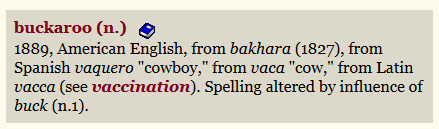
Why do you think the whites say buckero? Cause they couldn’t say vaquero.
I dunno if I reblogged this before but fuck it, y’all gon learn today.
Teach the children.
also, cowboy culture was hella gay. like, write-poems-about-your-cowboy-partner gay.
IF people acknowledge it, they play the necessity card– there weren’t any women out on the range, so they had to “resort to men.” this claim completely erases 1) the romantic (not just sexual) writings of actual cowboys, 2) the acknowledgement of cowboys’ potential homosexual activity by writers at the time, and 3) the possibility that some men would deliberately become cowboys with the intent to seek out homosexual encounters.
no one wants to admit it, but cowboy culture was just. so inherently gay.
Im here for the gay POC cowboys
Guys: “vamoose,” “hoosegow,” “calaboose” it’s all Spanish.
Off the top of my head, it jibes with what I’ve discovered in other sources.
Queuing this with a reminder to self: add that Cartographer’s Guild thread link to this, it has more details w basically the same numbers.
… things i never did: add that link. Ahem.
Just to add re: horses re: typical 4 gaits
Walk is an average of 4mph Trot is an average of 8mph Canter is an average of 16-20 mph Gallop is an average of 25-30 mph
Your gallop is probably only gonna be 40 mph if a) your horse is really fit or b) your horse is built for running, a la the English Thoroughbred or the American Quarter Horse. Your horse also needs to be pretty physically fit to sustain a gallop for more than a couple of miles. Top level eventing equines, at the peak of physical fitness, only sustain a gallop for about 11 minutes/4 miles, and that’s a tremendous effort resulting from serious conditioning, and is also including going over/through various terrain and obstacles that the average horse might shy away from. If your horse hits that speed, they will need to recover immediately afterward, either through stopping, or going at the walk.
Your horse will probably be able to maintain a relatively high speed for longer if they are alternating between walking and trotting, with some cantering.
Good references for horse travel include the Pony Express, literally any cavalry program, and modern-day endurance racing.
More on horses and distance.
Message riders, including the Pony Express, would switch horses so they could run a horse to exhaustion without killing it and then grab another fresh one while a groom took care of the spent horse. Which would then do another run after it had recovered. Pony Express riders would switch horses about every 10 miles. Also, the riders were restricted to 125 pounds. Most Pony Express riders were teenaged boys. So, how far did a Pony Express rider ride in a day? About 75 miles. Still not 100. Could you do it? Probably, with multiple horses, but you’d be riding yourself beyond exhaustion and it’s more likely you’d fall off from tiredness, bluntly.
Stage coaches also used a similar system to maximize speed. A stagecoach could cover 60 to 70 miles per day. This was, by the way, the fastest way to travel in Regency England.
100 miles in a day on a single horse?
The Tevis Cup is a 100 mile race with a time limit of 24 hours. In 2016 the winning rider, Karen Donley, rode Royal Patron to the finish at Auburn at 9:48pm, having set off from Robie Park at 5:15am.
This means it took her 16.3 hours to cover the 100 mile distance on a single horse.
The Tevis Cup is the most difficult endurance ride in the world.
After such a ride, both horse and rider would be spent. They take days to recover from these rides. Days.
The horses have to be at least 8 years old to compete at the top level. They’re checked by a vet regularly, and these horses and riders train extensively.
There is absolutely no way horse and rider could cover 100 miles in a day and be fit for anything else afterwards. Furthermore, if a top race rider is taking 16 hours to do that distance, with anything quicker likely to kill the horse…
70 is more reasonable, but they’re still not going to be much use.
So, how far should you have your character travel on horseback in one day.
The answer is 20-30 miles, maybe 40 if they’re on a road in level terrain. Less if they’re having to trailblaze, use game trails, etc. That is assuming that your characters know how to ride and that their horses are in appropriate condition.
It’s also assuming you don’t have a wounded, unconscious companion tied across the saddle. Or have a pack horse. Dead weight – unconscious or dead bodies, the deer you just killed, your packs, or somebody who doesn’t know how the heck to ride slow horses down considerably.
The distances are similar, by the way, for mules.
Have I already reblogged this at some point in the past?
Eh, still important to know.
Something else that’s important to note is that, if your characters are riding in a carriage, and they’re going to be traveling nonstop, especially at a fast pace, then there is no way they’ll be using the same team of horses the entire time.
So for an added bit of realism, mention that the few pit stops they make included getting a fresh team of horses.
I already mentioned that when talking about stagecoaches, but reblogging for the added clarification.
around this time of year i see a lot of articles and op eds from muslims and non-muslims alike about what jesus means in islam and to muslims. which makes sense. there is undeniable year-round pressure to assure christians that muslims have jesus too, just in a different way, a pressure which only intensifies around christmastime.
but we also have mary. and what i often don’t see is talk of her, despite mary being one of the most important female figures in islam, despite mary being one to lead souls into paradise, despite the qur’anic story of the birth of jesus coming from a chapter named for his mother. and i think we should talk about mary more.
the qur’an tells us not just about mary as a single woman giving birth to a prophet, but as a woman who was once a little girl, who was once a surprising answered prayer from allah. mary’s parents were old and childless when her mother hannah saw a mother bird feeding her babies. the sight awakened a desire in hannah to have a child, so she prayed for a child, and as you may guess, allah granted her request and when hannah became pregnant, and her husband died before the child was born, she prayed again.
“Allah listened when a woman of the family of Imram said, ‘My Lord! I do hereby vow to you what is in my womb to be dedicated to your service.’…But when she gave birth she said, ‘My Lord! I have given birth to a female,’ and Allah knew best what she had given birth to, and the male she was thinking of was not like this female she had brought forth. ‘I have named her Mary and I commend her and her offspring to your protection from satan, the accursed.’” (3:35-36)
basically, hannah had expected a boy, and so promised that he would be raised in the service of god. so when she turned out to have a daughter, she went, “uhh, god? you gave me a girl,” and allah was like, “i know what i did,” and hannah said, “well, okay! i named her mary and i’m gonna follow through of my promise even though it’s gonna be kinda weird. please protect her and her future children.” so mary grew up in the temple under the care of the prophet zechariah.
and it was obvious that mary was blessed.
“Every time Zechariah visited her in her chamber, he found her with provisions. He said, ‘From where do you get all this, Mary?’ She replied with all conscientiousness, ‘It is from Allah. Allah provides whomsoever he wills without measure.’” (3:37)
and mary’s righteousness caused zechariah to pray for a child for himself and his wife elizabeth, despite his old age and her infertility, and the child they were blessed with was yahya, aka john the baptist, a prophet like his father.
and when an angel appeared to mary in the form of an attractive man, she immediately called out for allah to defend her from this strange man, bc women have always had reason to be afraid when finding themselves alone around men (and in one translation she says, “make him leave me alone” which i love for obvious reasons), but the angel reassured her, bringing her the message of the child she was about to conceive.
and mary did not have a joseph.
and mary went off into the desert all alone to give birth to jesus, and delivered her son under a dried up dead palm tree, and wished aloud, in her physical and emotional pain, that she had died before all this happened to her, before she would have to endure single motherhood, before she could experience the agony of labor, before she would have to cope with how her family and friends and society would treat her when she returned as a still-unmarried young woman with a baby.
and mary, hungry and dehydrated and without a support network and now with a newborn, wished that she had been utterly forgotten.
but mary would not be forgotten by allah, for after all, her mother had prayed for her protection, and for the protection of the child she had just given birth to, and allah listens to all things.
“But he called her, ‘Do not grieve; your Lord has provided beneath you a stream. And shake toward you the trunk of the palm tree; it will drop upon you ripe, fresh dates. So eat and drink and be contented. And if you see from among humanity anyone, say, ‘I have vowed a fast to the Most Merciful, so I will not speak to anyone today.’” (19:24-26)
and so mary did not have to answer to anyone who would speak out against her when she returned home with an infant, defend herself against any name she would be called, because she answered to allah alone.
and – my favorite bit of all of mary’s story – is this:
“And remember when the angels said, ‘Mary, indeed Allah has chosen you and purified you and chosen you above all the women of the worlds.’” […] And remember when the angels said, ‘Mary, indeed Allah gives you good tidings through a prophetic word from him about the birth of a son, whose name will be Messiah, Jesus, son of Mary – distinguished in this world and the hereafter and among those nearest to Allah.’“ (3:42, 45)
and mary was chosen twice.
and the story would not be told casting her as mary, mother of jesus. no, it was and is mary’s story. and jesus, one of the most important prophets in islam, would be called, son of mary.
“If autism isn’t caused by environmental factors and is natural why didn’t we ever see it in the past?”
We did, except it wasn’t called autism it was called “Little Jonathan is a r*tarded halfwit who bangs his head on things and can’t speak so we’re taking him into the middle of the cold dark forest and leaving him there to die.”
Or “little Jonathan doesn’t talk but does a good job herding the sheep, contributes to the community in his own way, and is, all around, a decent guy.” That happened a lot, too, especially before the 19th century.
Or, backing up FURTHER
and lots of people think this very likely,
“Oh little Sionnat has obviously been taken by the fairies and they’ve left us a Changeling Child who knows too much, and asks strange questions, and uses words she shouldn’t know, and watches everything with her big dark eyes, clearly a Fairy Child and not a Human Like Us.”
The Myth of the Changeling child, a human baby apparently replaced at a young age by a toddler who “suddenly” acts “strange and fey” is an almost textbook depiction of autistic children.
To this day, “autism warrior mommies” talk about autism “stealing” their “sweet normal child” and have this idea of “getting their real baby back” which (in the face of modern science) indicates how the human psyche actually does deal with finding out their kid acts unlike what they expected.
Given this evidence, and how common we now know autism actually is, the Changeling myth is almost definitely the result of people’s confusion at the development of autistic children.
Weirdly enough, that legend is now comforting to me.
I think it’s worth noting that many like me, who are diagnosed with ASD now, would probably have been seen as just a bit odd in centuries past. I’m only a little bit autistic; I can pass for neurotypical for short periods if I work really hard at it. I have a lack of talent in social situations, and I’m prone to sensory overload or you might notice me stimming.
But here’s the thing: life is louder, brighter and more intense and confusing than it has ever been. I live on the edge of London and I rarely go into the centre of town because it’s too overwhelming. If I went back in time and lived on a farm somewhere, would anyone even notice there was anything odd about me? No police sirens, no crowded streets that go on for miles and miles, no flickery electric lights. Working on a farm has a clear routine. I’d be a badass at spinning cloth or churning butter because I find endless repetition soothing rather than boring.
I’m not trying to romanticise the past because I know it was hard, dirty work with a constant risk of premature death. I don’t actually want to be a 16th century farmer! What I’m saying is that disability exists in the context of the environment. Our environment isn’t making people autistic in the sense of some chemical causing brain damage. But we have created a modern environment which is hostile to autistic people in many ways, which effectively makes us more disabled. When you make people more disabled, you start to see more people struggling, failing at school because they’re overwhelmed, freaking out at the sound of electric hand dryers and so on. And suddenly it looks like there’s millions more autistic people than existed before.

 Steel Phoenix Studios