If I can, I always opt to ditch my name tag in a dementia care environment. I let my friends with dementia decide what my name is: I’ve been Susan, Gwendolyn, and various peoples’ kids. I’ve been so many identities to my residents, too: a coworker, a boss, a student, a sibling, a friend from home, and more.
Don’t ask your friend with dementia if they “remember your name” — especially if that person is your parent, spouse, or other family member. It’s quite likely to embarrass them if they can’t place you, and, frankly, it doesn’t really matter what your name is. What matters is how they feel about you.
Here’s my absolute favorite story about what I call, “Timeline Confusion”:
Alicia danced down the hallway, both hands steadily on her walker. She moved her hips from side to side, singing a little song, and smiled at everyone she passed. Her son, Nick, was walking next to her.
Nick was probably one of the best caregivers I’d ever met. It wasn’t just that he visited his mother often, it was how he visited her. He was patient and kind—really, he just understood dementia care. He got it.
Alicia was what I like to call, “pleasantly confused.” She thought it was a different year than it was, liked to sing and dance, and generally enjoyed her life.
One day, I approached the pair as they walked quietly down the hall. Alicia smiled and nodded at everyone she passed, sometimes whispering a, “How do you do!”
“Hey, Alicia,” I said. “We’re having a piano player come in to sing and play music for us. Would you like to come listen?”
“Ah, yes!” she smiled back. “My husband is a great singer,” she said, motioning to her son.
Nick smiled and did not correct her. He put his hand gently on her shoulder and said to me, “We’ll be over there soon.”
I saw Nick again a few minutes later while his mom was occupied with some other residents. “Nick,” I said. “Does your mom usually think that you’re her husband?”
Nick said something that I’ll never forget.
“Sometimes I’m me, sometimes I’m my brother, sometimes I’m my dad, and sometimes I’m just a friend. But she always knows that she loves me,” he smiled.
Nick had nailed it. He understood that, because his mom thought it was 1960, she would have trouble placing him on a timeline.
He knew that his mom recognized him and he knew that she loved him. However, because of her dementia, she thought it was a different year. And, in that year, he would’ve been a teenager.
Using context clues (however mixed up the clues were) Alicia had determined that Nick was her husband: he was the right age, he sure sounded and looked like her husband, and she believed that her son was a young man.
This is the concept that I like to call timeline confusion. It’s not that your loved one doesn’t recognize you, it’s that they can’t place you on a timeline.
What matters is how they feel about you. Not your name or your exact identity.
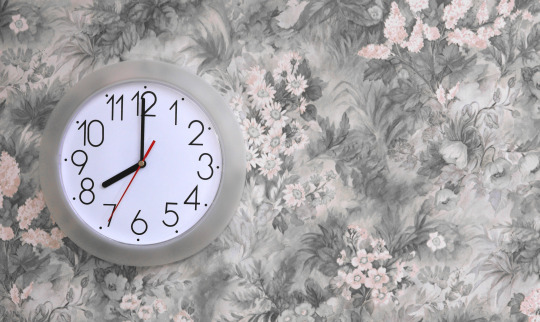
[image: analog clock set to 7:59]
This is super informative!!
I also want to chime in with my own experience caring for people with dementia
With those who have timeline confusion they may talk about people from that time who have long passed; such as a parent or a spouse and sometimes they’ll ask/state if the person is coming- or if they can go see them.
Do not tell them that their loved one has passed because this will upset the person greatly; instead tell them that they’ll be coming later or that they’ll see them soon. Act is if the person is still alive for them, ask the person about the loved one who’s passed to give them a sense of ease and comfort and some time to gush about the person they love.
In a nutshell just go along with what they’re saying unless it’s detrimental to them, they’re happier that way.
“Oh yeah, every time that dad forgets mom is dead, we head to the cemetery so he can see her gravestone.”
WHAT. I can’t tell you how many times I’ve heard some version of this awful story. Stop taking people with dementia to the cemetery. Seriously. I cringe every single time someone tells me about their “plan” to remind a loved one that their loved one is dead.
I also hear this a lot: “I keep reminding mom that her sister is dead, and sometimes she recalls it once I’ve said it.” That’s still not a good thing. Why are we trying to force people to remember that their loved ones have passed away?
If your loved one with dementia has lost track of their timeline, and forgotten that a loved one is dead, don’t remind them. What’s the point of reintroducing that kind of pain? Here’s the thing: they will forget again, and they will ask again. You’re never, ever, ever, going to “convince” them of something permanently.
Instead, do this:
“Dad, where do you think mom is?”
When he tells you the answer, repeat that answer to him and assert that it sounds correct. For example, if he says, “I think mom is at work,” say, “Yes, that sounds right, I think she must be at work.” If he says, “I think she passed away,” say, “Yes, she passed away.”
People like the answer that they gave you. Also, it takes you off the hook to “come up with something” that satisfies them. Then, twenty minutes later, when they ask where mom is, repeat what they originally told you.
I support this sentiment. Repeatedly reminding someone with faulty memory that a loved one has died isn’t a kindness, it’s a cruelty. They have to relieve the loss every time, even if they don’t remember the grief 15 minutes later.
In other words, don’t try to impose your timeline on them in order to make yourself feel better. Correcting an afflicted dementia patient will not cure them. They won’t magically return to your ‘real world’. No matter how much you might want them to.
It’s a kindness of old age, forgetting. Life can be very painful. Don’t be the one ripping off the bandage every single time.
I used to work as a companion in a nursing home where one of the patients was CONVINCED I was her sister, who’d died 40 years earlier. And every time one of the nurses said “that’s not Janet, Janet is dead, Alice, remember?” Alice would start sobbing.
So finally one day Alice did the whole “JANET IS HERE” and this nurse rather nastily went “Janet is dead” and before it could go any further I said “excuse me??? How dare you say something so horrible to my sister?”
The nurse was pissed, because I was “feeding Alice’s delusions.” Alice didn’t have delusions. Alice had Alzheimer’s.
But I made sure it went into Alice’s chart that she responded positively to being allowed to believe I was Janet. And from that point forward, only my specific patient referred to me as “Nina” in front of Alice—everyone else called me Janet, and when Alice said my name wasn’t Nina I just said “oh, it’s a nickname, that’s all.” It kept her calm and happy and not sobbing every time she saw me.
It costs zero dollars (and maybe a little bit of fast thinking) to not be an asshole to someone with Alzheimer’s or dementia. Be kind.
I wish I had heard this stuff when Grandma was still here.
I read once that you have to treat dementia patients more like it’s improv, like you have to take what they say and say to yourself “ok, and” and give them more of a story to occupy them and not just shut it down with something super harsh.
A nurse I used to work with always told us: “If a man with dementia is trying to get out of bed to go to work, don’t tell him he’s 90 and in a nursing home. Tell him it’s Sunday and he can stay in bed. If a woman with dementia is trying to stand because she wants to get her husband’s dinner out of the oven, don’t tell her he’s been dead for 20 years. Tell her you’ll do it for her and she can sit back down.”
Always remembered that, always did it. Nothing worse than hearing someone with memory loss ask the same question over and over again only to be met with: “We already told you!”
Just tell them again.
I’ve worked with elderly dementia patients, and I agree with all the above. Treat them as you’d like to be treated in the same situation.
ultimately i think kindness is the most radical thing you can do with your pain and your anger. it’s like, you take everything awful that’s ever been done to you, and you throw it back in the world’s teeth, and you say no, fuck you, i’m not going to take this. you say this is unacceptable. you say that shit stops with me.
humans are fucking terrible and this awful world we live in will fucking kill you but if you are kind, if you are brave and clever and try really hard, you can defy it. you can impose on this bleak and monstrous structure something beautiful. even if it’s temporary. even if it doesn’t heal anything inside you that’s been hurt.
i’m gonna sleep and i’m gonna wake up and i swear by everything in this deadly horrible universe i’m gonna make someone happy.
i’ve seen a number of comments and tags where people feel that they must swallow or repress their anger in order to engage in kindness. that is not at all what i am recommending here. radical kindness is an expression of anger. it is not passive. it is not repressive. it does not require you, in any way, to forgive those that have fucked you up. it does not require you to be quiet.
it just requires that you be kind. viciously. vengefully. you fight back. you plant flowers. give to charity. play games. pet someone’s dog. scream into the dark. paint and write and dance, tell jokes, sing songs, bake cookies. you have been hurt and you don’t have to deny that hurt. you just have to recognize it in other people, and take their hand, and say: no more. enough. fuck this. no more.
have a cookie.
i will say this again: we are all going to die. the universe is enormous and almost entirely empty. to be kind to each other is the most incredible act of defiance against the dark that i can imagine.
i will say this again: we are all going to die. the universe is enormous and almost entirely empty. to be kind to each other is the most incredible act of defiance against the dark that i can imagine.
3. Two good quotes by Kurt Vonnegut: “Hello babies. Welcome to Earth. It’s hot in the summer and cold in the
winter. It’s round and wet and crowded. On the outside, babies, you’ve
got a hundred years here. There’s only one rule that I know of,
babies-“God damn it, you’ve got to be kind.”
And: “Be soft. Do not let the world make you hard. Do
not let pain make you hate. Do not let the bitterness steal your
sweetness. Take pride that even though the rest of the world may
disagree, you still believe it to be a beautiful place.”
Another good quote:
“I. THIS IS NOT A GAME.
II. HERE AND NOW, WE ARE ALIVE.”
You can be kind and fuel it with rage. You can be kind and fuel it with a bitter twist, or you can be kind and fuel your kindness with righteous anger, or you can be kind and fuel it with love or spite or ecstatic joy. And no matter what your fuel is, you still can make kindness happen in the world so that people can warm themselves by it.
Kindness isn’t an emotion, kids. That’s the thing. Kindness is action. Kindness is choosing to take your emotions and channel them towards doing the most good where you can; to choose the targets of your actions carefully; to spread a little joy behind you, when you have a little to spare.
Kindness can mean a gentle word or a shouted imperative. It can be a warm meal or a gentle hug or a clean death. Kindness can manifest in many ways, and not all of them are one hundred percent nice. The kind thing to do may be doing nothing at all.
But kindness is, above all else, an action. We are imperfect humans, and we cannot control our emotions–but we can control what we do as a result. We can control the actions that our emotions and experiences propel us to perform.
The darkness is nothing but the absence of light, you know. It is endless and nihilistic and all enveloping. A lit candle has no hope against it.
But if enough of us light small candles and little matches behind us as we walk through this wide, uncaring universe, we can light up that sky. We can take an empty world and we can fill it with each other.
That’s how we can take the bones of an empty universe and forge a warm hearth fire humanity can use to keep back the night.
But kindness is, above all else, an action. We are imperfect humans, and we cannot control our emotions–but we can control what we do as a result. We can control the actions that our emotions and experiences propel us to perform.
Good is a thing you do.
I dearly love everything about this, and fundamentally have faith in the power of kindness and the impact of compassion, so I’m grateful this post exists.
The “be soft” quote is one of my absolute favorite expressions of this concept, but because of that, I just want to clarify that it was written by Iain Thomas , and it very rarely is credited to him, and I think it’s meaningful to know where it came from, despite the fact that he isn’t a well-known author.
And to add to this a few more that are etched into my heart:
“If I can stop one heart from breaking, I shall not live in vain.” – Emily Dickinson
“kindness as a discipline. tenderness as a practice.” – Warsan Shire
and, fundamentally, essentially, this, though its exact source is somewhat of a mystery (certain places site excerpts of the Talmud, others paraphrased rabbinical teaching): “Do not be daunted by the enormity of the world’s grief. Do justly, now. Love mercy, now. Walk humbly, now. You are not obligated to complete the work, but neither are you free to abandon it.”
The Judaic philosophy of Tikkun olam, or repairing/healing the world, has principles which I believe could be applied secularly by anyone who wishes to practice it, every day, in whatever way one can, even (perhaps especially) in the small, quiet acts. “The most modern and broadly understood notion of tikkun olam is that of “repairing the world” through human actions. Humanity’s responsibility to change, improve, and fix its earthly surroundings is powerful. It implies that each person has a hand in working towards the betterment of his or her own existence as well as the lives of future generations. Tikkun olam forces people to take ownership of their world. It is them, not G-d, who will bring the world back to its original state of holiness. More simply, it is important [to] participate in repairing the world by participating in tzedakah (justice and righteousness) and g’milut hasadim (acts of loving kindness). Without their stake in the improvement of their environment, injustice and evil will continue to exist.” (x)
It does not mean silence in the face of prejudice, it does not mean understanding towards violence or oppression. It does mean uplifting the hurting, it does mean hearing and defending the oppressed. It is not a relinquishing of anger, it is, as another comment above says, defiance, an action that cuts through the harms and the apathy and the weights the world can wield or lay upon us. It is an active choice, to know that we stand on a precipice, to look into and witness the dark, and to love relentlessly anyway, to be kind anyway, to light a candle that pushes back against it, to illuminate and warm whatever space you can, to exhibit tenderness, to raise your voice, to embrace the bright and all too ephemeral beauty and sweetness that can exist in the life (all types of life) around us. (love can ignite the stars. love cannot be killed or swept aside. have courage and be kind.)
The work is never finished. It never will be. We are not obligated to complete it, but we are not free to abandon it – choosing to move in love, in kindness, even with all our pain and fury, is an unwavering strength. The power is in our hands, our words, lives in the remnants of the stardust that traces our bones.


 Steel Phoenix Studios