My grandfather doesn’t use the word “calories” when talking about food…he uses the word “value” instead. I was eating fruit for lunch and he said “if you’re going for a run later you need something more valuable”. I sat there for a while just thinking about the way he said that. Change out a negative word with a positive one and you’ll see start seeing positive change.
aka “A attempt at resolving/achieving something with less effort than is required for success, & a high probability of it proving merely futile & faintly unpleasant’
I was told recently about a school that was shamed into changing its school motto. The motto was “I hear, I see, I learn.” Nothing wrong with that per se. Unfortunately the motto was in Latin, and the Latin for “I hear, I see, I learn” is “audio, video, disco”.
What the fuck that’s the best school motto ever change it back
Your yearly reminder that “I learn through suffering” can be translated into Latin as “Disco Inferno.”
Latin has this word, sic. Or, if we want to be more diacritically accurate, sīc. That shows that the i is long, so it’s pronounced like “seek” and not like “sick.”
You might recognize this word from Latin sayings like “sic semper tyrannis” or “sic transit gloria mundi.” You might recognize it as what you put in parentheses when you want to be pass-agg about someone’s mistakes when you’re quoting them: “Then he texted me, ‘I want to touch you’re (sic) butt.’”
It means, “thus,” which sounds pretty hoity-toity in this modren era, so maybe think of it as meaning “in this way,” or “just like that.” As in, “just like that, to all tyrants, forever,” an allegedly cool thing to say after shooting a President and leaping off a balcony and shattering your leg. “Everyone should do it this way.”
Anyway, Classical Latin somewhat lacked an affirmative particle, though you might see the word ita, a synonym of sic, used in that way. By Medieval Times, however, sic was holding down this role. Which is to say, it came to mean yes.
Ego: Num edisti totam pitam?
Tu, pudendus: Sic.
Me: Did you eat all the pizza?
You, shameful: That’s the way it is./Yes.
This was pretty well established by the time Latin evolved into its various bastard children, the Romance languages, and you can see this by the words for yes in these languages.
In Spanish, Italian, Asturian, Catalan, Corsican, Galician, Friulian, and others, you say si for yes. In Portugese, you say sim. In French, you say si to mean yes when you’re contradicting a negative assertion (”You don’t like donkey sausage like all of us, the inhabitants of France, eat all the time?” “Yes, I do!”). In Romanian, you say da, but that’s because they’re on some Slavic shit. P.S. there are possibly more Romance languages than you’re aware of.
But:
There was still influence in some areas by the conquered Gaulish tribes on the language of their conquerors. We don’t really have anything of Gaulish language left, but we can reverse engineer some things from their descendants. You see, the Celts that we think of now as the people of the British Isles were Gaulish, originally (in the sense that anyone’s originally from anywhere, I guess) from central and western Europe. So we can look at, for example, Old Irish, where they said tó to mean yes, or Welsh, where they say do to mean yes or indeed, and we can see that they derive from the Proto-Indo-European (the big mother language at whose teat very many languages both modern and ancient did suckle) word *tod, meaning “this” or “that.” (The asterisk indicates that this is a reconstructed word and we don’t know exactly what it would have been but we have a pretty damn good idea.)
So if you were fucking Ambiorix or whoever and Quintus Titurius Sabinus was like, “Yo, did you eat all the pizza?” you would do that Drake smile and point thing under your big beefy Gaulish mustache and say, “This.” Then you would have him surrounded and killed.
Apparently Latin(ish) speakers in the area thought this was a very dope way of expressing themselves. “Why should I say ‘in that way’ like those idiots in Italy and Spain when I could say ‘this’ like all these cool mustache boys in Gaul?” So they started copying the expression, but in their own language. (That’s called a calque, by the way. When you borrow an expression from another language but translate it into your own. If you care about that kind of shit.)
The Latin word for “this” is “hoc,” so a bunch of people started saying “hoc” to mean yes. In the southern parts of what was once Gaul, “hoc” makes the relatively minor adjustment to òc, while in the more northerly areas they think, “Hmm, just saying ‘this’ isn’t cool enough. What if we said ‘this that’ to mean ‘yes.’” (This is not exactly what happened but it is basically what happened, please just fucking roll with it, this shit is long enough already.)
So they combined hoc with ille, which means “that” (but also comes to just mean “he”: compare Spanish el, Italian il, French le, and so on) to make o-il, which becomes oïl. This difference between the north and south (i.e. saying oc or oil) comes to be so emblematic of the differences between the two languages/dialects that the languages from the north are called langues d’oil and the ones from the south are called langues d’oc. In fact, the latter language is now officially called “Occitan,” which is a made-up word (to a slightly greater degree than that to which all words are made-up words) that basically means “Oc-ish.” They speak Occitan in southern France and Catalonia and Monaco and some other places.
The oil languages include a pretty beefy number of languages and dialects with some pretty amazing names like Walloon, and also one with a much more basic name: French. Perhaps you’ve heard of it, n’est-ce pas?
Yeah, eventually Francophones drop the -l from oil and start saying it as oui. If you’ve ever wondered why French yes is different from other Romance yeses, well, now you know.
I guess what I’m getting at is that when you reblog a post you like and tag it with “this,” or affirm a thing a friend said by nodding and saying “Yeah, that”: you’re not new
this is all amazing, but I’m now waiting for people to start reblogging posts with the additional comment “SIC”.
I started Hebrew, which is why I’ve been dead on this blog, but I don’t think I can ever properly convey to you guys the sheer cultural whiplash of spending years learning Japanese from Japanese teachers and then trying to learn Hebrew from an Israeli
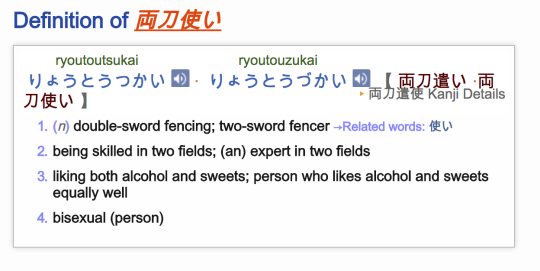
Japanese: you walk into class already apologizing for being alive Hebrew: you walk into class, the teacher insults you and you are expected to insult her back
Japanese: conjugates every single verb based on degree of intended politeness, nevermind keigo and honorifics Hebrew: Someone asked my teacher how to say “excuse me” and she laughed for several seconds before saying we shouldn’t worry about remembering that since we’ll never need to say it
Japanese: if you get one stroke wrong the entire kanji is incomprehensible Hebrew: cursive? script? fuck it do whatever you want, you don’t even have to write the vowels out unless you feel like it
Japanese: the closest thing there is to ‘bastard’ is an excessively direct ‘you’ pronoun Hebrew: ‘bitch’ translates directly
Fun fact: Israel has possibly the lowest power-distance metric of any culture in the world, while Japan has one of the highest. I didn’t realize that the CTO of my company was the CTO until somebody else told me, because everybody called him by his first name and engaged in mutual shit-talking/playful insults with him.
In Japan, even calling your boss by the wrong honorific is liable to get you in trouble.
And apparently there’s some sciencey cooperative venture going on between Israel and Japan in an official diplomatic capacity. I want to be a fly on the wall when Japanese and Israeli scientists work together.
what she means: the words “christmas tree” are used in the hobbit, and since we know that bilbo is the author of the hobbit, hobbits must have christmas which means there must be a middle earth jesus. but hobbits seem to be the only ones who have the concept of christmas which means it was probably a hobbit jesus. but frodo says in return of the king that no hobbit has ever intentionally harmed another hobbit so who crucified hobbit jesus?? were there other hobbit incarnations of religious figures?? was there hobbit moses?? did jrr tolkien even think about this at all??
Wait wait I might actually have an answer
Tolkien wrote The Hobbit like waaaay before he even dreamed up the idea for Lord of the Rings, so when he DID dream up LotR, he had a whole bunch of stuff that didn’t make sense. Like plotholes galore
Like for example in the first version Gollum was a pretty nice dude who lost the riddle contest graciously and gave Bilbo the ring as a legit present and was very helpful and it was super nice and polite and absolutely nobody tried to eat anyone because this is a story for kids and that’s very rude
But that doesn’t work with LotR, so Tolkien went back and re-released an updated version of The Hobbit with all the lore changes and stuff to fix everything that didn’t work
This is the version we know and love today
BUT rather than pretend the early version never existed, Tolkien went and worked the retcon into the lore
If you pay attention in Fellowship, there’s a bit where Gandalf is telling Frodo about the ring and he mentions how Bilbo wasn’t entirely honest about the manner in which it was found
To us modern readers, this doesn’t make a ton of sense, so mostly we just breeze by it–but actually that line is referencing the first version of The Hobbit
The pre-retcon version of the Hobbit is canonically Bilbo’s original book. The original version with Nice Gollum is canonically a lie Bilbo told to legitimize his claim to the ring and absolve him of the guilt he feels for his rather shady behavior
Then the post-retcon version is an in-universe edited edition someone went and released later to straighten out Bilbo’s lies
So it’s 100% plausible that the in-universe editor who fixed up Bilbo’s Red Book and translated it from whatever language Hobbits speak was a human who knew about Christmas Trees and tossed the detail in to make human readers feel more at home, because that’s the kind of thing that sometimes happens when you have a translator editor person dressing up a story for an audience that doesn’t know the exact cultural context in which the original story was written
Tolkien was a medieval scholar and medieval stories are rife with that sort of thing, so like… yeah
Not only all that, but Tolkien was also working within a frame narrative that he wasn’t the real author, but a translator of older manuscripts; so, in-universe, the published The Hobbit isn’t actually Bilbo’s book, but rather Tolkien’s copy of an older copy of an older copy of an older copy of Bilbo’s book. So when errors and anachronisms came up, he would leave them there instead of fixing them, and he may have even put some in intentionally; what we’re supposed to get from the “Christmas tree” bit is that the first scribe to translate the book from Westroni to English couldn’t come up with an accurate analogue for whatever hobbits do at midwinter.
Yes. Another example of tolkien doing this is him using, for instance, Old High Gothic to represent Rohirric – not because the people of Rohan actually spoke that language, but because Old High Gothic had the same relationship with English that Rohirric had with Westron (Which is the Common Language spoken in the West of Middle-Earth). There’s tons of that stuff in the book.
Like, Merry and Pippin’s real names (In Westron) are Kalimac Brandagamba and Razanur Tûk, respectively (to pick just one example of this). Tolkien changed their names in English to names which would give us English-speakers the same kind of feeling as those names would to a Westron-speaker. Lord of the Rings is so much deeper than most readers realise.
tolkein’s entire oevre is just one epic in-joke with the oxford linguistics department imo
@deadcatwithaflamethrower do you know any thing about this? It sounds like something you would know about….
I am not a full-blown LotR nerd, but that Tolkien the linguistics nerd would do this surprises me NOT AT ALL. None. Nope. Tolkien was a Language Troll and he loved it.
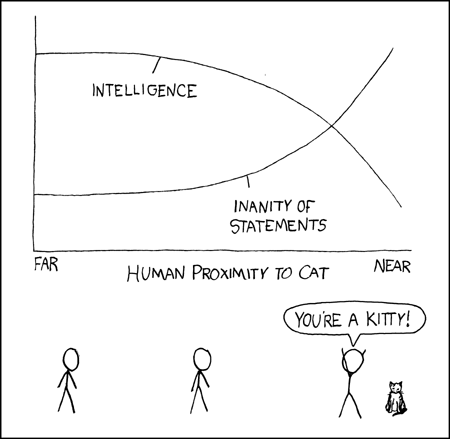
me when i see a cat: CAT! cat cat cat cat cat cat cat cat cat cat cat cat cat cat cat cat cat cat cat cat cat cat cat cat cat cat cat cat cat cat cat cat cat cat cat cat
Fun fact: when I see cute animals, I forget English and automatically revert to my native Hungarian. I don’t know what bystanders make of me, reciting guttural gibberish to rabbits.
But the real question is, what are you SAYING to the rabbits? Is it ‘RABBIT! rabbit rabbit rabbit rabbit rabbit rabbit bunny bunny bunny awww cute bunnyyyyy’?
Well, I usually say the Hungarian equivalent of ‘bun bun bun lil bun look at your tiny spoon-shaped ears awww bun brave little lawnmower bun’, but sometimes I say ‘hey rabbits, my sister’s gonna go to med school’ because I think everyone should know.
I live in Japan, and I always revert to English to talk to small animals, and I was cooing at this tiny little fluff machine of a puppy in baby english like “hello you’re so cute such a cute hello hello yess you’re good” and the 70 year old Japanese lady that was walking him started to *translate the baby talk english into Japanese* for her pup. She wanted to be sure he understood it too.

 Steel Phoenix Studios
