People who say bi erasure doesn’t happen need to realize Freddie Mercury is known as the most famous homosexual man when he identified himself as bisexual. If that’s not bi erasure I don’t even know.
Also PoC erasure, most people don’t know he was 100% Indian
Specifically he was Parsi. Also raised Zeroastrian.
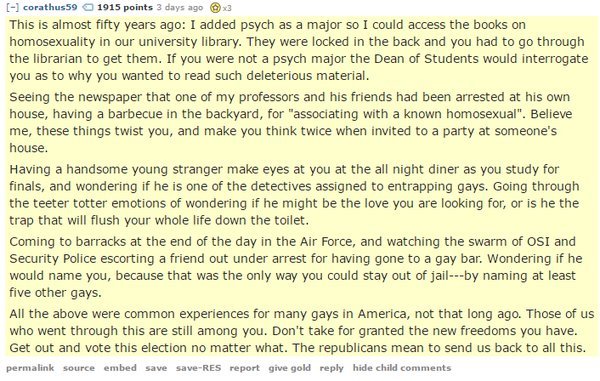
This is almost fifty years ago: I added psych as a major so I could access the books on homosexuality in our university library. They were locked in the back and you had to go through the librarian to get them. If you were not a psych major the Dean of Students would interrogate you as to why you wanted to read such deleterious material.
Seeing the newspaper that one of my professors and his friends had been arrested at his own house, having a barbecue in the backyard, for “associating with a known homosexual”. Believe me, these things twist you, and make you think twice when invited to a party at someone’s house.
Having a handsome young stranger make eyes at you at the all night diner as you study for finals, and wondering if he is one of the detectives assigned to entrapping gays. Going through the teeter totter emotions of wondering if he might be the love you are looking for, or is he the trap that will flush your whole life down the toilet.
Coming to barracks at the end of the day in the Air Force, and watching the swarm of OSI and Security Police escorting a friend out under arrest for having gone to a gay bar. Wondering if he would name you, because that was the only way you could stay out of jail – by naming at least five other gays.
All of the above were common experiences for many gays in America, not that long ago. Those of us who went through this are still among you. Don’t take for granted the new freedoms you have. Get out and vote this election no matter what. The Republicans mean to send us back to all this.]
What annoys the FUCK out of me about the ‘all historians are out there to erase queerness from history’ thing on Tumblr is that it’s just one of those many attitudes that flagrantly mischaracterises an entire academic field and has a complete amateur thinking they know more than people who’ve spent fucking years studying said field.
Like someone will offer a very obvious example of – say – two men writing each other passionate love letters, and then quip about how Historians will just try to say that affection was just different ‘back then’. Um…no. If one man writes to another about how he wants to give him 10 000 kisses and suck his cock, most historians – surprise surprise! – say it’s definitely romantic, sexual love. We aren’t Victorians anymore.
It also completely dismisses the fact of how many cases of possible queerness are much more ambiguous that two men writing to each other about banging merrily in a field. The boundaries of platonic affection are hugely variable depending on the time and place you’re looking at. What people mock us for saying is true. Nuance fucking exists in the world, unlike on this hellscape of a site.
It is a great discredit to the difficult work that historians do in interpreting the past to just assume we’re out there trying to straightwash the past. Queer historians exist. Open-minded allies exist.
I’m off to down a bottle of whisky and set something on fire.
It’s also vaguely problematic to ascribe our modern language
and ideas of sexuality to people living hundreds or even thousands of years
ago. Of course queer people existed then—don’t be fucking daft, literally any
researcher/historian/whatever worth their salt with acknowledge this. But as
noted above, there’s a lot of ambiguity as well—ESPECIALLY when dealing with a
translation of a translation of a copy of a damaged copy in some language that
isn’t spoken anymore. That being said, yes, queer erasure happens, and it
fucking sucks and hurts. I say that as a queer woman and a baby!researcher. But
this us (savvy internet historian) vs. them (dusty old actual historian)
mentality has got to stop.
You’re absolutely right.
I see the effect of applying modern labels to time periods when they didn’t have them come out in a bad way when people argue about whether some historical figure was transmasculine or a butch lesbian. There were some, of course, who were very obviously men and insisted on being treated as such, but with a lot of people…we just don’t know and we never will. The divide wasn’t so strong back in the late 19th century, for example. Heck, the word ‘transmasculine’ didn’t exist yet. There was a big ambiguous grey area about what AFAB people being masculine meant, identity-wise.
Some people today still have a foot in each camp. Identity is complicated, and that’s probably been the case since humans began to conceptualise sexuality and gender.
That’s why the word ‘queer’ is such a usefully broad and inclusive umbrella term for historians.
Also, one more thing and I will stop (sorry it’s just been so long since I’ve gotten to rant). Towards the beginning of last semester, I was translating “Wulf and Eadwacer” from Old English. This is a notoriously ambiguous poem, a p p a r e n t l y, and most of the other students and I were having a lot of trouble translating it because the nouns and their genders were all over the place (though this could be because my memory is slipping here) which made it hella difficult to figure out word order and syntax and (key) the fucking gender of everything. In class, though, my professor told us that the gender and identity of the speaker were actually the object of some debate in the Anglo-Saxonist community. For the most part, it was assumed that the principal speaker of the poem is a woman (there is one very clear female translation amongst all that ambiguity) mourning the exile of her lover/something along those lines. But there’s also some who say that she’s speaking of her child. And some people think the speaker of the poem is male and talking abut his lover. And finally, there’s some people who think that the speaker of the poem is a fucking BADGER, which is fucking wild and possibly my favorite interpretation in the history of interpretations.
TL;DR—If we can’t figure out beyond the shadow of a doubt whether the speaker is a human or a fucking badger, then we certainly can’t solidly say whether a speaker is queer or not. This isn’t narrowmindedness, this is fucking what-the-hell-is-this-language-and-culture (and also maybe most of the manuscripts are pretty fucked which further lessens knowledge and ergo certainty).
Also, if there’s nothing to debate, what’s even the fun in being an historian?
All of this.
I had a student once try to tell me that I was erasing queer history by claiming that a poem was ambiguous. I was trying to make the point that a poem was ambiguous and that for the time period we were working with, the identities of “queer” and “straight” weren’t so distinctive. Thus, it was possible that the poem was either about lovers or about friends because the language itself was in that grey area where the sentiment could be romantic or just an expression of affection that is different from how we display affection towards friends today.
And hoo boy. The student didn’t want to hear that.
It’s ok to admit ambiguity and nuance. Past sexualities aren’t the same as our modern ones, and our understanding of culture today can’t be transferred onto past cultures. It just doesn’t work. The past is essentially a foreign culture that doesn’t match up perfectly with current ones – even if we’re looking at familiar ones, like ancient or medieval Europe. That means our understanding of queerness also has to account for the passage of time. I think we need to ask “What did queerness look like in the past?” as opposed to “How did queerness as we understand it today exist in the past?” As long as we examine the past with an understanding that not all cultures thought same-sex romance/affection/sexual practice was sinful, we’re not being homophobic by admitting there can be nuance in a particular historical product.
I know a lot of very smart people who are working on queerness in medieval literature and history. And yes, there are traditions of scholars erasing queer history because they themselves are guided by their own ideologies. We all are. It’s impossible to be 100% objective about history and its interpretation. But that doesn’t mean there isn’t good work being done by current scholars, including work that corrects the bad methodologies of the past.
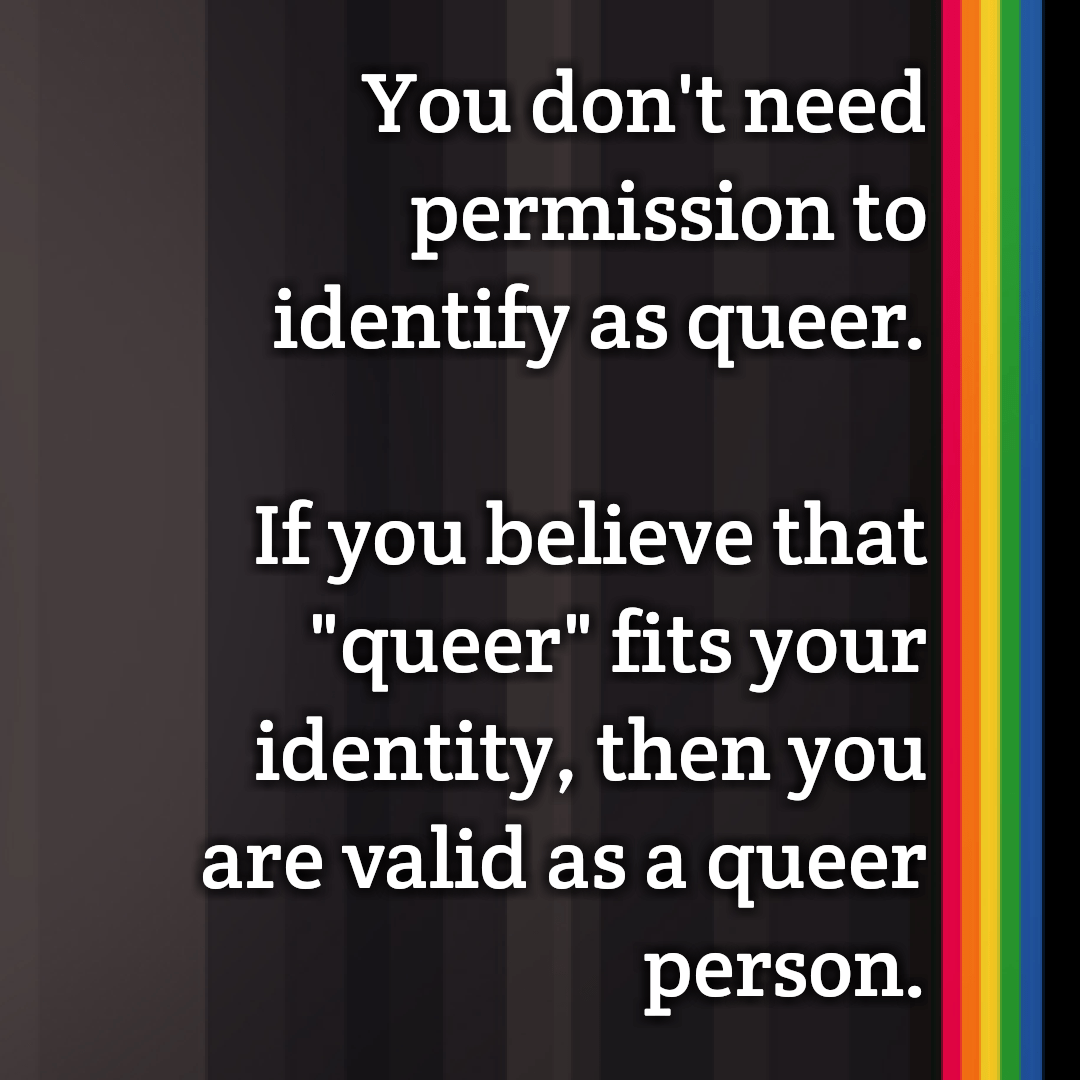
(Image description: a dark background with a rainbow stripe along the right side; white text says “You don’t need permission to identify as queer. If you believe that queer fits your identity, then you are valid as a queer person.” End image description.)
achilles is so often called gay by the community and straight by society even though he fell in love with men and women. freddie mercury is known as the most famous gay man even though he self identified as bisexual. channing tatum is constantly called straight even though he’s dated men and women. evan rachel wood and angelina jolie and drew barrymore–all self identified bi women constantly called straight.
sappho wrote love poems for both men and women and yalls response to the idea that she might have been bi is “there was no concept of bi/gay back then!! let’s focus on the fact that she was sapphic!!” to the point where her name has become synonymous with gay and she’s called a lesbian icon and y’all only seem to have issues with “concepts” and labels when the concept/label is BI. why am i not surprised?
bisexuality is valid pass it on
Sappho loved both men and women. She died for a guy she loved. Idk why people don’t acknowledge that part of her.
periodic reminder that if you’d like to read a fantasy series with any of the following:
small, angry mindreader who can scale a cliff to break into a mansion and would rather do that than talk about her feelings, thanks; her magic makes it painful to touch people, which is fine, she’s fine with it, she doesn’t want to touch anyone anyway, especially not that tall girl over there with all the muscles who’s been so unbearably kind
big, sweet, quiet farm girl who could fuck you up with her staff or her fists but would prefer not to; dreams of adventure; tries very hard not to have a crush on that talkative and difficult mindreader (it’s not working); intensely dislikes that smug, sharp-tongued linguist they meet in book 2, you know, the one with the hair and the eyes and the smile
beautiful, stylish, wealthy woman who would never do anything to hurt you and is definitely not plotting something nefarious
a mysterious encoded book, found by the mindreader and the farm girl, that probably reveals something incriminating about that rich lady, if only they could read it
a genderfluid linguist who is here to wear pretty clothes and write erotic poetry and be the smartest person in the room at all times; deeply resents getting caught up in all of this murderous conspiracy nonsense; does not care about justice or doing the right thing or that sanctimonious tall girl with all the muscles and the beautiful smile, fuck off (this one doesn’t show up until book 2–some things are worth waiting for)
is it a love triangle? NO IT’S A TRIAD
they travel all over the world
there’s a really big, diverse cast of supporting characters, e.g.: a teenage boy who takes up writing seditious pamphlets; a shy trans guy who has the power to alter memories with a touch; a charming sailor who mostly uses his magic to cheat at cards
also there are sea monsters
and some of it’s written in epistolary form
and at one point the main characters break out of prison
and infiltrate a fancy party
and there’s a lot of flirting but also a lot of mutual pining
does anybody get hurt and require comfort? count on it




 Steel Phoenix Studios