like, u know there is a degree of moderation there, right? someone has to order the books to stock in the library. a library that lets any old creep stash their hastily scribbled shota pwp in between the shelves is a library that’s going to be shut down p quick. by the police. for providing ppl with child porn. (and yes if a picture of a tree or a description of a tree can make someone experience a tree, then the same can be said about a picture or description of a child in a sexual situation ffs)
I mean there’s like a million other logistical differences, and idk who checks erotica out of a library, but hey ppl can be wild abt these things
Hooboy. Well, as a librarian who has worked in many varieties of libraries, let me… try to… respond to this from a library and librarian perspective.
1) It is true that libraries have a process to go through for accepting materials, and that there is a degree of selectivity involved–this is because libraries have limited budgets, limited physical space, and limited staff to process and manage materials.
So, yes, any random junk written and left in the library would be thrown out. Not because the library would be concerned about its liability if anyone should see it; because we like to keep the library clean and organized, and leaving stuff on the shelf is not how we add things to the collection (how would they get CATALOGUED and LABELED???) And, of course, any adult attempting to show pornography (or, say, themselves) to actual children would be Removed From The Library because this would involve actual children being harmed by an actual adult in direct contact with them. Police do not shut down the libraries where this happens. They arrest the people harming the children.
Meanwhile, libraries spend VAST SUMS OF MONEY and ENDLESS STAFF HOURS to keep copies of Fifty Shades of Gray on the shelves where children actually can find them quite readily (and have them checked out on their library cards if mom’s has too many fines). Same with Last Tango in Paris and Flowers in the Attic and Year’s Best Erotica collections. (And Bibles, which get stolen at a ridiculous pace. I don’t know why, we were just forever having to order more of them.)
In an online space, which has effectively unlimited space, where adding new material costs nothing, and where the process of organizing that material and making it available is fully automated and what labor is involved is taken on by the contributing author, literally none of those constraints apply, so more content is more content! It’s catalogued and labeled as soon as it’s posted! It cannot be misshelved. Perfect!
2) This is not to say that no physical library has handwritten erotica in its collection somewhere. Many, many libraries collect rare local works such as self-published zines, and unique items like the personal papers of notable people (San Jose State University, for instance, holds the papers of the Kensington Ladies’ Erotica Society; The University of Iowa Zine Collection includes fanfic zines with erotic content; UCLA has the personal papers of Anais Nin), and doubtless some of these zines and personal papers include erotica. Because this handwritten material would be unique and its value would be presumed to lie mainly in the fact of its authorship, it would be properly collected, not in a library, but in an archive or special collection, where some archivist would dutifully folder it and make a note of what it was so future visitors to the collection could readily access it.
The main goal there would be to protect the material, not the person who might potentially view the material.
I worked in a public library which had an extensive collection of Playboy on microfilm, for instance. We kept it behind a desk where it had to be requested and checked out with a library card before it could be viewed. This was partly to prevent children viewing material inappropriate for their age–just as, say, the AO3 clearly marks adult material as such–but mainly to prevent vandalism of the material by people who disapproved of it. Several of the images on the film had been damaged by people trying to scratch them out; for the safety of the microfilm, we restricted access to it. This is also why the AO3 doesn’t allow people who dislike a fic to force it to be taken down.
This is also why most libraries celebrate Banned Books Week by eagerly higlighting works which people have ATTEMPTED to force to be removed from libraries–including work like Lolita, which is read by many as a titillating pedophile love affair. Librarians are not celebrating Lolita. They are celebrating the principle that they will not be stopped from collecting materials of interest and making them available to readers.
3) From your description of a library where children can freely access anything on the shelves, you seem to have only one conception of a library–a public library with open stacks, or perhaps a school library. There are, in fact, many kinds of libraries, with academic libraries being the most obvious foil to your description.
In an academic or university library, all authorized users of the library are adults who take adult responsibility for what they find in the library, much like when adult internet users indicate on a website that they are choosing to view adult content.
When I worked in a university library, I asked one of the librarians what do when a guy was sitting at a computer very obviously watching porn while a young woman, sitting next to him doing something text-based, seemed like she might be uncomfortable. I was told in no uncertain terms that the library’s policy was to relocate the person who was uncomfortable. The library was a repository of information and a place to access information: any kind of information, including the erotic. Under no circumstances would we curtail a library user’s access to that information.
(Unless he got his own actual dick out where people could see it, then we could call the campus police. Because, again: actual humans directly involved.)
Duke University Library Erotica Collection, 1940s-1960s (”An archive of original illustrations, sketchbooks, and erotic stories, depicting transgressive sex acts including (but not limited to) lesbian and heterosexual sex, incest, pedophilia, sadomassochistic behavior, and copulation with objects as varied as sex toys, produce, and household appliances. The stories and illustrations appear to be the work of a single individual, with nearly all narrative told from a female’s point of view. Also includes some amateur pornographic photography and magazine clippings.”)
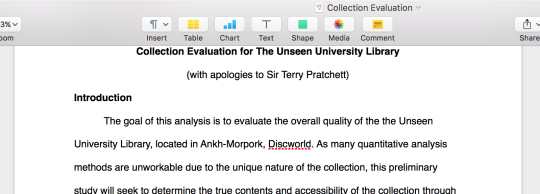
She doesn’t know it yet, but she will soon. You see, the midterm paper on calls for students to write a collection evaluation for a library of our choosing. Now, I know that when she said that library does not need to be real, she meant that we didn’t need to pick a specific one. But what I heard was…
As a library worker, there’s something I want to say to you.
You do not have to apologize for the books you choose to read.
At all. To anyone. You owe nobody any explanations; you need no excuse or “good reason” to be reading the book.
You do not have to be ashamed for wanting to read “bad” books. You wanna read Twilight? We got Twilight. Need a banal, cookie-cutter-plot mystery or thriller?Those are always fun. Our regulars check them out by the towering stack. Ask Betty for recommendations; she’s read them all. 50 Shades of Oh Fucking No? We’ve got it, we even got it in large print. Have fun. Check out the rest of our porn too. Oh, and the sex manuals are a MUST if you want to “experiment” yourself. Don’t be afraid to ask; they’re here for a reason.
Want to read a book written by a huge asshole everyone hates and agree was a monster? Yeah, we have those. No, we don’t think you’re an asshole for wanting to know what was actually written in there, or judging things for yourself.
You are not too old for Diary of a Wimpy Kid, The Babysitter’s Club, or Captain Underpants. You are not too young for Sherlock Holmes. There’s nothing wrong with a boy reading The Princess Academy or Sweet Valley High. There’s nothing wrong with a girl being into The Hardy Boys or Artemis Fowl instead.
You do not have to pull the shame face and offer me an excuse when you check out your books. I don’t care if I got so angry at that book I threw it against a wall when I read it: you have the right to read it, and enjoy it if it’s enjoyable for you. THAT’S WHY THE LIBRARY HAS IT IN THE FIRST PLACE. If we only stocked pure, unproblematic literature everyone approved of, by authors of unquestionable virtue, we wouldn’t have any books at all. Or music. Or movies. It would be utterly fucking boring. And it certainly wouldn’t be a library.
so I work at a library now and during training we were shown each section and how they’re organized bluh bluh normal stuff, until we got to the 680s and my boss sighed at this shelf nearly busting from the weight of a shit ton of yarn books. now you may be wondering “how much is a shit ton of yarn books exactly max???” well let’s just say it’s about 2 shelves worth crammed onto one.
so when we got to this area my supervisor looked at us new pages and said in the most serious voice, “if anyone EVER gives you book donations never EVER accept donations of yarn books. EVER.” and we all laughed but deep down in the pit of my stomach I knew that was not a joke.
fast forward to a month later (today) and my shift starts pretty normally, I’m casually chatting with my co worker about video games and sorting books in the workroom when this couple walk into our workroom with big boxes saying they wanted to donate some books. so my coworker nods and says something about just leaving them there and he’ll grab our manager. so they put down these boxes and leave. so my manager comes along exclaiming how nice it is to get such a big donation and so she walks to the boxes, opens them, and starts shouting “JAMES GET IN HERE RIGHT NOW JAMES IT HAPPENED AGAIN” and so now I’m interested and I walk over and it just looks like boxes filled to the brim with books until I see the books all had library stickers on them and all have the numbers 680. so james comes running over and sees them and drops to his knees and starts shaking his head.
so then we got the details. apparently all libraries in my city all have too many yarn books and since you can technically check out a book and return it to any library and they’ll just shelve it there, all libraries just try and get rid of the books by tricking other libraries into taking them in. ways of this happening is staff from one library checking out the maximum amount they can of yarn books and dropping books around another library, or just viciously shoving these books through our returns, and now this, and apparently it’s a full out war with war maps and planning sheets written inside these yarn books. so please for the love of god never donate yarn books to your local library
Ahhhhh I also work at a library and this applies to all craft books. The 700-760 section is ridiculous. Plus they tend to be weird shapes/sizes which makes the mess worse
A research tip from a friendly neighborhood librarian!
I want to introduce you to the wonderful world of subject librarians and Libguides.
I’m sure it’s common knowledge that scholars and writers have academic specialties. The same is true for subject librarians! Most libraries use a tool called Libguides to amass and describe resources on a given topic, course, work, person, etc. (I use them for everything. All hail Libguides.) These resources can include: print and ebooks, databases, journals, full-text collections, films/video, leading scholars, data visualizations, recommended search terms, archival collections, digital collections, reliable web resources, oral histories, and professional organizations.
So, consider that somewhere out there in the world, there may be a librarian with a subject specialty on the topic you’re writing on, and this librarian may have made a libguide for it.
Because you’re searching library collections, you won’t have access to all the content in the guides, and there will probably be some link rot (dead links), but you can still request resources through your own library with interlibrary loan, or even request that your library purchase the resources! Even without the possibility of full-text access, libguides can give you the words, works, people, sites, and collections to improve your research.
Search [your topic] + libguide and see what you get!
This is…amazing. I am angry that I didn’t know about this until now. Now I can ~academically~ indulge my fascination with the 1918 flu pandemic? When I have organic chem homework and a lab report due tomorrow? I both love this and hate this.
I want this in every library, everywhere. After all, some kids won’t even google this stuff because they don’t want parents/siblings checking their browser history.
This is really awesome. And if you’re not familiar with how the Dewey Decimal system works – the numbers subject-based, which means these numbers are applicable in EVERY library. So if you see something you want to research on this list – look for those same numbers in any of your local libraries.
This is wonderful.
Reblogging to possibly save a life
in case anyone is unable to look up information like this at home
Libraries are free, mostly. Pretty much everything millennials are “killing” costs money.
Plus, unlike half the stuff we’re killing, libraries actually have a practical use
we out here
Not to be *that* millennial, but as a librarian I’d just like to say that the greatest thing you can do to support your local library is to understand how they are funded and to support their funding with your vote.
Libraries can do a lot all on their own but quite often they cannot legally “toot their own horn” so-to-speak when it comes to advocating for sustaining or increasing funding, getting levies or bond issues passed, etc. Libraries need you to love them not just with your checkouts and attendance at programs.
We can do that too.
build libraries on dead golf courses.
We Are Dewey’s Army X3
Friendly reminder that many Libraries double function as free schools and other free resources, sometimes including otherwise inaccessible technology, like 3D printers.
The libraries in my city host ‘English as a Secondary Language’ classes, cooking classes, classes on how to use that 3D printer, local history classes, responsible naturalistic gardening classes, beekeeping classes, and all sorts of other fun topics. Plus the plethora of clubs that use the library conference rooms as their meeting place.
All for free.
Support and visit your local library. Ask about their services and classes. VOTE TO KEEP THEM FUNDED
I’m a librarian and I can’t stress this enough!
Also a librarian, if my library wasn’t here I’m not actually sure what half the population of the town would do with themselves.
Libraries are free, mostly. Pretty much everything millennials are “killing” costs money.
Plus, unlike half the stuff we’re killing, libraries actually have a practical use
we out here
Not to be *that* millennial, but as a librarian I’d just like to say that the greatest thing you can do to support your local library is to understand how they are funded and to support their funding with your vote.
Libraries can do a lot all on their own but quite often they cannot legally “toot their own horn” so-to-speak when it comes to advocating for sustaining or increasing funding, getting levies or bond issues passed, etc. Libraries need you to love them not just with your checkouts and attendance at programs.
We can do that too.
build libraries on dead golf courses.
We Are Dewey’s Army X3
Friendly reminder that many Libraries double function as free schools and other free resources, sometimes including otherwise inaccessible technology, like 3D printers.
The libraries in my city host ‘English as a Secondary Language’ classes, cooking classes, classes on how to use that 3D printer, local history classes, responsible naturalistic gardening classes, beekeeping classes, and all sorts of other fun topics. Plus the plethora of clubs that use the library conference rooms as their meeting place.
All for free.
Support and visit your local library. Ask about their services and classes. VOTE TO KEEP THEM FUNDED

 Steel Phoenix Studios
