Their Moana is very talented, and their Maui is a local newscaster whose daughters made him audition!
Rachel House still voices Grandma Tala, Temuera Morrison still voices the Chief, and Jemaine Clement still voices Tamatoa.
Rob Ruha and Jemaine Clement translated and rearranged the music so that the songs still worked while sung in a different language, which is super impressive.
this news is from earlier this year, you can now actually listen/watch the te reo version in clips on youtube now. this one is pretty exemplary of the original and new voice actors together! ❤
AUCKLAND, New Zealand — The families lined up at the theater above a shopping mall here in New Zealand’s biggest city and filed past posters for Stephen King’s “It” and “Captain Underpants” for a film unlike any they had ever seen — the Disney hit “Moana,” translated into the indigenous language of New Zealand.
“Kei te pehea koe?” said the ticket taker, Jane Paul, greeting groups of children with a phrase meaning, “How are you?”
“Are you Maori too?” one girl asked.
About 125,000 of New Zealand’s 4.7 million people speak the Maori language, or “te reo Māori,” as it is widely rendered here. There are concerns that numbers are declining, putting it at risk of dying out. But with one in three Maori people in New Zealand younger than 15, experts said the chance for youth to see a wildly popular movie in their own words could turn the language’s fortunes around after more official efforts faltered.
“The language has got to be made cool and sexy and relevant to young people, and this movie is the perfect way to make that happen,” said Haami Piripi, a former head of the government body charged with promoting te reo Māori as a living language.
…
Taika Waititi, a New Zealand writer and director who worked on the original English-language version of “Moana,” also approached Disney early on about translating the film, and his sister, Tweedie Waititi, went on to produce the translated version.
The film was screened free at 30 theaters around New Zealand at the end of the annual Maori language week. It did not have English subtitles, but screenings were fully booked within 30 minutes, leading to plans in at least one town for additional showings.
Many of those attending in Manukau, in southern Auckland, said they had never seen a film at the theater entirely in their language before.
…Parents entering the theater said they relished the chance for their children to see themselves and their language reflected on the big screen, in a different kind of story that they hoped would instill pride in being Maori.
…
Most of the efforts to revitalize the language that have worked so far, he added, have been initiated by protest or court action. But Mr. Piripi said the film “Moana reo Māori” had given him hope there was another way: making the language “cool, relevant and useful” to young Maori.
“There’s no other film in the Maori language that would attract whanau and kids like that,” he said, using the word for families.
The entire process, including translation, recording the voices and mixing the sound, happened over three months.
Katarina Edmonds, a senior lecturer in Maori education at the University of Auckland, and one of three people who translated the film, said the team worked not only to find the exact equivalents of words in the Disney script, but also to remain true to the Maori language and tikanga, or cultural values.
Some moments of the film posed a challenge; Moana raging at the ocean, for example, contravened a Maori cultural rule to never curse or turn one’s back on the sea, so they turned it into a more humorous moment using careful wordplay.
At the same time, Ms. Edmonds said, the translation gave the film a uniquely Maori flavor of humor, while staying true to the spirit of the original script.
Rachel House, a New Zealand actor who voiced the character Gramma Tala in both the English and Maori versions of the film — and who was also the performance director of the Maori production — said she had been blown away by the response to the film, and the 30 theaters that screened it free.
“I’ve been on a very slow journey with the language for years, and now I feel like I can sit back and really enjoy the film, and experience the learning tool that it represents,” she said.
In Manukau, most families left the theater beaming. Many said they were eager to buy a DVD of the film, which is expected sometime in the next few months.
Desiree Tipene, 30, said that having grown up with immersion schooling, she was determined to give her children a similar experience — for a sense of identity and spiritual connection. She described “Moana” as a “funny and beautiful” way for her four children to connect with their culture.
“I just enjoy our language being spoken,” she said.
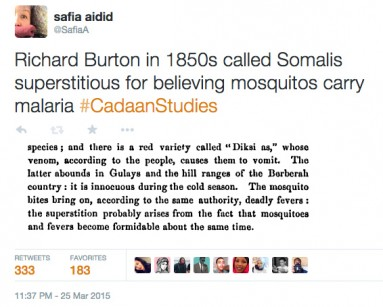
What’s really wild is that the native people literally told the Europeans “they walked” when asked how the statues were moved. The Europeans were like “lol these backwards heathens and their fairy tales guess it’s gonna always be a mystery!”
Maori told Europeans that kiore were native rats and no one believed them until DNA tests proved it
Roopkund Lake AKA “Skeleton Lake” in the Himalayas in India is eerie because it was discovered with hundreds of skeletal remains and for the life of them researchers couldn’t figure out what it was that killed them. For decades the “mystery” went unsolved.
Until they finally payed closer attention to local songs and legend that all essentially said “Yah the Goddess Nanda Devi got mad and sent huge heave stones down to kill them”. That was consistent with huge contusions found all on their neck and shoulders and the weather patterns of the area, which are prone to huge & inevitably deadly goddamn hailstones. https://www.facebook.com/atlasobscura/videos/10154065247212728/
Literally these legends were past down for over a thousand years and it still took researched 50 to “figure out” the “mystery”. 🙄
Adding to this, the Inuit communities in Nunavut KNEW where both the wrecks of the HMS Erebus and HMS Terror were literally the entire time but Europeans/white people didn’t even bother consulting them about either ship until like…last year.
“Inuit traditional knowledge was critical to the discovery of both ships, she pointed out, offering the Canadian government a powerful demonstration of what can be achieved when Inuit voices are included in the process.
In contrast, the tragic fate of the 129 men on the Franklin expedition hints at the high cost of marginalising those who best know the area and its history.
“If Inuit had been consulted 200 years ago and asked for their traditional knowledge – this is our backyard – those two wrecks would have been found, lives would have been saved. I’m confident of that,” she said. “But they believed their civilization was superior and that was their undoing.”
“Oh yeah, I heard a lot of stories about Terror, the ships, but I guess Parks Canada don’t listen to people,” Kogvik said. “They just ignore Inuit stories about the Terror ship.”
Schimnowski said the crew had also heard stories about people on the land seeing the silhouette of a masted ship at sunset.
“The community knew about this for many, many years. It’s hard for people to stop and actually listen … especially people from the South.”
Indigenous Australians have had stories about giant kangaroos and wombats for thousands of years, and European settlers just kinda assumed they were myths. Cut to more recently when evidence of megafauna was discovered, giant versions of Australian animals that died out 41 000 years ago.
Similarly, scientists have been stumped about how native Palm trees got to a valley in the middle of Australia, and it wasn’t until a few years ago that someone did DNA testing and concluded that seeds had been carried there from the north around 30 000 years ago… aaand someone pointed out that Indigenous people have had stories about gods from the north carrying the seeds to a valley in the central desert.
it’s literally the oldest accurate oral history of the world.
Now consider this: most people consider the start of recorded history to be with the Sumerians and the Early Dynastic period of the Egyptians. So around 3500 BCE, or five and a half thousand years ago
These highly accurate Aboriginal oral histories originate from twenty thousand years ago at least
The aboriginal people of Australia have a history in the country that starts at least 30,000 years ago. Possibly as long as 60,000 years ago. They are believed to have been among the very the first diasporas out of Africa.
Just think about that. We’d been confined to a single continent for all of human history. And this group invented migration and sea-crossing and got to Australia. They probably went via Asia, but on the other hand there’s no genetic evidence for them spending any time in that continent.
It hardly seems plausible they just sailed from the Somali coat heading east across the vast India Ocean with their fingers crossed they’d hit land, hundreds of thousands of years before sea-going was even A Thing. But then the idea of this band going the long way round – across desert, mountain, sea and jungle; through Western Asia, then the entire India sub-continent and then hopping from island to island – hardly seems possible either.
Nevertheless, they made the journey.
No one survives that, and then goes on to thrive in Australia (which is well documented as being a hostile landscape even today) by luck. These were sophisticated people.
Aboriginal people know what they’re about. They saw the world before most people knew there was a word to see. If they say there were giant kangaroos, there were giant kangaroos.


 Steel Phoenix Studios