Man Creates Edible Water “Jelly Drops” to Help Dementia Patients Stay Hydrated

seandotpolitics:

London-based student Lewis Hornby is a grandson on a mission. When he noticed that his dementia-afflicted grandmother was having trouble staying hydrated, he came up with Jelly Drops—bite-sized pods of edible water that look just like tasty treats.

Each of these colorful “candies” is made up of mostly water, with gelling agents and electrolytes making up just 10% of their composition. Available in a rainbow of colors and presented in packaging reminiscent of a box of chocolates, Jelly Drops are an easy and engaging way to avoid dehydration—a common problem for those suffering from degenerative neurological diseases.

“It is very easy for people with dementia to become dehydrated,” he explains. “Many no longer feel thirst, don’t know how to quench thirst, or don’t have the dexterity to drink.” With this in mind, Hornby set out to find a solution. In addition to seeking advice from psychologists and doctors, he opted to “experience” life with dementia himself through the use of virtual reality tools and a week in a care home.

Once he was familiar with what dementia patients need, he brainstormed what they want. “From my observations, people with dementia find eating much easier than drinking. Even still, it can be difficult to engage and encourage them to eat. I found the best way to overcome this is to offer them a treat! This format excites people with dementia, they instantly recognize it and know how to interact with it.”

Case in point? Hornby’s own grandmother’s reaction: “When first offered, grandma ate seven Jelly Drops in 10 minutes, the equivalent to a cup full of water—something that would usually take hours and require much more assistance.”

Man Creates Edible Water “Jelly Drops” to Help Dementia Patients Stay Hydrated

fierceawakening:

ddnosakechi:

koalatea:

i hate when ppl make fun of me for trying 2 be positive and spread good vibes like fuck your bitter ass i spent a good portion of my short life being bitter and angry and suicidal if i wanna shoot sunshine out of my ass then i fuckin will 

the worst part is when their all “we can’t all be neurotypical, Karen” like listen, I’m not neurotypical I’m just trying to get better jesus

Even Bigger Mood

sometimesyouhavetobebrave:

mememic-bry:

mememic-bry:

mememic-bry:

executive dysfunction is telling yourself for two and a half hours that you need to shower bc you smell like your workplace and you absolutely Cannot do Anything Else until you shower, doing Any Other Thing before showering is illegal!!! but you still haven’t for some reason??? you’ve just been sitting on your bed in a towel scrolling tumblr for 2+ hours thinking “I need to shower right now immediately” and growing increasingly frustrated that you are still not clean and you haven’t eaten or done your laundry either

ok actually no I’m reblogging this because a) I am clean now (and I smell amazing, thank you), and b) I had a heckin Realize and I wanted to share it with y’all in the hopes it’ll help someone else with a brain like mine.

I figured something out about myself a long time ago– it’s only just now occurred to me that I was in fact solving a problem caused by executive dysfunction, and I haven’t been implementing this solution lately because my brain went “that’s a relatively new term to me and therefore a Different problem that requires a Different solution”. thanks a lot, brain.

anyway, long long ago, before I knew these fancy schmancy Official words, the problem, as I phrased it to myself, was such: 

sometimes I get Stuck. I was doing something, or on my way to doing something, and then… I just. got stuck.

“Stuck” looks like refreshing my feed or dashboard repeatedly. or it looks like staring at a spot on the wall. or chewing my fingernails. or picking at a stubborn sticker. all the while, my brain drifts through various unrelated topics I wouldn’t be able to recall if asked. sometimes I can get Stuck for hours before realizing I am Stuck. sometimes I get so Stuck that I go to bed that way (feeling especially bad for being unproductive) and I have to just reset everything by sleeping.

one day I asked myself, “why is this happening? why am I stuck, right now, at this moment in time?” the answer, as it turns out, was pretty simple: I was trying to make a decision, and I got distracted. I haven’t moved forward because I haven’t answered that one question or made up my mind.

let me rephrase this in terms of executive dysfunction: many people have expressed that it feels like knowing you need to do a thing but not feeling “ready” to do it. many with ADHD may also be familiar with the feeling of needing things to be “just so” before you embark on a task- you need your setup to look a certain way, or you need to set a timer, or have the right music playing, etc.

when I get Stuck it’s often because I got lost somewhere in that setting-up process, and my brain took the opportunity to nyoom off into Distraction Town.

getting myself Unstuck is solved, 95% of the time, by tracing my steps back to the original decision I was trying to make- often something small and inane- and then troubleshooting from there. (out loud! verbal processing is totally punk.) 

  • “what was I trying to do?” 
  • “was I trying to decide between two things?” 
  • (the answer’s usually yes.) 
  • “what were they?” 
  • “okay, let’s decide. 
  • “okay, that’s settled. let’s move on.”
  • and then I am free as a bird to nyoom in the direction of The Thing I Wanted To Do All Along, in the amazingly disorganized, scattered, yet rapid-fire way that I do many things.

so!!! in the case of my first post, where I hadn’t showered for 2 hours? turns out I had been trying to decide what music to listen to in the shower. (another hack: my chances of getting Stuck while showering decrease by 75% if I have music playing to help me keep track of time.) I couldn’t immediately make up my mind, got lost in thought, got distracted, and drifted. once I stopped and asked- “why am I stuck?”-  then I remembered- “oh yeah! I wanted to listen to music”-  and then decided- “I want to listen to Daft Punk’s Discovery album”- I was finally heckin able to shower. and also eat, and also throw my clothes in the dryer.

and may I add I only zoned out once, during the slow part of “One More Time.” 😛

I’m not saying this is a foolproof method. sometimes I don’t have a reason for being stuck, and that’s okay! I’m also not saying this is how every adhd brain works. it’s just how my brain works, and I’m sure there’s at least a few who can relate. for those few, I hope this helps!!

a lot of people are reblogging the original post without the update and leaving frustrated comments and that makes me sad! if I can find ways to hack my brain than so can you! executive dysfunction is a real and frustrating challenge, but don’t buy the lie that there’s no way to work with it or around it!!!

!!!!

Don’t ask someone with dementia if they “know your name” or “remember you”

chuckle-voodooz:

pouchrat:

dementia-by-day:

If I can, I always opt to ditch my name tag in a dementia care environment. I let my friends with dementia decide what my name is: I’ve been Susan, Gwendolyn, and various peoples’ kids. I’ve been so many identities to my residents, too: a coworker, a boss, a student, a sibling, a friend from home, and more. 

Don’t ask your friend with dementia if they “remember your name” — especially if that person is your parent, spouse, or other family member. It’s quite likely to embarrass them if they can’t place you, and, frankly, it doesn’t really matter what your name is. What matters is how they feel about you.

Here’s my absolute favorite story about what I call, “Timeline Confusion”:

Alicia danced down the hallway, both hands steadily on her walker. She moved her hips from side to side, singing a little song, and smiled at everyone she passed. Her son, Nick, was walking next to her.

Nick was probably one of the best caregivers I’d ever met. It wasn’t just that he visited his mother often, it was how he visited her. He was patient and kind—really, he just understood dementia care. He got it.

Alicia was what I like to call, “pleasantly confused.” She thought it was a different year than it was, liked to sing and dance, and generally enjoyed her life.

One day, I approached the pair as they walked quietly down the hall. Alicia smiled and nodded at everyone she passed, sometimes whispering a, “How do you do!”

“Hey, Alicia,” I said. “We’re having a piano player come in to sing and play music for us. Would you like to come listen?”

“Ah, yes!” she smiled back. “My husband is a great singer,” she said, motioning to her son.

Nick smiled and did not correct her. He put his hand gently on her shoulder and said to me, “We’ll be over there soon.”

I saw Nick again a few minutes later while his mom was occupied with some other residents. “Nick,” I said. “Does your mom usually think that you’re her husband?”

Nick said something that I’ll never forget.

“Sometimes I’m me, sometimes I’m my brother, sometimes I’m my dad, and sometimes I’m just a friend. But she always knows that she loves me,” he smiled.

Nick had nailed it. He understood that, because his mom thought it was 1960, she would have trouble placing him on a timeline.

He knew that his mom recognized him and he knew that she loved him. However, because of her dementia, she thought it was a different year. And, in that year, he would’ve been a teenager.

Using context clues (however mixed up the clues were) Alicia had determined that Nick was her husband: he was the right age, he sure sounded and looked like her husband, and she believed that her son was a young man.

This is the concept that I like to call timeline confusion. It’s not that your loved one doesn’t recognize you, it’s that they can’t place you on a timeline.

What matters is how they feel about you. Not your name or your exact identity.

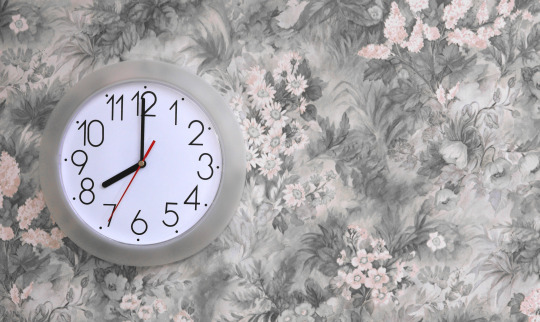
[image: analog clock set to 7:59]

This is super informative!!

I also want to chime in with my own experience caring for people with dementia

With those who have timeline confusion they may talk about people from that time who have long passed; such as a parent or a spouse and sometimes they’ll ask/state if the person is coming- or if they can go see them.

Do not tell them that their loved one has passed because this will upset the person greatly; instead tell them that they’ll be coming later or that they’ll see them soon. Act is if the person is still alive for them, ask the person about the loved one who’s passed to give them a sense of ease and comfort and some time to gush about the person they love.

In a nutshell just go along with what they’re saying unless it’s detrimental to them, they’re happier that way.

foggysuggestion:

some days, you’ll oversleep and be late to class or work, you’ll look like an absolute mess, you’ll fail your biggest exam of the year, you’ll drop your phone in a puddle outside, you’ll say the wrong thing at the wrong time, you’ll lose the person you thought was the love of your life. you’ll cry your eyes out and feel so completely hopeless because everything seems like it’s going wrong, but even on those days, you’ll have people that love you. and some days, that’s all that matters. and that’s okay.

aichu-chu-chu:

howilearnedtocope:

dsudis:

eupheme-butterfly:

icecream-eaterrr:

I just heard this woman say “you procrastinate because you are afraid of rejection. It’s a defense mechanism, you are trying to protect yourself without even trying.” and I think I just realized what was wrong with me.

Yep, this is a very, very common reason for procrastinating.  It’s also why procrastination, even though it’s often associated with laziness, is a fairly common trait in a lot of people with anxiety and perfectionism issues.

This idea – You’re not lazy, you’re protecting yourself – hit me really hard while reading, of all things, Emily Nagoski’s Come As You Are, which turns out to be as much about how brains work and how relationships work as how orgasms work.

In an early part of the book she talks about Fight/Flight/Freeze responses to threats–the example she uses is being attacked by a lion. You fight, if you think you can defeat the lion; you run away, if you think you can escape the lion; and when you think there’s nothing you can do, when you feel the lion’s jaws closing on your neck, you freeze, because dying will hurt less that way. You just stop and go numb and wait for it to be over, because that is the last way to protect any scrap of yourself.

Later in the book, she talks about the brain process that motivates you to pursue incentives, describing it as a little monitor that gauges your progress toward a goal versus the effort you’re expending. If it feels like too little progress is being made you get frustrated, get angry, and, eventually, you… despair. You stop trying.

You go numb and wait for it to be over, because that’s the only way left to protect yourself.

So it occurred to me that these are basically the same thing–when facing a difficult task, where failure feels like a Threat, you can get frustrated and fight it out–INCREASE DOING THE THING until you get where you’re going. Or you can flee–try to solve the problem some other way than straight on, changing your goal, changing your approach, whatever. Fight or flight.

But both of those only apply when you think the problem is solvable, right? If the problem isn’t solvable, then you freeze. You despair. 

And if you’re one of those Smart Kids (Smart Girls, especially) who was praised for being smart so that all tasks in the world came to be divided between Ooh This Is Easy and I DON’T KNOW IF I CAN DO THAT AND IF I FUCK UP I WILL DIE, then… it’s pretty easy to see how you lose the frustration/anger stage of working toward a goal, because your brain goes straight to freeze/despair every time. Things are easy and routine or they are straight up impossible.

So, you know, any time you manage to pull yourself up and give that lion a smack on the nose, or go stumbling away from it instead of just falling down like a fainting goat as soon as you spot it on the horizon, give yourself a gold star from me. Because this is some deeply wired survival-brain stuff. Even if logically you know that that term paper is not a lion, it really is like that sometimes.

Yes! We actually had a perfectionism group in treatment and one of the things they taught us was how perfectionism can actually lead to avoiding stuff & doing less. It’s definitely important to understand this.

One long term strategy I’ve heard is to promise yourself you’ll only work for a smallish period of time (at a date before it’s last min of course). Do you work for that time, and then you congratulate yourself for what you accomplished even if it’s not as much as you wanted, and then no matter what you actually stop. Your brain realizes that doing work can actually be a manageable experience & it starts breaking the association between doing work and stress/sadness/guilt etc. *Lowering* your standards & working before it gets super bad can help with this

I do this all the time and it is the most frustrating thing in my life. Combine 1) problem I do not feel I have the authority to solve easily (especially dealing with older men) with 2) moving target for success or unclear parameters, and 3) other, less fraught things to do at the same time and I will ALWAYS procrastinate like crazy and wait until the problem is on fire and giving me high blood pressure and insomnia and dehydration from stress. Over and over again and it makes me absolutely insane. Every time I lower my standards it works, and I am good enough at managing relationships + being hard to pin down on specifics + willing to work insane hours for a few days/weeks to make up for the procrastination, but it sucks. This advice is worth trying.

lexi-cakes:

undastra:

hashtagdion:

My emotions are valid*

*valid does not mean healthy, or good, or to be privileged above common sense and kindness

A distinction for anyone who is young and hasn’t figured this out yet:

You are allowed to have whatever emotions you want. No one can control your emotions. Emotions are healthy responses to things.

You are not allowed to have behaviors that are harmful just because you have certain emotions. Your behaviors are what you can control, and they are far easier to control than your emotions.

You can be jealous about someone or their talents until you turn green, but it is harmful to yourself and to that person if you try to sabotage them because of it. You can be so angry you can literally feel your temperature rise, but this does not give you permission to rage at others.

Your emotions are valid. They are always valid. You are a person of value. However, you behaviors are not always justified just because of those emotions. You may not be able to control you emotions, but you can certainly control your behaviors.

“You may not be able to control your emotions, but you can certainly control your behaviors.”