One overlooked thing that really sets the Lord of the Rings films apart from other franchises is how earnest they are-
Most movies are so afraid of being “cheesy” that whenever they say something like “friendship is the most powerful force in the world” they quickly undercut it with a joke to show We Don’t Really Believe That! 😉 Even Disney films nowadays have the characters mock their own movie’s tropes (”if you start singing, I’m gonna throw up!”) It’s like winking at the camera: “See, audience? We know this is ridiculous! We’re in on the joke!”
But Lord of the Rings is just 12.5 hours of friendship and love being the most powerful forces in the world, played straight. Characters have conversations about how much their home and family and friends mean to them, how hope is eternal, how there is so much in the world that’s worth living for…. and the film doesn’t apologize for that. There’s no winking at the audience about How Cheesy and Silly All This Is; it’s just. Completely in earnest.
And when Lord of the Rings does “lean on the fourth wall” to talk about storytelling within the film, it’s never to make jokes about How Ridiculous These Storytelling Tropes are (the way most films do)…. but instead to talk about how valuable these stories can be. Like Sam’s Speech at the end of the Two Towers: the greatest stories are ones that give you something to believe in, give you hope, that help you see there are things in a bleak violent world that are worth living for
Earnestness is so much cooler than all the hip cynicism in the world. You go LOTR
Sometimes i think about the idea of Common as a language in fantasy settings.
On the one hand, it’s a nice convenient narrative device that doesn’t necessarily need to be explored, but if you do take a moment to think about where it came from or what it might look like, you find that there’s really only 2 possible origins.
In settings where humans speak common and only Common, while every other race has its own language and also speaks Common, the implication is rather clear: at some point in the setting’s history, humans did the imperialism thing, and while their empire has crumbled, the only reason everyone speaks Human is that way back when, they had to, and since everyone speaks it, the humans rebranded their language as Common and painted themselves as the default race in a not-so-subtle parallel of real-world whiteness.
In settings where Human and Common are separate languages, though (and I haven’t seen nearly as many of these as I’d like), Common would have developed communally between at least three or four races who needed to communicate all together. With only two races trying to communicate, no one would need to learn more than one new language, but if, say, a marketplace became a trading hub for humans, dwarves, orcs, and elves, then either any given trader would need to learn three new languages to be sure that they could talk to every potential customer, OR a pidgin could spring up around that marketplace that eventually spreads as the traders travel the world.
Drop your concept of Common meaning “english, but in middle earth” for a moment and imagine a language where everyone uses human words for produce, farming, and carpentry; dwarven words for gemstones, masonry, and construction; elven words for textiles, magic, and music; and orcish words for smithing weaponry/armor, and livestock. Imagine that it’s all tied together with a mishmash of grammatical structures where some words conjugate and others don’t, some adjectives go before the noun and some go after, and plurals and tenses vary wildly based on what you’re talking about.
Now try to tell me that’s not infinitely more interesting.
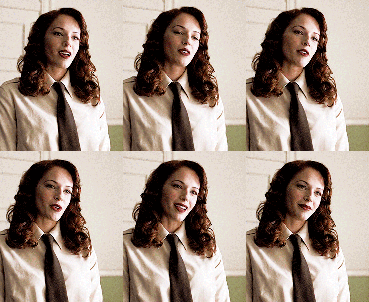
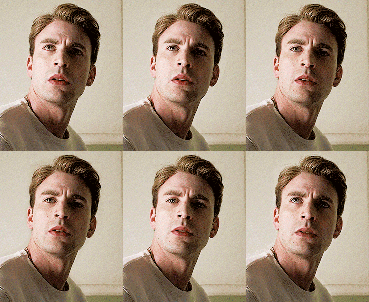
Steve Rogers did, in fact, realize that something was off when he saw the outline of the woman’s odd bra (a push-up bra, he would later learn), but being an officer and a gentleman, he said that it was the game that gave the future away.
No, see, this scene is just amazing. The costume department deserves so many kudos for this, it’s unreal, especially given the fact that they pulled off Peggy pretty much flawlessly.
1) Her hair is completely wrong for the 40’s. No professional/working woman would have her hair loose like that. Since they’re trying to pass this off as a military hospital, Steve would know that she would at least have her hair carefully pulled back, if maybe not in the elaborate coiffures that would have been popular.
2) Her tie? Too wide, too long. That’s a man’s tie, not a woman’s. They did, however, get the knot correct as far as I can see – that looks like a Windsor.
3) That. Bra. There is so much clashing between that bra and what Steve would expect (remember, he worked with a bunch of women for a long time) that it has to be intentional. She’s wearing a foam cup, which would have been unheard of back then. It’s also an exceptionally old or ill-fitting bra – why else can you see the tops of the cups? No woman would have been caught dead with misbehaving lingerie like that back then, and the soft satin cups of 40’s lingerie made it nearly impossible anyway. Her breasts are also sitting at a much lower angle than would be acceptable in the 40’s.
Look at his eyes. He knows by the time he gets to her hair that something is very, very wrong.
so what you are saying is S.H.E.I.L.D. has a super shitty costume division….
Nope, Nick Fury totally did this on purpose.
There’s no knowing what kind of condition Steve’s in, or what kind of person he really is, after decades of nostalgia blur the reality and the long years in the ice (after a plane crash and a shitload of radiation) do their work. (Pre-crash Steve is in lots of files, I’m sure. Nick Fury does not trust files.) So Fury instructs his people to build a stage, and makes sure that the right people put up some of the wrong cues.
Maybe the real Steve’s a dick, or just an above-average jock; maybe he had a knack for hanging out with real talent. Maybe he hit his head too hard on the landing and he’s not gonna be Captain anymore. On the flipside, if he really is smart, then putting him in a standard, modern hospital room and telling him the truth is going to have him clamming up and refusing to believe a goddamn thing he hears for a really long time.
The real question here is, how long it does it take for the man, the myth, the legend to notice? What does he do about it? How long does he wait to get his bearings, confirm his suspicions, and gather information before attempting busting out?
Turns out the answer’s about forty-five seconds.
Sometimes clever posts die a quiet death in the abyss of the unreblogged. Some clever posts get attention, get comments, get better. Then there’s this one which I’ve watched evolve into a thing of brilliance.
It used to bother me a little that Star Wars characters talked as if the Empire had been around forever (”before the dark times”, Obi-Wan says, exhausted) when the prequels tell us it’s only been about twenty years.
like whats the average lifespan of an asgardian? like yeah thor is 1500 but what if thats just like 23 in human terms
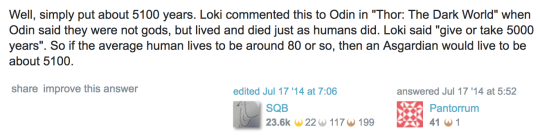
googled “asgardian lifespan” found this,
so if thor is currently 1500 years old (said in infinity war)
5100/1500 = 3.4
so thors current age times 3.4 would be the average lifespan of an asgardian
to change that to human terms the average lifespan of a human is about 80 so
80/3.4
lsdmkfgjdfjsd oh my God…
thor really out here having the worst time of his life and hes like 23
this metric gets even weirder if you do it for loki’s age
according to Thor 1 loki was a baby in 965 AD, making him not much older than 1000 years (1053 counting from this year,) so considerably younger than Thor.
Doing the same calculation as above, 5100/1053 gives a ratio of 4.8, that is to say that the average life span of the aesir is 4.9 times as long as loki has lived, so 84/4.8 places him comparative to a human life span at:
….17.
LOKI YOU ARE NOT EVEN OLD ENOUGH TO *VOTE,* LET ALONE HOLD HIGH OFFICE! YOU GET DOWN FROM THAT THRONE RIGHT NOW!!!
aight fuckers I’m doing it I’m spending a full $4 to watch the first lotr movie, for the first time
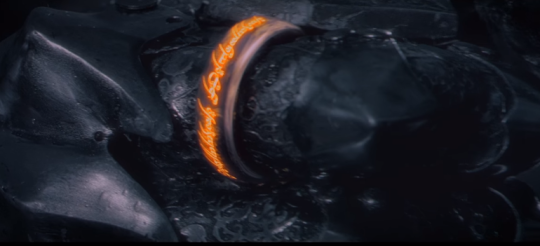
so like I get, you know, power and malice and cruelty were ‘poured’ into the rings, but like. what did they actually put in those things. what fuckin gold gives a ring malice. why did the elves only get three.
holy shit it’s Agent Smith with pointy ears
this ring was made of weet-bix and nutri grain
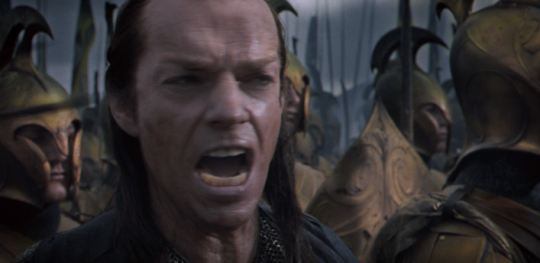
it was in this moment, when all hope was lost, that issieldor-whoever took up his father’s sword –
I’M SORRY BUT I’M LAUGHING THE RING GIVES THE BIG BAD GUY LIKE DARK MAGIC AND A DEMON ARMY TO CONTROL BUT EESEELDOOR PUTS IT ON AND HE JUST TURNS INVISIBLE
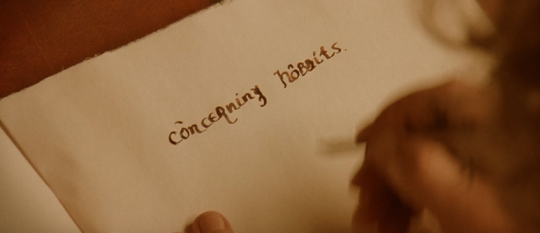
holy shit I just experienced seven and a half minutes of introductory exposition by a mysterious lady who apparently thinks VERY little of hobbits
omg is this WHOLE movie exposition
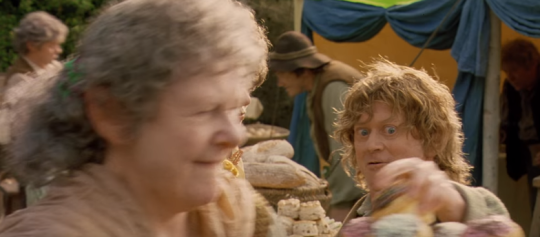
it has been remarked by some that a hobbit’s only real passion
is for food
FOOD
a wizard is never late
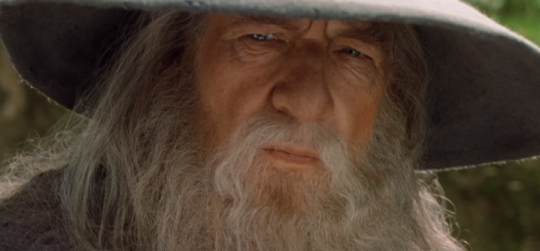
says Ian McKellan, wishing he was Julie Andrews, Queen of Genovia
I know absolutely nothing about either of these two but I already fucking love their relationship it’s beautiful
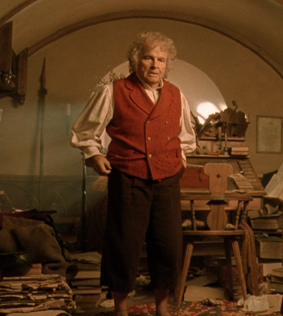
OH SO BILBO’S THE FUCK THAT CAUSED ALL THOSE JUMP SCARES
oh shit son he’s got the ring and the golem voice
okay so that’s pretty fucking cute
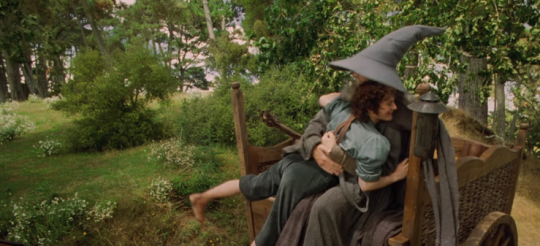
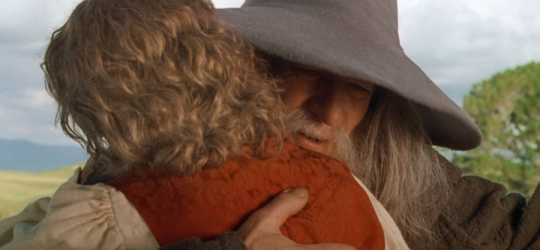
apparently every hobbit has an instinctual urge to hug Ian McKellen and honestly? same
holy shit guys I’m not even 20 minutes in I’m gonna have to make multiple posts
One of my favorite studies of Harry Potter is that of the ring composition found both in the individual novels and overall composition. That very composition is what makes Harry Potter such a satisfying story. It’s a large part of the reason Harry Potter is destined to become a classic.
And it’s an integral part of the series many people are completely unaware of.
So what is ring composition?
It’s a well-worn, beautiful, and (frankly) very satisfying way of structuring a story. John Granger, known online as The Hogwarts Professor, has written extensively on it.
Ring Composition is also known as “chiastic structure.” Basically, it’s when writing is structured symmetrically, mirroring itself: ABBA or ABCBA.
Poems can be structured this way. Sentences can be structured this way. (Ask not what your country can do for you — ask what you can do for your country.) Stories of any length and of any form can be structured this way.
In a novel, the basic structure depends on three key scenes: the catalyst, the crux, and the closing.
The catalyst sets the story into the motion.
The crux is the moment when everything changes. (It is not the climax).
The closing, is both the result of the crux and a return to the catalyst.
In Harry Potter, you might recognise this structure:
Voldemort casts a killing curse on Harry and doesn’t die.
Voldemort attempts to come back to power
Voldemort comes back to power.
Harry learns what it will take to remove Voldemort from power.
Voldemort casts a killing curse on Harry and dies.
But all stories should have this structure. A book’s ending should always reference its beginning. It should always be the result of some major turning point along the way. Otherwise, it simply wouldn’t be a very good story.
What’s most satisfying about chiastic structure is not the basic ABA structure, but the mirroring that happens in between these three major story points.
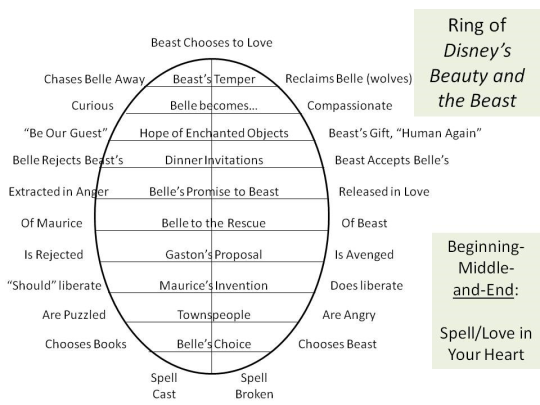
To illustrate what a more complicated ABCDEFGFEDCBA structure looks like, (but not as complicated as Harry Potter’s, which you can see here and here) Susan Raab has put together a fantastic visual of ring composition in Beauty and the Beast (1991), a movie which most agree is almost perfectly structured.
What’s so wonderful about ring composition in this story is that it so clearly illustrates how that one crucial decision of Beast changes everything in the world of the story. Everything from the first half of the story comes back in the second half, effected by Beast’s decision. This gives every plot point more weight because it ties them all to the larger story arc. What’s more, because it’s so self-referential, everything feels tidy and complete. Because everything has some level of importance, the world feels more fully realized and fleshed out. No small detail is left unexplored.
How great would Beauty and the Beast be if Gaston hadn’t proposed to Belle in the opening, but was introduced later on as a hunter who simply wanted to kill a big monster? Or if, after the magnificent opening song, the townspeople had nothing to do with the rest of the movie? Or if Maurice’s invention had never been mentioned again after he left the castle?
Humans are nostalgic beings. We love returning to old things. We don’t want the things we love to be forgotten.
This is true of readers, too.
We love seeing story elements return to us. We love to know that no matter how the story is progressing, those events that occurred as we were falling in love with it are still as important to the story itself as they are to us. There is something inside us all that delights in seeing Harry leave Privet Dr. the same way he got there–in the sidecar of Hagrid’s motorbike. There’s a power to it that would make any other exit from Privet Dr. lesser.
On a less poetic note, readers don’t like to feel as though they’ve wasted their time reading about something, investing in something, that doesn’t feel very important to the story. If Gaston proposed to Belle in Act 1 and did nothing in Act 3, readers might ask “Why was he even in the movie then? Why couldn’t we have spent more time talking about x instead?” Many people do ask similar questions of plot points and characters that are important in one half of a movie or book, but don’t feature in the rest of it.
Now, ring composition is odiously difficult to write, but even if you can’t make your story a perfect mirror of itself, don’t let story elements leave quietly. Let things echo where you can–small moments, big moments, decisions, characters, places, jokes.
It’s the simplest way of building a story structure that will satisfy its readers.
If there’s no place for something to echo, if an element drops out of the story half-way through, or appears in the last act, and you simply can’t see any other way around it, you may want to ask yourself if it’s truly important enough to earn its place in your story.
Further reading:
If you’d like to learn more about ring theory, I’d recommend listening to the Mugglenet Academia episode on it: x
You can also read more about symmetry in HP here: x
And more about ring structure in Lolita and Star Wars here: x and x
And about why story endings and beginnings should be linked here: x
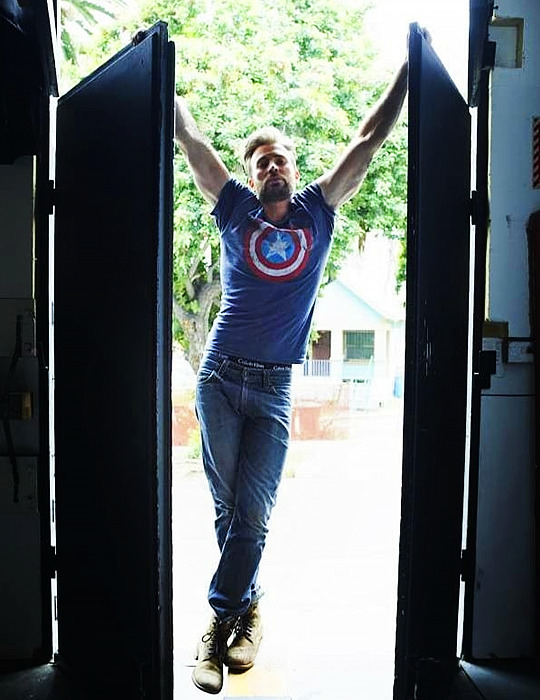
Chris Evans behind the scenes of the May 2016 Rolling Stone shoot
the tags on this were utter gems so here are some of my faves
Essay time y’all – cause these tags are truth. But one of my FAVORITE (and by favorite I mean the reason so many of his pictures fucking enthrall me) things about the way either he poses or the photographers pose him is that that the default for him doesn’t tend to be the WALL OF MAN imposing/daring someone to fuck with him poses that most photographers position men in, especially men who play superheroes. Far more often you see him posed as photographers often pose women – S-curves (trace a line from shoulders to hips to waist to knees in that pic – it’s a feminine way to pose), shoulders slightly hunched forward, looking at the camera through his eyelashes, mouth slightly open. They pose him to invite the viewer in instead of projecting out. The way they pose him is a type of masculinity that isn’t trying so fucking hard and y’all my LOINS ARE HERE FOR IT.
When I try to describe the type of masculinity that I find fucking appealing, it’s this.
(Look… y’all… if you haven’t seen his truckstop hooker photos from way back, do your loins a favor and find them)
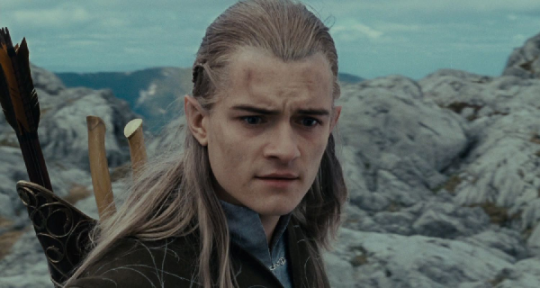
Legolas pretty quickly gets in the habit of venting about his travelling companions in Elvish, so long as Gandalf & Aragorn aren’t in earshot they’ll never know right?
Then about a week into their journey like
Legolas: *in Elvish, for approximately the 20th time* ugh fucking hobbits, so annoying
Frodo: *also in Elvish, deadpan* yeah we’re the worst
Legolas:
~*~earlier~*~
Legolas: ugh fucking hobbits
Merry: Frodo what’d he say
Frodo: I’m not sure he speaks a weird dialect but I think he’s insulting us. I should tell him I can understand Elvish
i mean, honestly it’s amazing the Elves had as many languages and dialects as they did, considering Galadriel (for example) is over seven thousand years old.
english would probably have changed less since Chaucer’s time, if a lot of our cultural leaders from the thirteenth century were still alive and running things.
they’ve had like. seven generations since the sun happened, max.
frodo’s books are old to him, but outside any very old poetry copied down exactly, the dialect represented in them isn’t likely to be older than the Second Age, wherein Aragorn’s foster-father Elrond started out as a very young adult and grew into himself, and Legolas’ father was born.
so like, three to six thousand years old, maybe, which is probably a drop in the bucket of Elvish history judging by all the ethnic differentiation that had time to develop before Ungoliant came along, even if we can’t really tell because there weren’t years to count, before the Trees were destroyed.
plus a lot of Bilbo’s materials were probably directly from Elrond, whose library dates largely from the Third Age, probably, because he didn’t establish Imladris until after the Last Alliance. and Elrond isn’t the type to intentionally help Bilbo learn the wrong dialect and sound sillier than can be helped, even if everyone was humoring him more than a little.
so Frodo might sound hilariously formal for conversational use (though considering how most Elves use Westron he’s probably safe there) and kind of old-fashioned, but he’s not in any danger of being incomprehensible, because elves live on such a ridiculous timescale.
to over-analyse this awesome and hilarious post even more, legolas’ grandfather
was from linguistically stubborn Doriath and their family is actually from a
somewhat different, higher-status ethnic background than their subjects.
so depending on how much of a role Thranduil took in his
upbringing (and Oropher in his), Legolas may have some weird stilted old-fashioned speaking tics in his
Sindarin that reflect a more purely Doriathrin dialect rather than the Doriathrin-influenced Western Sindarin that became the most widely spoken Sindarin long before he was born, or he might have a School Voice
from having been taught how to Speak Proper and then lapse into really
obscure colloquial Avari dialect when he’s being casual. or both!
considering legolas’ moderately complicated political position, i expect he can code-switch.
…it’s
also fairly likely considering the linguistic politics involved that Legolas is reasonably articulate in Sindarin, though
with some level of accent, but knows approximately zero Quenya outside of loanwords into Sindarin, and even those he mostly didn’t learn as a kid.
which would be extra hilarious when he and gimli fetch up in Valinor in his little homemade skiff, if the first elves he meets have never been to Middle Earth and they’re just standing there on the beach reduced to miming about what is the short beard person, and who are you, and why.
this is elvish dialects and tolkien, okay. there’s a lot of canon material! he actually initially developed the history of middle-earth specifically to ground the linguistic development of the various Elvish languages!
Legolas: Alas, verily would I have dispatched thine enemy posthaste, but y’all’d’ve pitched a feckin’ fit.
Aragorn: *eyelid twitching*
Frodo: *frantically scribbling* Hang on which language are you even speaking right now
Pippin, confused: Is he not speaking Elvish?
Frodo, sarcastically: I dunno, are you speaking Hobbit?
Boromir, who has been lowkey pissed-off at the Hobbits’ weird dialect this whole time: That’s what it sounds like to me.
Merry, who actually knows some shit about Hobbit background: We are actually speaking multiple variants of the Shire dialect of Westron, you ignorant fuck.
Sam, a mere working-class country boy: Honestly y’all could be talkin Dwarvish half the time for all I know.
Pippin, entering Gondor and speaking to the castle steward: hey yo my man
The thing about how women in comics used to be drawn and sometimes are still drawn, you can only really understand the difference between an action girl being forced into unrealistic sexual, sensual positions, and an actual strong and well posed, empowering but still sexy female character, when you see what it looks like to have male characters depicted in overtly sensual poses
And I’m not talking about the Hawkeye Initiative or any given parody
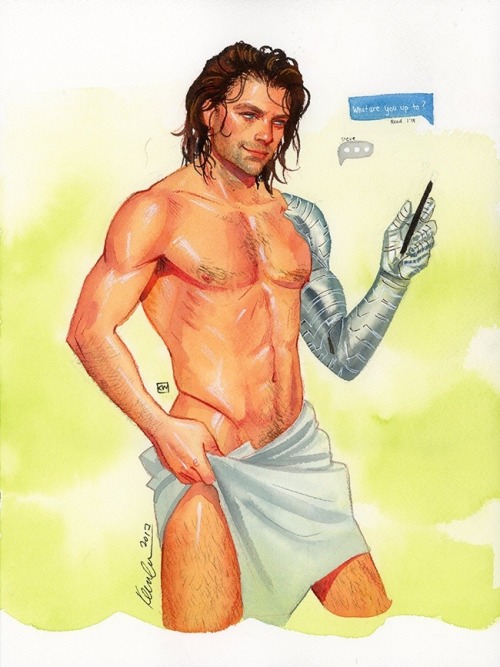
I actually want to draw a comparison using art by Kevin Wada
Kevin Wada is a proud part of the LGBTQ+ community and he has this unique ability to sexualize mainstream male heroes without it looking like a parody. He draws covers for multiple big comic companies and his style reminiscent of old fashion magazines, drawn largely in traditional watercolor, has made him a stalwart of the industry.
He also draws a lot of naked Bucky Barnes.
Anyway, I want to talk about how interesting his art is, the difference between his power poses and his sexy poses for male and female characters.
A typical power pose for a male comics character would look like this
Whereas every so often with female heroes you get something like this
Not all the time, of course, but it happens and it happens in the wrong places. You wouldn’t be posing like a cover model in the middle of a battle, you really wouldn’t.
But when it comes to Wada and male and female characters, the difference is pretty clear.
When he draws male characters, they more often look like this
Sensual, in a pose you wouldn’t usually see a big, muscular hero doing. If not that, then playful, sexy, for looking at, but nothing about their anatomy overly exaggerated
How he draws women is also very clearly different from many other artists, from sexy pose to power pose.
Still posing for the camera, still to be looked at, but very, very different from how we’ve seen female characters portrayed in mainstream comics in the past.
And I guess it’s really just a matter of variety? Objectification in art is a long time debate and appears everywhere always, but for all that we can argue about its impact on popular media, there are a few things I know for sure:
1) having a female character pose like a playboy cover girl in the middle of a battle scene is just Bad Art and y’all need to find better references
2) female power poses will never look quite as right as when they’re drawn by people who know the value of expressing personality through pose (it’s basic animation principles and some artists still need to learn it) and who actually know what a female character’s personality beyond “sexy”
3) Iron Man or Batman posing like they’re about to beat somebody up is 100% not the same as a fashion drawing by Kevin Wada where a Typical Beefy Action Guy gets to pose like a flirty pretty boy
4) the MCU films have figured out the value of pandering to female audiences by sexually objectifying all their male action heroes while simultaneously appealing to the male demographic’s action movie power fantasy. Quoting Chris Hemsworth and Taika Waititi: “I’m not a piece of meat” “Uh, yes you are.”
They definitely struck some kind of balance there.
Also, more important than this entire post: y’all should follow @kevinwada on Tumblr and give him love because his art is divine and his talent beyond words
We featured @kevinwada‘s Naked Snake last year and mentioned (as a couple times before) that if you really want to see the principles male gaze applied unironically to masculine characters, you gotta find pinup done by a male artist who’s into men. And Wada’s artwork is a great proof of that, without resorting to pandering exaggerations (which belong more to parody art).






 Steel Phoenix Studios
