[If you found my blog because you’re curious about Greek people mixing up prehistoric bears and demigods, this post is for you. I studied archaeology with a focus on other things, and the research on this topic goes back decades, but imo the best book on how dinosaur bones influenced mythology is Adrienne Mayor’s The First Fossil Hunters. I strongly suggest you support this amazing historian and buy her stuff – she’s a great writer and she specializes in folklore and geomythology, it doesn’t get much cooler than that – but if you can’t and you’re interested in the subject – well, I believe scientific knowledge should be shared and accessible to everyone, so here are a few highlights. Part one of six.]
Griffins: a very mysterious mystery
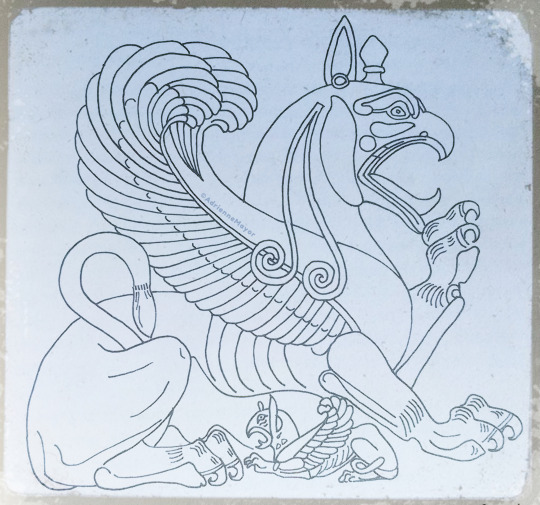
“A race of four-footed birds, almost as large as wolves and with legs and claws like lions.”
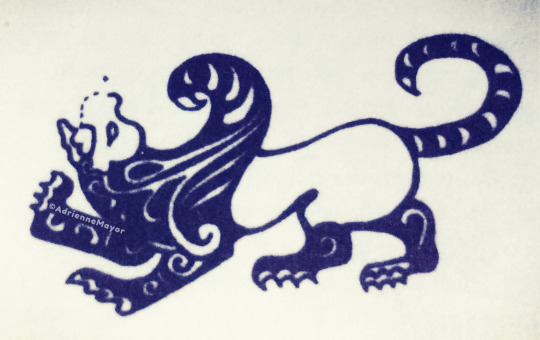
The one thing you need to know about griffins is that they don’t really fit in anywhere. They have no powers, they don’t help heroes, they’re not defeating gods or anything like that. Technically speaking, they’re not even monsters – people thought griffins were legit – real animals who lived in Central Asia and sat on golden eggs and mostly killed anyone who went near them. And okay, someone might say, ‘Frog, what’s fishy about that? People used to be dumb as rocks and there’s plenty of bizarro animals out there, anyway’ and yeah, that’s a very good point – except for one thing. See, what’s creepy about griffins is that we’ve got drawings and descriptions of them spanning ten centuries and thousands of miles, and yet they always. look. the. freaking. same.
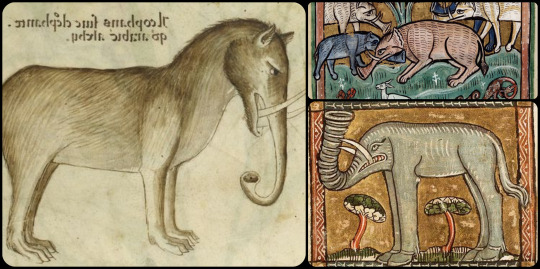
Like, here’s how people imagined elephants.
This is insanely funny and probably why God sent the Black Death to kill everyone, but also pretty common tbh, because a) people want to feel involved, b) people are liars who lie and c) it’s hard to imagine stuff you’ve never seen. So the more a story is passed around, the more it’s going to gain and lose details here and there, until you get from dog-footed hairy monkey of doom to plunger-nosed horror on stilts. But griffins – art or books, they’re consistently described as wolves-sized mammals with a beaked face. So that’s what made Adrienne Mayor go, Uh.
And what she did next is she started digging around in Central Asia, because that’s the other thing everyone agreed on: that griffins definitely lived there and definitely came from there. And this is where things get really interesting, because as it turns out, on one side of the Urals you’ve got Greeks going, ‘Mate, the Scythians, you know – they’ve got these huge-ass lion birds, I’m not even shitting you rn’ while on the other side of the Urals – wow and amaze – you’ve got Siberian tribes singing songs about the ‘bird-monsters’ and how their ancestors slaughtered them all because they were Valiant and Good.
(This according to a guy studying Siberian traditions in the early 1800s, anyway, because you know who writes stuff down? Not nomads, bless them: dragging around a shitload of books on fucking horseback is not a kind of life anyone deserve to live.)
And anyway, do you know what else those Mighty Ancestors did? They mined gold sand, and they kept tripping over dinosaur bones because that entire area is full of both things and some places are lucky like that. And in fact, the more excavations were carried out in ancient Scythian settlements, the more we started to realize that those guys were even more obsessed with griffins than the Greek were. Hell, some warriors even had griffins tattooed on their bodies?
And it’s probably all they ever talked about, because that’s when griffins suddenly appear in the Mediterreanean landscape: when Greek people start trading (and talking) with the Scythians.
(Another important note here, not that I’m not bitter or anything: something else those excavations are showing is that Herodotus was fucking right about fucking everything, SO THERE. Father of lies my ass, he was the only sensible guy in that whole bean-avoiding, monster-fucking, psychopathic and self-important Greek ‘intelligentsia’ and they can all fuck off and die and we don’t care about temples Pausy you dumb bitch we want to hear about the tree people and the Amazons and the fucking griffins goddammit. Uuugh. /rant)
So anyway, Scythian nomads had been hunting for gold in places with exciting names like ‘the field of the white bones’ and basically dying of exposure because mountains, so Herodotus (and others) got this right as well: that successful campaigns could take a long-ass time, and very often people just disappeared, never to be heard from again. What everybody got less right: the nomads and adventurers and gold miners weren’t killed by griffins, because by the time they started traveling into those mountains, ‘griffins’ had been dead for hundreds of thousands of years. What they did see, and what was sure to spook the fuck out of them, were fossils – and, more precisely, protoceratops skulls, which can be found on all the major caravan routes from China all the way to Uzbekistan and are so ubiquitous paleontologists call them ‘a damn nuisance’.
And guess what they look like.
Just fucking guess.
[Left: a golden griffin, Saka-Scyhtian culture; right: psittacosaurus skull, commonly found in Uzbekistan and the western Gobi.]
Also, fun detail if you’re into gory and painful ways of dying: many of the dino skeletons are found standing up, because the animals would be caught in sand storms and drop dead. So basically you’d be riding your horse and minding your own gold-related business when all of a sudden you see the empty sockets of a beaked something staring at you and yeah – as a reminder, the idea of evolution was not a thing until Darwin, so any Scythian or Siberian tribesman seeing something like that would assume there was a fairly good fucking chance of a live whatever-the-hell-this-is waiting for him behind the next hill. And that’s what he’d say to Greek traders over a bowl of fermented mare’s milk: to stay the fuck away from those mountains, because griffins, man, they’re fucking real and there’s hundreds of them and anyway, maybe write that down if writing’s something you’re into, never saw the point myself but eh, to each his own, right, and cheers, good health, peace and joy to the ancestors.
Man, don’t you just love mythology?
(How fossils influenced mythology: part two, Cyclops, will be up soon.)
Wheat fields are more mystical than fields of other crops. You are 7,000 times more likely to meet an old god or see a portent of doom in a wheat field than in a field of like… soybeans.
For your consideration: cornfields
Cornfields are less mystical than wheat fields but more mystical than soybean fields. Two-bit monsters congregate in corn fields to eat people, but their power is nothing compared to the things that manifest in wheat fields.
Have been in both wheat and cornfields; can confirm. Cornfields host monsters who eat people. Wheat fields attract old gods.
I have a theory that this is because the notions most of us have of “old gods” are pretty intrinsically European, and wheat was (and is) the staple crop of European life. It is quite literally tied to the ancestral rituals and beliefs of most white people. Odin, the Morrigan, and even Zeus are actually linked to a set of peoples who cultivated wheat.
Meanwhile, corn (maize) is a crop native to the Americas. It features in the white cultural imagination in a very different way. Corn is a motif seen not in our ancestral myths, but in a much newer genre: the American Gothic. With its focus on the tensions between man and nature and—perhaps more importantly—the United States’s history of genocide against its indigenous population and trade in enslaved Africans, the American Gothic is VERY preoccupied with agriculture. Our monsters come out of corn fields because corn is a symbol for not only what we did to the Native Americans (who were the first to grow the crop), but of what we are doing to the very land itself. Corn is a monument to our cultural sins.
Meanwhile, I suspect that corn features very differently in the imaginations of people of color. If you asked a Native American person or a Latinx person what sort of mysticism they associate with corn fields, I imagine their answer would be very different than ours.
TLDR: White people associate wheat with our ancestors’ gods because our ancestors grew wheat. We associate corn with terrible monsters because it is a literal sign of our own monstrosity.
Native American here, can confirm that small plots of corn feel safe and homey; ideally they should be interplanted with other crops. You find turkeys and possums and raccoons in the corn. It might tell you important knowledge.
However.
Giant monocultures of corn, where the corn grows unbroken for miles and miles, not near human habitation, devoid of local wildlife, just corn on corn in the soft wind? Corn mega monocultures? Those sound like screaming.
The difference between a small plot of corn with other crops intermixed and a massive fucking endless field is made of eldrich fucking horror.
In Grímnismál, Odin states, “Never a single name have I had since first I fared among men.” And indeed, we have a very large number that are attested, as well as many that have no doubt been lost to time.
One of the more well known heiti is Hrafnaguð, the Raven God. In turn, his blood brother Loki is called Gammleið, “the vulture’s path.”
Because of Odin’s connection with ravens as well as his role of selecting those slain on the battlefield for an afterlife in Valhalla, I propose that it is feasible, perhaps even likely, for Odin to have been named “the raven’s path” by viking age skalds.
Another notable name is the one commonly used for him: Odin. The word it most likely derives from, óðr, is usually associated with ritual ecstasy and battle frenzy, but it could potentially extend to other forms of “madness.” For example, of his twin ravens, Huginn and Muninn, traditionally translated as “thought” and “memory”, Odin states, “I fear more for Muninn.” He embodies anxiety about not only the temporary abandonment of ritual or battle, but also a more permanent loss of history and self.
One final aspect of Odin that his heiti point to but is rarely explored is his connection to the night and blackness. He is Fjölnir, concealer, Herblindi, blinder of hosts, and Tvíblindi, twice blind. He is Grímnir, the hooded one. He presides over Yule, the longest night. Ravens are so closely associated with their color that the word is used as a synonym for black. And according to folklore, he notably rides forth with his forces, known today as the Wild Hunt only between sunset and dawn.
So basically, it’s 100% lore compliant to say that Odin is Ebony Darkness Demtia Raven Way.
I can’t believe you did this and am utterly torn between impotent fury and seizing hilarity. Wow. Wow.
why have the multiply-cursed, shabby, jackal-laughing PACK of you CONSPIRED to put this in front of my eyeballs so many times that I was FORCED TO READ IT TO THE END.
Maybe medieval people happened upon a T-Rex fossil and came to a relatively logical conclusion that dragons existed.
I’ve read a couple books on this actually, thats exactly what happened. Also cyclops are from looking at bones from a certain type of baby elephant. The giant note hole and tiny eyes made it look like a single eye.
Yep, can confirm! And what’s even funnier to me is that back in the dark ages, Greek people used to find a lot of prehistoric bear skeletons – and those look exactly like human skeletons, except they’re like eight feet tall or something – so they naturally assumed those were the heroes of legend, and made armour and clothes for them and reburied them with the most splendid and sacred religious ceremonies they could think of? Fast forward five centuries, Athens’ all modern and rational, philosophers and scientists aren’t taking any shit from anyone – but the problem is, people will randomly find graves containing giant-ass warriors, so that’s something that can’t be explained away and yeah, demigods were a thing and yeah, they used to be eight feet tall and sorry I don’t make the rules.
Some scientists suspect that the origin of the cyclops myths came about because of elephant skulls, which are vaguely human in shape but with a honking big hole in the middle for the trunk but easily mistakable for an eye socket without any flesh
These hypotheses are heavily debated so I want to be clear when posting that this is in no way 100% fact.
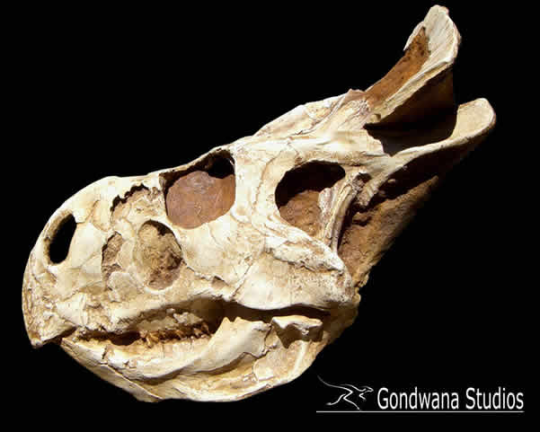
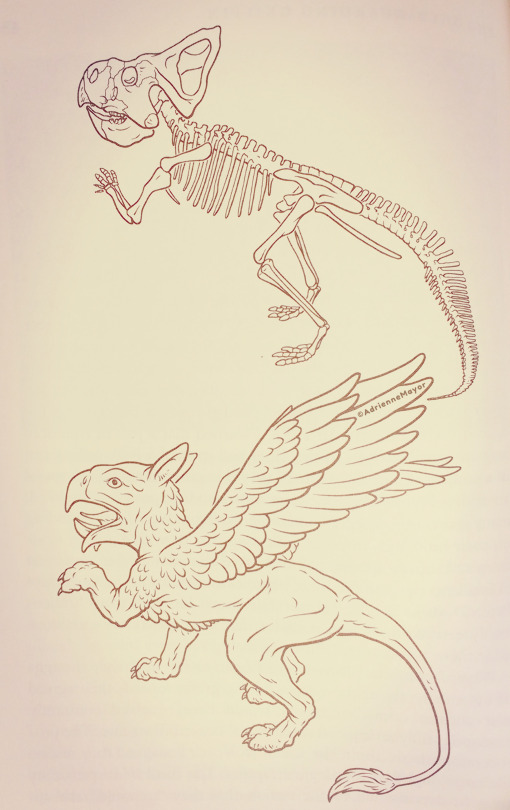
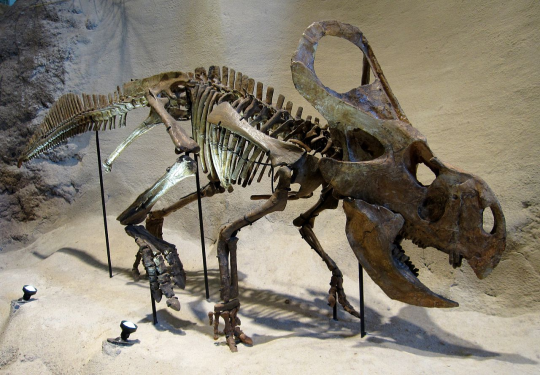
…but I also want to add that the dinosaur Protoceratops or similar genera are hypothesized by folk scientist Adrienne Mayor to have been partially responsible for the griffin myth.
(via wikipedia commons)
I mean, yeah, I can sorta see how someone could mistake that for some half-bird, half-mammal beast, especially with incomplete remains that fossils almost always have as well as the lack of knowledge of what a dinosaur is.
Whether or not it’s true? Who really knows at this point, but it’s fun to think about.
Adrienne Mayor has a book out called The First Fossil Hunters on this exact topic if anyone is interested. I haven’t read it myself though so I couldn’t tell you how good or bad it is!
I have been having some thoughts about the original mythological
Loki and the thought that has been on my mind most is this:
Loki is
1. Surprisingly great with kids
2. Is addicted to parenthood
Let me explain.
As to the first bit, well, yeah, it’s surprising. Or it should
be at first glance. Because, seriously, this is fucking Loki. Standing
in close proximity to him for longer than a minute is bound to result in theft,
arson, a splash of bloodshed for color, and at least one confused party waking
up in bed with the fucker. He’s a chaotic, manic, and generally hazardous force
to be reckoned with.
To us. That is, adults.
Mortals, gods, giants, trolls, dwarves, et cetera–but only
those who are mature.* *Read: there is Something to be Gained from conning,
seducing, or otherwise messing with us. Whether it’s to save his own skin, or
to get some sweet petty vengeance, or to steal a bauble, or to satisfy some
carnal itch, or to just fuck up somebody’s day for the Hel of it, Loki only
ever targets those he can take something worthwhile from.
And what is there to take from kids?
Plenty of folks on his extremely extensive Enemies List have
children, of course. No one in the Norse mythos was especially mindful of
dropping their seed. So. Children.
Children–easy to fool, easy to make a hostage, easy to charm
and siphon their parents’ secrets and treasures from–should be great big
bullseyes to the God of Mischief and Trickery and Assorted Other Unscrupulous
Things. Yet there isn’t a single Edda or snippet of lore in which Loki makes cruel
use of them. Not once.
But what’s the big deal? Most of the rude and/or villainous
characters in Norse mythology don’t bother with harassing kids either. Except
in the case of stories like Loka
Táttur.
Loka Táttur is a tale about how a farmer loses a bet with a
vicious troll who swears to kill the farmer’s little boy. The farmer calls upon
three gods in turn. Odin, Hoenir, and Loki. Odin and Hoenir both disguise the
boy and hide him away, but the troll is too clever and each time manages to
sniff out the boy’s hiding place. Ultimately it is Loki who hides the kid–pulling
an Idunn-in-a-Nutshell gag and hiding him as a speck on the eye of a flounder
in the water–and then, rather than stepping back as Odin and Hoenir did from
their work, he sits in his boat and lets the troll see him.
The troll, being suspicious, asks what Loki’s business is. Only
fishing, obviously. The troll demands to join him. Lo and behold, they bring up
a wealth of flounders, including the one where the boy’s hidden. Loki manages
to change the boy back to his true shape and hide the kid behind his back
without the troll noticing. As Loki brings the boat back to shore, and to the
farmer’s boathouse with the latter’s doors open, Loki tells the boy to run
through the boathouse. He goes, the troll gives chase, and the troll becomes
wedged in the entryway.
At which point Loki proceeds to chop off the troll’s legs and
stick an iron stake in the bastard’s skull. Then he walks the kid back home. The
grand payoff for Loki after all this?
The boy is safe. The troll is dead. The End.
Huh.
Now, much as Loki may have been the catalyst for a lot of
corpses pre-Ragnarok–see his business with Thor getting his hammer back and
leading more than one giant into a death trap–Loki is actually very rarely, if
ever, one to get his hands dirty by killing a victim himself. Even Baldr was
done in by an arrow he aimed with blind Hod’s fingers. So why did Loki
personally orchestrate this plan in such a grisly way? For what gain?
What, other than the satisfaction of personally slaughtering the
would-be child-killing prick troll?
In a less bloody narrative, we see his hand in getting Thialfi
and Roskva, a pair of mortal siblings, taken into Thor’s service. While the
exact ages of the two aren’t mentioned, they are young enough to still be in
the care of their parents. When Thor and Loki are travelling it’s their father
who invites them under their roof. Thor’s goats are slaughtered for the evening
meal and–in some tellings–it is Loki who entices the son, Thialfi, into
breaking a leg bone to taste the marrow. When morning comes and Thor resurrects
his goats, one has a broken leg.
Thor’s visibly pissed—never ever
a good thing–and so the family offers to make some compensation.
Loki, coughing through his hand: ThialfibroketheboneheshouldpledgeservicetoThor
Thialfi: Uh–
Loki, clearing his throat:Alsotakethesistertwoforonedeal
Rosvka: But I didn’t do anything—
Loki, en sotto voce: Kids, consider your options. Teensy
mortal lifetime of toil on Midgard, harvesting dirt and snow on one hand.
Potentially immortal lifetime, I don’t know, scrubbing giant blood off Mjolnir in
Thor’s hall on Asgard on the other. Verdict?
Both: Sold.
Loki: Excellent! Really, Thor, you’re a master dealmaker,
a born barterer, I’m in awe.
Thor: Wh—
Loki: AND WE’RE BACK TREKKING LETS GO
Cue laugh track.
Point being, Loki has been shown to purposefully go
out of his way to help kids because…because. Yet how does this translate to the
idea of him being good with kids?
I ask this purely hypothetically and am trying not to
laugh as I do, because really. Really.
How in the hell is a kid not going to be entertained by the Norse god of
revelry and recreation?
Oh yeah, that bit’s often left off the résumé.
Loki, God of
Mischief, is also God of Recreation. Play, in other words. Because playtime is
a thing that is Chaotic rather than a product of Order, and so Loki is
naturally all over it. There are some who even credit him with having added
that trait to the first humans, Ask and Embla, while Odin, Vili, and Vé were
carving them and breathing character into their souls.
On top of that, he’s also the god of flyting—poetic shit-talking.
So we have a shapeshifting, storytelling,
magic-wielding, game-spinning, trickster god who can also teach young ears
every bad word they could ever hope to learn, and he’s expected not to be a hit with kids? This is all
without even mentioning the fact that Loki is a bit of a hyperactive attention
hog all on his own. What better audience for him than a gaggle of credulous
little onlookers who are too young to sneer at his antics rather than take
delight in them? Children are wee balls of mischief themselves, muddled in with
imagination and wonder and an eagerness to be wowed or made to laugh themselves
into weeping.
All of which brings me to point number two:
Loki is a kidaholic.
Like, even though a lot of his and/or her sleeping
around the Realms can be chalked up
to an insane libido, there’s also just the sheer number of kids they’ve
produced to factor in. Maybe more than even Odin or Thor could boast. At least
half being born from Loki herself. Not because Loki was helpless against the
workings of nature—it’s impossible to believe that Loki wasn’t smart enough or powerful enough to get around producing
new Lokisons and Lokisdottirs with every other bedmate—but because Loki wants more kids. There will never be
enough kids.
The guy’s got a case of severe paternal/maternal
hoarding going on. I mean
Loki: I need another one.
Odin: You really don’t.
Loki: You’re right. I need two other ones.
Odin: I am positive that you do not.
Loki: Three. Triplets. Need them. Right now.
Odin: Loki.
Loki: Four? Four. Definitely four.
Odin: Loki, please.
Loki: Yeah, let’s go with four. I can give or get. I’ll
flip a coin.
Odin: Loki, as Allfather, I am expressly forbidding
you to impregnate or be impregnated for at least a century.
Loki: Fine.
Odin: …
Loki: …I’ll settle for three.
Odin: What did I just
say?
Loki: Three’s a good number, isn’t it? All good
things come in threes. You and your brothers—
Odin, fighting an aneurysm: You and your brothers—
Loki: So you agree!
Odin: I did not—
Loki: Three it is!
Odin: Loki—
Loki: Be back when I feel like it
Odin: Loki—
Loki: Give my love to Sleipnir
Odin: LOKI—
Loki, pantsless, vaulting over the wall, cartwheeling
towards Jötunheimr’s Ironwood forest: Bye
It’s in that Ironwood that he meets Angrboda and
fathers a giant wolf, a giant snake, and the literal corpse-faced queen-goddess
of the dead by her. Being that Loki’s scope of attractiveness/aesthetic acceptability
is elastic enough to let all sorts of species between his legs, I find it hard
to believe that his kids’ unique looks would repulse or even faze him. They’re
his children. Therefore they’re great.
And we all know how that happy family
ended up. Ditto his second family with Sigyn and his two little twin boys.
Enter Ragnarok, warfare, general Bad
Times, and so on.
Anyway.
Comical as it is to envision a Loki who cringes at
the notion of parenthood and/or fears his more monstrous children, I just don’t
believe it lines up with what we know of the Loki of myth.
Myth Loki is a god who would spend hours entertaining
a child, simply entertained that the child is entertained.
Myth Loki is also a god who would hunt down and methodically dismember whichever idiot
thought it would be okay to make a child cry within said god’s earshot.
Cafés don’t have clocks because they are timeless places
there’s a cafe in my town called time and it has clocks all over the walls, but none of them are the same or the right time, so like, #confirmed
That café is the entry to the faery world sorry I don’t make the rules
“Do not eat or drink fairy food.”
“I know… but have you tried their lattes?”
okay but the whole thing about not accepting fairy food or drink is that they give it to you and you then owe them something for it
so like, if it’s a normal cafe and you pay for your coffee & muffin you’d technically be okay since you paid them
so what I’m saying is, fairies starting coffee shops because it’s actually pretty profitable and more interesting than just waiting for humans to stumble into fairy circles
Some Fair Folk Cafe’s are fine, you go in, pay for your food, and if you leave wanting to go back that’s normal. These guys want you returning, they like humans, want to watch them and interact with them and learn about them.
Some, less so. You feel an urge, an itch under your skin to take more than you paid for. “We can upgrade you for free, if you’d like!” The cashier says. There’s something a little off in her smile. Sharp teeth are uncanny at this angle, you think. You shake your head, refusing politely.
“Samples, take one!” The person stocking the cabinet says, holding out a plate of small pieces of cake. They don’t say free, they don’t say what they cost. You know better than to take them at the implied meaning. Fair Folk don’t do ‘implied’.
“I just ate, but thank you,” you reply gracefully. The smile fades, sharp teeth hidden, before it widens again.
“Next time then,” they say, and you feel the promise brushing over your skin.
“Maybe,” you reply, still smiling. You know better than to agree with one of the Fair Folk. Words have weight after all, and none more than the echo of a promise to one of The People.
I’d be screwed. I love free samples.
But that’s where they get you – they never say it’s free.





 Steel Phoenix Studios