In Grímnismál, Odin states, “Never a single name have I had since first I fared among men.” And indeed, we have a very large number that are attested, as well as many that have no doubt been lost to time.
One of the more well known heiti is Hrafnaguð, the Raven God. In turn, his blood brother Loki is called Gammleið, “the vulture’s path.”
Because of Odin’s connection with ravens as well as his role of selecting those slain on the battlefield for an afterlife in Valhalla, I propose that it is feasible, perhaps even likely, for Odin to have been named “the raven’s path” by viking age skalds.
Another notable name is the one commonly used for him: Odin. The word it most likely derives from, óðr, is usually associated with ritual ecstasy and battle frenzy, but it could potentially extend to other forms of “madness.” For example, of his twin ravens, Huginn and Muninn, traditionally translated as “thought” and “memory”, Odin states, “I fear more for Muninn.” He embodies anxiety about not only the temporary abandonment of ritual or battle, but also a more permanent loss of history and self.
One final aspect of Odin that his heiti point to but is rarely explored is his connection to the night and blackness. He is Fjölnir, concealer, Herblindi, blinder of hosts, and Tvíblindi, twice blind. He is Grímnir, the hooded one. He presides over Yule, the longest night. Ravens are so closely associated with their color that the word is used as a synonym for black. And according to folklore, he notably rides forth with his forces, known today as the Wild Hunt only between sunset and dawn.
So basically, it’s 100% lore compliant to say that Odin is Ebony Darkness Demtia Raven Way.
I can’t believe you did this and am utterly torn between impotent fury and seizing hilarity. Wow. Wow.
why have the multiply-cursed, shabby, jackal-laughing PACK of you CONSPIRED to put this in front of my eyeballs so many times that I was FORCED TO READ IT TO THE END.
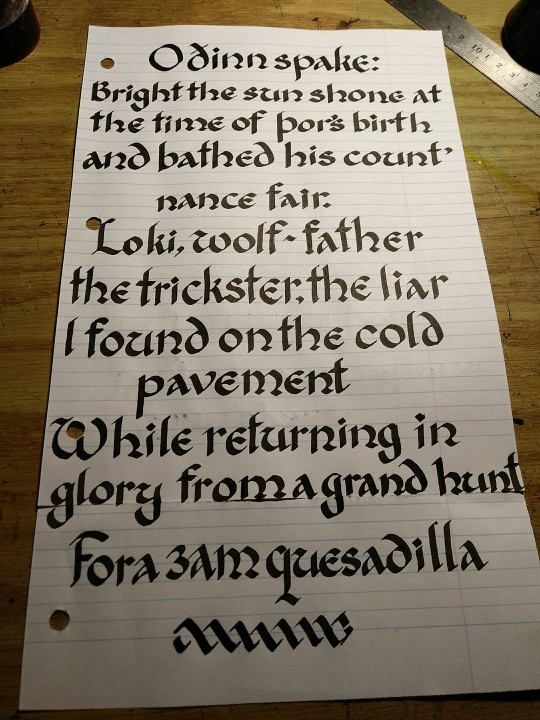
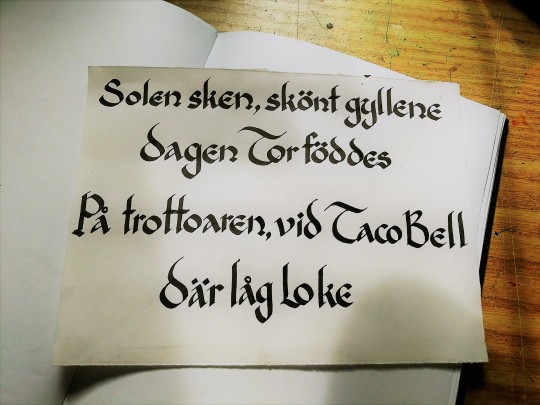
odin is like “when thor was born the sun shone bright upon his beautiful face. i found loki on the sidewalk outside a taco bell”
Oðinn spake:
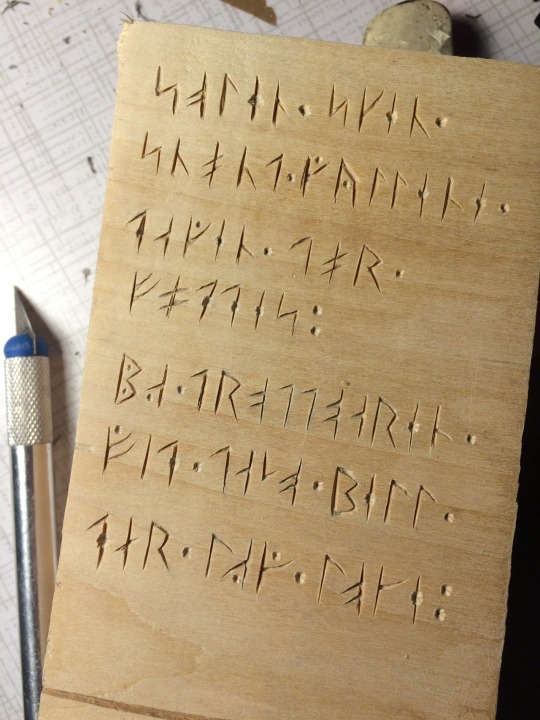
Bright the sun shone | at the time of Þor’s birth, And bathed his count’nance fair. Loki, wolf-father, | the trickster, the liar, I found on the cold pavement While returning in glory | from a grand hunt For a 3 AM quesadilla.
Þrymskviða. Compressed down, it goes like this: A Jotun steal Thor’s hammer Mjolnir and says he’ll only give it back if he’s given Freyja to marry, as she is the most beautiful goddess in all of existence. The gods argue over what to do for a while before Heimdall suggests they stick a bridal veil on Thor, says he’s Freyja, and pretend they’re giving Freyja (Thor) to the Jotun to marry so Thor can get close enough to the Jotun to steal Mjolnir back.
Now typically when people talk about this story, it’s with an element of disbelieving comedy. “Oh my god, who would believe Thor was a woman, let alone Freyja, the most beautiful goddess in the world?”
But I propose a different way to look at the story.
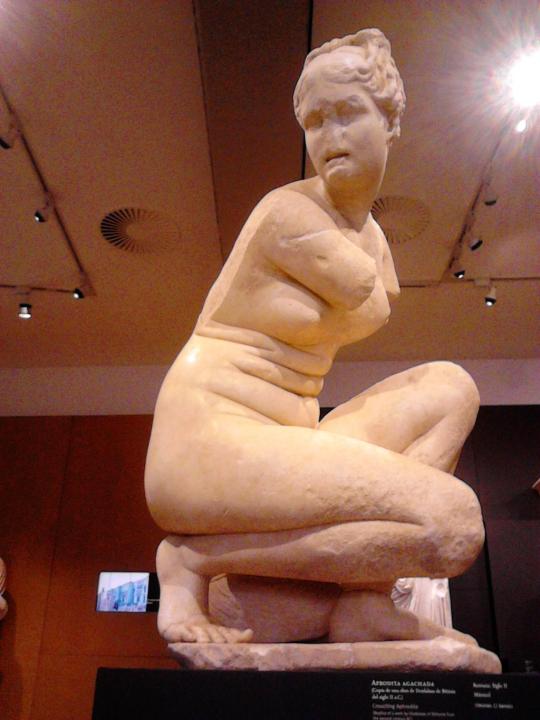
See, different cultures have different beauty standards. Modern western beauty standards may be a delicate hourglass supermodel, but that’s not always been the case. Greece, for instance, depicted Aphrodite like this:
Yeah. A Greek sculptor was told “sculpt the goddess of beauty” and they thought “alright, fat rolls, that’s where beauty is at, let’s do this”. And everybody else apparently agreed with them, because up went the statue. Beauty is a malleable concept is what I’m getting at.
Now this is where it becomes relevant that Freyja is not just the goddess of love, sex, and beauty. She’s also the goddess of war. And the righteous dead. Goddess of war in the same Viking warrior culture that gave us shield maidens, women who wielded seven fucking kilogram (15 lbs) shields in combat.
Sooooo … when the Norse storytellers said, “This is Freyja, goddess of war and the righteous dead, who rode giant murder cats into battle, she is the most beautiful goddess in the world”, I’m guessing they weren’t thinking of her as some willowy waif. No, I’m guessing they probably thought more along the lines of:
190 cm (6′3″), broad shoulders, built like a brick shithouse, with a jawline like whoa, and fully capable of murdering everything in her path.
Put in that context, the story of Thor dressing up as Freyja sounds less like a punchline about “how could anyone ever mistake Thor in a veil for Freyja?” and becomes more a case of “ohhhhhhhhhhh, no wonder all the gods thought this plan would work”.
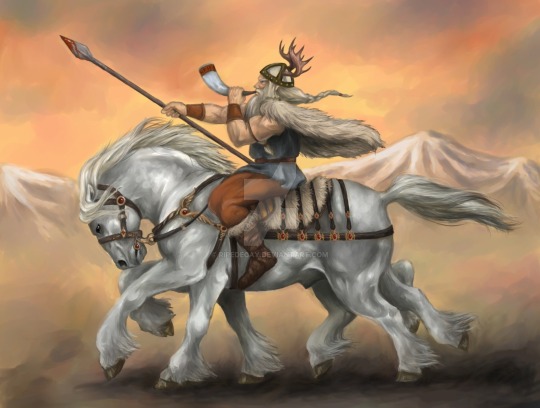
One thing I never really understood was Sleipnir (meaning “slippery one” fyi) in depictions of Norse mythology. Sleipnir is an eight-legged horse, the steed of Odin and the son of Loki, and he is commonly depicted like this:
(image not mine)
But why would you depict an eight-legged horse like this? Horses gallop the same way most other mammals run, with all feet leaving the ground at one point, so having extra feet here doesn’t seem like it could make the horse any faster. I’m also not sure it would give it any more stable footing, since it doesn’t have a wider base.
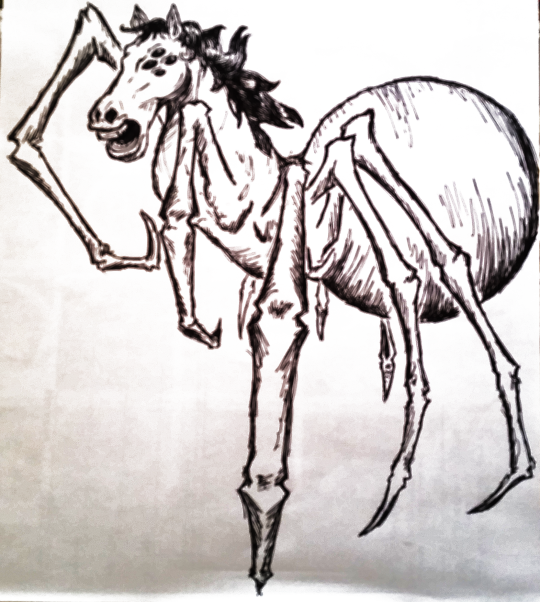
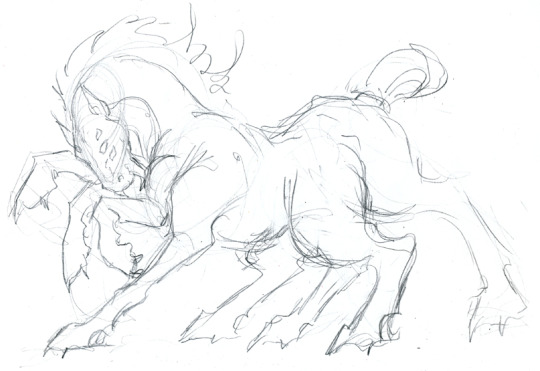
If you want a stable eight-legged form that can reach great speeds for its size, wouldn’t you want to start with what nature has already provided? Wouldn’t you want something more like… this?
(my drawing)
“But wait!” you might say, “Sleipnir was conceived when Loki, in horse-form, seduced another horse! That’s why it looks all horsey, just with extra bits!”
Well, that’s a good point, but consider that Loki as a deity was originally based off the spider, and his name even derives from the old Swedish word for spider (source). Therefore, it’s not too hard to believe Sleipnir inherited his horse half from his mother and the more spidery half from his father. In conclusion:
Spider-Horse, Spider-Horse, He does spider-things of course! Weaves a web, Makes you gawk, Riding round ‘til Ragnarok! Look out! Here comes the Spider-Horse.
I am all for creative interpretations of Sleipnir. And spiders, obviously. This is epic.
But just so you know, that journal is from the 60′s, and the current scholarly consensus no longer considers the spider etymology to be likely. We still aren’t sure where the name comes from, and probably won’t ever be, but I’ve seen quite a few more recent academics lean toward Old Norse luka, meaning “close”, “shut”, or “end.” (See Simek’s Dictionary of Northern Mythology.)
^^^^ my research found much the same. (which is sad, i like spiders)
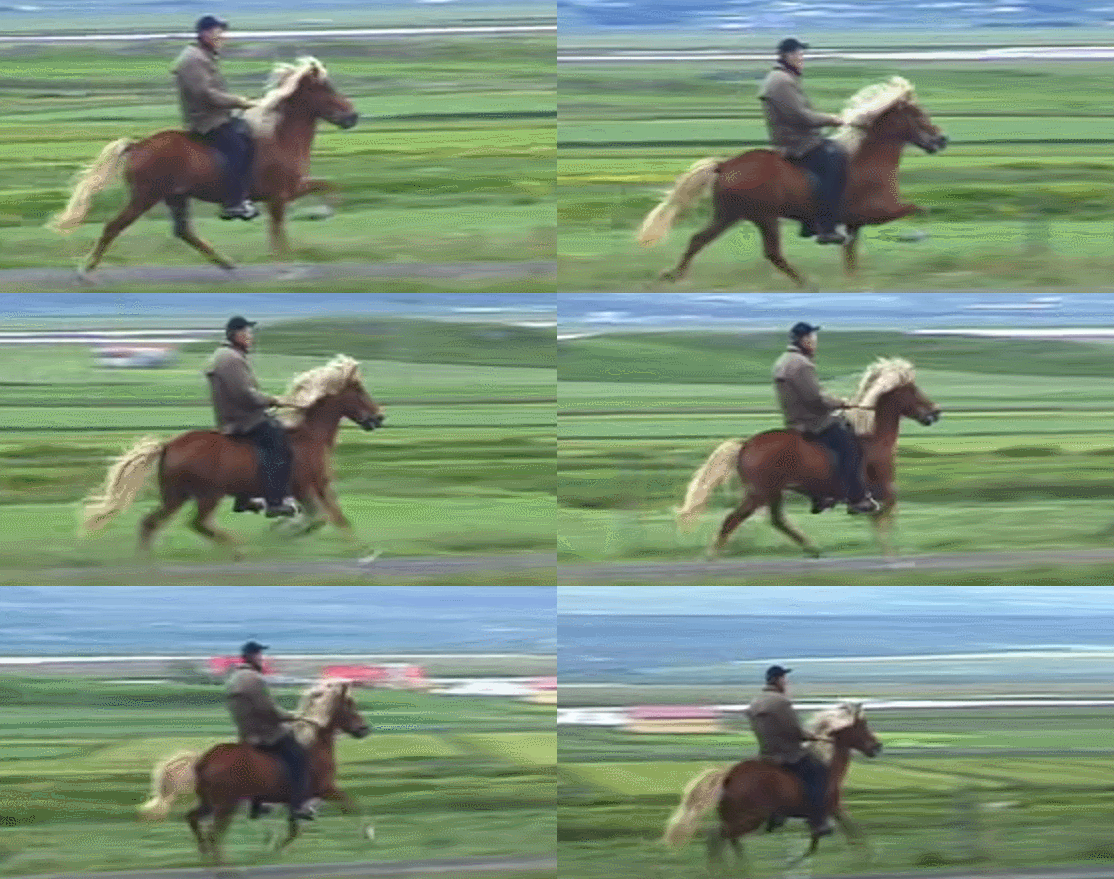
As far as Sleipnir having eight legs, it’s probably a reference to Icelandic horses. Icelandic horses are one of the few horse breeds with five gaits. They can do a walk, trot and canter/gallop, like most horses. But they have also evolved to have a tolt,
[ gif of a man riding a brown Icelandic horse doing a tolt. The back legs of the horse move rather stiffly back and forth, while the front legs are lifted up almost to the horse’s chest. While the horse bounces slightly, the man riding the horse could probably hold a glass of water without spilling. ]
which is fast, smooth and noted for its explosive speed and ability to cover long distances.
The second unique gait is called flugskeið, or flying pace.
[ a light brown Icelandic horse demonstrating the flugskeið. With the exception of the wind in the horses’ mane, the upper part of the horse and the rider seem to almost be still, with the background simply zipping by them. The horse’s legs, however, move fast enough to blur. Unlike with a full gallop, the horse does not fully extend its legs away from its body. This is particularly obvious in the front legs of the horse, which lift up to the chest of the horse and land under its chin the same way as in the tolt]
It is both smooth and fast, some horses being able to reach speeds of 30 mph. Not all Icelandic horses can do a flugskeið, but you’ll notice that when done properly the legs move in unison and so fast they can blur, giving the illusion of the horse having eight legs.
Anyways, here is a video to further emphasize how cool the flugskeið is;
I’d never heard this theory! That’s so neat.
The one I’ve read attributed the eight legs thing to a metaphor of a coffin + 4 pallbearers.
This is FASCINATING, and I adore Sleipnir! 😍 @tinaferraldo
You’ve brought my horse geek out now. You have been warned!
The thing is, until the late 1800s we didn’t know how horses moved.
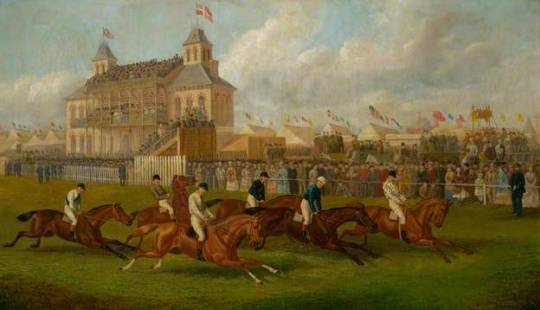
In old paintings you typically see horses with their legs stretched wide as they thought that gave the appearance of great speed.
But it really just looks like Timmy’s big brother was being an evil bastard and bent the legs of his tin horses out .
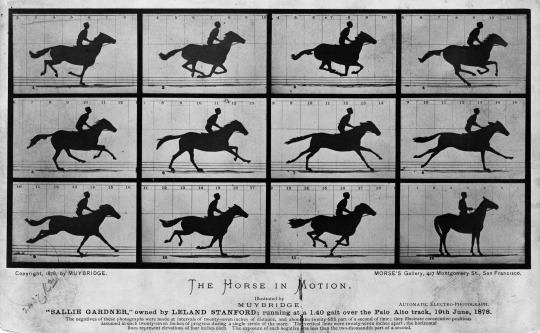
It’s completely unnatural looking, but horses moved too fast for us to be able to see how they moved, until Edward MAuybridge captured their motion in a series of consecutive photographs in 1878.
And for the first time we could see that all four legs did leave the ground. (and are never stretched uncomfortably wide!).
He also created the first motion picture as the individual photographs could be put together as a series of film frames (below).
So, all this is to say that back when Sleipnir was being dreamed up, they didn’t understand how animals moved and probably thought more legs = faster, and to a degree they were right, things on four legs run faster than bipeds so they continued that principle to its logical, if incorrect, conclusion.
THIS IS THE BEST HORSE MOVEMENT DISCOURSE EVER
or we can consider that norse epics were, above all else, poetry, and consider that the image of an eight-legged horse brings to mind a horse that moves like a spider – with that fast darting scuttle that so many people find terrifying. an alien horse. a divine horse. a monster.
(personally i find the spider run adorable, like when a cat gets startled and does the skitter. but i recognize this is an unusual reaction.)
So, inspired by the whole concept of a spider-horse I very loosely sketched this:
…To which my brother @foxofwar simply pointed out, that being a spider-horse, it’s a sporse.
Slightly off topic, but it isn’t unique to Norse mythology to give a magical horse unusual number of legs tho. In Hungarian folklore special horses (usually fond of eating cinders, capable of flying or running faster than the win or even faster than thoughts, usually liked to sass the hero of the tale) had 5, 6 or 7 legs.
Obviously those numbers were chosen because they held cultural significance (our dragons/giants had odd number of heads too), but it probably sounded like common sense that more legs=faster horse.
I have nothing to add but damn is this thread epic.
There’s a Peruvian horse breed called the Paso that has a fifth gait as well – kind of a smooth, toe-skimming shuffle between the trot and the canter. It’s smooth as butter.
I just want to throw in there that Muybridge didn’t shoot a horse on film galloping for science. No. He did it to settle a bar bet about whether horses ever had all four hooves off the ground.
he won.
Never underestimate the power of the bar bet to change the world.
someone pls talk to me about the inheritance of gaits because this is fascinating.
I have been having some thoughts about the original mythological
Loki and the thought that has been on my mind most is this:
Loki is
1. Surprisingly great with kids
2. Is addicted to parenthood
Let me explain.
As to the first bit, well, yeah, it’s surprising. Or it should
be at first glance. Because, seriously, this is fucking Loki. Standing
in close proximity to him for longer than a minute is bound to result in theft,
arson, a splash of bloodshed for color, and at least one confused party waking
up in bed with the fucker. He’s a chaotic, manic, and generally hazardous force
to be reckoned with.
To us. That is, adults.
Mortals, gods, giants, trolls, dwarves, et cetera–but only
those who are mature.* *Read: there is Something to be Gained from conning,
seducing, or otherwise messing with us. Whether it’s to save his own skin, or
to get some sweet petty vengeance, or to steal a bauble, or to satisfy some
carnal itch, or to just fuck up somebody’s day for the Hel of it, Loki only
ever targets those he can take something worthwhile from.
And what is there to take from kids?
Plenty of folks on his extremely extensive Enemies List have
children, of course. No one in the Norse mythos was especially mindful of
dropping their seed. So. Children.
Children–easy to fool, easy to make a hostage, easy to charm
and siphon their parents’ secrets and treasures from–should be great big
bullseyes to the God of Mischief and Trickery and Assorted Other Unscrupulous
Things. Yet there isn’t a single Edda or snippet of lore in which Loki makes cruel
use of them. Not once.
But what’s the big deal? Most of the rude and/or villainous
characters in Norse mythology don’t bother with harassing kids either. Except
in the case of stories like Loka
Táttur.
Loka Táttur is a tale about how a farmer loses a bet with a
vicious troll who swears to kill the farmer’s little boy. The farmer calls upon
three gods in turn. Odin, Hoenir, and Loki. Odin and Hoenir both disguise the
boy and hide him away, but the troll is too clever and each time manages to
sniff out the boy’s hiding place. Ultimately it is Loki who hides the kid–pulling
an Idunn-in-a-Nutshell gag and hiding him as a speck on the eye of a flounder
in the water–and then, rather than stepping back as Odin and Hoenir did from
their work, he sits in his boat and lets the troll see him.
The troll, being suspicious, asks what Loki’s business is. Only
fishing, obviously. The troll demands to join him. Lo and behold, they bring up
a wealth of flounders, including the one where the boy’s hidden. Loki manages
to change the boy back to his true shape and hide the kid behind his back
without the troll noticing. As Loki brings the boat back to shore, and to the
farmer’s boathouse with the latter’s doors open, Loki tells the boy to run
through the boathouse. He goes, the troll gives chase, and the troll becomes
wedged in the entryway.
At which point Loki proceeds to chop off the troll’s legs and
stick an iron stake in the bastard’s skull. Then he walks the kid back home. The
grand payoff for Loki after all this?
The boy is safe. The troll is dead. The End.
Huh.
Now, much as Loki may have been the catalyst for a lot of
corpses pre-Ragnarok–see his business with Thor getting his hammer back and
leading more than one giant into a death trap–Loki is actually very rarely, if
ever, one to get his hands dirty by killing a victim himself. Even Baldr was
done in by an arrow he aimed with blind Hod’s fingers. So why did Loki
personally orchestrate this plan in such a grisly way? For what gain?
What, other than the satisfaction of personally slaughtering the
would-be child-killing prick troll?
In a less bloody narrative, we see his hand in getting Thialfi
and Roskva, a pair of mortal siblings, taken into Thor’s service. While the
exact ages of the two aren’t mentioned, they are young enough to still be in
the care of their parents. When Thor and Loki are travelling it’s their father
who invites them under their roof. Thor’s goats are slaughtered for the evening
meal and–in some tellings–it is Loki who entices the son, Thialfi, into
breaking a leg bone to taste the marrow. When morning comes and Thor resurrects
his goats, one has a broken leg.
Thor’s visibly pissed—never ever
a good thing–and so the family offers to make some compensation.
Loki, coughing through his hand: ThialfibroketheboneheshouldpledgeservicetoThor
Thialfi: Uh–
Loki, clearing his throat:Alsotakethesistertwoforonedeal
Rosvka: But I didn’t do anything—
Loki, en sotto voce: Kids, consider your options. Teensy
mortal lifetime of toil on Midgard, harvesting dirt and snow on one hand.
Potentially immortal lifetime, I don’t know, scrubbing giant blood off Mjolnir in
Thor’s hall on Asgard on the other. Verdict?
Both: Sold.
Loki: Excellent! Really, Thor, you’re a master dealmaker,
a born barterer, I’m in awe.
Thor: Wh—
Loki: AND WE’RE BACK TREKKING LETS GO
Cue laugh track.
Point being, Loki has been shown to purposefully go
out of his way to help kids because…because. Yet how does this translate to the
idea of him being good with kids?
I ask this purely hypothetically and am trying not to
laugh as I do, because really. Really.
How in the hell is a kid not going to be entertained by the Norse god of
revelry and recreation?
Oh yeah, that bit’s often left off the résumé.
Loki, God of
Mischief, is also God of Recreation. Play, in other words. Because playtime is
a thing that is Chaotic rather than a product of Order, and so Loki is
naturally all over it. There are some who even credit him with having added
that trait to the first humans, Ask and Embla, while Odin, Vili, and Vé were
carving them and breathing character into their souls.
On top of that, he’s also the god of flyting—poetic shit-talking.
So we have a shapeshifting, storytelling,
magic-wielding, game-spinning, trickster god who can also teach young ears
every bad word they could ever hope to learn, and he’s expected not to be a hit with kids? This is all
without even mentioning the fact that Loki is a bit of a hyperactive attention
hog all on his own. What better audience for him than a gaggle of credulous
little onlookers who are too young to sneer at his antics rather than take
delight in them? Children are wee balls of mischief themselves, muddled in with
imagination and wonder and an eagerness to be wowed or made to laugh themselves
into weeping.
All of which brings me to point number two:
Loki is a kidaholic.
Like, even though a lot of his and/or her sleeping
around the Realms can be chalked up
to an insane libido, there’s also just the sheer number of kids they’ve
produced to factor in. Maybe more than even Odin or Thor could boast. At least
half being born from Loki herself. Not because Loki was helpless against the
workings of nature—it’s impossible to believe that Loki wasn’t smart enough or powerful enough to get around producing
new Lokisons and Lokisdottirs with every other bedmate—but because Loki wants more kids. There will never be
enough kids.
The guy’s got a case of severe paternal/maternal
hoarding going on. I mean
Loki: I need another one.
Odin: You really don’t.
Loki: You’re right. I need two other ones.
Odin: I am positive that you do not.
Loki: Three. Triplets. Need them. Right now.
Odin: Loki.
Loki: Four? Four. Definitely four.
Odin: Loki, please.
Loki: Yeah, let’s go with four. I can give or get. I’ll
flip a coin.
Odin: Loki, as Allfather, I am expressly forbidding
you to impregnate or be impregnated for at least a century.
Loki: Fine.
Odin: …
Loki: …I’ll settle for three.
Odin: What did I just
say?
Loki: Three’s a good number, isn’t it? All good
things come in threes. You and your brothers—
Odin, fighting an aneurysm: You and your brothers—
Loki: So you agree!
Odin: I did not—
Loki: Three it is!
Odin: Loki—
Loki: Be back when I feel like it
Odin: Loki—
Loki: Give my love to Sleipnir
Odin: LOKI—
Loki, pantsless, vaulting over the wall, cartwheeling
towards Jötunheimr’s Ironwood forest: Bye
It’s in that Ironwood that he meets Angrboda and
fathers a giant wolf, a giant snake, and the literal corpse-faced queen-goddess
of the dead by her. Being that Loki’s scope of attractiveness/aesthetic acceptability
is elastic enough to let all sorts of species between his legs, I find it hard
to believe that his kids’ unique looks would repulse or even faze him. They’re
his children. Therefore they’re great.
And we all know how that happy family
ended up. Ditto his second family with Sigyn and his two little twin boys.
Enter Ragnarok, warfare, general Bad
Times, and so on.
Anyway.
Comical as it is to envision a Loki who cringes at
the notion of parenthood and/or fears his more monstrous children, I just don’t
believe it lines up with what we know of the Loki of myth.
Myth Loki is a god who would spend hours entertaining
a child, simply entertained that the child is entertained.
Myth Loki is also a god who would hunt down and methodically dismember whichever idiot
thought it would be okay to make a child cry within said god’s earshot.
Yes this could have to do with the fact that Freya the Norse Goddess of love, beauty and fertility drove a chariot pulled by cats.
So, if I ever get married, I fully expect a catmobile.
One of the other reasons why they gave cats to each other was for their valuable skills as mousers. Cats were able to control rodent populations around their properties.
Also, Norse myths are thought to have the earliest literary descriptions of the Norwegian Forest Cat. They were described as large, strong cats that drew Freya’s chariot and were so heavy that not even Thor, God of Thunder, could lift them from the floor. (Source)
They kinda live up to the legend, too. Your average Norwegian Forest Cat is twenty pounds of solid muscle, with claws large and strong enough to climb solid rock. They’ve been known to attack bears when defending their territory. And yet they’re one of the cuddliest breeds out there, particularly noted for being patient with small children.
I have a Norwegian mix, and can attest that she is the cuddliest cat but also insane enough to try and fight a bear.
Viking cats “FIGHT ME”
Whosoever holds this hammer, if he be worthy, still could not lift this cat.
And this is how The End is stopped. Not by the gods or goddesses, the other races than man, no. It is Tumblr. As a mass running after a now confused and tail tucking Fenrir, whining softly as the crowd chants “PUPPER! PUPPER! PUPPER!”
Better yet: Fenrir escapes his chains and lopes forward to destroy the earth, and is met by a crowd of people. An army, Fenrir thinks, and bares his teeth in a ferocious snarl and charges toward them.
They cheer.
Wait … cheer?
Fenrir slows, confused. He smells no fear, senses no rage. This is … a very strange army.
The first hand—weaponless!—reaches for him; he tenses, ready to tear the offending limb to shreds, and lets out a high little yippy whine when it pats him about the ears.
Immediately the noise is reproduced by some four or five of the nearest humans; he smells excitement; more hands are patting him.
It’s nice.
The humans crowd around him, patting him and scritching him and shuffling around to give others a chance. Voices coo, and make puppy noises, and someone catches just the right spot and he cocks his leg and scratches himself, drawing a multitude of oohs and ahhs and cheers and squees.
At some point, his hunger awakens at the scent of burnt flesh; a human has brought him what he later learns is a hot dog; he swallows it in one bite, to more cheering, and looks around hopefully for more.
It is not long before more is bought: steaks and Big Macs and bacon; it seems like much of the group has brought him a snack of some kind and was hoping for a chance to give it to him.
The End of the World is supposed to be at hand, but Fenrir does not care. His hunger sated, his battle-lust swept away by a tide of gently petting hands, he rolls over, careful not to crush his many companions, and takes a nap.
“Who’s a good boy?” they ask him, over and over.
Is this some psychological warfare, he wonders, designed to undermine his confidence and remind him that he is nothing more than a monster who needs to be chained?
“Who’s a good boy, huh, huh?” “Who’s my good boy?” “
And then one of them answers the question for him.
“You are!”
‘Me?’ he thinks. But if there was any doubt, she confirms it.
“You are, yes you are.”
Fenrir’s tongue hangs out of his mouth as he grins. ‘I’m a good boy!’
This would work. Fenrir was betrayed by gods that he trusted; they feared his strength and tricked him into accepting being bound because he trusted Tyr, his friend. (Loki was not directly involved in selling out his own son; usually Loki is involved any time someone gets tricked by the Aesir, but it’s notable that he was not, here.) The deal was that Tyr would put his arm in Fenrir’s mouth to prove that the gods were acting in good faith when they tied Fenrir up to “let him prove he could break the chain”; when he couldn’t break the chain, the gods refused to free him, and Fenrir bit Tyr’s arm off, because that was the deal.
So Fenrir has a serious rageboner going on against the Aesir and all of creation; that’s why he wants to eat the sun and end existence. A huge number of humans validating him, praising him, petting him and giving him yummy treats might actually convince him that, while the Aesir are still assholes and would deserve it if he ate them, he should not eat the sun because Midgardians are totally cool and give him petties.
VIKING LORE HELD THAT BOTH WEAVING AND SORCERY WERE WOMEN’S WORK, DITTO THE ORDERING OF THE HOUSE ACCOUNTS. MANY CULTURES HAVE HISTORICALLY LEFT ACCOUNTANCY TO WOMEN! MANY SOCIETIES HAVE ALSO LEFT FIBERCRAFT TO WOMEN BECAUSE IT IS TEDIOUS AND REPETITIVE BUT ALSO VERY NECESSARY. SEE ALSO: COOKING, CLEANING, BUDGETING, EMOTIONAL LABOR.
ANYWAY FIBERCRAFT, AS I HAVE DISCOVERED VIA LEARNING TO DO A WHOLE LOT OF IT, IS ALMOST ENTIRELY APPLIED MATHEMATICS EXCEPT FOR THE PART THAT’S ENGINEERING (WHICH IS ALSO MATHEMATICS). ONCE YOU LEARN EVEN THE BASICS OF KNITTING, SEWING, AND WEAVING, IT BECOMES ABSOLUTELY INCREDIBLE TO REALIZE MEN THINK WOMEN ARE BY VIRTUE OF THEIR SEX (these are of course sexist gender-essentialist men who are not cool with trans people) ILL-EQUIPPED TO DO MATH SOMEHOW. HOLY SHIT, HAVE YOU SEEN HEIRLOOM KNITTING PATTERNS? HAVE YOU SEEN THE FORETHOUGHT THAT GOES INTO WORKING A HARNESS LOOM? OH MY GOD.
THIS IS, THEN, WHERE PROGRAMMING (AND SORCERY) COMES IN. A PROGRAM IS “CODED INSTRUCTIONS FOR THE AUTOMATIC PERFORMANCE OF A PARTICULAR TASK”. WEAVING IS OFTEN A BINARY PATTERN: OVER/UNDER. PUNCH CARDS ON ADVANCED LOOMS CAN SET WHETHER THREADS GO OVER OR UNDER, AND SWITCHING THE CARDS AROUND YIELDS DIFFERENT PATTERNS OF CLOTH. A DUDE NAMED JAQUARD DEVELOPED EXTREMELY COMPLEX PUNCH CARDS THAT STARTED TO ENCODE HIGH VOLUMES OF INFORMATION FOR INCREASINGLY AUTOMATED LOOMS. A HUNDRED YEARS LATER WOMEN ARE USED AGAIN FOR THE ‘TEDIOUS BUT NECESSARY’ BUSINESS OF USING BINARY ON/OFF CARDS TO WRITE PROGRAMS FOR EARLY COMPUTERS.
WHERE SORCERY FITS INTO ALL THIS IS HAVE YOU EVER SEEN A WOMAN USE A CARD LOOM REALLY FAST? IT’S THE MOST INTIMIDATING SKILLSET OUTSIDE OF A RODEO. SHE 100% LOOKS LIKE SHE COULD MAKE YOUR BUTT FALL OFF IF YOU CROSSED HER. APPLIED MATHEMATICS / ENGINEERING IS BAFFLING TO WATCH FROM THE OUTSIDE, ESPECIALLY WHEN IT COMES TO FIBERCRAFT. YOU CAN MANIFEST WITH YOUR MIND AND HANDS THIS HIGHER AND TRUER ARCANE PLANE OF EXISTENCE INTO A NICE SCARF AND KEEP YOUR HUSBAND ALIVE FOR THE WINTER. MAYBE IF HE CROSSES YOU YOU CAN ALSO MAKE HIS BUTT FALL OFF.
I TOTALLY ACKNOWLEDGE THAT MEN DO FIBERCRAFT TOO BUT THIS WAS SPECIFICALLY ABOUT THE INTERSECTIONS BETWEEN WOMEN, MATH, FIBERCRAFT, AND MAGIC, SO THERE YOU GO.
You may have known this already, but the Apollo guidance computer’s core memory was literally woven strands of copper, and it was all done by hand, by a bunch of women. Because who else knows how to weave things?
*SLAMS HANDS ON TABLE* WOMEN’S WORK SENT MEN TO THE FUCKING MOON HOW IS THAT NOT MAGIC AS HELL
Oh oh oh oh this is my subject on Viking reenactment gigs, I’m the group’s Vala and I also fill in for the weavers and spinners because IT’S THE SAME SHIT let me tell you about it 😀 😀 😀
SPINNING with a drop spindle, none of your fancy high-tech spinning wheels here my friend, SPINNING OMG is literally taking undifferentiated fluff and turning it into the most useful and life-essential item in your whole civilisation with little more than a click of your fingers–without thread you have no sails, no clothes, no blankets, it’s literally power of life-or-death shit here, it is magic AS FUCK. That’s without doubt why the Norns were spinners and weavers.
There was laws about not saying people’s names or talking about people when you’re spinning, because you’re basically bringing something into being out of nothing, and with that kind of power you could just as easily bring events into being. So folks probably look the other way when you’re spinning thread for your son’s shirt and you want him to be victorious and honourable, but if you’re spinning away and bitching out about that ho Ingvar (see below) and how she stole your man and deserves the same to happen to her, that’s a crime. You’d be in better legal standing if you just punched her, because enchantment against a person was seen as sneaky and underhanded, with all connotations of forethought and antisocial intention, while punching someone could be an understandable lapse of self-control.
It was also forbidden to spin “against the sun” (ie: counterclockwise) because ok we also know there’s a mechanical aspect to that as well, it’s very useful to have the twist going in the same direction at all times so it doesn’t cancel itself out, but it was believed that an item made from backwards-spun thread could literally kill a person, there’s an account of a Vala spinning a shirt to murder a priest and it’s inferred that it was spun backwards. Because like, the sun is the source of all life, and to go against the sun goes against life, and much as the anti-twist cancels out the twist, it cancels out life. Brutal.
And you couldn’t talk about people when weaving, either, because weaving is an extension of the whole something-from-nothing power, but presumably people did anyway because there’s an actual find of a weaving tablet with a curse carved on it “Sigvor’s Ingvar shall have
my misfortune” so basically every time the card was turned, it would strengthen the curse, and literally spin and weave it into being. HOW FUCKING AWESOME IS THAT. There’s also a find of a weaving sword with a “love poem” carved on it, note the quotemarks because this “poem” goes “Think of me, I think of you; Love me, I love you” THAT AIN’T NO POEM FAM THAT A SPELL. She probably making him (or her) a shirt.
And that’s three times I’ve mentioned shirts, so I should tell you that making a shirt for someone was a Big Deal, in a way it was sort of the period equivalent of the boyfriend sweater, with the sheer amount of labour that goes into making a shirt you have to really give a whole lot of shits about that person. There’s an account of a woman making a shirt for her brother-in-law while her husband was away, and it’s OMG DRAMA BOMB. The Vala I mentioned above really gave a lot of shits about murdering that priest. Hence, the most-likely-a-woman who owned the inscribed weaving sword could very well have been making a shirt for her crush, who may OR MAY NOT have been her husband. You know, she could’ve been like “hope my nice hubby thinks about me while he’s away” or she could’ve been like “damn, brother-in-law too hot” or she could’ve been like “damn, Ingvar too hot” (wlw aren’t attested at all but you gotta assume it happened because humans) but in any event she knew what was up. And making a shirt for someone wasn’t thought of as *overtly* magical, mostly, but there’s kind of a subtext to it that presupposes any shirt could be enchanted and probably was to some extent.
And this is just scratching the surface of the academically well established stuff, with none of my own hypotheses and observations. I can go on for hours.
I have talked about knitting and fiber arts with many different women of all sorts of religion and non religion, and the vast majority of them say that when they make special items, they put some kind of intentions into the garment.
And this is how The End is stopped. Not by the gods or goddesses, the other races than man, no. It is Tumblr. As a mass running after a now confused and tail tucking Fenrir, whining softly as the crowd chants “PUPPER! PUPPER! PUPPER!”
Better yet: Fenrir escapes his chains and lopes forward to destroy the earth, and is met by a crowd of people. An army, Fenrir thinks, and bares his teeth in a ferocious snarl and charges toward them.
They cheer.
Wait … cheer?
Fenrir slows, confused. He smells no fear, senses no rage. This is … a very strange army.
The first hand—weaponless!—reaches for him; he tenses, ready to tear the offending limb to shreds, and lets out a high little yippy whine when it pats him about the ears.
Immediately the noise is reproduced by some four or five of the nearest humans; he smells excitement; more hands are patting him.
It’s nice.
The humans crowd around him, patting him and scritching him and shuffling around to give others a chance. Voices coo, and make puppy noises, and someone catches just the right spot and he cocks his leg and scratches himself, drawing a multitude of oohs and ahhs and cheers and squees.
At some point, his hunger awakens at the scent of burnt flesh; a human has brought him what he later learns is a hot dog; he swallows it in one bite, to more cheering, and looks around hopefully for more.
It is not long before more is bought: steaks and Big Macs and bacon; it seems like much of the group has brought him a snack of some kind and was hoping for a chance to give it to him.
The End of the World is supposed to be at hand, but Fenrir does not care. His hunger sated, his battle-lust swept away by a tide of gently petting hands, he rolls over, careful not to crush his many companions, and takes a nap.
“Who’s a good boy?” they ask him, over and over.
Is this some psychological warfare, he wonders, designed to undermine his confidence and remind him that he is nothing more than a monster who needs to be chained?
“Who’s a good boy, huh, huh?” “Who’s my good boy?” “
And then one of them answers the question for him.
“You are!”
‘Me?’ he thinks. But if there was any doubt, she confirms it.
“You are, yes you are.”
Fenrir’s tongue hangs out of his mouth as he grins. ‘I’m a good boy!’






 Steel Phoenix Studios