thankgoodnessforme:

cardozzza:

lightnjoynstuff:

oakydokey:

honeygoblin:

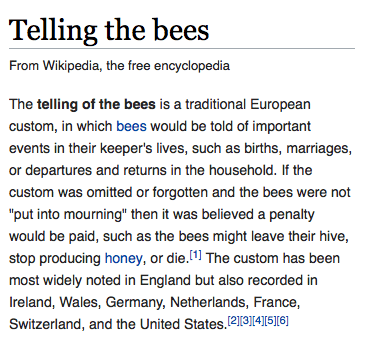
Little is known about the origins of this practice, although there is some unfounded speculation that it is loosely derived from or perhaps inspired by ancient Aegean notions about bees’ ability to bridge the natural world with the afterlife.

#me shoving my head into a beehive: yall would not fuckin BELIEVE the day i’ve had

@cardozzza

I love the mental image that tag creates

The bees when you give them the tea:

Hi, i was wondering if you had any tips on how to maintain religion in a post-apocalyptic/otherwise desolate setting. I have a Hindu character and a Jewish character and I want them to keep their religion and remain devout but I also want it to be realistic given the lack of resources etc…

writingwithcolor:

Maintaining religion in a post-apocalyptic setting – Jewish & Hindu Emphasis

A lot of the signs of Jewish devoutness are things you can totally do in a postapocalyptic setting. I mean first of all, you can break any rule to save a human life, so if you’re not supposed to kindle a flame on Shabbat but you have to light a fire to not die, then you’re fine.

But anyway. Shabbat is about rest and renewal, so your character can take one day in every seven, starting at sundown (Friday night if they have a way of knowing what the days of the week were in the Before Times!) to rest, say the special prayers – if they’re devout enough to be “devout” as you said in your question, they’ll know a lot of this stuff by heart – and refrain from the kind of work you do on weekdays. Like maybe if they’re a posthole-digger they don’t dig any post-holes on “Saturday” morning.

Not eating pork, shellfish, rabbit, the back end of beef, and bugs is another thing – but again, people did wind up eating all kinds of whatnot in the Warsaw Ghetto – these rules aren’t meant to be dying over. If they know when Passover is in this world they can leave off eating bread for a week and maybe even cobble together a makeshift seder from memory.

If you have a married woman and she’s Orthodox she can still cover her hair. If she’s not Orthodox this is probably not an issue.

If they have any way of knowing when Yom Kippur and Tisha b’Av are, and it’s safe to do so, they can fast.

Especially if they’re Orthodox, they can start the day with the morning prayers. If this person is Orthodox and menstruating, and there’s water in which to do so, they can say the mikveh prayer while taking the bath after their period is all finished. (I’m Reform but I find comfort in this kind of thing, too.)

If we’re talking about someone who wasn’t raised in the normal world – I was assuming the apocalypse in this was recent, but I mean if they’ve never known normal-Earth – then they might have learned all these things by rote from parents or community instead of from going to temple.

It really is that simple – prayer and moments and remembrance. Actually, in my very first book, my characters are stuck in the middle of the woods as the sun goes down for Shabbat. They say the prayers anyway, using the sunset itself as candles. Here’s some art: http://shiraglassman.tumblr.com/post/78112396680/its-shabbat-shulamit-suddenly-realized-out

This, plus living up to Jewish values like tikkun olam (healing the world) and tzedekah (justice) and all that – that’s all it takes to feel like good/satisfying rep to me.

–Shira

As I’ve probably mentioned before, the term “Hinduism” is kind of a misnomer, as it implies that there’s one such thing.  If Christianity or Islam are families of sibling belief systems that share obvious commonalities, “Hinduism” is a huge family of distant cousins, groups of which often don’t seem to have much of anything in common and you just have to take their word that they’re related.  If you look hard, there might be a family resemblance.

I often think about this when confronted with the question of how I’d live my life in a post-apocalyptic wasteland (and this is something I consider with alarming regularity these days).  Which are the parts of my upbringing that are actually important?  What of it have I already jettisoned by choice or changes in circumstance and what more would I?  And what of it is silly garbage that’s going to get me killed by the next band of water bandidos marauding the blasted hellscape that is New New York City?

Anything that you might broadly categorize as a religion has aspects that range from the ritualistic to the philosophical so of course Hinduism is no exception.  I’d posit that extreme ritualism and extreme navel-gazing are both things likely to get you shanked by bandidos so in the interests of survival your character is probably going to want to tread a middle path.  Any rules against eating beef are probably out the window (unless it just makes them sick regardless).  So is strict adherence to doing a morning prayer or yoga, or meditating so deeply you don’t notice the bandidos coming.  On the other hand, there may be good reasons for maintaining dietary restrictions (e.g., you can’t trust that any food grown outside the Safe Zone isn’t deadly).  Meditation can relieve stress and you could probably use some stress relief after the apocalypse.  However, arguably these markers are matters of culture rather than belief (that is, not all Hindus eschew beef or practice meditation; those that do do because they were exposed to the concept somewhere).

This is a hard question to answer because it would really depend what kind of Hindu background this character comes from and how (if relevant) they related to their culture “before the fall” so to speak.  They may identify with one particular deity due to their circumstances (for example, Vishnu, to preserve the world they do have; Shiva or Durga, as a reflection of the destruction that presumably brought about said apocalypse, and from which there will hopefully come renewal; or Ganesh, to remove the obstacles they surely encounter every day).  I should note that were it me in that position, any identification with or invocation to a god would probably be extremely sarcastic: the gods didn’t prevent the apocalypse, why the hell would they help me now?  Again, it depends on the character’s personal outlook.

You might also consider some of the relations elemental factors have to most Hindu rituals and how that might change in this environment.  For example: water, light, fire, and food are all typically revered or at least valued greatly.

– Water is a life-giving resource and many Hindus revere rivers.  In a wasteland, protecting clean and safe water might very well have sacred significance as a matter of literal life and death.

– The divine is often thought to dwell in food and sustenance and gods receive offerings of food at festivals.  You may not be having very many festivals but the value of food may be thrown into stark new focus.

– Does this world lack for sunlight, warmth, or energy?  Orthoprax Hindu priesthood often revolves around keeping a sacred fire.  In a world where flame is the power source of a community, for example, the person who keeps the fire going could very well think of it as a sacred ritual, and maybe that’s a connection to the beliefs or practices they or their family held before.  You can even abstract it a bit more.  What if a postapocalyptic community runs off some relict solar panels?   Some character might see that as very literally depending on the sun for their survival.

If there is one thing that unites most flavors of Hinduism, it’s the notion of dharma, which is hard to translate, but loosely means “order” or “duty,” or more generally “that which is established or held firm.”  So, what about this character holds firm?  I’d say in such an extreme circumstance, devotion or religious practice is more than just throwing out the names of some gods every now and then to remind people of your roots (especially if you keep praying for help and it never comes).  It’s more about how you conduct yourself in relation to the world, and when you reach back into those old virtues ingrained in you by your family, how you exercise them relative to nature and the people around you when literally may not be sure that the sun will rise tomorrow.  It’s not easy but the apocalypse rarely is.

-Mod Nikhil

whateverthepoodle:

randomslasher:

thelogicalloganipus:

academicnerdlord:

prismatic-bell:

wynx-hates-pedos:

toorational:

thelogicalloganipus:

randomslasher:

thelogicalloganipus:

“the Bible says homosexuality is a sin” well the Bible also has a lot of sexism, rape, incest, violence and a lot of contradictory messages in general because it was written by people and people have agendas

I don’t really think that God even has the time to care about if people are gay like if he’s got a whole world to run there are more important things anyway

And if God is love, he’s not just loving me if I am what he wants; he’s loving me as the person he made me to be, which is a queer person

You can’t say “I love you, and I made you gay but I’m sending you to hell you awful sinner” my dude that doesn’t make sense it’s not like hell has a low population is it

The god I believe in loves queer people because that’s how he made us

the bible doesn’t condemn homosexuality anyway. It’s content taken out of context and misinterpreted over hundreds of years of translations, re-translations, and mis-translations. 

Hell, in Kenneth Davis’s Don’t Know Much About The Bible, there’s a passage that absolutely blows my mind and proves just how much we can misinterpret with simple translation mistakes: 

In researching the world’s oldest city, for instance, I learned that Joshua’s Jericho is one of the oldest human settlements. It also lies on a major earthquake zone. Could that simple fact of geology have had anything to do with those famous walls tumbling down? Then I discovered that Moses and the tribes of Israel never crossed the Red Sea but escaped from Pharaoh and his chariots across the Sea of Reeds, an uncertain designation which might be one of several Egyptian lakes or a marshy section of the Nile Delta. This mistranslation crept into the Greek Septuagint version and was uncovered by modern scholars with access to old Hebrew manuscripts.”

The bible is one long-ass game of telephone, whispered around the world in dozens if not hundreds of languages, for thousands of years. I have a hard time knowing what my grandpa is talking about, when he starts going on about the technology or practices of his youth, and that was only about 80 years ago, in the same country and in the same language as me. So why every Joe on the streets thinks they can take one or two verses, completely out of context and probably mis-translated several times to boot, and use it to spout propaganda and hatred for an entire group of people will forever be beyond me. 

You’re all valid, and frankly, if there is a ‘loving God,’ then that God will be happy to see you happy. Seriously. 

I needed that. Thank you.

The Bible wasn’t faxed down from the sky, people, it’s been compiled and formulated for hundreds of years until it became what it is today. And yes, misinterpreted by whoever with whatever agenda-of-the-day.

And hypocrites always stick to the word and not the spirit of any religion: to love, to help, to respect, to protect, and to strive to make the world a better place.

Yup, Jesus never said ANYTHING against LGBT people. All he said was don’t be greedy, don’t be lustful and don’t be wrathful. The fact that LGBTphobes took those instructions out of context to justify their LGBTphobia is pretty telling!

Hey, your friendly neighborhood Jew here!

You guys know that verse in Leviticus that homophobes like to trot out? Well, I’m here to tell you:

They don’t read Hebrew and they don’t know shit.


And now here’s something you probably won’t hear from any of those Fine Christian Folks ™ anytime soon, either:

We do read Hebrew and we still don’t know shit.


Here’s the thing. The most “accurate” word-for-word translation of that verse would say “a man shall not lie with another man; it is forbidden.”

Here’s the issue.

The grammar surrounding “men” in that sentence isn’t correct, and the word I’ve translated as “forbidden” is “toevah,” a word so fucking old we literally don’t know what it meant anymore.


The strange sentence construction suggests that “lie with another man” uses a feminine construction you wouldn’t normally find in a sentence that’s entirely about men, and while “toevah” means “forbidden,” it’s not actually clear what is forbidden. Here’s an incomplete list of possibilities:

Pederasty (adult male/adolescent male sex) is full-stop forbidden, a man sleeping with a male prostitute is full-stop forbidden, a man sleeping with a man as part of any kind of sex magic or fertility ritual is forbidden.

And my rabbi’s personal interpretation, based on the sentence construction: a man shouldn’t sleep with another man in a woman’s bed. (So basically: don’t cheat on your wife with a dude, which is probably treated separately from “don’t commit adultery” because adultery would come with the risk of an illegitimate child.)

You’ll notice none of these involve “ew, you disgusting gays.”

Unless you accept a word-for-word literal translation with zero consideration for the social mores and other tribes surrounding Israel contemporary with the writing of Torah, nothing about this commandment has anything to do with our modern understanding of queer people having committed relationships. Once you start taking the rituals and practices of Israel’s contemporaries into account, it suddenly becomes clear why these prohibitions would have been put into place (sex magic was common in the cult of Ba’al, for example, while pederasty was practically a requirement in Greece).

If you’re just a person out there loving other people of the same gender as you? The Torah says nothing against you. But do you know what our literary tradition does say?

It puts you in the company of Naomi and Ruth.

Ruth is considered the first convert, and her vow to her mother-in-law Naomi (after Ruth’s husband’s death) forms the basis of our modern marriage vows. “Where you go, I shall go, and where you lodge, I shall lodge; your people shall be my people, and your G-d my G-d; and where you die I shall die, and there shall I be buried.” Ruth remarries as prescribed by law at the time, but even when a child is born of that new union, nobody calls it “Ruth’s and Boaz’s child”–they all say a child has been born to Ruth and Naomi.

You are in the company of a woman whose name we invoke in our prayers and whose life we celebrate. I wear her words around my shoulders on my tallit, my sacred prayer shawl. Since we consider that everything in the Tanakh is intended for learning and study, what might we take from this story, but that a queer person can be virtuous and beloved of G-d?

Slow clap for Jews spitting truth.

Yesssssss

phenomenal

@zombizombi for the lovely Jewish addition

kaylapocalypse:

thewinterotter:

theactualcluegirl:

animatedamerican:

alternativetodiscourse:

animatedamerican:

bigsis144:

animatedamerican:

fenrisesque:

animatedamerican:

fenrisesque:

blood is not kosher

assuming vampires breathe, and are therefore alive, what do they do

If they’re alive and they need it to survive, it’s permitted (provided they don’t kill people in so doing).

If they’re not alive, halacha doesn’t apply to them.

Either way, there is no reasonable halachic restriction on a vampire drinking blood.

but would it need to be from a kosher animal
can they drink, like, dolphin blood

Okay now that gets interesting and I would want to actually ask a rabbi whether that would be a thing.  like, if one must consume the blood of living things to survive, does it make a difference whether one limits it to the blood of kosher animals or not.  I could see it being ruled either way.  (I would think if there is only one type of blood one can metabolize or if only one type of blood is available, one can consume it regardless.)

I remember learning that human blood (not sure about animal blood) is permissible to consume if it has not been “poresh” (”separated”) from the body (in the context of “if you cut your lip or your finger and immediately and instinctively put it in your mouth, you don’t have to spit out the blood”).

So 

Drinking blood out of a goblet or vacuum-sealed bag would be assur, but sinking your teeth into someone and drinking directly (so that the blood never touches the air or is in a vessel) would be okay.

I know that applies to one’s own blood, but I don’t know if the principle applies to someone else’s.  But it may count as a possible precedent!

Okay, so I asked my rabbi about this (… yes, my actual rabbi). Short answer, @fenrisesque​, is that the ideal situation is for the vampire to intravenously ingest blood that was donated by a human in order to stay alive, assuming that donation doesn’t kill the person. If homemade intravenously doesn’t work, then storebought oral ingestion is fine too. This applies whether or not the vampire can drink animal blood. Long answer, which I find fascinating but is long so under a cut:

Keep reading

THIS IS SO BEAUTIFUL please thank your rabbi for me

(also, consuming blood from a live person who will not be harmed by the loss of blood is completely different from killing and eating a person – because it is forbidden to derive material gain from a corpse, which includes using it for food, separately from any kosher/nonkosher issues.)

Where were you wonderful people when I was working on Tempus Fugitive???I?I

Listen I’m not a real religious person but the complete willingness of rabbis to seriously discuss whether various forms of possible vampire food are kosher is just the most amazing thing, and I feel like the Jewish people are really doing a lot of things right, is all.

I Highly recommend the long explanation. 

bairnsidhe:

owlsofstarlight:

paintmeahero:

symmetraismygf:

the athiesm of women/people of color/lgbt people is absolutely different than the athiesm of cishet white men and i feel like people forget that a lot

how?

Don’t have spoons for long explanation – also this is only speaking for christianity – but religion has been a force of oppression for women, people of color, and lgbt+ people and the rejection of the religion is often coupled with the rejection of how religion treats them.

I’ll also say that abuse survivors are included in this because it is a reaction to and an attempt to reconcile how (christian) god would allow abuse to happen.

For straight white men atheism is usually rooted in intellectual and rational superiority complexes. It’s a “i am more rational and intelligent than you, how can you believe in something so obviously fake” thing as opposed to a reaction to a societal institution that upholds their oppression and abuse.

Women, PoC, Queer people, immigrants, trauma survivors, etc:  How can I believe in something that teaches you to be cruel?  How can I trust the books that tell me of peace and love, when you use your faith to hurt me?  How can a loving god allow [insert injustice of the day]?

White Men: I, as an Intellectual, eschew silly superstitions that say I might, someday, after my death, face one (1) single consequence.

cricketcat9:

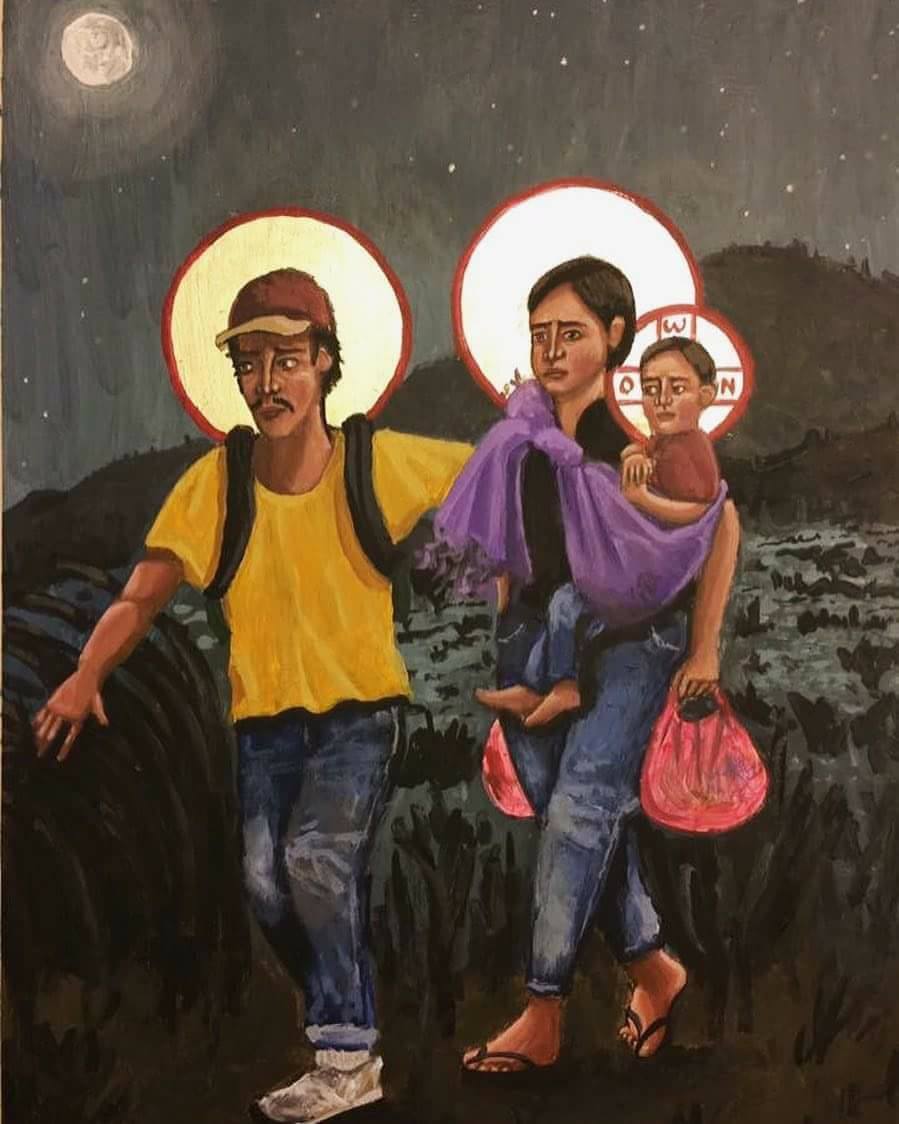
Let’s be clear, evangelical American expats from where I live: you may invoke The Lord 15 times every hour, and sit with your Bibles on the Plaza trying to convert “heathens”, and go to your respective churches every Sunday, yet every single one of you is silent on the subject. You would put Baby Jesus in a cage and arrest His parents without a second thought, because “the laws”. 

gonehometoyavin4withpoe:

snapslikethis:

Confession: I used to belong to trump culture.

Not entirely willingly, mind. I was young, religious, and I made
the naïve mistake in thinking that all Christians were like the ones I had
encountered at my home church: warm, tolerant, kind. I fell in love, and we did
what young, hormonal Christian teenagers did: rushed into a marriage.

I realized my mistake almost immediately, but it took far
too long to get out.

Personally, I endured abuse at the hands of my new husband—mental,
physical, sexual, economic, emotional. You name it, he did it. Brutal is an
understatement. He systematically broke me down until I was a shell of a human
being. I’m still dealing with the emotional fallout and physical side effects,
and I probably will be for another decade at least.

That’s personally, but let’s talk his family. Because he was
an extreme case, yes, but he was raised with the idea that women existed to
keep their mouths shut and their legs open. I spit out two children faster than
I could whip my head, because birth control wasn’t part of god’s grand plan for
my life. I was fulfilling my purpose as a mother, and wasn’t that great? My
husband didn’t want the first baby. He wanted me for himself, see? Abortion was
unthinkable, but he fully expected to carry a baby—my baby—to term, then give
it away.

Keeping him was my first rebellion. Keeping the next one was
my second.

In the time I belonged to that family, I watched my
mother-in-law endure the same, though less extreme mistreatment. I watched every
young female family member be groped by the family patriarch. “That’s just how
it is.” I was shamed for making a fuss about it. I watched an older cousin try to sexually assault my teenage
sister-in-law and she was the one who
felt ashamed. We women made family dinners while the men sat on their asses. My
husband and I lived with his parents for a short time. She and I would go to
work each morning—an hour each way—with our husbands sitting in their robes in
the living room, playing video games. When we returned hours later, weary,
exhausted, they hadn’t moved. The standard greeting? “What’s for dinner.”

That’s his family, and yes, some families are sexist, but let’s
talk about church. That’s where all of this is validated, encouraged, taught. Imagine
my shock, when I went to my new husbands’ family church and encountered muted
xenophobia and racism, a heavy dose of homophobia, and some damned overt sexism
(see above.)

Equal roles, but different. Sound familiar? This is still
being taught to little girls today.

In church, I listened with quiet disgust as pastors preached
about how awful my sister—one of the gays—was. I piped up and asked how that
sexual sin was any different than the two young church kids who’d just been
caught “in a bad way”, soon to expect their first baby. Sexual sin is sexual
sin, isn’t it? I sure did get an earful for that one. We did church boycotts:
Disney, Target. Every Sunday School class: Job, cookies, and lets pray God
saves the moos-lims before they all come over and blow us up. We revered
people with white savior complexes who went to be jesus’s hands and feet and
save the poor, helpless Africans.

Hate and ignorance, wrapped up in the holy Scripture.
Hallelujah.

Meanwhile, I endured this abuse. This abuse, and every door
slammed in my face as my husband hit me, tortured me. “Stay true to your vows,”
the pastor would say. “You have communication issues,” our sister-in-law
would tell us. My mother-in-law: “Linds, you just have to accept it. Love is a
choice.”

“But what about the part where it says that husbands are to
love their wives like Christ loves the church?” I asked.

My brother in law, joking: “This is why women aren’t
supposed to speak in church.”

This America is alive and kicking, kids. It’s never gone away; it’s just been lurking,
behind closed doors. “Pass the casual racism and meat loaf, would you? And get
me a glass of water while you’re up. Ketchup, too.” What I’m scared about,
truly, is that I know this. And these ideas are now validated. Now mainstream. Almost
50% of our population believes this is
a good idea.

“It’s our time to take America back.”

What in the hell, if they’ve been saying these things behind
closed doors, and if they believe them In The Name Of God—what in the hell are
they going to say in the open, now? What in the hell are they going to do?

The 50s are revered as the aspirational yester-year, days
gone by. Progress, as we call it, is godlessness to them. We, the godless libs,
took Jesus out of schools. We’ve gone wrong ever since.

This is the America people want back, and that’s my first
fear.

The second is this:

I got out. And I’m terrified that this, my success story,
won’t happen anymore.

I’m the rare statistic. I un-brainwashed and educated myself.
I got counseling (against every Christian advice) to treat severe post-partum
depression. In the process of becoming a healthier person, I realized
what a goddamn mess I was.

It took three tries and a pastor-pseudo-therapist legitimately
telling me, “You know if he hits you again, Linds, I’m going to have to tell
you to leave.” 

All regretful, like it was bad news.

“Why should I stick around and wait for it to happen again?”
I asked.

He didn’t have an answer. I left the next week.

It took a few boldfaced lies (it’s temporary, it’s just a separation), and a few miracles, and a
large support system of family and friends who all but plucked me out of that
hell.

For leaving? My price was excommunication. From his family,
our friends, our church. I am the heathen who Divorced my Husband and broke our
home. In that entire city, only three people talk to me now.

(No loss, but it took a long time to recognize that.)

I never, ever would have made it on my own. I had two small children,
a new job that barely paid a living wage, and I was, as I’ve said, a shell of a
human being. I left him and went straight to the human services office. Without
subsidized childcare, healthcare, and food supplements, we would have starved
or been homeless. It never would have been possible.

These are the services that will probably be cut first.

How will anyone in my situation ever be able to leave? They
won’t. Not to mention federal funding for shelters, crisis counseling for
families, healthcare for abused women, and legal services for domestic violence
victims. Throw in a court system that doesn’t value women, and a cultural mentality
that believes what happens behind closed doors should stay behind closed doors… What hope do abused, trapped women have? None in hell.

If this is what makes America great again, I want out. I’ve
been there, done that, and I’m never, ever doing it again.

You’ll take it back over my cold, lifeless body.

This is the dark, dirty secret of Amerika: Women are not free. 

naamahdarling:

danbensen:

exxos-von-steamboldt:

ralfmaximus:

moogloogle:

ralfmaximus:

tobaeus:

ralfmaximus:

nyxetoile:

antibutch:

thats a valid question

A communion wafer, according to the internet, is about .25g. Jesus was a healthy young man, who worked manual labor and walked everywhere. The average male in Biblical times was 5′1″ and about 110 pounds so call it 50kg or 50,000 grams. So 200,000 wafers to make up a whole Jesus. At one wafer a week that’s 3846 to eat a whole Jesus at weekly communion. If you went to Mass daily you could do it in under 550 years.

1000 communion wafers from Amazon costs $15, so acquiring a Jesus load would set you back about $3000

But that’s just the body. Jesus also bade his followers to drink his blood. How much of that Jesus communion wafer supply needs to be replaced with communion wine to account for his blood, and how much of that would need to be consumed to have drunk all his blood as well?

The human body contains roughly 5 liters of blood.

Communion wine costs about $66 for a case of 12 x 750 ml bottles (9000 ml).

So half a case is 4500 ml, or close enough if Jesus was on the small side which is reasonable given what we know of the times.

Thus, Jesus’ blood would be about 6 bottles of communion wine, costing $33.

How much of his weight was his blood, now? We can bring down the wafer count.

Osnap what an excellent question.

Water has a specific gravity of 1.0 and weighs 1kg/liter. Wine has a specific gravity if 1.5 thus weighs 1.5kg per liter.

4.5L of wine would weigh 6.75kg or about 15 pounds.

Reducing the wafer load by 6.75kg yields 43.25kg so call it 161,000 wafers or $2450 and change.

@danbensen

Full Metal Eucharist

*CHOKES*

niuniente:

dark-haired-hamlet:

Pro tip: if an evangelical stranger approaches you asking to pray for you, there’s inevitably something about you that they see and want to change. [Ex: I attend a very conservative, very religious uni and am clearly tomboyish/lesbiany, and thus am constantly attracting evangelical strangers] If you can’t shake them (usually very difficult), then turn the tactic upon them by asking if they mind you leading the prayer bc “I have a few things on my mind.”

Then talk about whatever it is that’s making them uncomfortable. I ask god to protect all the lgbt+ kids that are lost, isolated or homeless. I mention my non-Christian brothers, sisters, and siblings that have to fight for recognition and respect in a monoreligious nation. I pray for the protection of immigrants and refugees, reminding my evangelical friends that their savoir was once one of that number. You can pray for pregnant mothers to find the resources and abortive care that they need, if they need it, if you’re feeling particularly brave.

This achieves two things: 1) there is no response to this, esp if you wrap it up with “amen, thank you guys so much for doing that with me. I hope y’all have a blessed day” and leave them no room to continue the prayer. But more importantly 2) that group will NEVER bother you again and you will show them, using their own method against them, that their prayer isn’t an act of faith, but of power.

Just thought I’d share bc I know that I used to be accosted by evangelical strangers once a week on my uni campus and never had a good response or ‘out’. This is by far the most effective method of shutting that sort of behavior down real quick.

Do what Jesus would have done and scare the “people of faith” away by doing the thing wrong.