If you think trans women shouldn’t be in women’s sports because you think that makes them male I want you to know I personally deeply dislike you and find you to be a vile person.
a good take. another option: sports are only segregated by gender in the first place because men are piss babies who cant stand the thought of losing to a woman, so just stop catering to fragile masculinity in the first place and divide the teams by skill level, or weight class, or any other actually meaningful criteria
Look I’m sorry but if you think the reason sports are segregated by gender is because MEN will lose then you are delusional. I hate to say that as a woman but it’s just straight true. They have waaaaay more testerone than us and it makes them stronger and faster and that’s just a fact. There are obviously exceptions but it’s true the great majority of the time and I think it’s okay to be honest about that. Women don’t have to be men to be just as good and valuable as men. I think we hurt women by pretending we have to be as physically strong as men because we’re not gonna win that battle. Why can’t we just be ourselves and value that?
I understand what you’re saying but you’re stating a lot of things as fact that really aren’t. Testosterone and hormones in general are really not the catch all you think they are. I’ve talked about this in another post I made but I don’t expect you to have known that but you should read this. Basically, sex is really complicated and multi-faceted and testosterone doesn’t realy work that way. There’s many things that go into it.
There’s also the fact that it is absolutely impossible to separate sex and socialization. WE can’t state for a fact that men are superior athletes because socially everything we’ve been told by that has been shaped by the idea that men are better. The article linked above mentions multiple times where sexually “male” athletes who, because of the way their genes were expressed, were considered women and did not experience any sort of advantage over their sexually female competitors. as well as referencing that no studies really prove that testosterone gives athletes an advantage. So those aren’t facts.
And yeah, womens leagues now are a necessity because mens leagues are forcing them too. But if we want to go back to the beginning of pro mens sports in north america. They’re not totally wrong. Sports were going to be mixed gendered but men had their feelings hurt. It’s changed since then, definitely. But They’re not wrong.
Womens leagues are amazing and they shouldn’t have to be compared to mens leagues to be that way. They don’t need to be physically superior to men. They don’t need to face off against mens teams to have worth. But we need to start acknowledging that men are put on that platform not because of sex and how that links to talent disparity. but because we live in a very sexist world that’s trying to portray biological sex as something concrete and simple when it is not. Women’s leagues are a necessary product of a shit system designed by men to make women and trans people feel they are lesser. They’re women trying to build themselves back up and find a place in that system. But the system relies on the fact that they are lesser.
people always talk about the extreme no homo mentality in guys sports teams but don’t talk about the severe lesphobia in girls sports teams. growing up playing team sports really fucked me up as a kid. straight girls i’ve played with were always scared of being perceived as gay for being athletic and because of the stereotypes of lesbians in certain sports. this was universal in the 3 sports i played: volleyball, softball, and basketball.
there were always strict unwritten rules about how you presented yourself while playing. for instance the ribbon in the hair for softball and a bow in your ponytail for volleyball. if you didn’t prove your femininity while playing you were a lesbian. there was so much effort in not being seen as a lesbian and proving that you /weren’t/ a lesbian was really important.
girls would always talk shit about girls with short hair on opposing teams. “we’re playing the team with the d*ke” was something i heard often as a kid. something i still heard in high school. being a lesbian in girls sports teams is predominantly what made me feel trapped in the closet in high school. I only felt comfortable coming out after i quit sports altogether
so if we could stop acting like straight girls have less of a stake in homophobia that’d be great
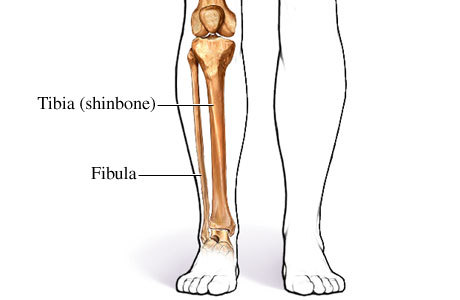
There are two bones in your lower leg. One’s big and buff and one’s pretty wimpy. When you walk, that big tibia takes ~80% of your weight of impact, and the fibula only has to take the remaining 20%.
But skaters place their weight differently over their feet. In principle a hockey player has 100% of their weight shifted forward onto their tibia.
You can actually see the implications of this in practice. If you break your fibula, 20% of the weight-bearing is gone, and you won’t really be able to walk. But a hockey player who cracks their fibula can and will keep skating almost without noticing something’s wrong. This happens pretty damn often when they block shots. You’ll see them skate easily over to get checked out, step up onto the hallway floor, and then suddenly slump over, with medical staff helping them limp off down the hallway.
I hear people saying, “oh, guess he’s fine!” when hockey players get up and appear to be skating okay: nah. And when a player wants to return to the ice: they may genuinely feel better skating but be too injured to walk.
And over time, if you’re in the weight-bearing position for skating more often than walking, and are skating from a young age, yes, that affects the shape of your weight-bearing bones and external appearance of your legs and feet. I don’t have a survey on hockey players’ shapely ankles compared to the normal population in front of me at the moment, but every single skater I see could be identified by their ankles
I thought this was going to be someone condescendingly explaining hockey to me but this is so informative and well written and I trust you with all my bones now.
Someone please source this, it’s too beautiful to not have sources
i can sort of provide some more explanation, maybe? note that all of my skating experience comes from taking figure skating lessons and that i am absolutely not a physiologist/sports science-person.
@brainsandbodies This wasn’t my original post, so I’m sorry I didn’t see you asking for sources earlier. All of you asking for sources here are very cool, and I wanted to round up what I can for you. If I forget somebody’s question, please just @ or ask me. But this also struck me because I think one of the most important things to remember about health is:
basic professional knowledge is often hard to cite and hard to make accessible
Hang with me for a sec.
This happens to be the story that got me into sports med. I’d just lost my parents; fuck knows what I was doing but I knew I needed to make up credit hours and I already had an EMT-B, so I signed up three weeks late for SM 136: Emergency Care, the first class I ever planned to sleep through. I remember coming in late for my first (late) day and seeing a lot of snapbacks in the room. It was taught by a small, sweet-faced man who used to train the Philadelphia Phillies: he’d fly down with the team to Tampa for spring training, so he got to know the head trainer for the Tampa Bay Lightning, and they got to gossiping about the shit their clients put them through.
When he got bored of baseball he left the Phillies, and moved up here to hockey country. He wanted to see some skaters break their legs.
He dragged us through the fundamentals of weight-bearing step by step, and you could see him light the fuck up: you just knew he was getting to something gross.
“So that’s how hockey players can break their own legs,” he said, stopping right by my desk, “and not even know it until they step off the ice. Fine, fine, and then—“ he made a wet sort of crunching noise. Whoever was under the snapback next to me gagged. I was hooked. I said, I believe, “COOL,” full-volume, and he met my eye, nodding with the full solemn grandeur of the wicked awesomeness of physiology.
You’re wondering: I got my first snapback that week.
Here’s the thing:
The fibula was found to bear about 6.4% of your weight when in a neutral ankle position in 1984. At the time the experiment had to be done with autopsy specimens and in simple positions (Takebe, Nakagawa, Minami, Kanazawa, Hirohata,1984). Since then we’ve seen that in the more complex positions of a standard heel-toe walking gait, the fibula typically carries about to 10-15% of a person’s weight and the tibia takes 80%. (It doesn’t add up because there are other tissues involved and the two bones work to stabilize each other.) 80% is the conventional approximation we’re taught in classes, that appears in biomedical textbooks, and that’s used in practice by therapists.
Most of the muscles of your calf and ankle attach to your fibula, so your fibula is all wrapped up snug in a bunch of muscle, so it follows that it’s hard to break. The conventional knowledge in healthcare is that people who come in with broken fibulas are athletes or were in motor vehicle accidents or were physically abused because that’s what we observe.
The risk of breaking your fibula is a casual part of how we talk about shot-blocking, because we see it happen a lot. And the Tampa Bay trainers who work directly with individual players had seen them skate off what turned out to be a broken fibula; my professor had seen it happen; I’ve seen it happen. It’s something that we talk about in classes and look for on the ice. But it’s kind of hard to study beyond the players you personally get your hands on.
Greg Campbell skated on what turned out to be a broken right fibula back in 2013.
But the only reason we have the footage of it was that it was an obvious, severe break, so he was in visible pain, and later the specific injury was made public. In other cases they don’t look especially hurt until they hit the hall, and the injury isn’t shared. So I can’t tell you how often it happens in total, out of all the hockey players out there. That information isn’t gathered anywhere.
Sports medicine is a fascinating and a bit of a fucked up field to try to explain because we have to use observational data and case studies and conventional knowledge.
We can’t line up a bunch of hockey players and whack them in the legs to see what happens in real time, or compare them to a control group who didn’t get whacked.* We can’t wait for people to be injured and round them all up to study, because it’s an unpredictable accident, and we can’t ask players to skate with an injury—that’s what I like to call “un-the-fuck-ethical.”
We’re also limited in how much we can see inside a living skater while they skate! Right now—like right now—motion-capture and 3D modeling is exploding our understanding of biomechanics, and that will inform PT practice. (There’s a reason Mathews and McDavid and all the other monsters are here now; we’re just now figuring out how to train them like that.)
But it’s still difficult even to gather data on how or how often certain injuries happen to certain people beyond individual trainers’ clinical observations. It’s not a centralized system. We don’t have concussion reporting worked out yet!
And it’s hard because it’s hard to get money to research something that’s already Known.
All that means that sports medicine is something of a slow science: individual providers are using clinical judgement and observing to see what works and drawing on a body of knowledge about what has worked in the past to inform their treatment, but we can’t test or tell you a lot of things.
And that also makes it hard for people who don’t have that professional knowledge to access your own medical information. Because you need basics and context to interpret everything but that information is just in our heads.
Ideally, the point of the professional trainer is just to be efficient: they carry that body of knowledge and fish out what you need when you need it so you don’t have to sit through Human Anatomy & Physiology and SM 101 just to understand what your ankle is doing. In practice, the knowledge often bottlenecks there and it never gets to you.
So you want to search and ask for sources for medical information, but also keep in mind that not all our knowledge is available in a form you’re familiar with, and what is out there might need a lot of context.
@selasphorus-rufus is spectacular for jumping in to talk about edges: I skimmed over them here and got into it more in a couple replies, because apparently I sure misread the room and thought it would muddy things up.
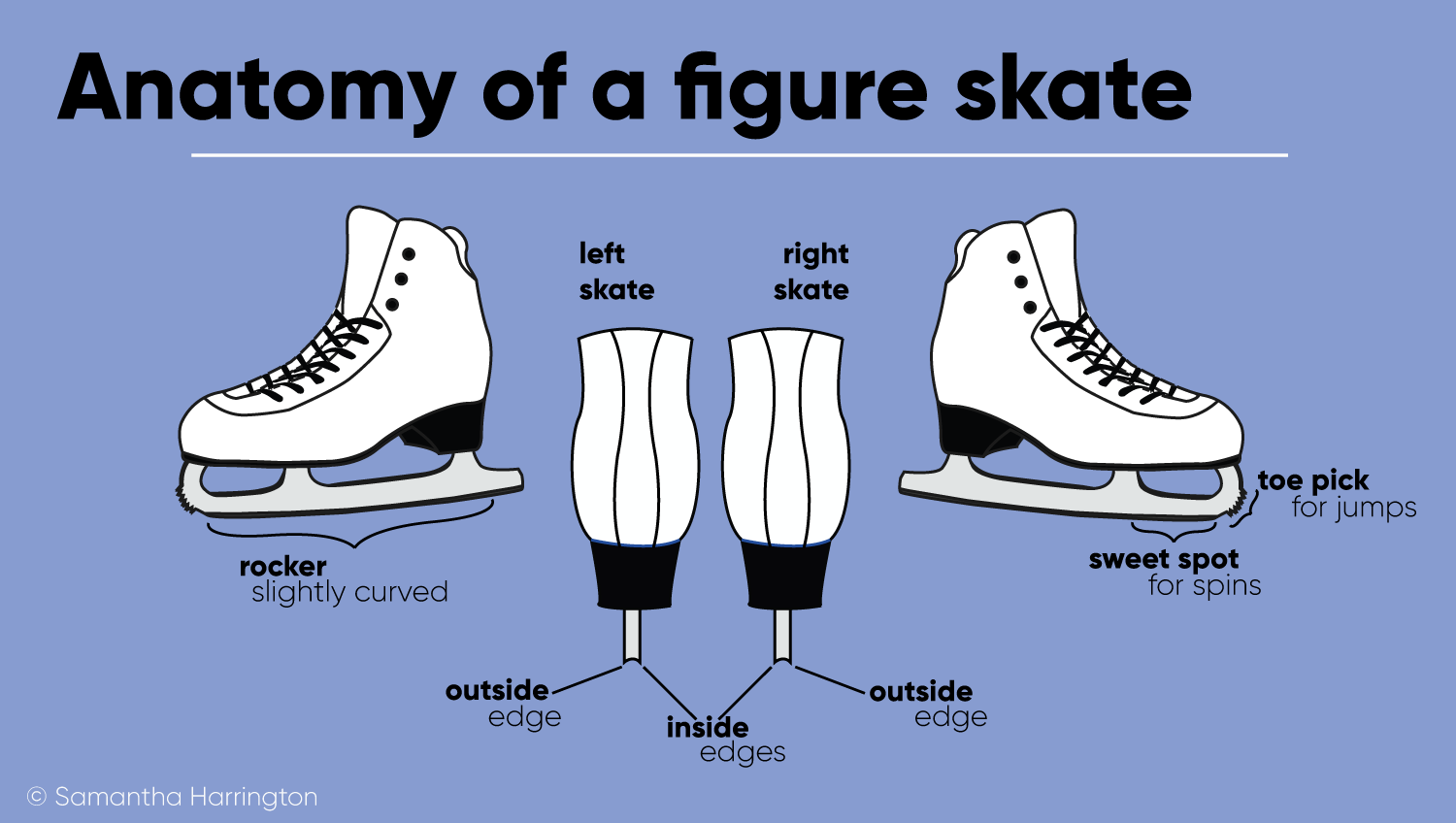
“if you look at that leg diagram, the tibia is much closer to where the inner edge of the skate is, ergo hockey players would be positioning most of their weight on the tibia as it’s much easier to balance on the inner part of your foot when using the inner part of your foot”
This is a great way to start reading it, and the basic principle is on point.
How To Evaluate Figure Skating Injuries by Rachel Janowicz, DPM gives a quick summary of edgework and how it affects the entire leg; I’m limiting myself to the ankle because the good lord knows I need some limits here, (but you better believe skating-related bone changes work all the way up through your hips and back.)
It’s a little more complex because your ankle is complex. When you use your edges, the sole of your foot doesn’t stay flat and perpendicular to your leg bones: you lift up off the heel and onto the ball of your foot, and your tip the sole of your foot in or out, which is called pronation or supination. That creates an angle between your leg bones and your foot bones.
They’ve drawn a straight line, but his actual feet are slightly, distinctly tipped out as he strides. That supination make an angle with his tibia that makes his medial malleolus (the lumpy end fibula at the inside of your ankle) pop out.
(@angsversteuring and @ismellapples That’s what people are looking at. I also think it looks Completely Normal, but many people have much, much less malleolus, so it looks odd to them.)
The bone there is physically pushed out more. High-top “ankle supporting” skate boots put extra pressure on that prominent point of bone (Both hockey players and figure skaters now wear those, so @ineptshieldmaid and @luckyhorseshoecrab yes, both would see this. There are also other factors for figure skaters but I’m too far gone to get into it call me back and remind me later please). That stress as well as the stress of your strides on the angled bone causes increased bone growth, potentially forming bone spurs or bursae, which all adds to the aesthetic charm of your big honkin skater ankle (Smith, 1990; Luke & Micheli, 1999; Anderson, Weber, Steinbach, & Ballmer, 2004.
Smith, A. D. (1990). Foot and ankle injuries in figure skaters. Phys Sportsmed18(3):73-86.
Luke A. C., Micheli, L.J. (1999). Ankle Swelling – Figure Skating. Med Sci Sports Exercis 31(5):S87.
Anderson, S.E., Weber, M., Steinbach, L.S., Ballmer, F.T. (2004). Shoe rim and shoe buckle pseudotumor of the ankle in elite and professional figure skaters and snowboarders: MR imaging findings. Skeletal Radiology 33(6):325-329
Takebe, K., Nakagawa, A., Minami, H., Kanazawa, H., Hirohata, K. (1984). Role of the fibula in weight-bearing. Clin Orthopaedics Related Res. 184, 289–292
*I suppose we could let the Washington Capitals whack each other, but that would be a kinkier kind of science.
I love in hockey when a player scores a goal and just turns around and screams at the crowd while the crowd screams back it’s so weird
I love how the immediate thing to do in hockey after you score is throw your hands up in the air and wait for other fluffy marshmallow men to come and give you hugs
I love how when a team wins the first thing they do is hug and pet the goalie on the head, like he’s an affectionate old dog that they grew up with
So Pepsi Center is also home to the Nuggets (NBA) and the Mammoth (NLL), and there were FOUR games last weekend. Check out this sick time lapse!! Mad props to our conversion team.
Listen im super white so i dont really feel confident talking too much about this since i dont know what racism is like. But native americans and the whole history about the us is touchy as Hell, mostly because its an ongoing thing, STILL. They never had any form of justice and then people go around using names like Washington redskins and Cleveland indians etc, making it ’cool’ and i guess whitewashing it – without recognizing any of the history or issues in place. If anyone wants to go off please do because im really not educated enough in this subject (im not even american)
I AM american, but also a White, so if anyone feels like I’m talking out of place here on Native issues pls let me know!!
The logo itself is Racist and not just “insensitive” because to use a human being (especially a Native person in their ceremonial clothing) as a logo is to dehumanize them. Essentially you’re turning a real life group of people into a mascot, a THING, and disrespecting not only them but their culture and traditions.
In the US especially this is a Big Problem, as the disrespect for Native People has been a huge problem for as long as we white people have been here stealing land that wasn’t ours and being huge dicks to people who were here first. And there has never been any sort of move by the government or by white people in general to fix any of the shit we fucked up in the years since we arrived. (And no Reservations don’t count, you can’t take a People from their land, shove them all into a tiny percentage of what they once had, offer no resources or help, and call it a day)
Anyway the Blkhwks logo is racist as hell, and no person, Native or otherwise, should be dehumanized and used as a mascot or logo for any White People thing.
As a Native American, I’m going to agree with the above and also add: using us in these caricature forms also promotes prejudice and stereotyping that is incredibly harmful to us as a people.
Basically, the B-Hawks, R*dskins, Indi*ns, can all get fucked with their racist logos (and names, for the latter two). There are other alternatives, and ignoring our protests about it only further proves that they don’t actually understand OR care about the problem.
Also to add, but Indi*ns fans don’t just have the logo. They dress up as the logo.
The Br*ves do a tomahawk chop motions to a made up native sounding chant. It’s really gross.
I was gonna say to be fair I hadn’t seen H*wks fans do this but I literally just googled it. Oh also I should say, I didn’t have to google like “h*wks fans being racist” this literally just came up when I googled h*wks fans.
The problem is we’re not just taking the logos and using them as gross racist caricatures, which is pretty nasty in and of itself, but we’re also taking and belittling all of these aspects as a part of sports culture to cheer on teams, and that’s pretty disgusting too. Like there are literally people up there in red face to support their team, and we are using significant items like the tomahawk or a headdress to dress up to support the team.
Anyways yeah the entire logo thing is concretely connected to a massive amount of anti-native racism in sports.



 Steel Phoenix Studios