My dad told me a story recently about how he was in Boy Scouts or something and they went on a hike and were each given a rifle and one single bullet to practice shooting with (idk, it was the 70s or whatever). One of his friends, whom I’ll refer to as Steel Balls for reasons that will soon become clear, beckons my dad to a part of the woods and points to a giant hornets nest up in a tree. SB announces that he’s going to shoot it, waits for my dad to take cover (as one should in this situation), and fires off his only round into the nest. Sure enough, a swarm of pissed off hornets descend upon SB, who stands stoically and perfectly still at the base of the tree. Dad maintains that, despite their buzzing right around him, none of the hornets stung his friend, and they soon calmed down and returned to their newly renovated nest. SB turns back to face my dad and imparts this chunk of wisdom: “That’s the secret to dealing with hornets, Jim. They don’t know humans make rifle shots; they don’t know where the noise came from. You gotta stand still and don’t move, and they won’t chase you. If you run, they know you’re guilty.” Apparently dad was so awed he gave up his single bullet so SB could shoot the nest a second time, with the same results.
Long story short: hornets can sense guilt and there are people in the world who have tested this theory.
not to be dramatic, but Okoye telling her bitch ass husband she would end him without hesitation when he tried to manipulate her changed me as a person and cured my depression.
“would you kill me my love?”
“for wakanda? No question.”
a woman in my theater: “oH I HEARD THAT!!!!”
Listen. LISTEN. *cups your face in my hands* Listen to me. I have never so perfectly and purely seen a Paladin depicted in a movie as I saw in Okoye. Lawful good to her core. Pure, unvarnished loyalty to Wakanda and her people evident in every goddamned motion. Dignified, graceful, reverent respect for the rules of her country and its greater good.
There is something so beautiful about faith, something that just burns through with a beautiful glow that lights up someone’s eyes and every expression. There is a confidence and a peace that is both palpable and enviable when faith has been tested and come through intact. You could so hear it in her voice.
Personal shit is great, and I’m glad she was seen in a loving relationship. The Lone Woman Warrior trope is worn thin, and I’m sure even thinner for black women who are often not allowed to be lovable people on screen. But the core of the Paladin is ‘there is something greater than I, and I will sacrifice everything for it’, and it was beautiful to not only see that happen on screen but see her proved right, see her win, in one case by not even raising her weapon. She stood firm in her faith and the narrative said yes, it said this is just, it said your very faith will protect you from harm. And she’s not seen as hard or cold edged weapon for that. The imagery around her in that moment is more like a saint or an angel, glowing and reaching out a peaceful hand to a symbol of one of the tribes of her country. Her country loves her back.
Okoye doesn’t just love her country. She doesn’t just serve her country. She doesn’t just believe in her country. She has unshakable faith in an absolute truth: Wakanda Forever.
She is elevated for her faith as much as her skill.
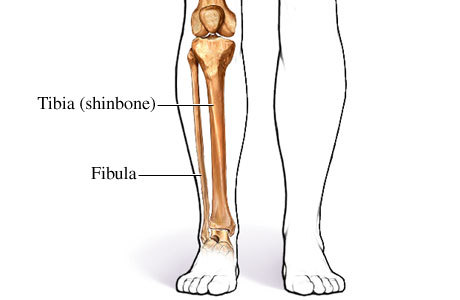
There are two bones in your lower leg. One’s big and buff and one’s pretty wimpy. When you walk, that big tibia takes ~80% of your weight of impact, and the fibula only has to take the remaining 20%.
But skaters place their weight differently over their feet. In principle a hockey player has 100% of their weight shifted forward onto their tibia.
You can actually see the implications of this in practice. If you break your fibula, 20% of the weight-bearing is gone, and you won’t really be able to walk. But a hockey player who cracks their fibula can and will keep skating almost without noticing something’s wrong. This happens pretty damn often when they block shots. You’ll see them skate easily over to get checked out, step up onto the hallway floor, and then suddenly slump over, with medical staff helping them limp off down the hallway.
I hear people saying, “oh, guess he’s fine!” when hockey players get up and appear to be skating okay: nah. And when a player wants to return to the ice: they may genuinely feel better skating but be too injured to walk.
And over time, if you’re in the weight-bearing position for skating more often than walking, and are skating from a young age, yes, that affects the shape of your weight-bearing bones and external appearance of your legs and feet. I don’t have a survey on hockey players’ shapely ankles compared to the normal population in front of me at the moment, but every single skater I see could be identified by their ankles
I thought this was going to be someone condescendingly explaining hockey to me but this is so informative and well written and I trust you with all my bones now.
Someone please source this, it’s too beautiful to not have sources
i can sort of provide some more explanation, maybe? note that all of my skating experience comes from taking figure skating lessons and that i am absolutely not a physiologist/sports science-person.
@brainsandbodies This wasn’t my original post, so I’m sorry I didn’t see you asking for sources earlier. All of you asking for sources here are very cool, and I wanted to round up what I can for you. If I forget somebody’s question, please just @ or ask me. But this also struck me because I think one of the most important things to remember about health is:
basic professional knowledge is often hard to cite and hard to make accessible
Hang with me for a sec.
This happens to be the story that got me into sports med. I’d just lost my parents; fuck knows what I was doing but I knew I needed to make up credit hours and I already had an EMT-B, so I signed up three weeks late for SM 136: Emergency Care, the first class I ever planned to sleep through. I remember coming in late for my first (late) day and seeing a lot of snapbacks in the room. It was taught by a small, sweet-faced man who used to train the Philadelphia Phillies: he’d fly down with the team to Tampa for spring training, so he got to know the head trainer for the Tampa Bay Lightning, and they got to gossiping about the shit their clients put them through.
When he got bored of baseball he left the Phillies, and moved up here to hockey country. He wanted to see some skaters break their legs.
He dragged us through the fundamentals of weight-bearing step by step, and you could see him light the fuck up: you just knew he was getting to something gross.
“So that’s how hockey players can break their own legs,” he said, stopping right by my desk, “and not even know it until they step off the ice. Fine, fine, and then—“ he made a wet sort of crunching noise. Whoever was under the snapback next to me gagged. I was hooked. I said, I believe, “COOL,” full-volume, and he met my eye, nodding with the full solemn grandeur of the wicked awesomeness of physiology.
You’re wondering: I got my first snapback that week.
Here’s the thing:
The fibula was found to bear about 6.4% of your weight when in a neutral ankle position in 1984. At the time the experiment had to be done with autopsy specimens and in simple positions (Takebe, Nakagawa, Minami, Kanazawa, Hirohata,1984). Since then we’ve seen that in the more complex positions of a standard heel-toe walking gait, the fibula typically carries about to 10-15% of a person’s weight and the tibia takes 80%. (It doesn’t add up because there are other tissues involved and the two bones work to stabilize each other.) 80% is the conventional approximation we’re taught in classes, that appears in biomedical textbooks, and that’s used in practice by therapists.
Most of the muscles of your calf and ankle attach to your fibula, so your fibula is all wrapped up snug in a bunch of muscle, so it follows that it’s hard to break. The conventional knowledge in healthcare is that people who come in with broken fibulas are athletes or were in motor vehicle accidents or were physically abused because that’s what we observe.
The risk of breaking your fibula is a casual part of how we talk about shot-blocking, because we see it happen a lot. And the Tampa Bay trainers who work directly with individual players had seen them skate off what turned out to be a broken fibula; my professor had seen it happen; I’ve seen it happen. It’s something that we talk about in classes and look for on the ice. But it’s kind of hard to study beyond the players you personally get your hands on.
Greg Campbell skated on what turned out to be a broken right fibula back in 2013.
But the only reason we have the footage of it was that it was an obvious, severe break, so he was in visible pain, and later the specific injury was made public. In other cases they don’t look especially hurt until they hit the hall, and the injury isn’t shared. So I can’t tell you how often it happens in total, out of all the hockey players out there. That information isn’t gathered anywhere.
Sports medicine is a fascinating and a bit of a fucked up field to try to explain because we have to use observational data and case studies and conventional knowledge.
We can’t line up a bunch of hockey players and whack them in the legs to see what happens in real time, or compare them to a control group who didn’t get whacked.* We can’t wait for people to be injured and round them all up to study, because it’s an unpredictable accident, and we can’t ask players to skate with an injury—that’s what I like to call “un-the-fuck-ethical.”
We’re also limited in how much we can see inside a living skater while they skate! Right now—like right now—motion-capture and 3D modeling is exploding our understanding of biomechanics, and that will inform PT practice. (There’s a reason Mathews and McDavid and all the other monsters are here now; we’re just now figuring out how to train them like that.)
But it’s still difficult even to gather data on how or how often certain injuries happen to certain people beyond individual trainers’ clinical observations. It’s not a centralized system. We don’t have concussion reporting worked out yet!
And it’s hard because it’s hard to get money to research something that’s already Known.
All that means that sports medicine is something of a slow science: individual providers are using clinical judgement and observing to see what works and drawing on a body of knowledge about what has worked in the past to inform their treatment, but we can’t test or tell you a lot of things.
And that also makes it hard for people who don’t have that professional knowledge to access your own medical information. Because you need basics and context to interpret everything but that information is just in our heads.
Ideally, the point of the professional trainer is just to be efficient: they carry that body of knowledge and fish out what you need when you need it so you don’t have to sit through Human Anatomy & Physiology and SM 101 just to understand what your ankle is doing. In practice, the knowledge often bottlenecks there and it never gets to you.
So you want to search and ask for sources for medical information, but also keep in mind that not all our knowledge is available in a form you’re familiar with, and what is out there might need a lot of context.
@selasphorus-rufus is spectacular for jumping in to talk about edges: I skimmed over them here and got into it more in a couple replies, because apparently I sure misread the room and thought it would muddy things up.
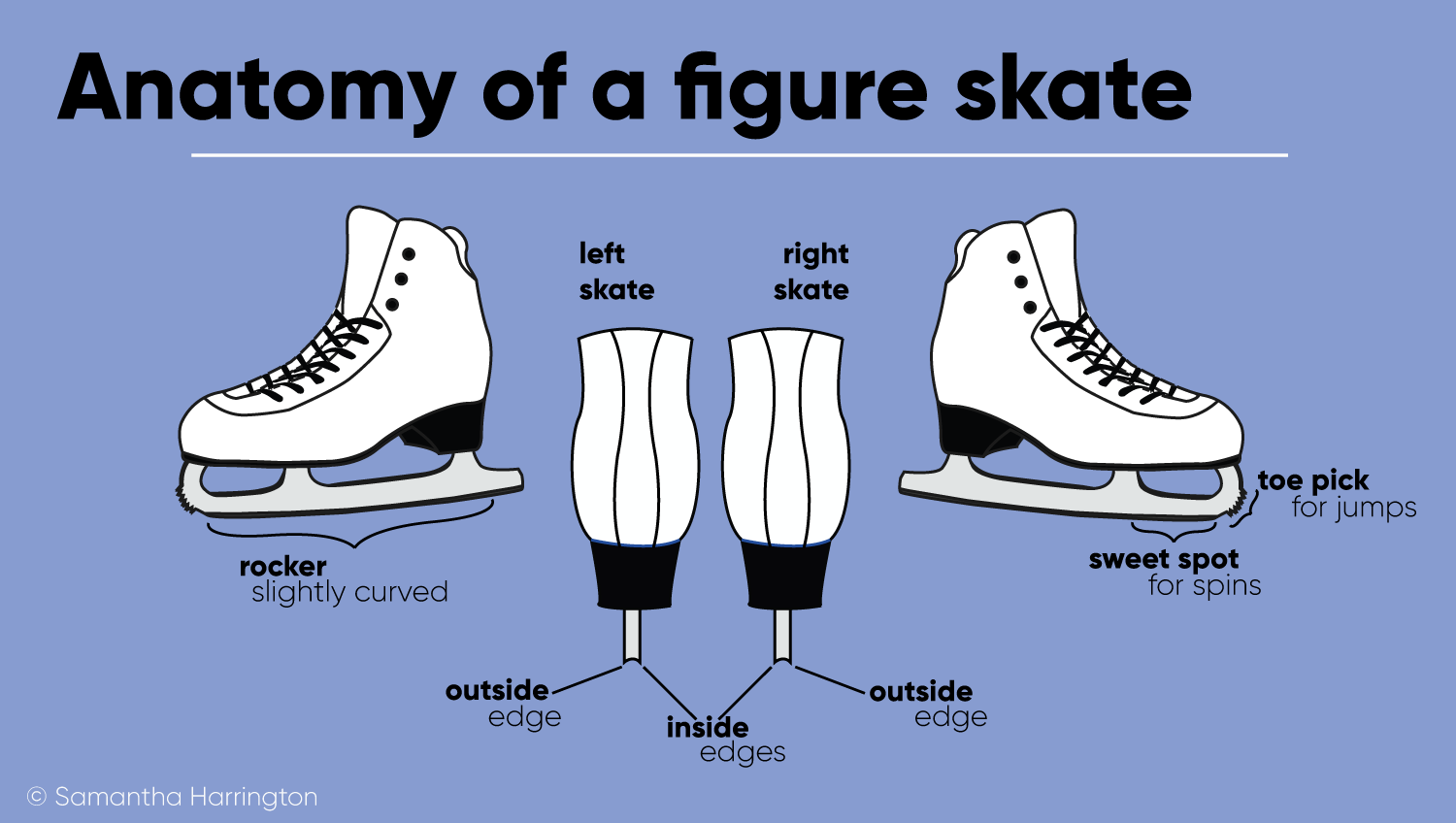
“if you look at that leg diagram, the tibia is much closer to where the inner edge of the skate is, ergo hockey players would be positioning most of their weight on the tibia as it’s much easier to balance on the inner part of your foot when using the inner part of your foot”
This is a great way to start reading it, and the basic principle is on point.
How To Evaluate Figure Skating Injuries by Rachel Janowicz, DPM gives a quick summary of edgework and how it affects the entire leg; I’m limiting myself to the ankle because the good lord knows I need some limits here, (but you better believe skating-related bone changes work all the way up through your hips and back.)
It’s a little more complex because your ankle is complex. When you use your edges, the sole of your foot doesn’t stay flat and perpendicular to your leg bones: you lift up off the heel and onto the ball of your foot, and your tip the sole of your foot in or out, which is called pronation or supination. That creates an angle between your leg bones and your foot bones.
They’ve drawn a straight line, but his actual feet are slightly, distinctly tipped out as he strides. That supination make an angle with his tibia that makes his medial malleolus (the lumpy end fibula at the inside of your ankle) pop out.
(@angsversteuring and @ismellapples That’s what people are looking at. I also think it looks Completely Normal, but many people have much, much less malleolus, so it looks odd to them.)
The bone there is physically pushed out more. High-top “ankle supporting” skate boots put extra pressure on that prominent point of bone (Both hockey players and figure skaters now wear those, so @ineptshieldmaid and @luckyhorseshoecrab yes, both would see this. There are also other factors for figure skaters but I’m too far gone to get into it call me back and remind me later please). That stress as well as the stress of your strides on the angled bone causes increased bone growth, potentially forming bone spurs or bursae, which all adds to the aesthetic charm of your big honkin skater ankle (Smith, 1990; Luke & Micheli, 1999; Anderson, Weber, Steinbach, & Ballmer, 2004.
Smith, A. D. (1990). Foot and ankle injuries in figure skaters. Phys Sportsmed18(3):73-86.
Luke A. C., Micheli, L.J. (1999). Ankle Swelling – Figure Skating. Med Sci Sports Exercis 31(5):S87.
Anderson, S.E., Weber, M., Steinbach, L.S., Ballmer, F.T. (2004). Shoe rim and shoe buckle pseudotumor of the ankle in elite and professional figure skaters and snowboarders: MR imaging findings. Skeletal Radiology 33(6):325-329
Takebe, K., Nakagawa, A., Minami, H., Kanazawa, H., Hirohata, K. (1984). Role of the fibula in weight-bearing. Clin Orthopaedics Related Res. 184, 289–292
*I suppose we could let the Washington Capitals whack each other, but that would be a kinkier kind of science.
So Pepsi Center is also home to the Nuggets (NBA) and the Mammoth (NLL), and there were FOUR games last weekend. Check out this sick time lapse!! Mad props to our conversion team.
Depiction of a daughter coming out to her mother, choreographed in Bharatanatyam
The story starts by showing a close, affectionate bond between the Mother and her Daughter when the Mother says that she wants her Daughter to get married soon to a worthy boy. At this point the Daughter finally comes out and tells her Mother the truth about herself. The rest is a constant fight between the two until they reach peace and understanding. At the end, the Mother finally accepts her Daughter as well as her significant other.
Choreographed and performed by:
Aarthy Sundaresan
Swathi Jaisankar
“According to the WesterosCraft site, the map is roughly 22,000 x 59,000 blocks which is about 806.51 sq km / 501.14 sq mi… around the size of Los Angeles.“



 Steel Phoenix Studios