The horse, Equus caballus, is one of my favorite arguments against Intelligent Design. I’ve spoken before about why I no longer see them, but even as a student I would wonder why and how this species existed when there were apparently so many things that could go wrong with its own anatomy, especially next to something tough like a trusty cow.
I don’t know how it’s possible to believe in a benevolent, loving, wise creator when creatures like the horse come to exist.
So I’m going to use your question as an excuse to write a post that had been on my mind for a while:
Things That Are Wrong With Horses
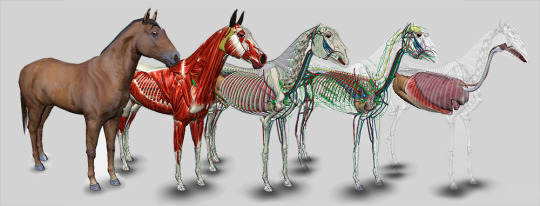
The basic structure of a horse has a few significant design flaws.
Cannot vomit. This means that anything which would make another species sick enough to vomit results in a horse getting s distended stomach and colic, where the stomach can rupture and the horse can die. Also means symptoms of illness are hidden longer
The large bowel (hind gut) of the horse is fricking huge, but can actually displace itself and bend around the wrong way, resulting in obstruction, colic and death without surgical intervention. This can commonly happen after exertion (splenic contraction) and giving birth. Colic due to nephrosplenic entrapment is particularly common after the horse has an adrenaline release, which causes the spleen to temporarily contract, and this seems like a poor design to risk death every time you spook or go for a fast run, especially in a species known for spooking and running fast.
Giving birth is a fast and explosive affair in the horse. The whole pushing business should be over and done with in about 20 minutes, however this assumes that everything is lined up just right for a normal delivery. Foals are all long legs and necks, which are easy to get tangled or bent around the wrong way. A mare is strong enough to push her foal’s feet through her uterine wall, which is death all round.
Speaking of strength, sometimes horses will kick each other when they have attitude, and they can do so with enough strength to rupture each other’s spleens.
When galloping most horses, best studied in thoroughbreds because they are made to gallop on a regular basis, horses routinely bash their diaphragm with such force against their liver that their liver bruises.
Galloping also often makes their lungs bleed. That’s why racehorses have their head held up after a race, so you don’t see any blood come out their nose and disqualify them. Even horses that you don’t see bleed have evidence of pulmonary bleeding after a gallop if you scope them.
Their leg bones are actually pretty damn tough, but the ends are spindly little things compared to the mass of musculature up top. Their legs are subjected to huge biomechanical forces when a horse runs which can often subject them to ligament damage and lameness. A fractured leg bone can heal like any other, but if a horse can’t bear weight evenly on all four legs for an extended period of time (eg after a fracture) then they are at risk of laminitis.
Laminitis can cause the hoof to slough off. (Aaargh!) They can also get laminitis from eating a bit too well.
Speaking of eating, they can also get colic (and risk death) from eating not enough fiber or the wrong sort of plants or from eating too much dirt.
Oh, and just to mess with you, horses have a space in their head called a guttural pouch which seems to exist for no other reason as far as I can tell (okay, maybe it’s about heat regulation) other than to get fungal infections that eat through the exposed artery and cause the horse to die from blood loss through it’s nose.
And Bonus: Exquisite sensitivity to tetanus and vulnerability to Hendravirus
This list is by no means complete. I haven’t even touched on their anesthetics or drug reactions, but it’s a simple start.
Customer (calling from Ireland): “Yes hello, I would like to -”
Sheep in the background: *gentle baa*
Customer: “Uh, sorry, what I want to do is -”
Sheep: *slightly more insistent baa*
Customer: “No, not now! -cough- Excuse me. I have a reservation and -”
Sheep: *VERY LOUD ACCUSATORY BAA*
Customer:“Arnulf! Please be quiet, I am on the phone! … Sorry, I sincerely apologize on behalf of Arnulf.”
me: “I love and forgive him.”
Customer: “Don’t, he doesn’t deserve it. Anyway, I’m calling about -”
Arnulf: *small, very self-satisfied baa*
I once took my kids to a local farm and we found a lil goat with its horns stuck in a fence, just sitting there kinda mournfully on the grass. We tried to help it get free but it was stuck tight. We petted it for a while and fed it some grass (as it had lawnmowered a circle around itself as far as it could reach), and then went back to the ticket office to tell them it needed help, but before I’d said more than: “There’s a goat-” the guy cut me off with a weary wave and said, “Yeah, we know. Stuck in the fence. That’s Brenda. She can get herself out whenever she wants. She just likes the attention.”
I was at the zoo the other day and there was this fucking goose trying to act likE A FUCKING FLAMINGO
this made my day its so adorable
This reminds me of one of my favorite conservation stories!!
When they were trying to bring Puffins back to islands on the US east coast they decided to do so with dummies. Puffins are very social, and as a result would want to land on islands that already have puffins. The dummies looked real from a distance, but were seriously lacking up close, held up by a single peg. Puffins, being social and wanting to fit in, followed suit:
So why don’t all vertebrates have this adaptation? It’s an advantage to animals that are active in the dark – cats, dogs, owls, raccoons, crocodiles, and so on – but it makes everything slightly blurry. Many daytime vertebrates (including humans and most other primates) do not have one and instead have better day vision.
I know cats have a stigma of being evil little robots who care for nobody but themselves. I don’t deny that there are some out there like this. But in defense of the large majority of darling cats who have been given a bad name due to the wicked few, I would like to tell you a story…
I am asthmatic. I’m not as bad as some; my asthma is generally well-controlled, and I don’t have much trouble with it on a daily basis. However, as all asthmatics know, getting sick becomes a nightmare. Even a small cold can turn into a days-long asthma attack, one that is very painful, and very annoying for me and those around me. The asthma cough sounds like an ill seal at best, or an angry moose with a nasal condition at worst. Y’all with asthma, and y’all with asthmatic friends, know exactly what I’m talking about. The bark. The hack. The Cough Heard Round The World. It’s painful, it’s loud, and it doesn’t stop. Even the rescue inhaler can only do so much to calm it. It just has to run its course with the cold.
Well, this week I caught the crud, and in the past few days it deteriorated into The Cough. Last night, I took some NyQuil to try and stave it off for as long as I could, just to try and get some sleep. That meant that for a few hours, I was cough-free. After that, I was still doped up enough to sleep through some of it. However, by 2am the sleep aid had worn off and The Cough woke me up. Since lying down makes it worse, and I didn’t want to wake my sister, I sneaked out of my bedroom into the living room, where I sat on the recliner and proceeded to hack up a lung while I waited for my next dose of NyQuil to kick in. That is when I noticed Simon.
Simon is a Russian Blue with a masterful resting-witch-face and an attitude to match. She (yes, she’s a girl, that’s another story) is old, fat, proprietary, and attitudinal. She isn’t shy about telling you when she is displeased, and does so with a loud shriek and some teeth or claws thrown in. She is convinced she owns the place, and owns all of us in turn. She is particular about where you can pet her, like most cats; and, like most cats, she loves her sleep and hates to be woken up.
And of course, my hacking woke her up.
Attempting to whisper an apology in between bouts of coughing, I noticed she was getting off her perch atop the chair nearby. She stretched, made a little squeaking sound, and trotted over to me.
I expected her to demand petting as payment for having woken her precious sleep, but she did not. Instead, this traditionally cranky dragon of a cat did something that amazed me.
She began to purr loudly, and sat herself directly on my aching chest. She kneaded my sternum softly, and nosed my chin as if to say, “I’ve got this, you sleep.” Even though I was still coughing, and bouncing her horridly in the process, she remained settled on my chest right above my diaphragm, purring loudly so that it vibrated through my ribs. I don’t know what magic spell she was chanting between her boat-like purrs, but within minutes my cough had subsided and I was able to sleep.
I didn’t wake up until about 4:30. When I did, it was to discover that my lap and chest were devoid of Simon’s presence, and I was coughing again. As I started coughing once more, I heard her familiar “I’m here” squeak from the area of the water dish. I heard some hurried lapping, and then her heavy gallop across the floor. She flumped onto my lap again, and resumed her purring and kneading. She had evidently been doing that for the past 2 hours, and had only left to get some water. Hydrated, she had returned to take care of me.
So yes, she has her share of evil, jerk-cat moments, but I can no longer pretend that Simon is entirely heartless. For that matter, I now refuse to believe that about any cat. Just because they act like a jerk doesn’t mean that they don’t love you.
There’s some research that the frequency of a cat purr (generally they purr in the range of 20 to 140 Hertz (Hz) can increase bone density, help relieve pain, and aid the healing of muscles/tendons. I’d link but I’m on mobile (google cat purr frequency healing" if you’re interested!) so it’s possible that the relief you felt was actually her!
Macaws are famous for their bright colors, which seem bold and conspicuous to us but
actually blend in well with the green leaves, red and yellow fruits,
and bluish shadows of the forest homes. (photo: Peter Csanadi)



 Steel Phoenix Studios