Conservation
Status: Critically Endangered; there are 153 as of 2016
Other Common
Names: Night parrot, owl parrot, tarapo, tarepo
Average Length
(wild): 23 – 25 in, 58 – 64 cm
Average Weight
(wild): 2 – 9 lb, 0.95 – 4 kg
Average Lifespan:
58 years, but have potential to live into their 90s. Their exact
lifespan is unknown. Researchers in the recovery program will know
when the kakapo hatched in the recovery effort die of old age, which
could be decades from now.
(Above: Historic range; Below: Current range)
Native Range:
Used to live from the far north of the North Island to the south of
the South Island. Now they are only found on offshore islands that
are protected areas without introduced predators. It is not believed
that there are any left on the main land of New Zealand, when the
recovery program began they were all captured from the Fiordland
National Park and brought to protected zones. They currently live on
Codfish Island (Whenua Hau), Little Barrier Island (Hauturu ao Toi),
and Anchor Island.
Naturalized
Range: N/A
Natural Habitat:
Formally from sea level to near tops of mountains. They are ground
dwellers who live in forest substrate and scrubland.
Flock Size:
They are solitary, gathering only to breed
Call: Loud
screeching “skraark”
Breeding:
They do not breed every year, as they will only breed when there is
enough rimu fruit.
Breeding season
starts around December and lasts until April
They engage in
“lek” breeding, which is when the males compete for female
attention. They are the only parrot species and New Zealand bird
species to do this.
The male
inflates like a balloon, and then emits a low boom which can be
heard from up to 5 km away. This lets any females in the area know
that he is ready to mate
After 20 -30
booms, the male emits a high-pitched ‘ching’, which pinpoints his
position, allowing females to find him
This booming
and chinging can last for 8 hours nonstop every night for 2-3 months
during breeding season
(Above: Booming Sketch)
Nesting: The
female lays 1-4 eggs. They are similar in size to chicken eggs and
will hatch after 30 days. The female raises them by herself, and has
to leave the nest at night to search for food. After 10 weeks, the
fledglings leave the nest, but may still be fed by their mother for
up to 6 months.
Wild Diet:
The berries of the Rimu plant (see picture) are their favorite food.
They also eat parts of other native plants, including the fruits,
seeds, bark, bulbs, leaves, stems, mosses, ferns, fungi, and roots.
Species include pink pine, stinkwood, Hall’s totara, and mountain
flax. When food species that are important to their diet become
abundant, they feed exclusively on it.
Currently, they
are also fed pellets, freeze-dried and frozen fruit, walnuts, and
pine conelets by the recovery effort.
Sexually
Dimorphic: Yes, the males are larger
Description
(wild): The upper side of their body is green with random black,
brown, and yellow barring and mottling. Their underparts are a
yellow-green and have irregular yellow and brown barring. The face is
yellow-brown and the beak is grey and smaller in females. The primary
wing feathers are tipped with yellow in males and green and brown in
females. The tail is green and brown with yellow and black barring
and flecks.
Color Mutations:
N/A
Noise Level:
Loud
Talking Ability:
N/A
Personality:
They are nocturnal and solitary and roost on the ground or in trees
during the day. When disturbed, they freeze, trying to blend in with
their background.
Behavioral
Concerns: They are not equipped
to deal with human intrusion and introduced predators, which caused
their numbers to decline rapidly. By 1970, there were only 18 males
left in Fiordland. In 1977, a small population of both males and
females were found.
Health Concerns:
Recently there has been an increase in cases of “crusty butt”,
which is a viral infection that causes the cloaca to become inflamed,
and presents like severe dermatitis.
It is still unknown what is
causing the virus and if it is infectious. There has been one death
due to this infection, and treatment, a topical cream, seems to only
help some individuals.
As of now, it is only found on Codfish Island,
and has been since 2002.
It is being taken very seriously and is
being closely monitored, with research being done to learn more about
it.
Aviculture:
N/A
History in
Captivity: Some young chicks are raised in captivity as part of a
Conservation attempt to save the species. Conservation and recovery
of this species has been going one since 1977, when a population of
both females and males were found on Stewart Island.
Fun Facts:
They are the largest parrot species in the world (by weight) and
possibly the oldest living bird!
Sirocco, a male
kakapo born March 23, 1997, was raised in captivity due to a illness
that required he be hand raised and quarantined from other kakapo. He
now thinks he’s human and is a conservation ambassador for the kakapo.
He
proved that kakapo can swim, after deciding to join one of the
rangers’ family who were swimming in the ocean. He jumped off the jetty and paddled around for a bit before going back to shore, completely nonchalant.
He is also the kakapo who made
his species famous after “shagging” Mark Cawardine on the BBC
series “Last Chance to See”.
So, there has been a green cat walking around the streets of Varna, Bulgaria this week. Many believed that it must’ve been the work of some awful vandals and started a Facebook page to find them… However, it was determined the cat turned himself green when he slept in some left over synthetic green paint and licked himself. People have been trying to catch this handsome fellow so they can clean him off but so far, have been unsuccessful. Apparently, this happened last year too so people don’t think it’s poisonous. He and his friend sure don’t seem to mind but hopefully he’ll get his bath soon!
A lot of pets will ignore you, but only a cat will follow you from room to room and check your lines of vision to make absolutely certain that you can see them ignoring you.
For anyone not so familiar with cat behavior, this cat is out of its mind excited to do this. It’s much more rare for cars to wag their tails but it means the same as it does when a dog does it. This cat is curious and proud and playing. It keeps looking at its owner too, like “LOOK AT ME, DAD” and it’s so rare to get videos of cats this happy. This is fucking rad
Nope.. wagging tails means anger or irritation in cat body language.
hey y’all, hope you don’t mind me stepping in!
you’re both right 🙂 a wagging tail means the cat is highly stimulated (think coiled spring, ready to go off). depending on the situation, this can be interpreted differently – just like people can smile nervously at job interviews vs. happily grin at friends.
in most cases, it’s safe to interpret overstimulation as ‘you’re doing something to amp up the cat & it wants you to stop’ (ex. unwanted petting). it should be seen as a warning; all that pent-up energy COULD be released as a swat or bite.
BUT in this case, that tail-wagging ‘frustration’ is the stimulation that comes from problem-solving (where can I jump? is it safe to go here?) and the excitement of play. it’s good to be wary of ‘cute’ animals vids, but this seems like an unproblematic video!
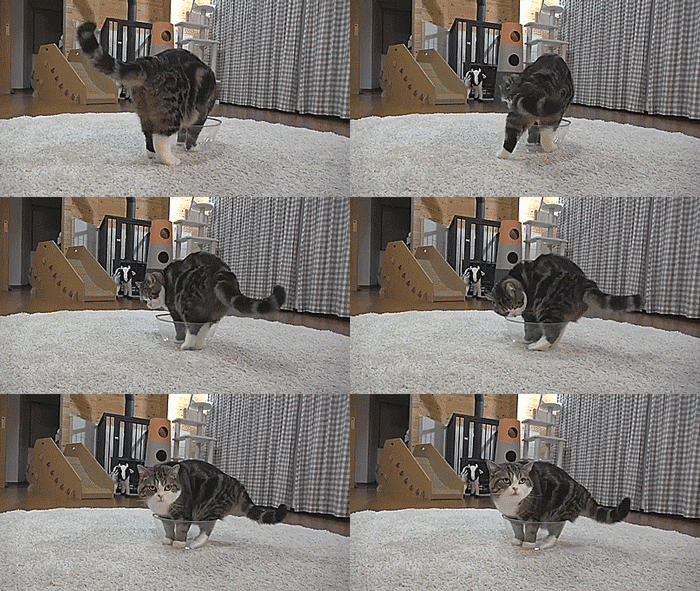
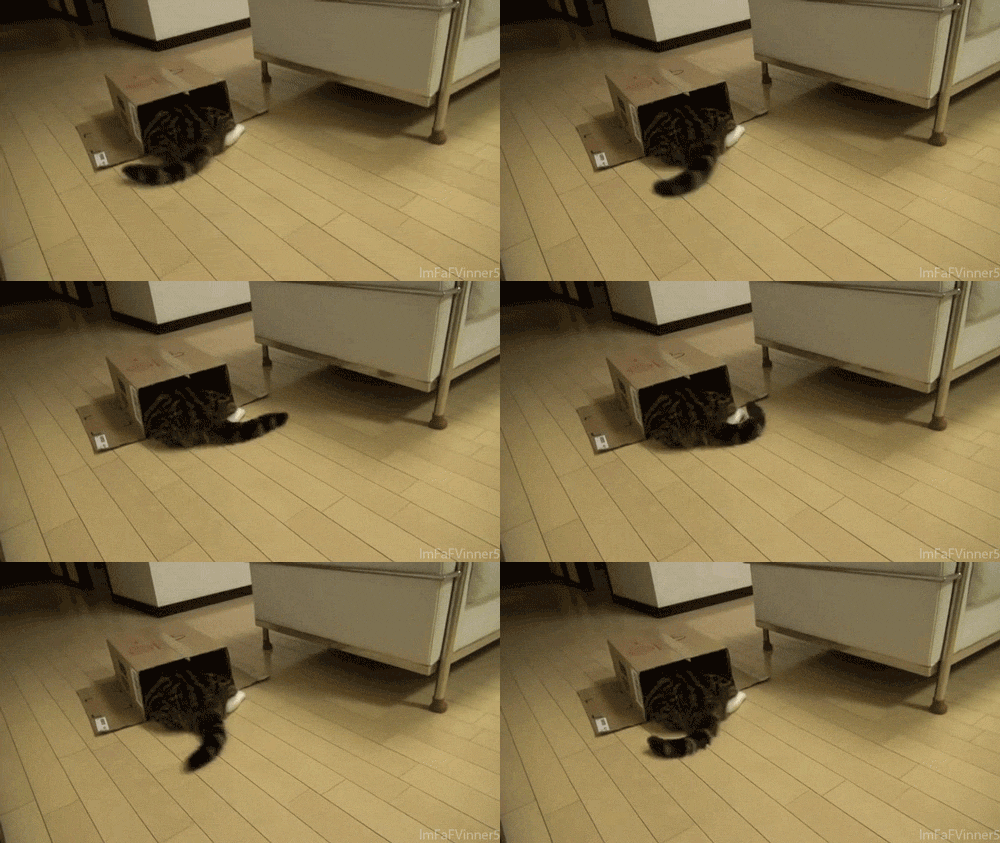
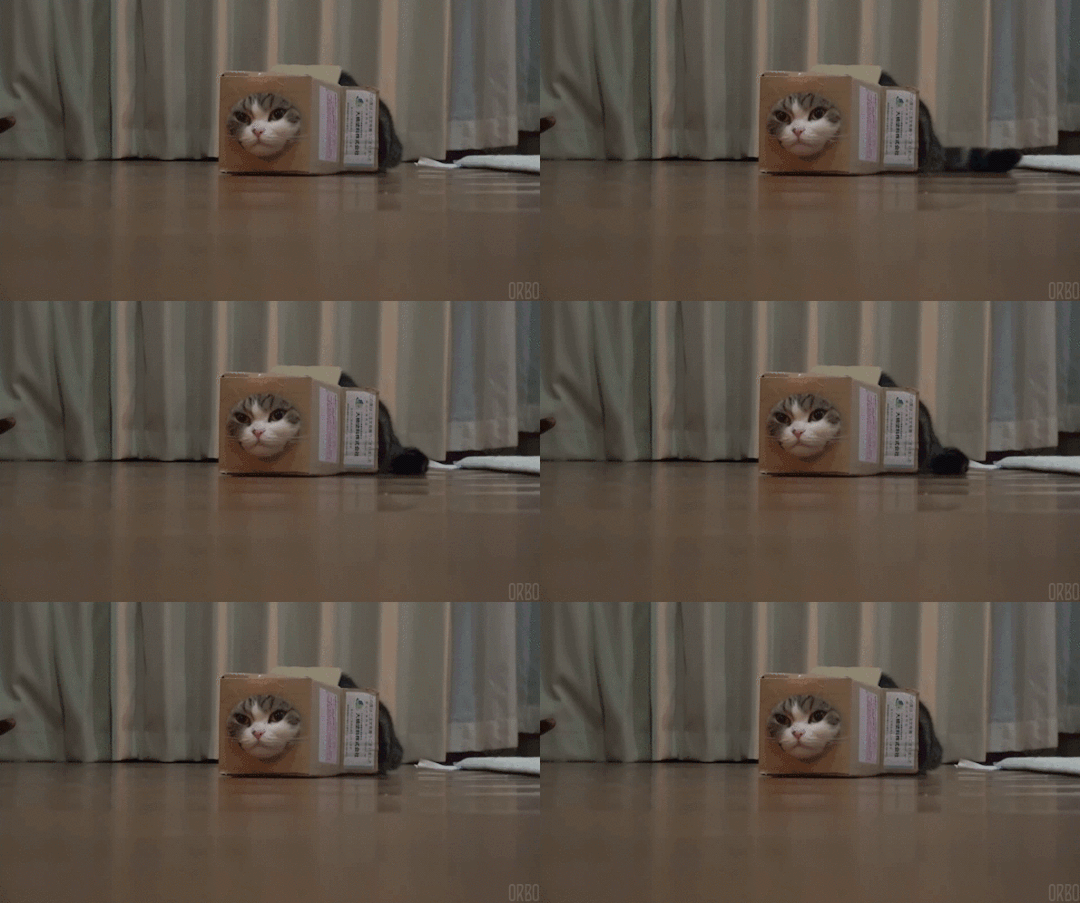
I’d like to add to this–just look at world-famous box-loving cat, Maru, who wags his tail every time he stuffs his body into a box or other small object. He’s clearly not about to attack the person behind the camera! It’s definitely based on stimulation, but more to the point of “ahhh FINALLY I’ve gotten into the small space, now how do I get the rest of me inside”:
@pangur-and-grim is spot on with their commentary here! A wagging tail (on a dog or a cat) is a sign of stimulation, also referred to professionally as arousal. That can be either positive or negative in experience. It’s like an accelerometer on a car – tail movement tells you the car is revving, but not how fast it is going or where.
Sometimes you can tell from tail movement and tension if the internal state of the animal is tense or excited. Low-stress engagement (calm interest, excitement, getting happy pets) tends to get a tail that wags more slowly, in softer arcs, whereas high-stress engagement (over-stimulation, prey drive) will get a stiffer tail wagging in more tight movements. These look like lower-stress tail movements to me and likely correlate with interest and engagement rather than anything unpleasant.




 Steel Phoenix Studios