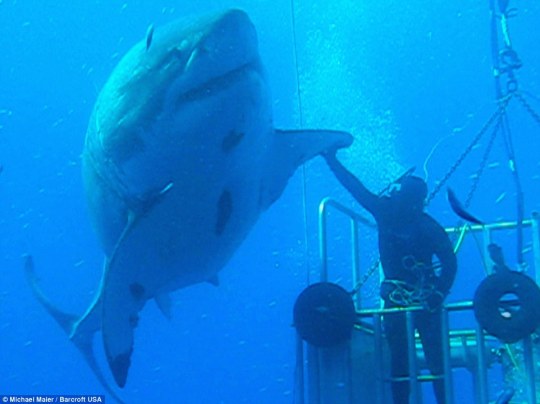
That’s Deep Blue, they think she’s the biggest white shark ever filmed
Of course it’s a girl. She’s beautiful and I’ll keep my hands inside the cage at all times
I…I love her.
My daughter is beautiful and strong.
her dorsal fin is longer than a full grown adult but I in all my 5’2" glory still wants to protect her
I am, I believe, the reasonable amount of scared of sharks that a smart soft mammal should be, but I definitely just said “whos a big pretty girl” at the screen.
Thank you, tumblr, for reminding me that things I’m afraid of are beautiful too.
So I got curious and look this giant up and found this picture of the diver high fiving her as she passed. According to the article, not only is Deep Blue big but in the picture she’s super pregnant too.
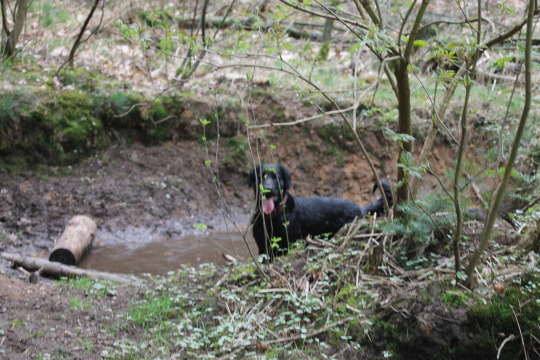
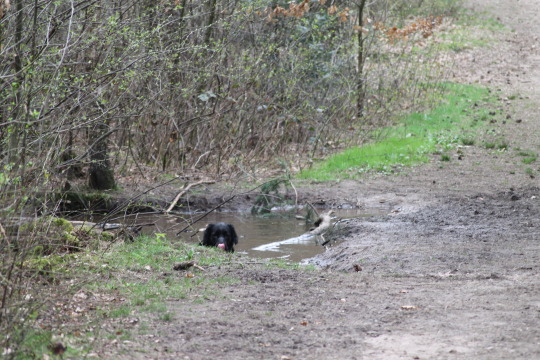
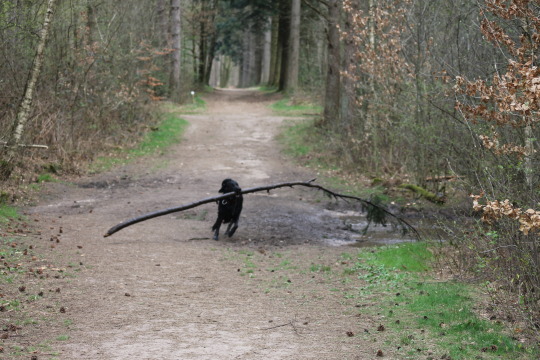
Peoplefriends with cars are THE BEST. Forest walks are THE BEST. Puddles are THE BEST. Giant sticks are THE BESTEST
Waterhole 1.
Right at the start of the walk, so BEST because convenient. Could dive in straight away before I got hot. Not very deep though and no good sticks. 3 stars.
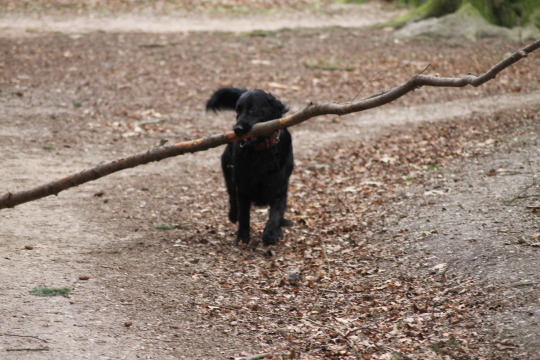
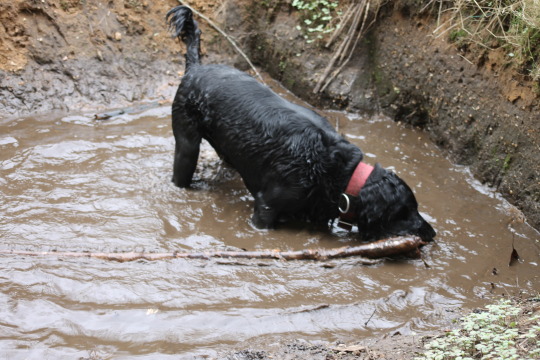
Peoplefriends called me away before I could grab the nice straight stick an old man was walking around with. Found a better stick not far from there though. BEST STICK.
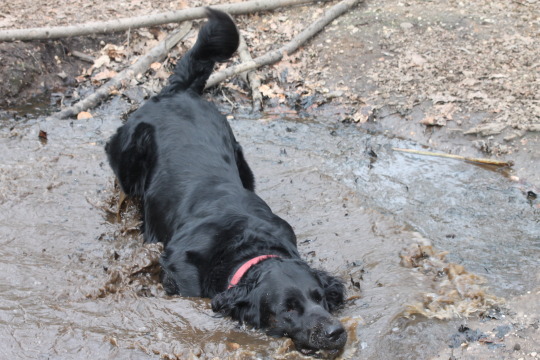
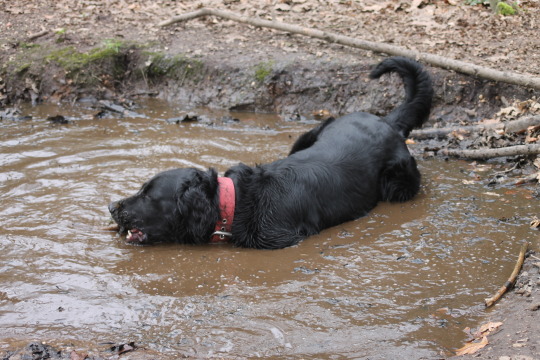
Waterhole 2:
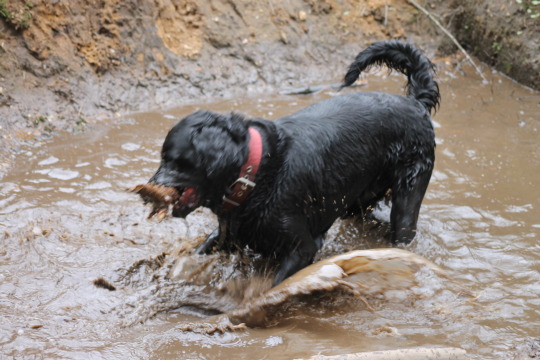
Middle of the walk, and this one is always full so I zoom ahead long before the peoplefriends get there so I have extra swimming time. It wasn’t as full as last time but still, nice and big, BEST mudding properties, a good cool place to stop and play with BEST STICK. 4 stars.
every autumn, tens of millions of monarch butterflies travel to their ancestral winter roosts in mexico’s mountain fir forests, coating the trunks of the trees in the orange of their wings, and causing the branches to droop under their collective weight.
surfing winds from southern canada and the northern united states, and taking directional cues from the sun and magnetic poles, they travel 4,500 kilometres over two months to reach their hibernation grounds – a feat that still remains a bit of a mystery, but which has been going on for millions of years.
interestingly, the autumn migration south is accomplished in one generation, which lives for about seven months, while the spring migration north is done over three generations, each living about six weeks.
last year’s migration, however, was the lowest on record, as excessive herbicide usage has reduced the supply of the milkweed plant which the monarch larvae rely on to feed, and which makes the monarch caterpillars toxic to predators. but the plant is now being destroyed from heavy use of roundup ready pesticides used in soy and corn crop production.
further complicating matters for the monarch is climate change, as drought along their migratory route has exacerbated milkweed decline, and colder spring temperatures has meant the temperature-sensitive cold-blooded butterflies are unable to begin their journey north.
and once they reach their hibernation sites in mexico, the butterflies, which rely on a thick forest canopy for protection from the cold and rain, encounter deteriorating forests from illegal logging.
experts, however, are hopeful that this year’s migration will double or triple, thanks in large part to the conservation efforts of the mexican government. nevertheless, this increase would still put monarch numbers at one tenth of their record high of one billion.
In 2013, photographer and marine tour guides Rainer and Silke Schimpf spotted a young killer whale, who they named Sira, with a missing dorsal fin and right-side pectoral fin, leaving him unable to hunt for himself.
But rather than be left to fend for itself or – even worse – die the young calf appeared to be cared for by members of its pod, which shared food with the youngster.
Four years later, by chance and coincidence, Rainer and Silke were out at sea in Algoa Bay, South Africa, documenting a pod of 1000 common dolphin hunting sardine when they had the surprise of a lifetime.
Rainer said: “We had been following this massive pod of dolphins for a couple of months with different film crews as well as tourists and on this particular day we encountered the dolphins we realised they were very nervous.
“Bearing in mind that orcas had been sighted in Cape Town about 800km away, 5-6 days prior, we knew that there was a good chance that orcas would actually be present.”
As the dolphins suddenly sped up, Rainer and his team noticed a pod of five orcas hunting the dolphin in front of the boat.
Rainer said: “We realised that one of the killer whales was our old friend Sira, who is a handicapped whale, which we had encountered first in 2013.”
When Rainer and Silke had first spotted Sira, the young killer whale appeared to follow the rest of the pod at a distance – swimming slower than the others and incapable to hunt.
But four years later, the couple were surprised to see that not only was Sira almost fully grown, but also appeared to be the leader of the pod.
Rainer said: “When we first saw that orca, he was a baby, about 3 and a half metres long and now this particular orca is almost fully grown to about 4 and a half to 5 metres and appeared to be the leader of the pod.”
The pod also included a female with a bent dorsal fin like the killer whale in Free Willy, a ‘huge male’ and four other females.
After spending an hour and a half following the pod of killer whales, Rainer and Silke headed back to shore with the hope that they will continue to encounter the friendly orca for years to come.
Rainer said: “It is obviously very interesting to us and any of the data that we collect gets sent out to diverse researchers.
“Hopefully there will be a happy end for Sira the orca and we will meet again and again.”












 Steel Phoenix Studios