Do you ever wonder if the reason that different cultures have such wildly different onomatopoeias for the noise a cat makes is that cats have regional accents?
Actually, they do.
There’s a lot of evidence that animals have regional accents. Both birds and sperm whales in fact to vocalise differently depending on where they grew up.
As for felines themselves, there’s an ongoing study underway on at Lund University precisely about this.
As a phonologist who has watched entirely too many cat videos on the internet, I can confirm that cats of differing countries do have differentiated accents in their cries. Felines in England tend to have shorter, lower “mow” whereas Japanese cats do tend to make glides into high vowels, and are sustained longer, such as the ubiqutous use of “nyaaaan” in Japanese onomatopoeia.
As a linguist, I can affirm that the sounds produced for communication are determined every bit as much by anatomical features as they are by communicative experience.
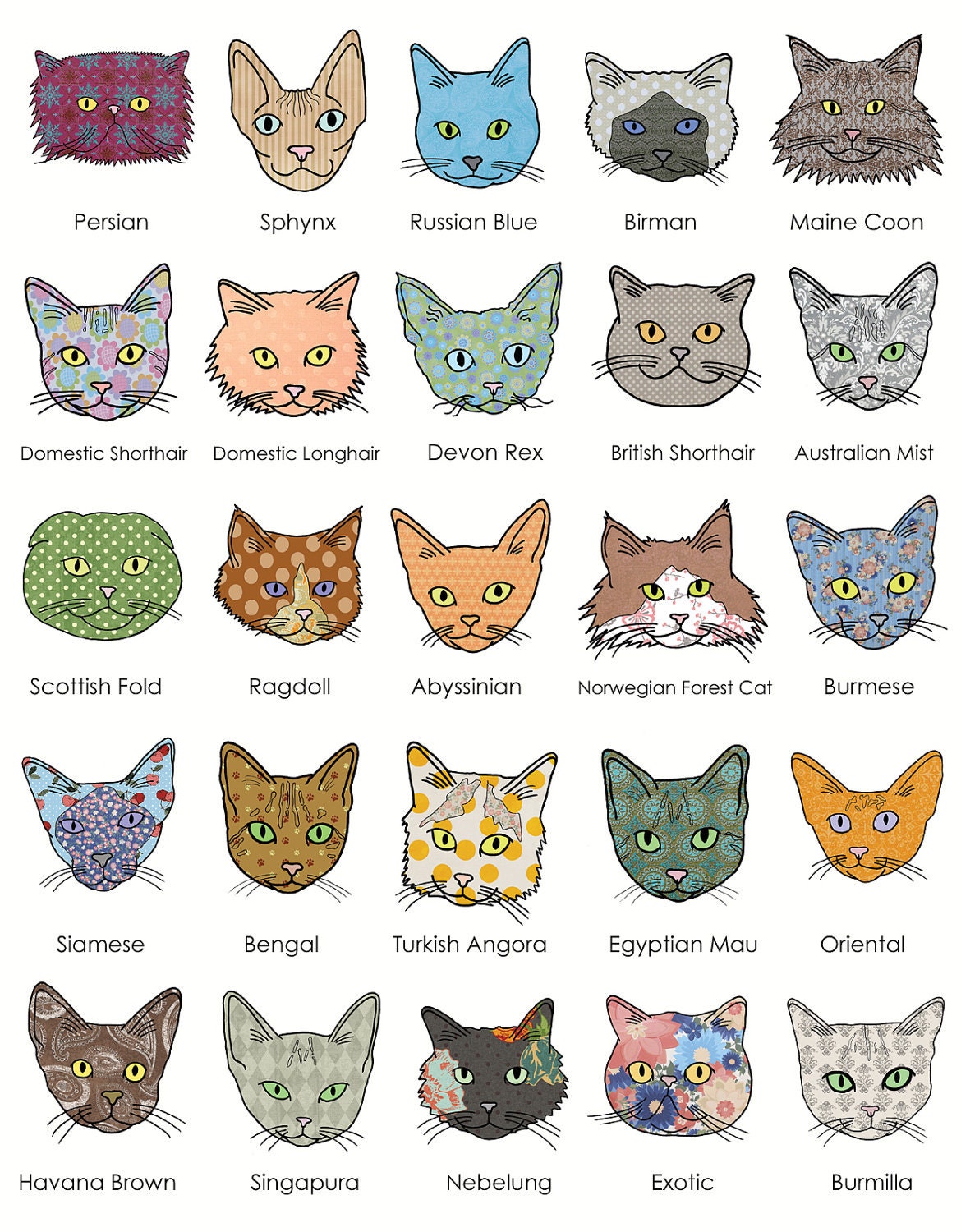
Has anyone ever taken a look at cats’ body sizes and shapes, especially in the face and throat? Especially the width of the throat, the length of the nose, depth of the chest, and size of the jaws and mouth.
Look at all these face, chest, and throat shapes. That alone would indicate differences in their sounds.
What I really want to see is comparing maine coons bred in different countries and raised by litters from different regions being compared, or cats with the same size/shape (to cover anatomical inconsistencies) being compared, even across a continent.
But the tricky thing is, even cats from the same place have different voices and preferred “syllables” they’ll sustain, or how rapidly they call, or for how long.
Does anyone know who that study (re: cat accents) is being conducted by? I can’t find any mentions of that one, specifically… (All the Google results I’m getting are about what certain cat noises mean, or the big debate on ‘do cats have a special language for humans/dogs/other cats’, ‘what noises do cats make we can’t hear’, etc… I can’t find a study or article on the accent thing.)
The next long awaited post in the Fantasy Biology series, finally looking at the popular pegasus thanks to popular opinion on my Patreon.
Long time followers of this blog have been waiting for this one for a while. You all seem very keen for my take on how to make a six-limbed creature work, get airborne, and ideally be ridden.
There is a lot to talk about with these flying horses. In the interest of narrowing the topic, I’m only going to discuss pegasus with bird wings, not with bat/dragon wings or any other magical flying horses.
Key features of a pegasus:
Horse body
Bird wings
Can fly
Ridden by heroes
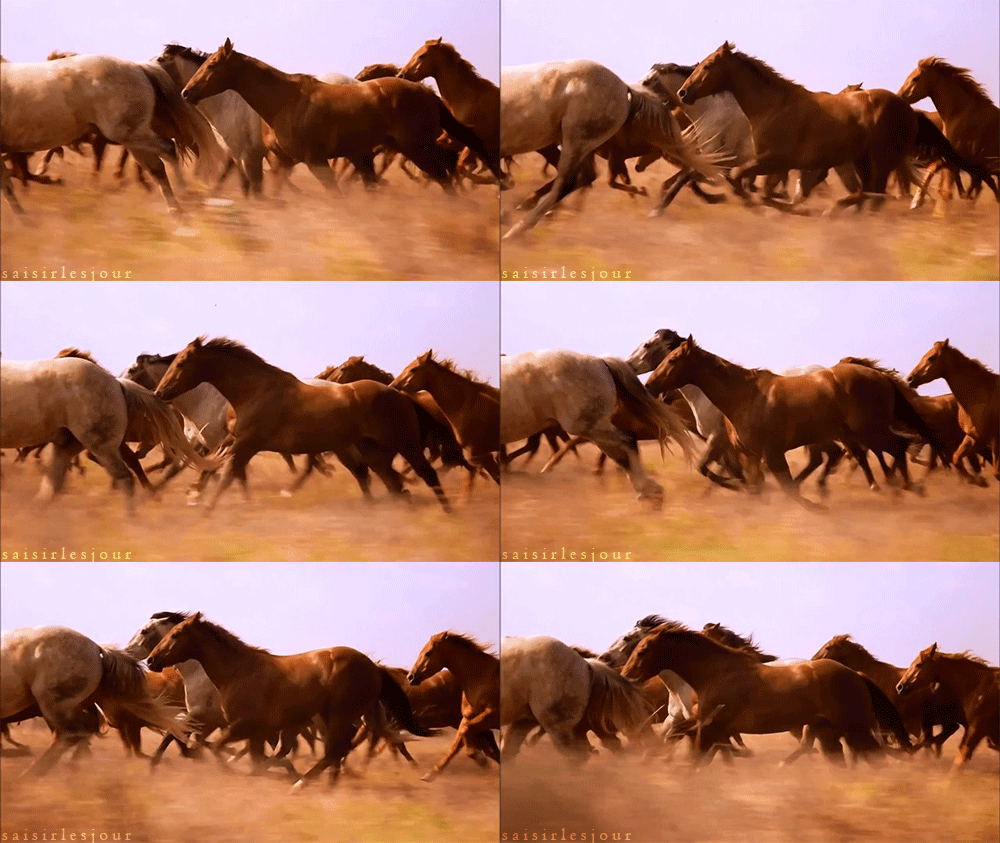
The biggest difficulty with making a pegasus ‘work’ is that you have two different types of forelimbs, that both use very different shoulder joints to function. A horse shoulder moves forward to back when running….
But a bird shoulder moves up and down with some rotation when flapping…
Super cute, although I think this is a marine species of hermit crab – they can tolerate being out of the water for short periods, but it’s stressful for them because once their gills dry out they’ll start suffocating.
I will forever love how perfectly hermit crab claws make a door to close the end of a well-fitting shell.
If I may- I believe that’s an Ecuadorian or similar species of land hermit crab, who are perfectly okay with going on land (as long as its humid)! It’s got the oval eyes, coloring, and sitting posture of an Ecuadorian but such a short video makes it hard to tell. I know somewhere else there is a longer clip of the same thing but I can’t seem to find it.
Nepal is fighting to save the snow leopard (x) | follow @the-future-now
Snow leopards are a really important species to conserve in-situ, because they’re very sensitive animals who don’t reproduce nearly as well in captive conservation scenarios as most other large cats.
One of my favourite lecturers at vet school was an old cattle vet. Retired from practice long ago, his demeanour was best described as “jolly but practical” and he had seen many years of students pass before him.
Many years. It used to be he would be teaching bovine obstetrics to a room full of strapping Aussie blokes, each more than capable of lugging a 40kg jersey calf around on their shoulders. Nowadays most of our class were women, and a fair chunk of those were petite international students, barely bigger than the aforementioned 40kg jersey calf themselves.
He knew very well that most of these smaller women were likely to end up in small animal practice, but that wasn’t going to stop him from trying to convert them to the joys of cattle medicine.
I remember him very clearly in the bovine obstetrics lectures,pulling a calf is a seriously physical task. Cattle are BIG and they are all muscle. When a cow decides she is going to push a 40kg calf at you the simple fact is that you cannot push against her. That uterus of hers is stronger than your forearms, and she’s prepared to push all day. Fortunately, there are drugs for that.
Our lecturer would merrily tell us some very colourful stories about pulling calves and the sorts of farmers he had encountered, including their unfortunate tendency to try to pull a calf first, using a tractor if need be.
Attaching a calf to a tractor and then driving away from the cow does not, in fact, make it any easier for her to give birth. If it’s stuck, it’s stuck, and no tractor is substitute for a lot of lube and some intra-uterine calf leg Tetris.
So what do you do, he specifically asked the international girls huddled down the front, when you show up at a farm, and the farmer, built like a brick house, and his son, also built like a brick house, have already tried and failed to pull this calf?
You walk up there, and you show them how it’s done.
You have a veterinary a science education and ten litres of lube. You can get the calf out. Use your brain, then give them the ropes to pull and use their muscles. Take control. Tell them what to do. Climb onto a box if you have to. If you’re particularly little, you can get both hands up there. You CAN pull that calf.
Up until that point, I don’t think those students actually expected to be able to really do it. But he expected them to.
And if all else fails, he continued, do a Caesarian. They won’t be judgemental if you didn’t pull a calf if they’re already tried anyway.
And you know, I personally know at least one of those petite little students ended up in cattle practice.
You can do it.
Reblogging old content for the Disenfranchised Duckling.
This is important for us, the
petite vet students who normally look tiny next to a Angus bull and a
Percheron.
Honestly, a big bull will send any human flying, no mater how big they are. 400-800kg of opinionated beef will always be stronger than a human, no matter how ‘beefy’ the human is.
If you are shot, you are less likely to injure your back when working on the feet of cattle and horses.
If you are petite, you may get both hands into the birth canal of a large animal, and you may be able to treat dystocia in alpaca or sheep without resorting to caesareans.
If you have thin arms, you wont feel nearly as bad about preg testing cattle.
Large animals are always going to be bigger than you, but they will also be bigger than your largest classmates



 Steel Phoenix Studios